Nikolai Medtner (1880–1951) was born into a cultured Muscovite family, and he graduated from the Moscow Conservatoire in 1900. He was admired as an exceptional pianist, and he expressed himself almost exclusively through the piano.
He was essentially self-taught as a composer, and although deeply steeped in an extended musical tradition, Medtner did not imitate previous models. Instead, he knew how to invest a miniature or a song with a distinct musical personality, or to generate a grand design with one.
Uncompromising Individuality
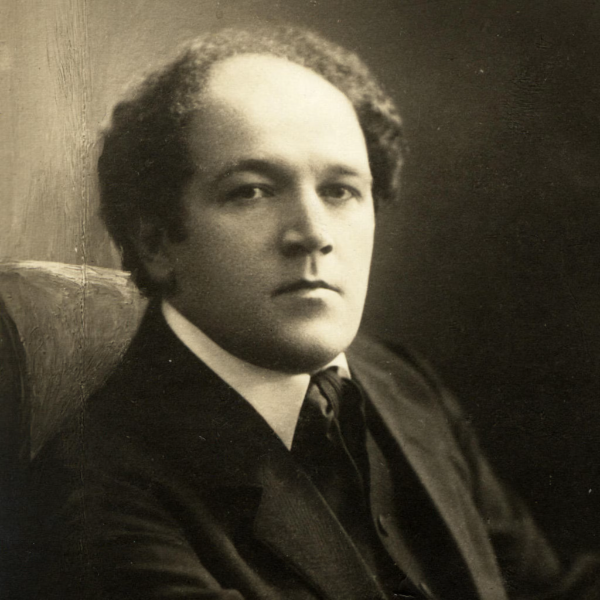
Nicolai Medtner
For Kaikhosru Sorabji, Medtner was “by far the most interesting and striking personality in modern Russian music… He does not flout current fashions; he does not even deliberately ignore them, but so intent on going his own individual way is he that he is simply unconscious of their very existence.”
Nikolai Medtner died on 13 November 1951, and thus we mark the 75th anniversary of his death in 2026. To mark the occasion, let’s listen to his “Night Wind Sonata,” one of the most ambitious and psychologically intense works in the piano repertoire.
Nikolai Medtner: Piano Sonata in E Minor, Op. 25, No. 2, “Night Wind” (Hamish Milne, piano)
The Night Wind Begins to Howl
Medtner completed his Piano Sonata in E minor, Op. 25, No. 2 in December 1911 after setting several poems by Fyodor Tyutchev. Regarded as one of the three great Russian poets of the 19th century, alongside Pushkin and Lermontov, Tyutchev once wrote, “I love poetry and my country above all else in the world.”
His love poems, most of them inspired by his liaison with Elena Denisyeva, are among the most passionate and poignant in the Russian language. In the realm of love, the chaotic night becomes central. Medtner pursued this theme further in his “Night Wind Sonata,” prefacing the published score with a poetic motto by Tyutchev.
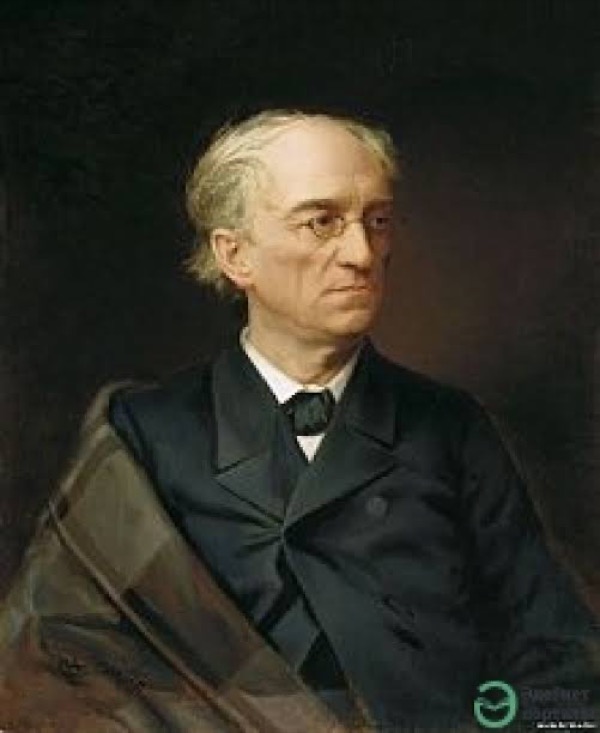
Fyodor Tyutchev
Night wind, night wind, why do you howl?
Whom do you mourn in such a panic?…
What does your strange voice mean; and how
Are you so dull and pleading, then volcanic?
In language that the heart knows well
You keep insisting on some mystic sorrow,
You wail and cry and drain the well,
Until your heart explodes, engulfed in horror!…
Sing not the fearful songs of old
About the ancient chaos, or the one before you!
The soul at night is its own world;
The soul is hungry for its favourite stories!
It bursts like flames from mortal chests
And wants to join itself with what’s eternal!…
Don’t howl, don’t wake, just let them rest!—
Beneath them, chaos waits its nocturnal turn!…
(Translated by Alex Gruzenberg)
Finding Order in Chaos
Nicolai Medtner
Medtner translates this poem into a monumental sonata of mind-boggling complexity. This single-movement work lasts roughly 35 minutes, and it seems organised by chaos itself. Spiritual resistance and the attempt to find peace and harmony are all contained within the music, but we don’t find victory in the end.
Medtner’s musical motto is present from the very beginning. It’s a triplet figure containing a descending minor third. It opens the sonata and recurs throughout, providing a unifying device that evokes foreboding and fate.
The motto triplets quickly become the backdrop to a sorrowful melody in the introduction, and the sonata proper unfolds in a rigorous Classical sonata form, with the unusual time signature of 15/8. The motto triplets demarcate the traditional sonata-form sections, and after a double barline, the second half develops contrapuntally from the first.
Destiny Written in Music
All the motifs originate in the opening triplet figure, and everything in this motivic, cyclic double sonata has a purpose. As Ateş Orga writes in 2022, “Medtner advances through natural selection and cogent development. He pursues, remembers, focuses on different features of a thought or idea, at first distantly, then more closely with greater energy. The past becomes like yesterday.”
The work is dedicated to Sergei Rachmaninoff, and when the composer premiered it in early 1912, Rachmaninoff was simply astounded and applauded “until the lights were extinguished.” Despite its dedication, Rachmaninoff never took “Night Wind” into his repertoire.
Kaikhosru Sorabji called it “the greatest piano sonata of modern times,” and it remains one of the most enigmatic works in the piano literature. For Medtner, however, “every theme has a destiny… and inspiration comes, where thought is saturated in emotion, and emotion is imbued with sense.”
For more of the best in classical music, sign up for our E-Newsletter