
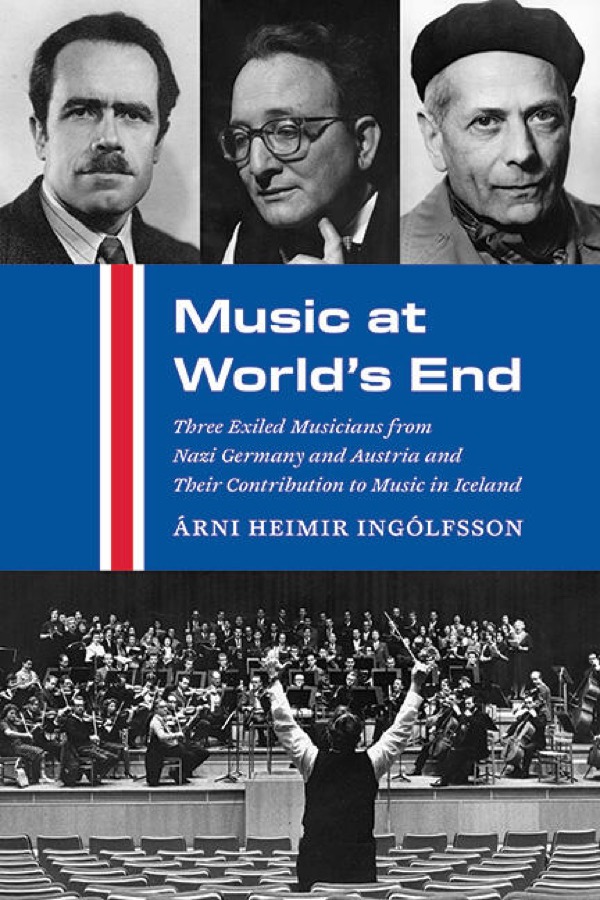
Music at World’s End by Árni Heimir Ingólfsson (book cover)
Iceland’s music scene is thriving with such outstanding Icelandic artists as pianist Vikingur Ólafsson, who has appeared worldwide. Pianist Ólafsson sings on the instrument.

Víkingur Ólafsson
https://www.vikingurolafsson.com/videos
Composers Jón Leifs, Haflidi Hallgrimsson, Anna Thorvaldsdottir and others are making their mark in Iceland and elsewhere. The latter’s cello concerto was recently performed in Iceland with the German cellist Johannes Moser.
But the Icelandic classical music scene is just out of its infancy. In fact, author, scholar, lecturer, and pianist Árni Heimir Ingólfsson maintains in his new book Music at World’s End,
“Iceland has one of the shortest Western classical music traditions of any European country. This remote island in the North Atlantic, settled by Norwegians in the ninth century CE, has long prided itself on its literary heritage, however its musical culture was far more humble. The first performance in Iceland by a full symphony orchestra took place as late as 1926 when the visiting Hamburg Philharmonic gave a momentous series of concerts in the nation’s capital, Reykjavik.”
With a very strong tradition of choral singing, folklore shapes the music of Iceland. The distinctive choruses that often sing a cappella, resound with the unique structure of parallel fifths. Listen to this remarkable chorus of Jón Leifs from his Elegies Op. 35.
Jón Leifs: Erfiljóð (Elegies), Op. 35: I. Söknuður (Grief)
Composer Anna Thorvaldsdottir continues the tradition into the present day with this lovely hymn.
Anna Thorvaldsdóttir: Heyr þú oss himnum á (Skylark Vocal Ensemble; Matthew Guard, cond.)
In the 1930s, Iceland began to test the waters of classical music at a time when Jewish musicians desperately fled Nazi Germany. Despite rigid and xenophobic immigration policies in Iceland, as in most countries of Europe, three musicians were allowed to settle in Iceland—in a country where “Jews were virtually unknown.” Ingólfsson delves into this forgotten history of Robert Abraham, Heinz Edelstein, and Victor Urbancic, carefully relating their remarkable escapes from the clutches of the Nazis, their groundbreaking contributions in Iceland, and ultimately their exclusion in a culture determined to uphold isolationism and nationalism in their hiring practices.
The author mentions several prominent musicians denied visas to Iceland, for example, Viktor Ullmann, an outstanding composer and pianist who studied with Arnold Schoenberg, and who perished at the hands of the Nazis—a loss to Icelandic culture and mankind. Certainly, we cannot know the contributions and discoveries that might have come from the many millions who perished during those horrendous years.
The three musicians whose history we learn about in Music at World’s End came from the major cultural centers in Central Europe: Victor Urbancic from Vienna, Austria, Róbert Abraham from Berlin, Germany, and Heinz Edelstein from Freiburg, Germany. When they arrived, it was not only to a “remarkably homogeneous country” but also to a dark, barren landscape and brutal climate.
“The conditions were extremely primitive, but at least they had something to do here and could clearly see they were making a difference. This was key in how they built a new identity for themselves in Iceland. They felt like pioneers, leading the music scene up the mountain, so to speak.”
Urbancic, Edelstein, and Abraham presented first performances of numerous classical masterpieces in Iceland, a country at that time with only 200,000 inhabitants. Symphonies, choral works, and solo and chamber music, such as works of Bach, Beethoven, and Stravinsky, had not been heard in Iceland and were played in makeshift venues. In fact, the artists often had to spend hours handwriting the sheet music parts or reworking segments when there was no one proficient on certain instruments. Each of the musicians was dedicated and active as teachers— privately in schools, with choruses, which they founded, and training orchestral musicians, in addition to conducting and performing.
“The Reykjavík Music School was only a few years old, still finding its footing in Hljómskálinn. The Reykjavík Orchestra was underdeveloped, a quasi-amateur chamber group, and choirs were scarce, primarily men’s choirs. They just built it up from scratch, rolled up their sleeves, and got started…Urbancic and Edelstein arrived with a contract in hand with the Reykjavík Music School. They had jobs waiting here and entered roles that were available to them. Róbert Abraham, on the other hand, had no such support, no job.”
Their freedom came at a price, depending on the country’s reception. Many Icelanders were reluctant to embrace outside influences, and these challenges were compounded by the ever-present risk that their visas might be revoked upon expiration.
“The exiles could also encounter hostility and distrust in a professional context since local musicians had diverse opinions on immigrants and the overall situation on the continent. The well-known Icelandic songwriter Jón Múli Árnason was a member of the men’s choir Kátir félgar (Gleeful Mates) recruited to perform with the Reykjavík Orchestra at Urbancic’s first large-scale concert in December 1938… Árnason recalls in his memoirs:
‘…a few nationalists declared that they weren’t eager to let refugees from the continent tell them what to do. It would be more apt, they said, to send them back home again…others in the choir balked at such talk and wanted nothing to do with such political nonsense…'”
But Urbancic, Edelstein, and Abraham approached their task with ambition and grit that soon won them many admirers.
The challenges they faced cannot be underestimated, with the language, a thorny one to learn, and the foods and surroundings so completely foreign to the families of these three artists.
Urbancic was an excellent pianist, composer, and conductor who championed new Icelandic music. Edelstein, a fine cellist, focused his attention on teaching music to children, making a huge impact at the Reykjavík Music School. Music education, he thought, “carried the fundamental potential of each human being.” Today, in a superb music program integrated into the school system throughout Iceland, children receive twice-weekly lessons, and a band is widely available.
Robert Abraham took the name Róbert Abraham Ottósson and adapted to his life in Iceland. He was a choral pioneer and became the leading scholar of early Icelandic liturgical music. He composed stunning arrangements of traditional Icelandic folk songs. Listen to this beautiful arrangement about 1:05’minutes into the following interview.
Today, the population of Iceland is still only 400,000 people, but the music and culture are flourishing in several genres. Some of you will be familiar with the well-known Icelandic singer, songwriter, composer, and multi-instrumentalist Jófríður Ákadóttir, known as JFDR. Here is one of her hits Spectator.
JFDR : Jófríður Ákadóttir Spectator
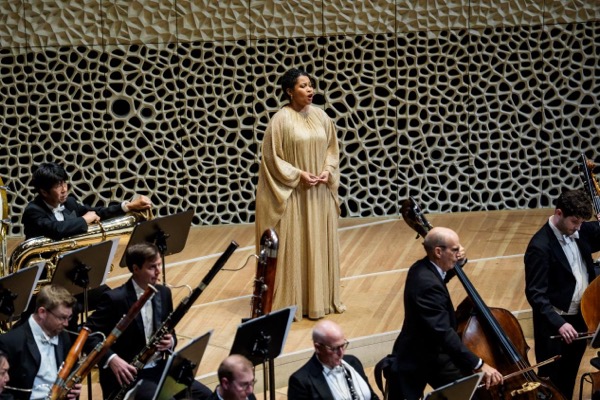
And in the classical sphere, especially with the recent appointment of conductor and singer Barbara Hannigan as chief conductor and artistic director of the Iceland Symphony Orchestra, classical music is also flourishing.
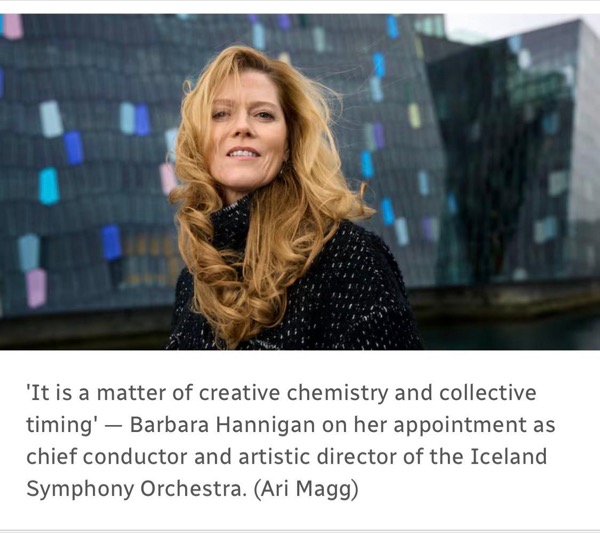
Barbara Hannigan
Hannigan, known for her stellar performances of avant-garde music, begins her tenure September 3rd, 2026, with Charles Ives From the Steeples and the Mountains; Hugi Guõmundsson Undark (world premiere), John Cage 4’33” (that’ll be interesting, I’m sure) and Gustav Mahler Symphony No. 1 in the striking Harpa Concert Hall in Reykjavik.
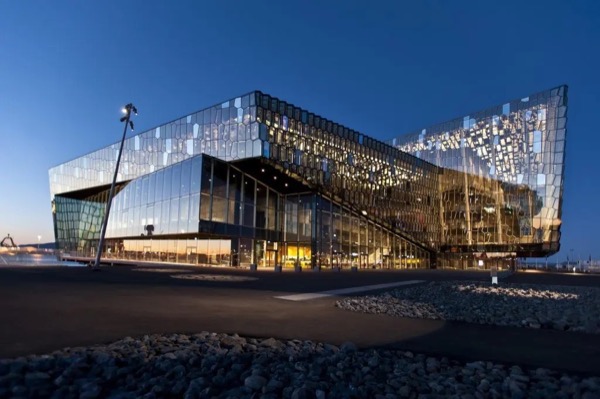
Harpa Concert Hall, Reykjavík
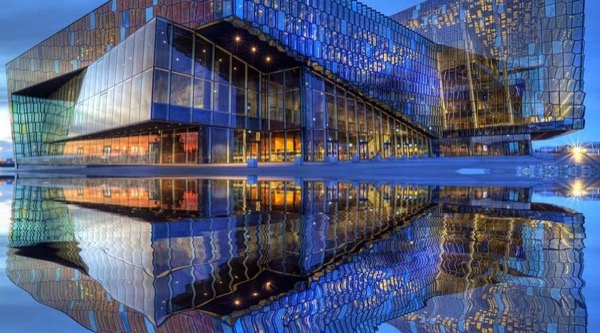
Harpa Concert Hall, Reykjavík
Árni Heimir Ingólfsson has written a fascinating, thorough, and impeccably researched account of the overlooked development of classical music in Iceland, the immeasurable influence of Robert Abraham, Heinz Edelstein, and Victor Urbancic, and lessons learned with regard to the effects of isolationism. Ingólfsson sums it up:
“I feel that it tells an important story that resonates strongly with the world we live in today.”
For more of the best in classical music, sign up for our E-Newsletter





Iceland’s vibrant new music scene, from Jon Leifs to Anna Thorvaldsdottir, is a remarkable achievement for such a small nation.