What was a 20-year-old Brahms like? Why was Liszt fascinated by the hell? Kirill Gerstein’s recitals illuminate the early 1850s, when the two met, and their creations fuelled the debates over absolute versus programmatic music. Being the busiest pianist on the planet, Kirill Gerstein zoomed in from the bright, sunny Santa Fe Festival. In the contrasting night of the China time zone, I asked him about his programs, including Brahms’s early Scherzo and Sonata, Liszt’s Sonetti del Petrarca and Dante Sonata, among others.
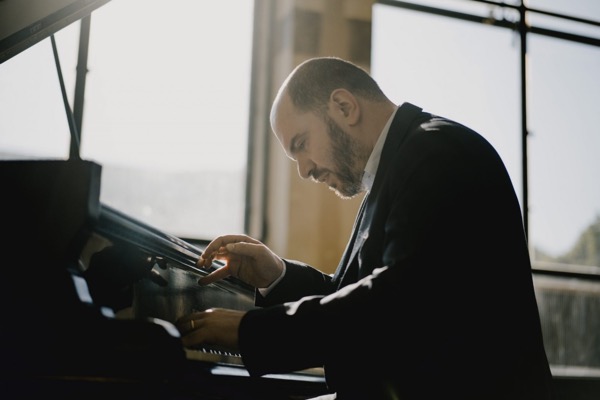
Kirill Gerstein (Photo by Marc Borggreve)
Liszt originally set 3 Sonetti del Petrarca as lieder, later adapting them into pure piano pieces. How did he convey emotions and words through musical elements?
Liszt made many transcriptions, most notably of Schubert and Beethoven. In the case of the sonnets, Liszt’s approach was fascinating. These were not simply direct transcriptions of the piano accompaniment and vocal line. Instead, Liszt reimagines them as a solo work.
Alongside Chopin, Liszt helped develop the idea of the piano imitating the human voice, an ensemble, or even an entire orchestra. He also explored the piano’s resonance in unprecedented ways. This creates what might be called a beautiful, three-dimensional, Lisztian resonance.
Franz Liszt: 12 Études d’exécution transcendante, S139/R2b: No. 12 in B-Flat Minor, “Chasse-neige” (Kirill Gerstein, piano)
This is particularly evident in the sonnets, where the piano’s extraordinary range of colour, texture, and resonance plays a crucial role in transmitting strong emotions. Liszt was not only poetic but visionary. I like to quote this phrase by the great Italian pianist, Ferruccio Busoni, who said that Liszt is the tree, and we are all branches of this tree. We all descend from Liszt.
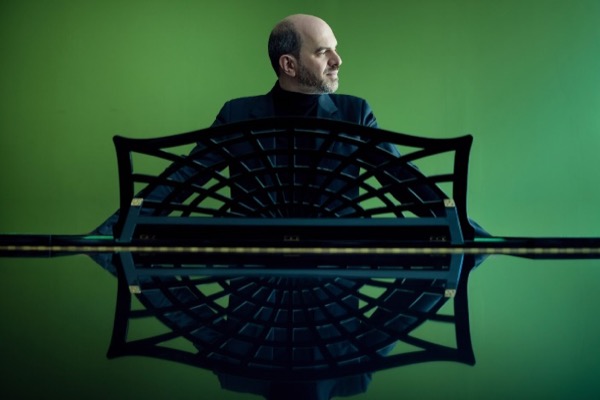
Kirill Gerstein (Photo by Marc Borggreve)
Your China recitals include Liszt’s Sonata in B minor and Après une lecture du Dante. Why was Liszt so fascinated by the journeys through hell?
First of all, the struggle between good and evil is an eternal theme in both humanity and art. But in the 19th century, particularly during the Romantic era, there was a renewed focus on emotionality and subjectivity, more personal ideas of paradise and hell.
The great living composer Thomas Adès once said that all 19th-century composers visited hell, from Berlioz to Mahler, but Liszt was the one who comfortably resided there. Liszt was remarkably at ease in these dark, almost devilish realms.
Thomas Adès: The Exterminating Angel: Berceuse (version for piano) (Kirill Gerstein, piano)
In both sonatas, Liszt combined the Beethovenian tradition with a new spiritual dimension—the contrasts between light and darkness, tension and release, good and evil. These opposing forces give the music a powerful sense of drama.
The Dante Sonata, with its Fantasia quasi Sonata designation, also paid homage to Beethoven’s so-called “Moonlight” Sonata quasi una fantasia—not through direct quotation, but through the interplay between the improvisatory, fantastical element and a highly structured form.
Claudio Arrau plays Liszt’s Dante Sonata
Claudio Arrau was very prescient when he called Liszt’s Sonata in B minor the “33rd Beethoven Sonata.” Beethoven was constantly reinventing the sonata form, especially in his late works. Op. 109 used variations, Op. 110 was a fugue, and Op. 111 contrasted a turbulent first movement with a deeply spiritual second movement.
Liszt’s Sonata in B minor took the next logical step. He reduced the traditional multi-movement sonata to one massive, uninterrupted movement. Yet, within it, we can still hear the functions and characters of the first, second, third, and fourth movements. In this sense, Liszt both extended Beethoven’s tradition and transformed it into something entirely new.
Franz Liszt: Piano Sonata in B Minor, S178/R21: Finale (Kirill Gerstein, piano)
Why did Brahms’ Sonata No.3 in F minor assume an unusual five-movement structure?
After Beethoven, it seems all composers were somehow daunted and influenced by this great figure. Brahms’ Sonata No.3 in F minor was essentially a piano work of symphonic proportions—another homage to Beethoven—in the structure of a first movement, a lyrical second, a scherzo in the form of a wild waltz, and a rondo-like finale.
What made it a five-movement sonata was the brief addition of Rückblick, or “look back,” inserted between the scherzo and finale. It recalled the romantic theme of the second movement, but in a darker, more desolate form, almost like a tragic recollection of lost love, accompanied by fatalistic timpani-like figures. This was a very romantic device, possibly inspired by Schumann, who was also whimsical about form and fantasy.
Johannes Brahms: Piano Quintet in F Minor, Op. 34: I. Allegro non troppo (Kirill Gerstein, piano; Hagen Quartet)
Brahms also titled Rückblick “Intermezzo,” which reminded me of his late piano works.
Late Brahms is universally loved, and deservedly so. But his early works are wonderful too, especially the Scherzo, Op. 4, and the Sonata, Op. 5, which I am playing. What’s fascinating is hearing the young Brahms before he became so perfect—wild, exuberant, and perhaps a little unruly, but already extraordinarily talented and imaginative.
In 1853, when the young Brahms first met Liszt, he played his Scherzo, Op. 4. On that occasion, he would also have heard Liszt’s newly completed Sonata in B minor, as well as the Petrarch Sonnets. These works were written within just a few years of each other, offering a fascinating glimpse of the early 1850s.
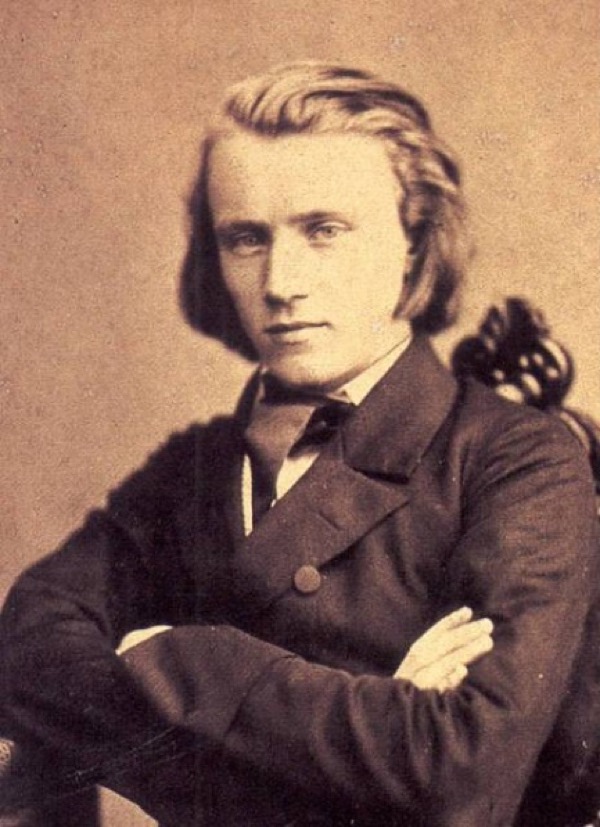
Photos of Brahms in 1853 and Liszt in 1858 (From Wikipedia open source)
This early period informs how we should hear Brahms’s late works. They weren’t written by someone who was always quiet and melancholic, but by a composer who began as a wild, romantic, and surprising young man. The same is true of the concertos: Brahms’s First Piano Concerto was written not by the older, slow man we often imagine with a big stomach, but by a young, vibrant virtuoso.
Kirill Gerstein demonstrates Brahms’s Piano Concerto No. 1
Is it whimsical to insert Brett Dean’s Hommage à Brahms: II. Hafenkneipenmusik?
It’s both natural and productive to place recent and older music side by side. We shouldn’t treat contemporary music as a separate category, but allow Brahms to feel as immediate as if it were written a few months ago, and perhaps a Brett Dean piece feels old. It’s a bit like a gallery where Rembrandt and Velázquez hang alongside Picasso and Dalí. The juxtaposition makes us hear what changes through history, and what remains universal.
That’s something I think about a lot in programming. If we believe classical music is a living art, we shouldn’t stop at music written a hundred years ago, nor isolate contemporary music in “new music” concerts. We should mix and juxtapose works from different periods. Let them talk to each other. Let them influence the listener’s ear.
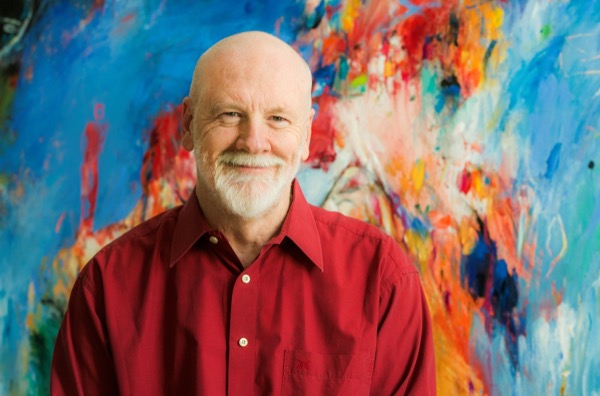
Brett Dean (Photo by Bettina Stöß)
What do your selections reveal about programmatic and absolute music?
With Liszt’s programmatic approach, Dante provided a direct reference, while Petrarch served as a source of inspiration. Brahms mostly advocated for absolute music, but not without quotations. The second movement of his Sonata No. 3 in F minor featured a poetic quote about two hearts intertwined, a romantic and programmatic element.
In the 19th century, there was a heated debate over whether music should be inspired by itself or by ideas outside music. Liszt and Brahms came to represent different sides, even if their supporters were more invested in the conflict than the composers themselves. Today, roughly 175 years later, the distinction seems far less clear-cut or incompatible. There is plenty of abstraction in Liszt, and still plenty of poetic underpinnings in Brahms.
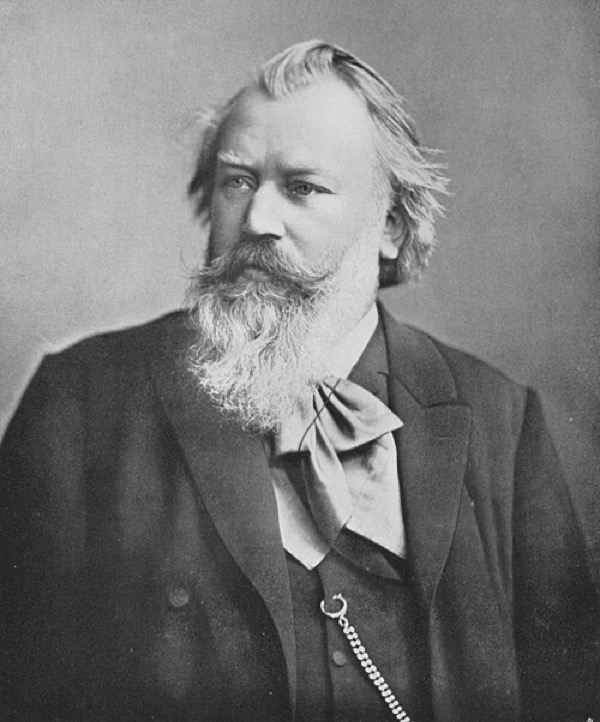
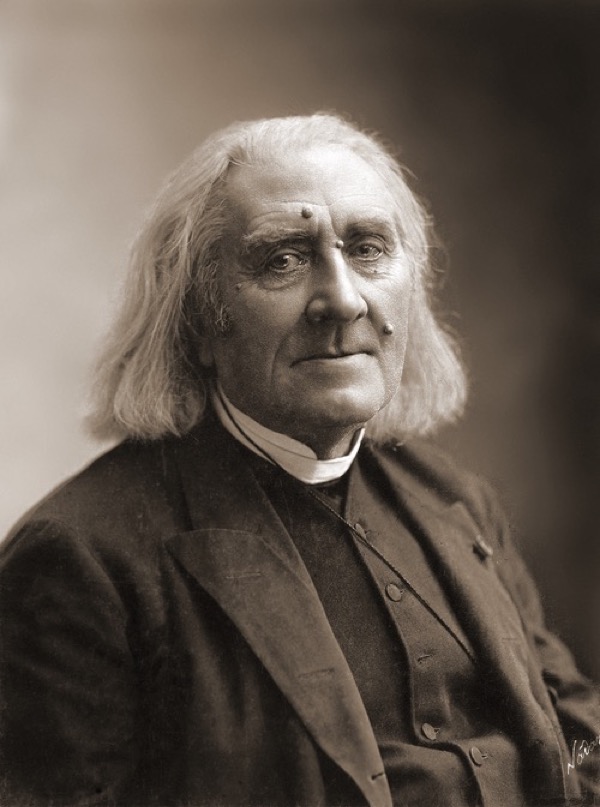
Photos of Brahms in 1889 and Liszt in 1886 (From Wikipedia open source)
In your masterclasses, I often find you speak poetically to students. As a musician, what is your relationship with literature?
Music and literature allow us to enter the thoughts and emotional worlds of talented, inspiring people who are often very different from ourselves. That’s quite magical, because how else can you experience somebody’s inner world than through art? As listeners, consumers, or practitioners, art allows us to go to places virtually and experience things with our mind and body that we couldn’t otherwise.
You have covered for other pianists in last-minute cancellations (András Schiff, Igor Levit, etc). How do you prepare yourself in such situations?
It’s always nice to see someone step in at short notice. Although the concert world is usually planned years in advance, it’s refreshing to know that great performances can also come together in a day. Every musician has a personal repertoire that they can perform immediately, while other works may need more time.
For young musicians, the advice is to stay generally prepared and keep both the mind and hands in shape, rather than focusing on only a few pieces for months and having nothing else ready. It’s a different way of thinking about what preparation truly means.
Kirill Gerstein and András Schiff play Busoni’s Fantasia Contrappuntistica.
There are videos on your Instagram account where you play four-hand piano with conductors such as Simon Rattle and Iván Fischer.
It’s always fun and festive when I don’t have to play the encore alone, but can share the piano with a conductor. Recently, Karina Canellakis, who was conducting the National Youth Orchestra of the United States of America (NYO-USA), joined the orchestra and played the second movement of Ravel’s Violin Sonata on the violin. It’s enjoyable for both us and the audience to see conductors and soloists making music together in a different way.
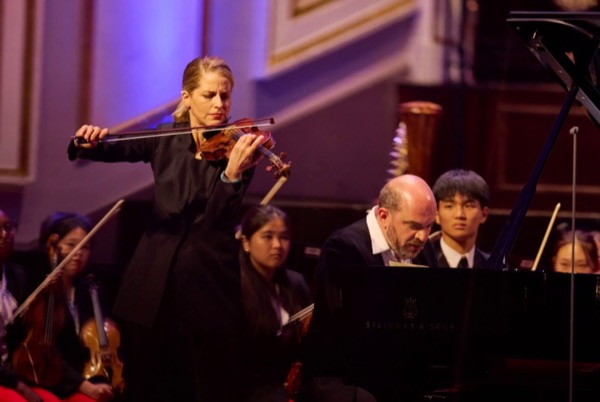
Karina Canellakis and Kirill Gerstein at the Edinburgh concert (Photo by Jess Shurte)
Recently, you also performed at the Verbier Festival.
I first came to the festival in 2000 as a student at the Academy, and I’ve watched it grow, develop, and expand over the years. This year, the Verbier Festival Orchestra, with its young musicians, was especially inspiring—their quality, enthusiasm, and openness were remarkable. Besides, it’s rare to have so many musician friends gathered in one place. In that sense, it really is a festival, because of its festive mood of coming together and sharing music.
Kirill Gerstein and Sir Simon Rattle perform Dvořák’s Slavonic Dances
Lastly, can you share any memorable encounters with audiences?
I would say each performance is a unique encounter between me, the instrument, and the audience on that day—whether in a small hall or a place like Carnegie Hall. Applause is always wonderful, but what I find truly magical is a deep, attentive silence. Recently at the BBC Proms in London, I played to more than 5,000 people at the Royal Albert Hall, and in the quiet moments, thousands of listeners remained completely silent and focused. That kind of connection between the audience, the music, and the performer is incredibly special.
Music is beautifully free—no one can dictate how we should perceive or enjoy it. Each person experiences it individually, yet we share the moment. When thousands of people listen attentively in the same space, a unique energy and connection emerge. That collective experience of live music cannot be replaced or replicated digitally; there is something truly special about gathering and listening together.
For more of the best in classical music, sign up for our E-Newsletter
Here’s Kirill Gerstein’s calendar: https://kirillgerstein.com/calendar/