Italian pianist Francesca Gemmo’s latest album, Janáček, Schoenberg: An Imaginary Conversation, brings together two composers whose musical languages developed along very different paths. The idea for the album emerged during the pandemic, after a period in which Gemmo devoted much of her time to improvisation and to studying and recording the music of John Cage. These experiences had taken her away from the traditional European approach to composition and musical notation in which she had been trained. At a certain point, however, she felt the need to return to studying musical thought and the compositional process more deeply. She revisited Schoenberg’s theoretical writings, including The Musical Idea and Structural Functions of Harmony, while also returning to the piano and exploring classical repertoire by composers whose music she felt particularly close to, including Janáček.
Janáček: Sonata 1.X.1905, I. Presentiment
“I simply wanted to study the piano again,” she explains. These two parallel interests eventually led to the idea of bringing the composers together in one recording.
Although Janáček and Schoenberg might initially seem like an unlikely pairing, Gemmo hears interesting connections in their musical development. Both began with works influenced by earlier composers: Brahms in Schoenberg’s case, and echoes of Dvořák and Tchaikovsky in Janáček’s early works, alongside elements of folk music that the composer reworks and recomposes in his own distinctive way. Occasional reminiscences of Mendelssohn also appear in his Variations. Their early compositions show links to sonata form, although Schoenberg’s Drei Klavierstücke, Op. 11, has a more subtle relationship with the traditional structure.
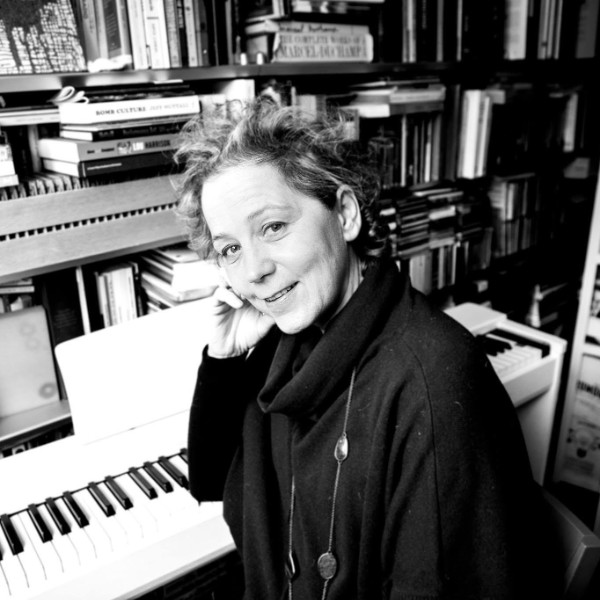
Francesca Gemmo © Luisa Mizzoni
Gemmo is particularly interested in how both composers gradually developed highly individual approaches to piano writing. “In the more mature works considered here, particularly Schoenberg’s Drei Klavierstücke, Op. 11, and Janáček’s Sonata, both composers achieve an exceptionally high level of expressive tension, although through profoundly different musical means. In Schoenberg, this tension emerges through an atonal (dissonant) language, characterized by fragmentation of the musical discourse and strong contrasts. In Janáček, by contrast, it arises from a highly individual treatment of tonal language, intensely dramatized through the insistent and obsessive repetition of certain musical elements.”
Their expressive languages nevertheless retain distinctly different characteristics. In Janáček’s music, melody and rhythm play a fundamental role, tending toward lyricism and often taking on a song-like, narrative quality. Gemmo describes it as more “figurative,” borrowing a term from painting. Schoenberg’s music, on the other hand, appears more enigmatic and mysterious, less immediately accessible to the listener and, continuing the analogy with painting, more inclined towards abstraction.
Another connection lies in what Gemmo describes as their almost “anti-pianistic” writing. This does not mean the works were conceived for another instrument, but rather that their musical ideas sometimes take priority over the physical comfort of the performer. “The difficulty, which inevitably creates a certain tension, can itself become an additional expressive element,” she says.
Preparing the repertoire brought her face-to-face with different kinds of challenges. In Schoenberg’s Fragments and Klavierstücke from 1894, she encountered passages in which the interplay of contrapuntal voices proves particularly awkward from a pianistic standpoint, especially when several independent lines unfold within the same hand. This sometimes results in writing that feels unnatural under the fingers, making performance particularly demanding. She nevertheless considers these characteristics understandable, given that the pieces date from the composer’s formative years.
Schoenberg’s Op. 11 presents a different challenge. The writing includes dense textures, widely spaced chords, large stretches, and technically demanding passages. The fragmented nature of the musical discourse makes the physical relationship with the keyboard even more difficult. The challenge is not just to overcome the technical difficulties, but also to bring out the relationship between the musical ideas. Janáček is perhaps somewhat less demanding technically, but his writing is not without difficulties. Gemmo points to technical challenges in some sections of the Variations and Sonata. As she puts it, “With Janáček and Schoenberg, these moments of pure pianistic pleasure are rather rare: there’s always something awkward lurking around the corner!” Despite these challenges, she approaches the score objectively, letting each composer’s personality and musical thinking come through.
The recording also gave her the opportunity to explore works she had not studied during her younger years. Although she had previously studied Janáček’s In the Mists, the other recorded compositions were new to her. Approaching them as a mature musician, with an established musical background and artistic experience, offered a different perspective. She describes the preparation as gradual rather than marked by unexpected discoveries.
For listeners unfamiliar with the composers, she suggests paying attention to how their musical languages evolve. Beginning with works still rooted in traditional models, listeners can follow the gradual emergence of two very different but equally distinctive musical personalities.
The album is also a tribute to the classical piano repertoire and the traditional approach to the instrument that began Gemmo’s musical journey. “I wanted to leave a record of my work as a classical pianist, pure and simple,” she explains.
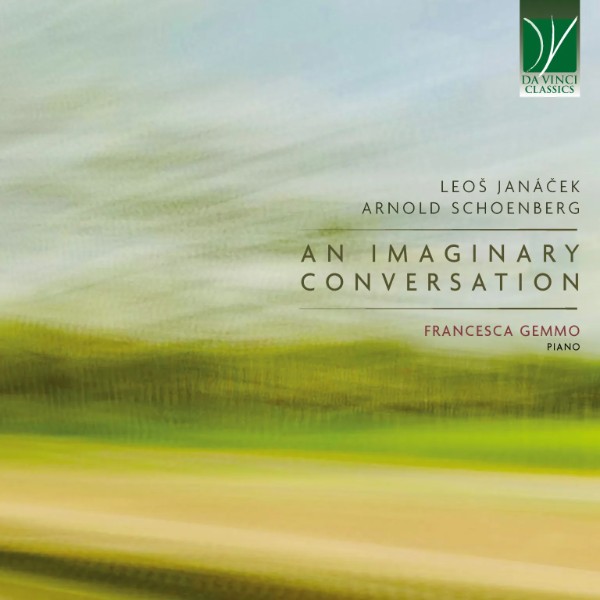
Janáček, Schoenberg: An Imaginary Conversation
Performed by pianist Francesca Gemmo
Released by Da Vinci Classics
Release date: September 25, 2026
For more of the best in classical music, sign up for our E-Newsletter