Rising young American pianist George Xiaoyuan Fu releases his third album, Solitude with Schubert, in the form of an evening of Franz Schubert (1797–1828). Just as in Schubert’s time, when the eponymous ‘Schubertiade’ hosted by the composer for his friends was an evening of piano music and song, Fu has created a similar collection on his debut Schubert album.
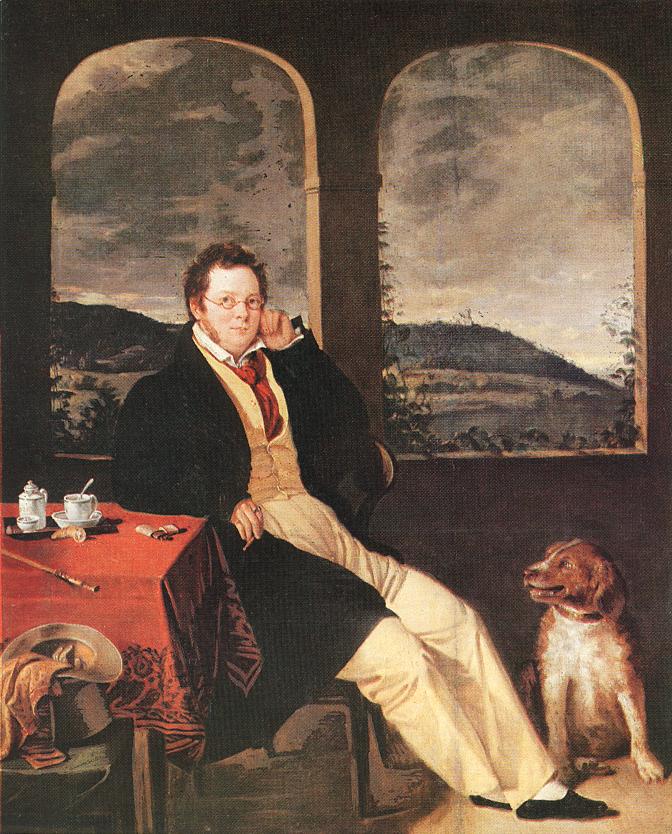
Gábor Melegh: Franz Schubert, 1827 (Budapest: Hungarian National Gallery)

George Xiaoyuan Fu (Photo by Raphael Neal)
The project began during COVID when Fu was drawn to Schubert’s late works, filled with the anxieties of the composer’s final year. Following the death of his father, Fu connected with a bereavement group in London and created a recital for them based on Schubert’s last works, and this album is the result of that recital. Fu found the switches between music filled with ‘bleakness and despair, which is bewilderingly followed by sunniness and hope’, and its juxtaposition of light and dark, to be something he was feeling in his own life.
Fu opens and closes the album with two short pieces, the Allegretto in C minor, D. 915, and the Hungarian Melody, D. 817, that bookend the entire collection. What Fu regards as Schubert’s most ‘Beethovenian essay’, the Piano Sonata No. 19 in C minor, D. 958, forms the core of the recording. Fu notes the work’s structure, key, and thematic elements can be traced to two works by Beethoven: 32 Variations in c minor, WoO 80, and the Pathétique Sonata, Op. 13, Schubert adds his own unique sound to the final movement, which the pianist declares gives anyone a workout similar to the demands of Erlkönig.
Franz Schubert: Piano Sonata No. 19 in C minor, D. 958 – IV. Allegro
No Schubert evening would be complete without a song. Schubert had the baritone Johann Michael Vogl (1768–1840) as his close collaborator. Fu brings Australian mezzo-soprano Lotte Betts-Dean to perform 2 songs (Liebesbotschaft and Die Taubenpost) from Schubert’s final printed collection, Schwanengesang, D. 957, and a six-verse song, Einsamkeit (Solitude), D. 620. The latter song was set to a text by Johann Baptist Mayrhofer (1787–1836). Each verse takes us through the life of a young man, with each new phase asking for a new action: ‘Give me my fill of solitude’, ‘Give me my fill of action’, ‘Give me the pleasure of company!’, ‘Give me my fill of bliss’, ‘Give me my fill of gloom’, and at the end of his life, ‘Give me the consecration of solitude.’ Fu sees it as a parallel with Beethoven’s An die ferne geliebte, Op. 98, which came out two years before Schubert’s work.

Lotte Betts-Dean
Franz Schubert: Einsamkeit, D. 620 – VI. Gib mir die Weihe der Einsamkeit
Just like his hero Schubert, Fu moves seamlessly from soloist to accompanist and gives us an album that would make an evening of beauty in piano music and song.
The album is scheduled to be released on 10 July and on 13 July in conjunction with Fu’s recital at Wigmore Hall.
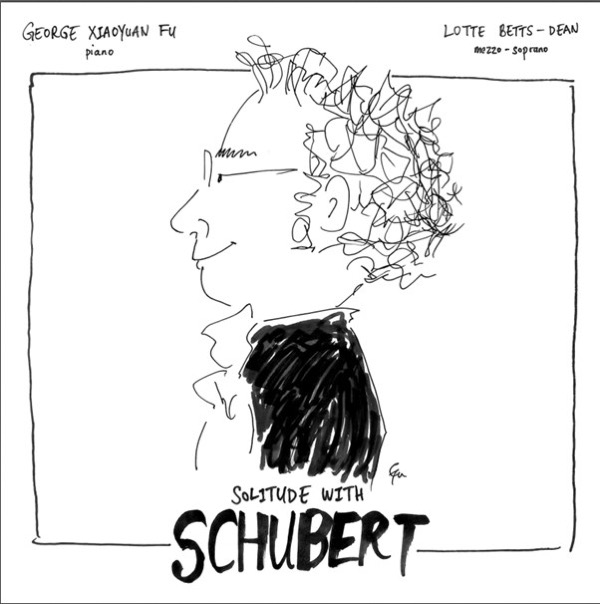
Schubert: Solitude with Schubert
George Xiaoyuan Fu, piano; Lotte Betts-Dean, mezzo-soprano
Platoon PLAT 31197
Release date: 10 July 2026
www.georgefupiano.com
Official Website
For more of the best in classical music, sign up for our E-Newsletter