Three new works, written between 2023 and 2024, by British-French-Israeli composer Nimrod Borenstein (b. 1969), are all on the same premise but with vastly different outcomes.

Nimrod Borenstein (photo by Sonia Fitoussi)
SOMM Recordings has just issued a recording with Borenstein’s Mandolin Concerto; five Shakespeare Songs for soprano and orchestra; and Légende, a concerto for oboe and orchestra. The composer leads the English Chamber Orchestra, with soloists Alon Sariel (mandolin), Sarah Fox (soprano), and Sanja Romić (oboe).
The question about concertos is always whether or not it’s the soloist and orchestra or the soloist versus the orchestra. In choosing his soloists as a mandolinist, a soprano, and an oboist, Borenstein is going back to some of the earliest instruments used in these positions.
We are more familiar with Vivaldi’s mandolin concertos than those by any other composer. Borenstein’s mandolin concerto moves us out of the Baroque and firmly into the modern era. The work was commissioned by the Stichting MusicaNostra and premiered by the present soloist, Alon Sariel, with the Thüringen Philharmoniker in December 2023.
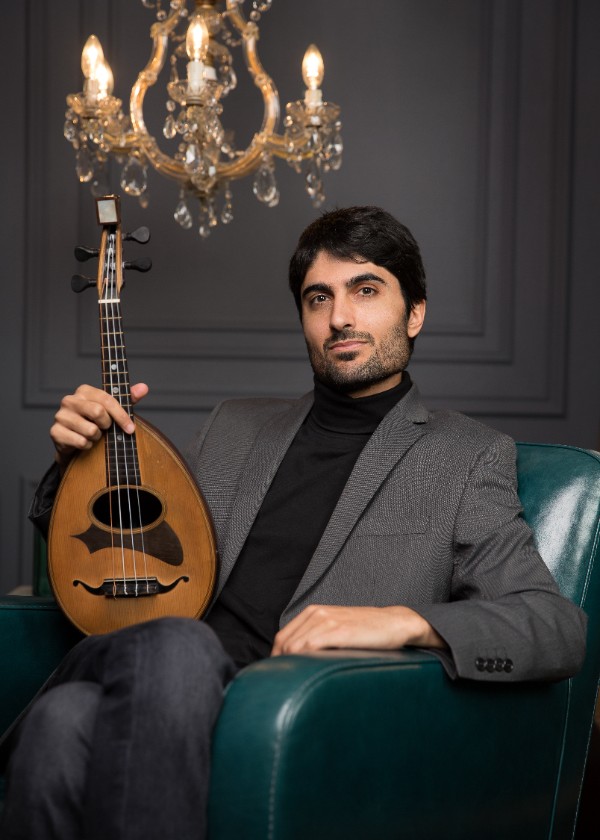
Alon Sariel (photo by Marc Rodenberg)
Borenstein takes our perception of the mandolin (delicate, quiet, soft) and makes it into the soloist it always was. Since the mandolin is strung with the same 4 strings as the violin, Borenstein looked to violin virtuosos such as Paganini for his technical and expressive tools. Dialogues between the mandolin and sections of the orchestra, or even between sections of the orchestra, give us a multi-faceted development of the work’s sound forces. Ricochet bowing and pizzicato have their place both in the string sections and for the soloist. Manic energy and calm beauty each have their place.
Borenstein describes the final movement of the mandolin concerto as ‘an evening with Mephistopheles’ where charm and danger each have their place. The mandolin duels with different sections of the orchestra, playfully with the strings and in conversation with the winds. The brass, however, helps the orchestra defeat this soloist upstart!
Nimrod Borenstein: Concerto for mandolin and orchestra, Op.97 – III. Allegro
The five movements of his Shakespeare Songs for soprano and orchestra, Op. 101 is a surprising work. Composed in 2024, the work received its premiere in March 2025, with Sarah Fox as soloist, with Borenstein leading the English Chamber Orchestra. The work is an update of an earlier work for voice and piano, Sonnets, Op. 83, written in 2019. This orchestral version keeps the same vocal part but isn’t a simple orchestral transcription of the piano part; it is a complete re-composition. And this is what makes the work so surprising: the orchestral part is full and realised. It has its own life, which often gives us something unexpected.
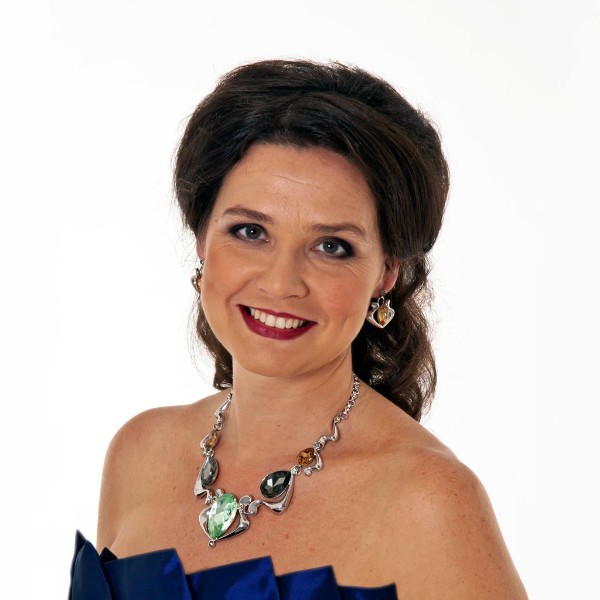
Sarah Fox
The love sonnet of ‘Shall I compare thee to a summer’s day?’ (Sonnet 18) It is given a dramatic setting that belies the poem’s often saccharine rendition in others’ hands. The poetry is full of contrasts, and the poet’s regard for his beloved shines through. Borenstein’s setting is nuanced and delicate, with the wind instruments, in particular, taking delicate and random paths of their own.
The other songs, ‘When my love swears that she is made of truth’ (Sonnet 138); ‘Love is…’ (‘Let me not to the marriage of true minds’, Sonnet 116);’ For thee, and for myself, no quiet find’ (‘Weary with toil, I haste me to my bed’, Sonnet 27); and ‘When in disgrace with fortune’ (Sonnet 29) takes us through false lovers, youths untutored in the art of love, the perfect love and marriage, attempts to sleep while the mind races, and how sweet memory can be more important than the wealth of kings. Shakespeare covered man’s hopes and disappointments, sitting on the side with more than a small air of complacency, and Borenstein uses the orchestra to give us the complex background inherent in the poetry.
The final work on the album is Légende, a two-movement concerto for oboe and orchestra. Written for the soloist Sanja Romić, with support from the French musical instrument maker Buffet Crampon, it had its premiere in Belgrade in March 2024. It was written to celebrate the 100th anniversary of the Belgrade Philharmonic.
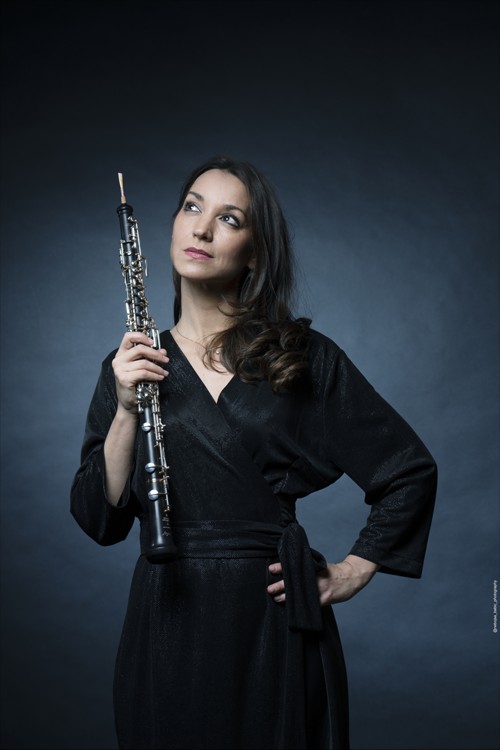
Sanja Romić
In Légende, Borenstein turns the classical three-movement concerto structure inside out, starting first with only two movements. It opens with a slow, introspective movement and closes with an exuberant Brio. The composer saw the first movement as a storyteller’s preparation for the telling of a great tale, ‘Let me tell you a story about a legend I once heard…’, hence the title, Légende.
The stage set, the second movement begins with a crash of timpani and orchestral chords. The oboe enters with a frantic story, and the movement shifts between energetic and contrasting sections in an A—B—A—C—A—D pattern. This allows Borenstein to use the non-A sections to explore emotion and texture, mood and drama.
Nimrod Borenstein: Légende – Concerto for oboe and orchestra, Op.99 – II. Allegro
As examples of the modern concerto, the mandolin and oboe concertos can serve as models for contemporary ideas about traditional concerto instruments. Borenstein’s change of the mandolin from its usual role of a soft and dreamy accompaniment to a leading soloist makes us reconsider this ancient instrument. The orchestral version of the Shakespeare Songs adds a depth beyond what a normal work for voice and piano can attain. The orchestra has its own opinions about the songs and adds background to what the voice may only be implying. The oboe concerto rethinks the oboe concerto from its very basics. We are especially fortunate in having each of the original creators of the work on this recording, from the composer to each of the soloists.
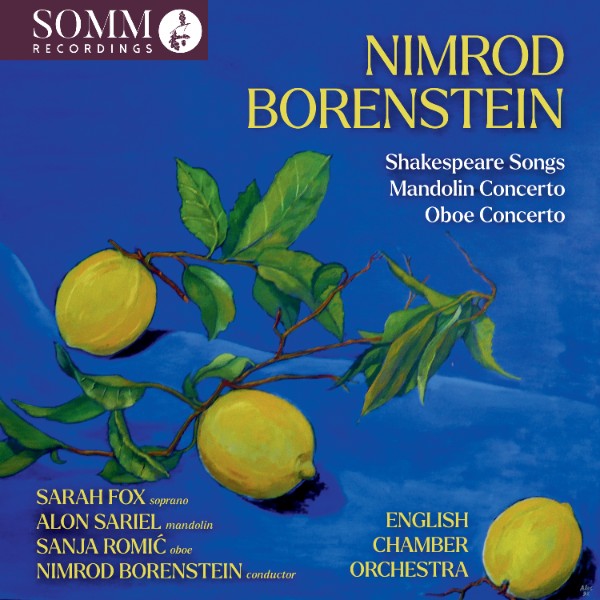
Nimrod Borenstein: Shakespeare Songs, Mandolin Concerto & Oboe Concerto
Alon Sariel (mandolin); Sarah Fox (soprano); Sanja Romić (oboe); English Chamber Orchestra; Nimrod Borenstein (conductor)
SOMM Recordings SOMMCD 0719
Official Website
For more of the best in classical music, sign up for our E-Newsletter