Chances are, Graz will not be your first stop in Austria. It lacks the monumental musical clichés of Vienna, the postcard saturation of Mozart‘s Salzburg, or the immediate dramatic peaks of Innsbruck’s snow-capped Alps. Yet, there is a reason why the surrounding province of Styria is the deeply cherished premier holiday escape for Austrians themselves. Graz does not perform for the casual tourist; it thrives for those who know where to look. Dawn over the Mur River reveals a city defined by an impossible equilibrium. To the outside world, it is a picturesque ensemble of red-tiled roofs and courtly echoes.
Nestled in the green heart of Austria, the city thrives where the rolling alpine foothills meet the sunny plains of Styria. This UNESCO World Heritage city beautifully balances centuries of imperial Habsburg history with a bold, forward-thinking creative energy, making it the perfect stage for an extraordinary artistic encounter.
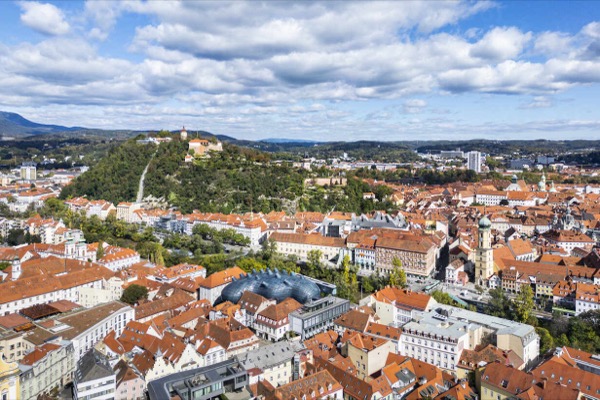
Aerial View of Graz (Credit: Westend61 / Amazing Aerial)
The Festival Context
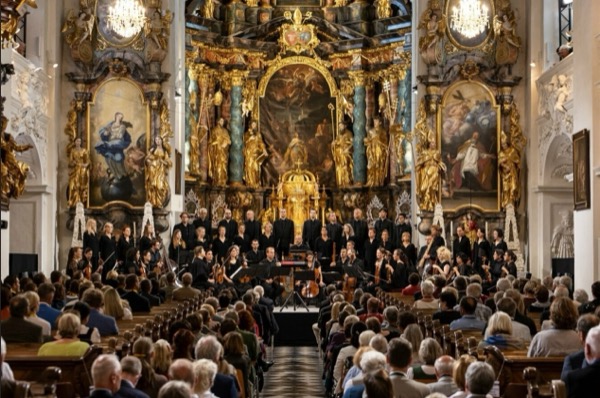
Running from late June to late July, the Styriarte Music Festival unfolds during the glorious height of the Styrian summer—a sun-drenched season when warm, balmy evenings are perfectly paired with fresh regional berries, crisp white wines, and the bustling energy of open-air markets. Founded in 1985, the festival was initially created to bring the legendary Austrian conductor Nikolaus Harnoncourt (1929-2016) closer to his home city, transforming the warm Styrian summer into an internationally acclaimed celebration of classical and early music.
Harnoncourt was a revolutionary force in classical music—one of the founding fathers of the Historically Informed Performance (HIP) movement who fundamentally changed how the world hears early music. Rejecting the polished, homogenised orchestral sound of the mid-20th century, his artistic philosophy was famously summed up in his belief that “music is not there to soothe, but to disturb us.” He founded Concentus Musicus Wien in 1953, pioneering the use of period instruments, raw gut-strings, and rhetorical phrasing to restore the dramatic value of Bach, Monteverdi, and Mozart. To Harnoncourt, music was a spoken language, an essential, almost primal human need.
What many do not realise is that this musical radical was also a son of the Austrian high aristocracy. Born Johann Nikolaus Graf de la Fontaine und d’Harnoncourt-Unverzagt, his mother, Countess Ladislaja von Meran, was the great-great-granddaughter of the beloved Archduke Johann of Austria. This noble lineage connected him directly to the sweeping estate of Schloss Stainz, just southwest of Graz, where his mother was born.
For Harnoncourt, bringing the avant-garde spirit of Styriarte to the Baroque parish church of Stainz was not just a clever programming choice—it was a literal homecoming. In 1989, he transformed this countryside sanctuary of his ancestors into a global epicentre of classical music.
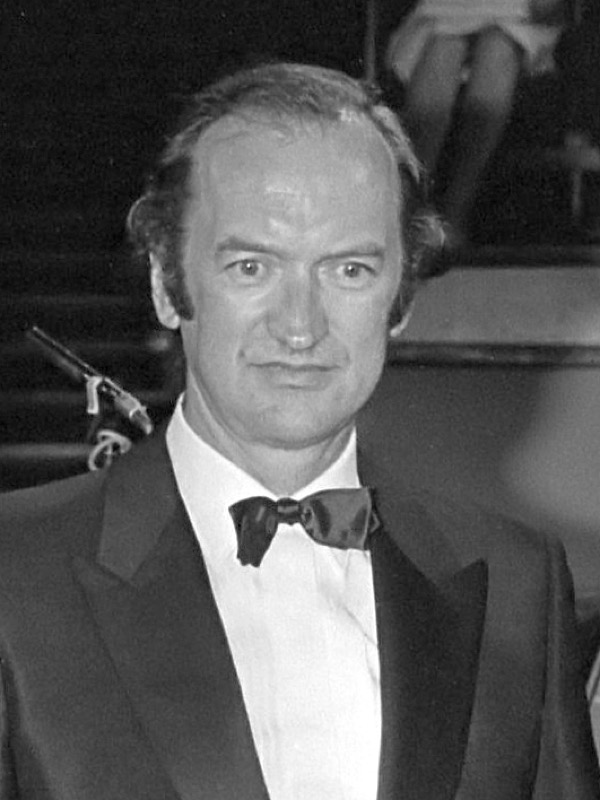
Nikolaus Harnoncourt (Credit: Marcel Antonisse / Anefo)
Over his towering career—which earned him a Grammy, the Kyoto Prize, and legendary status with the Vienna Philharmonic—Styriarte served as his personal artistic sanctuary. Here, free from commercial pressures, he could rehearse exhaustively, challenge conventions, and cultivate a deeply loyal community of musicians. Over the decades, his uncompromising legacy has kept the festival fiercely alive, growing it into an internationally acclaimed summer celebration of classical and early music that consistently fills around 90% of its seats.
The 2026 Festival Theme: Lichtspiele (Play of Light)
A core tradition of Styriarte is that each summer is anchored by a unifying, philosophical motto that challenges directors, musicians, and audiences to look at the repertoire through a singular thematic lens. Under the guidance of Artistic Director Mathis Huber, the festival maintains an almost ritualistic schedule: afternoons are for intimacy—such as chamber music, readings, and family-oriented adaptations—while evenings expand into grand orchestral statements, often accompanied by the legendary Klangwolke (Sound Cloud) broadcasting live to thousands across the province.
In 2026, the festival’s thematic spine is “Lichtspiele” (Play of Light). Over its month-long run (June 26 – July 26), the programming explores the sonic spectrum of light and dark—from the literal physics of illumination to the spiritual journey of the human soul seeking warmth in a fractured world.
The season opens inside the lavishly lit halls of Palais Attems with Einleuchten, an immersive musical trail where Vivaldi, Schubert, and even The Beatles are performed across beautifully illuminated Baroque rooms.
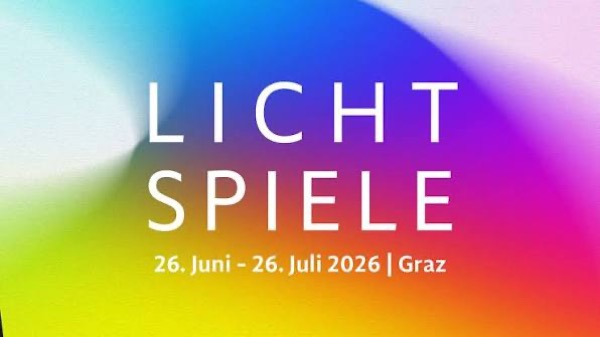
Styriarte Music Festival 2026 Poster
This sensory interplay of light and sound defines the festival’s most anticipated highlights:
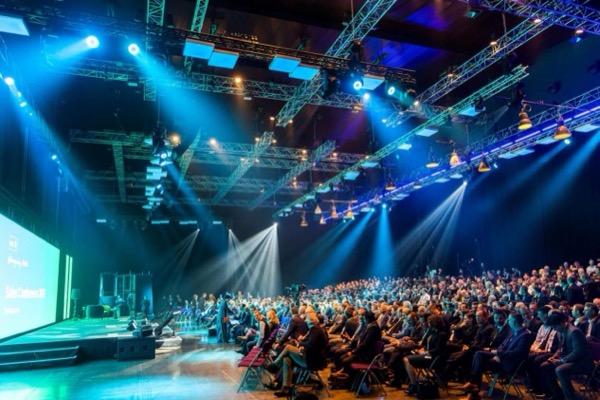
Haydn‘s The Creation (Die Schöpfung) at Helmut List Halle: Instead of the expected gold-leaf ceilings of an old-town cathedral, the festival’s most ambitious symphonic canvas unfolds in an unexpectedly modern, industrial landscape. Located in Graz’s evolving Smart City district, the Helmut List Halle sits beneath the futuristic gaze of the double-facade Science Tower, nestled among contemporary residential blocks with distinct, container-style architecture. The venue’s exhibition hall exterior belies a state-of-the-art concert space inside. Complete with tiered seating, it offers incredibly clean yet warm acoustics—and a rare luxury in the sweltering European summer: highly efficient climate control.
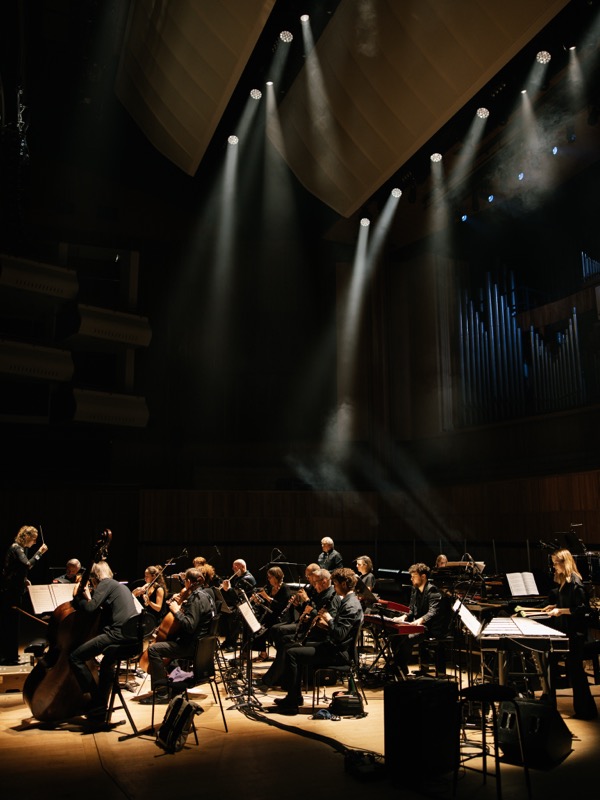
For Haydn’s The Creation, a work originally sparked by the scale of Handel‘s choruses at London’s Westminster Abbey, Styriarte leverages this high-tech industrial frame to stage a visually gripping multimedia drama. A massive rear screen serves as a dynamic scenic backdrop, subtly guiding the audience’s imagination with abstract digital projections of rolling seas, pristine pastures, and blooming flora. Most thoughtfully, during the depiction of humanity’s arrival, the screen presents Leonardo da Vinci‘s Vitruvian Man. The stage lighting itself becomes part of the orchestration: at the exact moment of genesis, blinding horizontal shafts of light pierce the auditorium, giving a dazzling, physical form to the iconic fortissimo burst on the word “Light.”
(Credit: photoworkers)
In the next episode, this festival guide will continue to offer a curated selection of festival activities, plus a short guide specifically tailored to help concertgoers enrich their experience before the late-afternoon/evening performances.
https://styriarte.com/en/festivals/styriarte
For more of the best in classical music, sign up for our E-Newsletter