The Eight Symphonies: More Than Just a Textbook
If you ever studied harmony, counterpoint, and orchestration at the university level, you will immediately recognise the name Walter Piston. I must confess that I was never a great fan of his textbooks, as they always seemed very dry and academic to me.
However, they are meticulously prepared, have been translated into countless languages, including Spanish, German, and Chinese, and have been widely used at universities worldwide. Essentially, his didactic publications reflect Piston’s teaching experiences as a professor of music at Harvard University, a position he held for more than four decades.
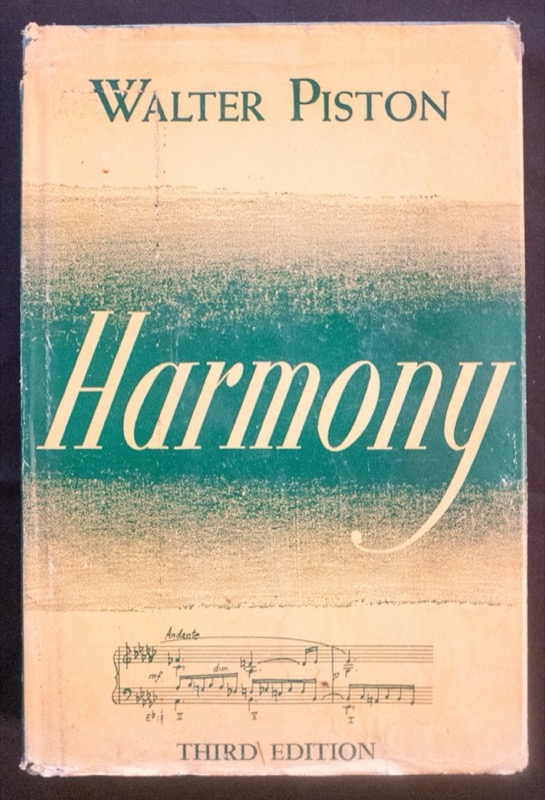
Walter Piston: Harmony
In light of his didactic fame, however, we tend to forget that Piston was also an accomplished and highly lauded composer. To commemorate the 50th anniversary of his death on 12 November 1976, I thought it might be fun to take a look at his eight symphonies. And don’t worry, I’ll try to make it entertaining by limiting the musical excerpts.
Walter Piston: Harmony, 5th Edition, Chapter 10 Exercises
From Navy Band to the Harvard Faculty
Walter Piston hailed from Rockland, Maine, and he studied engineering in high school while studying art at the Massachusetts Normal Art School between 1912 and 1916. He was essentially self-taught as a musician, earning money by playing the piano and violin in dance bands.
When the United States entered World War I, he learned to play the saxophone so that he could join the Navy band. He then joined Harvard as a special music student and graduated with honours in 1924.
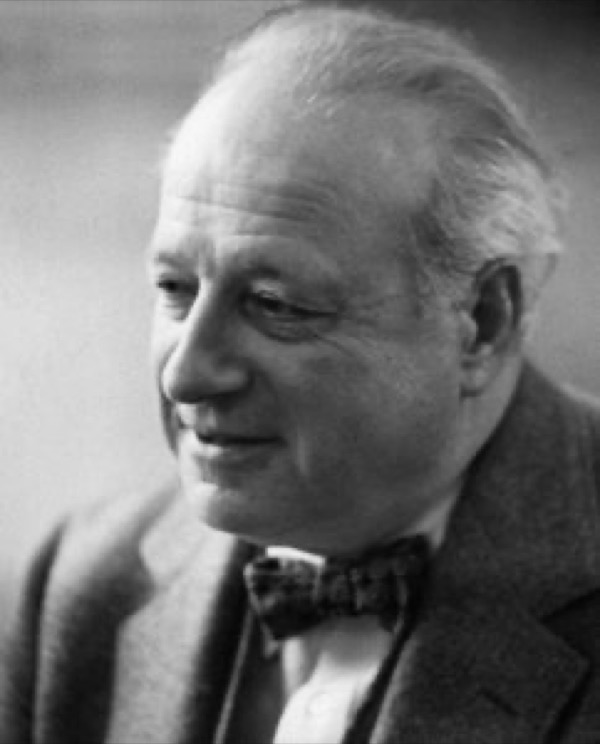
Walter Piston
He went on to pursue further studies in Paris with Paul Dukas, Nadia Boulanger, and George Enescu at the École Normale de Musique in the mid-1920s, and upon joining the music department at Harvard, he taught, among others, Elliott Carter, Irving Fine, Harold Shapiro, and Leonard Bernstein.
Walter Piston: Symphony No. 1, “Andantino-Allegro”
Finding His Voice
Piston’s work was championed by Serge Koussevitzky, conductor of the Boston Symphony Orchestra, and Aaron Copland brought him to national attention by declaring him “one of the most expert craftsmen American music can boast.”
But now, let’s get to the music. Piston completed his Symphony No. 1 in 1937, when he was already 43. It premiered on 8 April 1938 with the Boston Symphony Orchestra, conducted by the composer.
Well, you know that during the 1930s many composers experimented with the twelve-tone technique, and this symphony, according to Wikipedia, “incorporates this technique into a broader palette of compositional elements.”
So, if you listen to the featured first movement, you will hear an ostinato passage played in the pizzicato basses. This ostinato consists of nine of the twelve chromatic notes, and the remaining three appear in the theme above it. It’s all pretty sombre, but you might still hear a sense of tonality.
Walter Piston: Symphony No. 2: III. Allegro (Boston Symphony Orchestra; Michael Tilson Thomas, cond.)
Dance, Drama and Brass
Piston composed his Second Symphony in 1943, commissioned by a Columbia University fund. It premiered in Washington, D.C. on 5 March 1944 with the National Symphony Orchestra, conducted by Hans Kindler.
After that performance, Kindler sent Piston a note declaring that the symphony “sings forever in my heart and in my consciousness, and it does not want to leave me.” The work established Piston as an important American composer, but it fell into obscurity until Michael Tilson Thomas recorded it in 1970.
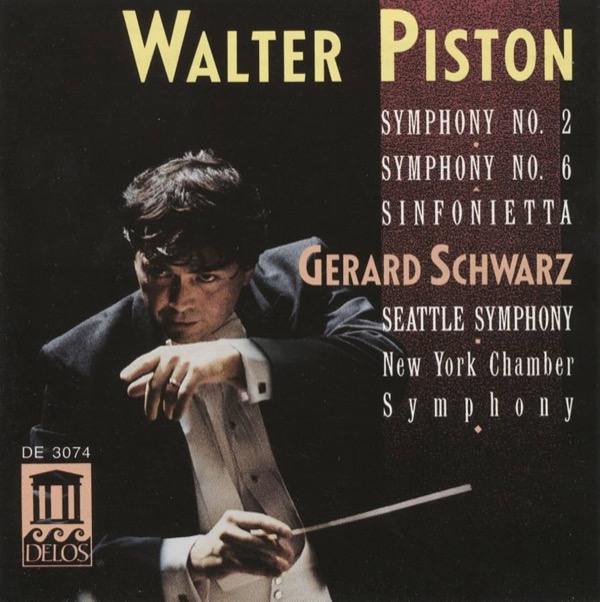
Walter Piston: Symphonies
I decided to feature the final “Allegro,” a really surging movement with lots of percussive accents and interjections from the brass. You can hear three basic themes: the first is almost dance-like, and another is nicely sung by English horn and clarinet. There is also a brassy, almost military tune, and all three reappear in this rondo-like movement.
Walter Piston: Symphony No. 3: III. Adagio (Harvard-Radcliffe Orchestra; James Yannatos, cond.)
Pulitzer Prize and a Beautiful Adagio
Walter Piston’s Symphony No. 3 is dedicated to the memory of Serge Koussevitzky’s wife, Natalie, and the Koussevitzky Music Foundation commissioned it. The work premiered in 1946, and Piston was awarded the 1948 Pulitzer Prize in Music Composition for it.
The music is organised into four movements, following a basic slow-fast-slow-fast framework. We also find no more 12-tone techniques, but instead encounter very classical and traditional key schemes.
As the structure and development unfold as expected, the harmony and instrumentation are unusual and modern in places. We certainly hear a wide range of expressive material, and the featured “Adagio” has a predominantly reflective character. Piston himself provided a very detailed programme note on this movement. Still, we might prefer to focus on the beautiful string melody in G major that forms the basis of the movement.
Walter Piston: Symphony No. 4: Ballando (Seattle Symphony Orchestra; Gerard Schwarz, cond.)
Urban Waltz Meets Country Fiddling
Walter Piston composed his Fourth Symphony in 1950, on a commission from the University of Minnesota to mark the centennial of the university’s foundation. Antal Doráti conducted the première with the Minneapolis Symphony Orchestra on 30 March 1951.
The composer himself described his Fourth Symphony as “melodic and expressive and perhaps nearer than my other works to the solution of the problem of balance between expression and formal design.” It almost sounds like something Brahms and Sibelius could have said, too.
I’ve decided to feature the “Ballando” movement from this symphony, because this Italian marking means dancing. It’s certainly the most entertaining movement of the symphony, as it constantly switches between metres. In a sense, Piston blends an urban waltz with the spirit of country fiddling. It’s not really a hoedown, but lots of fun nevertheless.
Walter Piston: Symphony No. 5: III. Allegro lieto (Louisville Orchestra; Robert S. Whitney, cond.)
Serialism with a Smile
As we have heard in Piston’s First Symphony, he began experimenting with Schoenberg’s twelve-tone technique during the 1930s. However, we have also heard that he never fully embraced serialism in his subsequent works.
Well, in his Symphony No. 5, composed in 1954, twelve-tone elements suddenly reappear, and the slow movement, for example, begins with a twelve-tone row. It’s a continuous variation movement, but for our listening excerpt, I have selected the concluding “Rondo.”
This movement seems full of joy and optimism, and it features two related episodes. The principal theme is in F major, and it is extensively developed each time it returns. The rhythmic drive is particularly strong, and there is a strong “American” flavour, produced by the spaciousness of the melodies and textures.
Walter Piston: Symphony No. 6: III. Adagio sereno (London Symphony Orchestra; Lance Friedel, cond.)
Beyond the Academic
To mark the Boston Symphony Orchestra’s 75th anniversary, Walter Piston composed Symphony No. 6 in 1955. This work is dedicated to the memory of Serge and Natalie Koussevitzky, and the BSO first performed it under Charles Munch. It is possibly the best known of his eight symphonies.
The composer writes, “While writing my Sixth Symphony, I came to realise that this was a rather special situation in that I was writing for one designated orchestra, one that I had grown up with, and that I knew intimately. Each note set down sounded in the mind with extraordinary clarity, as though played immediately by those who were to perform the work.”
For this work, I have selected the “Adagio sereno,” because it shows that Piston was not merely an academic composer. Just listen to the chant-like theme played softly by the low strings, emerging from a sonic carpet. And then we hear a beautiful, arcing melody in the solo cello. The music builds to a passionate climax, then unfolds and quietly ends with great emotional depth.
Walter Piston: Symphony No. 7: II. Adagio pastorale (Louisville Orchestra; Jorge Mester, cond.)
A Symphony Without a Story
Walter Piston received another Pulitzer Prize in 1961 for his Seventh Symphony, which Eugene Ormandy premiered on 10 February 1961. In his original programme notes, Piston went to great lengths to explain that this symphony had no descriptive or programmatic intentions.
Well, we can say that this symphony unfolds in three movements, and Piston took into account the particular sonic character of the Philadelphia Orchestra’s rich string timbres, as well as the acoustics of the Philadelphia Academy of Music.
I rather like the “Adagio pastorale,” as it builds a pastoral atmosphere through instrumental dialogue. The composer dryly wrote, “The second movement consists of a principal melody played by the oboe followed by four variations and a coda.” I guess we have to say that this movement doesn’t give us a specific landscape or narrative, but it does indicate a musical character.
Walter Piston: Symphony No. 8: I. Moderato mosso (Louisville Orchestra; Jorge Mester, cond.)
A Challenging Farewell
In his final symphony, Walter Piston returned to twelve-tone technique more extensively than in any of his previous symphonies. Commissioned by the Boston Symphony Orchestra and completed in 1965, it premiered under Erich Leinsdorf.
Interestingly, Piston had initially considered writing a flute concerto for Doriot Anthony Dwyer, principal flautist of the Boston Symphony, but the conductor preferred a symphony. Piston did eventually compose a flute concerto in 1971.
The opening “Moderato mosso” relies on a melody constructed from the twelve-tone series. Two six-note chords accompany it, consisting of the second and first hexachords of the same row. It’s all a bit dark and gloomy, because we hear a lot of minor seconds and minor thirds. Reviews were mixed, as the work apparently included murky, surreal details that overwhelm the formal design.
Technical Mastery and Emotional Restraint
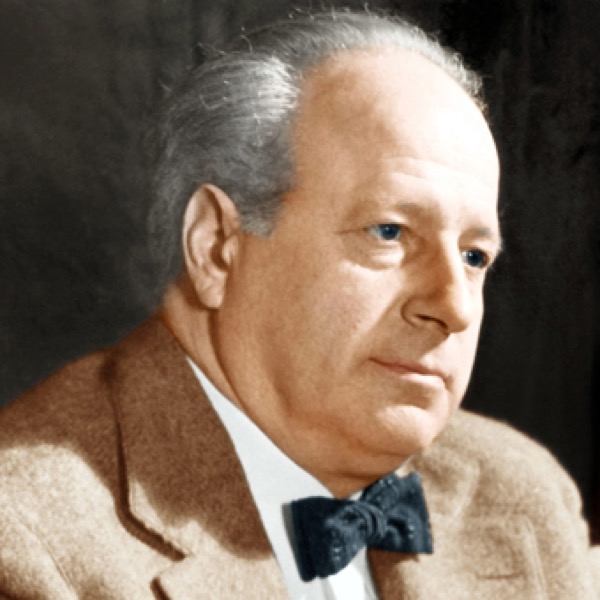
Walter Piston
Now that we have sampled all eight of Walter Piston’s symphonies, what kind of impression has the music made on you? Lots has been said about Piston the symphonist, ranging from “perhaps America’s most mature symphonist” to “a composer who went his own way.”
Although he has also been called “dry and academic,” I would probably prefer to call him a conservative modernist, working with impeccable technical sophistication but considerable emotional restraint.
For more of the best in classical music, sign up for our E-Newsletter