I’ve long admired pianist Igor Levit, not only for his exceptional musicianship, intellectual curiosity and uncompromising approach, but also for his willingness to speak out on matters beyond the concert platform. He seems to regard music as an essential part of life: a means of communication, connection, reflection, and, sometimes, resistance.
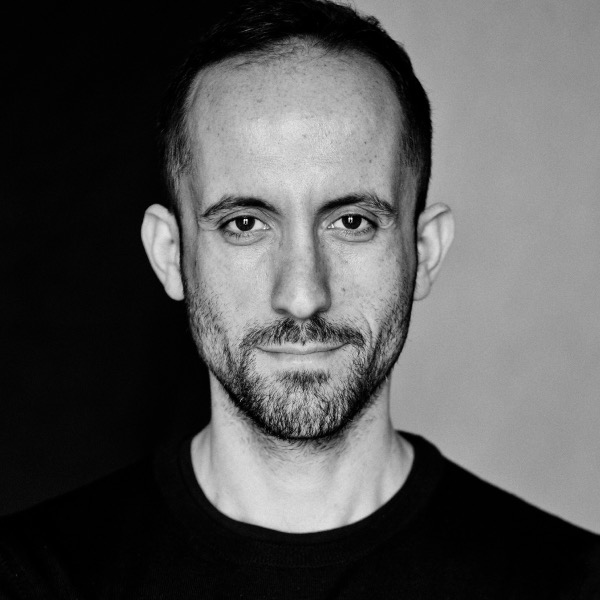
Igor Levit © Markus C. Hurek
His performances and recordings, which I have enjoyed greatly, in particular his Beethoven piano sonatas, reveal a musician of formidable technical command combined with serious artistic purpose. Nothing about his music-making is superficial. Levit brings to the music an intensity of concentration and a sense of personal engagement which invite us to listen more intently, and perhaps to think more deeply about what we are hearing.
In June 2026, Levit launched his own record label, NO SILENCE, in partnership with Sony Classical. This is no mere vanity project, nor simply a vehicle for releasing his own recordings. Levit has rather more ambitious intentions.
At its heart, NO SILENCE is about artistic freedom: the freedom to create, experiment, develop an individual voice, and resist the pressures of conformity. Levit aims to offer musicians an environment in which they can pursue their artistic ambitions without being required to fit a particular commercial mould. In a profession where young musicians are often encouraged to build a marketable identity, cultivate a public profile, and demonstrate commercial appeal, a record label that puts the artist’s individuality at the centre of its philosophy feels refreshing.
The name NO SILENCE carries significance beyond music. Levit has been outspoken in his opposition to antisemitism and extremism. Rather than retreating into the supposedly apolitical world of classical music, he has become more vocal in articulating his convictions. For Levit, silence implies acquiescence. His label’s name is therefore both an artistic statement and a declaration of personal responsibility. Music may not solve the world’s problems, but it can create a space to ask difficult questions, confront uncomfortable truths, and acknowledge our shared humanity.
The first albums on NO SILENCE, a triptych released on 23 October 2026, offer a fascinating indication of the label’s direction.
Levit’s own Resistance places Liszt’s monumental, virtuosic transcription of Beethoven’s Eroica Symphony alongside Schoenberg’s Ode to Napoleon. This thought-provoking pairing brings into conversation two works concerned, in different ways, with power, heroism, tyranny, and the individual’s response to political upheaval. Judging by the single from this album, the Scherzo from the Eroica, it promises to be a rewarding, thoughtful and immaculately presented recording.
Another of the label’s inaugural releases is the debut recording by the young Austrian pianist Lukas Sternath, a former student of Levit, featuring Schubert’s Wanderer Fantasy and Liszt’s Dante Sonata, together with selections from Liszt’s Années de Pèlerinage and Schubert song transcriptions. In the singles released ahead of the album, one hears a young artist with mature musical intelligence, technical command, and a glowing, poetic tone. The Litanei auf das Fest Aller Seele is generous and elegantly paced, with deep warmth in its hymn-like melody. Auf dem Wasser zu singen combines delicacy with robustness when required – here is an artist who appreciates that Schubert is not all pretty melodies: he can take a certain robustness. But there’s tenderness and poignancy here too. Ständchen is equally compelling, soulful and sensitively paced.
Lukas Sternath — “Auf dem Wasser zu singen” Schubert (transcribed by Liszt)
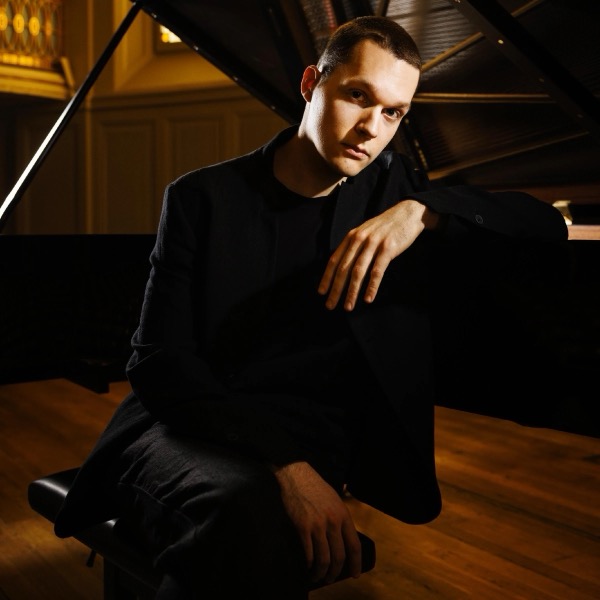
Lukas Sternath (photo by Peter Rigaud)
The last, but by no means the least, of this trio of releases is Erik Satie’s extraordinary, avant-garde Vexations, a work whose apparent simplicity conceals an almost absurd demand for repetition and endurance. Levit has performed Vexations several times: he streamed a solo 20-hour performance of all 840 repetitions from b-sharp studios in Berlin during the COVID-19 pandemic to support locked-down artists; and in 2025 he performed the piece live at London’s Southbank Centre in a collaboration directed by artist Marina Abramović. The vinyl release is a limited edition of 840 copies, featuring a selection of 30 Vexations, an NFC chip, and a signed sheet from the recording session. It’s another sign of Levit’s fascination with challenging conventional ideas of performance, time, and listening, and a reminder that artistic seriousness need not exclude eccentricity, curiosity, or a willingness to venture beyond familiar territory.
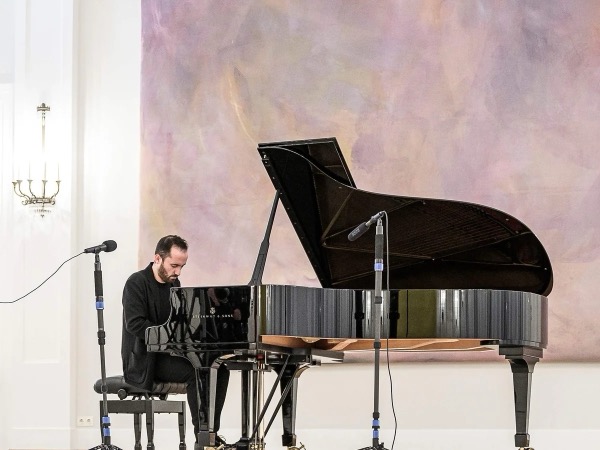
Igor Levit
The label’s musical vision extends beyond recordings to a broader foundation, with plans for educational activities, an academy, a festival, and opportunities for collaboration among artists across different musical genres.
What particularly interests me about NO SILENCE is its emphasis on the artist as an individual, rather than merely a performer or a product. Too often, musicians are judged by extrinsic measures of success: competitions, prestigious engagements, acclaimed recordings. Yet these things tell us remarkably little about what makes an artist interesting, or about the quality and depth of their own engagement with music.
Igor Levit’s desire to use his success to create opportunities for others is also commendable. With an international career and a strong relationship with a major record company, he can exercise a degree of control many musicians can only dream of. NO SILENCE suggests an acknowledgement that such freedom carries responsibilities as well as privileges.
NO SILENCE feels like a natural extension of Levit’s artistic personality. His musicianship has always suggested a belief that music matters profoundly, deserves our full attention, and has something to say about the human experience. This has been amply demonstrated in his more recent recordings, for example: Mendelssohn’s Songs Without Words, released as his personal response to the October 7 attacks on Israel; Life (sparked by the tragic death of a friend); and Encounter (marked by a desire for encounter and togetherness).
At a time when classical music can seem preoccupied with questions of relevance, audience development, and commercial survival, it is heartening to see a major artist articulate a vision founded not simply on selling recordings, but on the value of artistic individuality, creative freedom, and human connection.
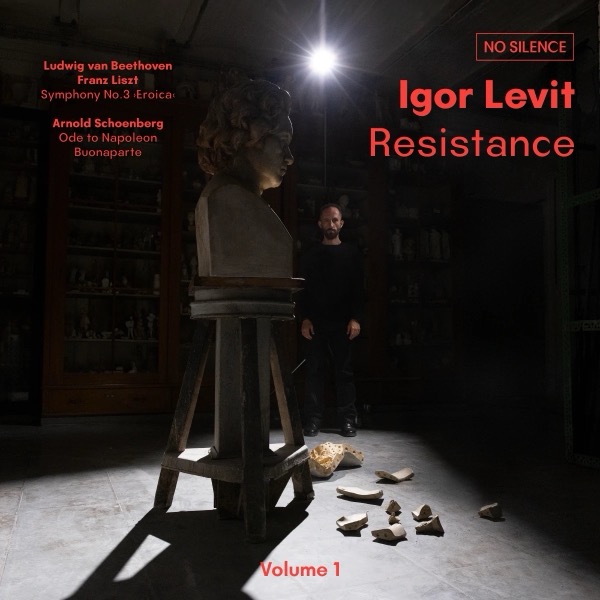
Vexations, Lukas Sternath plays Franz Schubert & Franz Liszt, and Resistance are released on 23 October on the NO SILENCE label.
For more of the best in classical music, sign up for our E-Newsletter