By 1816, Beethoven, always hungry to innovate, was pressing against the compositional conventions that he himself had helped cement.
By this point, he was also completely deaf. This isolation reshaped him; he communicated through notebooks, withdrew from the concert life that had once defined him, and turned further inward.
That internalisation shows up directly in these last five sonatas: they’re stranger, more personal, and less concerned with pleasing an audience than anything he’d written before.
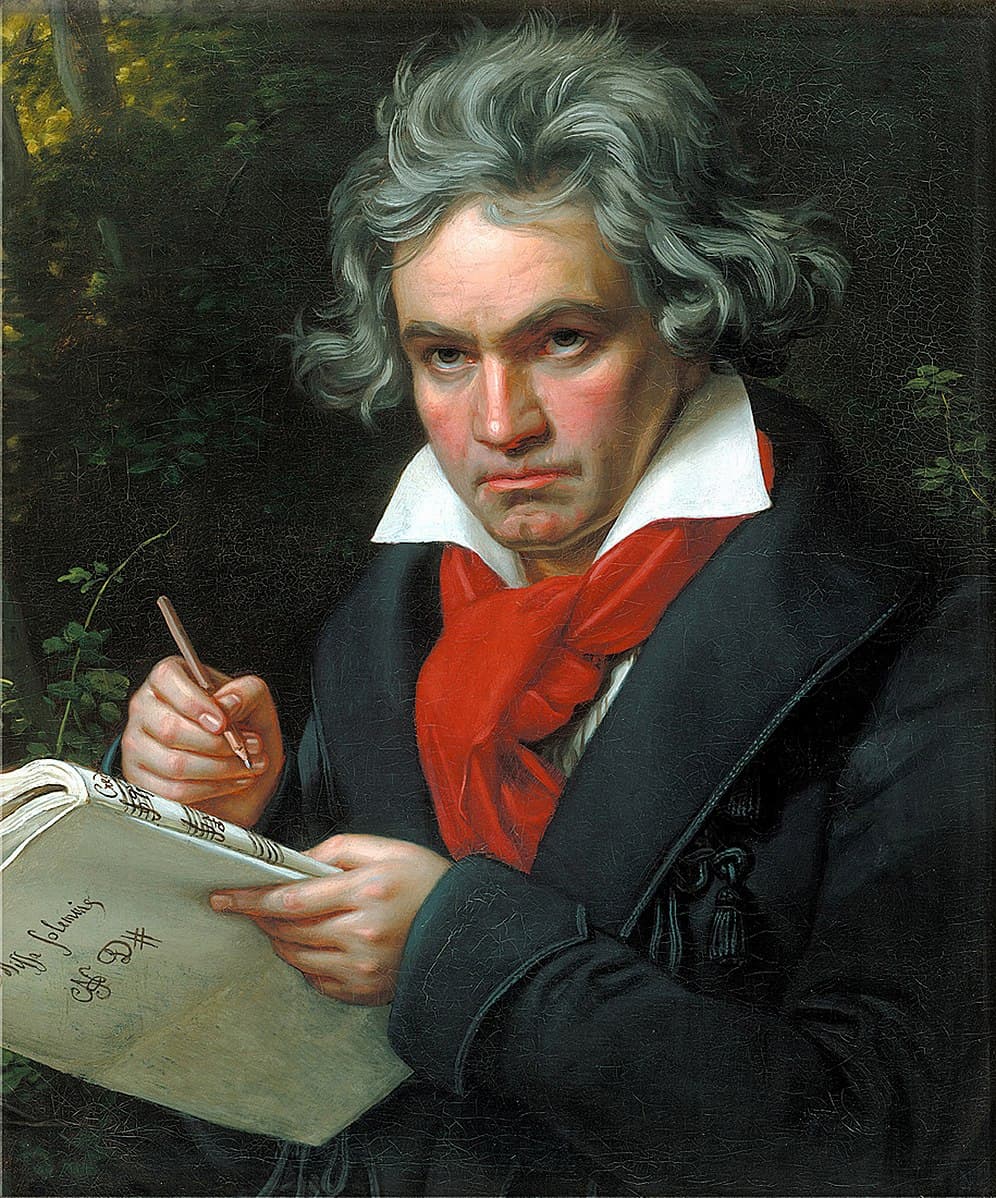
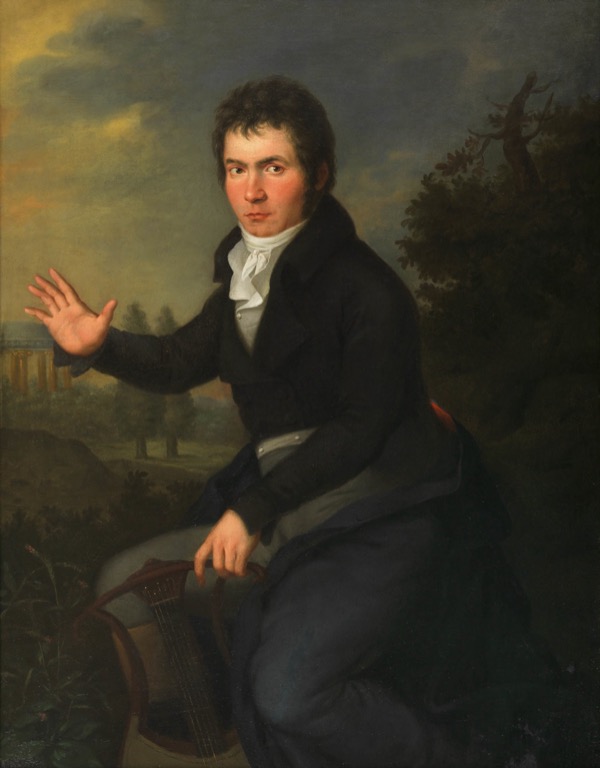
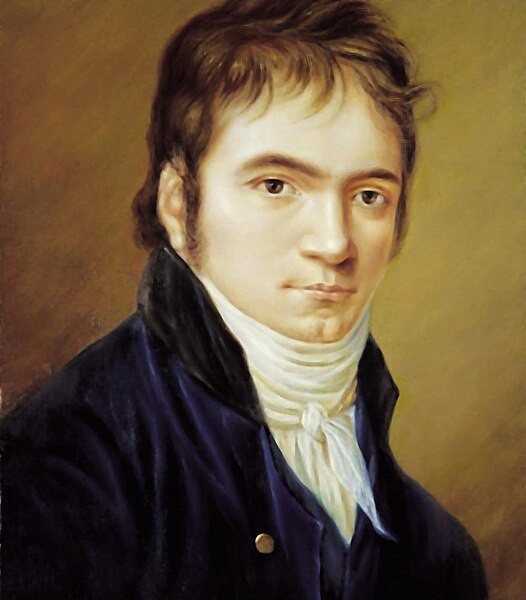
Portrait of Ludwig van Beethoven
These sonatas break rules Beethoven himself once set. Movements shrink to two where four were once expected. A finale can outweigh everything that came before it. Fugues, sacred and old-fashioned by his own era’s standards, turn up in music that otherwise sounds like nothing anyone had written yet.
By the last of them, Beethoven had pushed the piano sonata somewhere it had never been – and somewhere it would take generations to catch up to.
Piano Sonata No. 28 in A major, Op. 101
Year written: 1816, when Beethoven was 45
Dedicated to: Baroness Dorothea Ertmann
- This is the first of Beethoven’s late period piano sonatas.
- It was written for his friend and pupil Dorothea von Ertmann, a talented pianist in her own right and one of the great Beethoven interpreters of her generation. They had bonded over a decade earlier. After she lost a child in 1804, Beethoven had come to her home to improvise for her on the piano. “We will now talk to each other in tones,” he reportedly said.
- Beethoven described the sonata as “a series of impressions and reveries.”
- The final movement includes a 100-measure-long fugato in four voices.
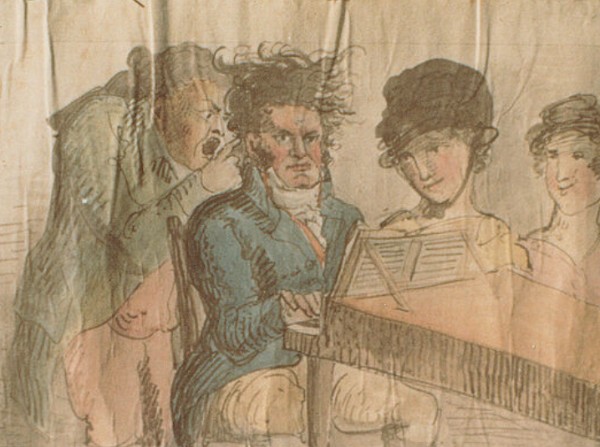
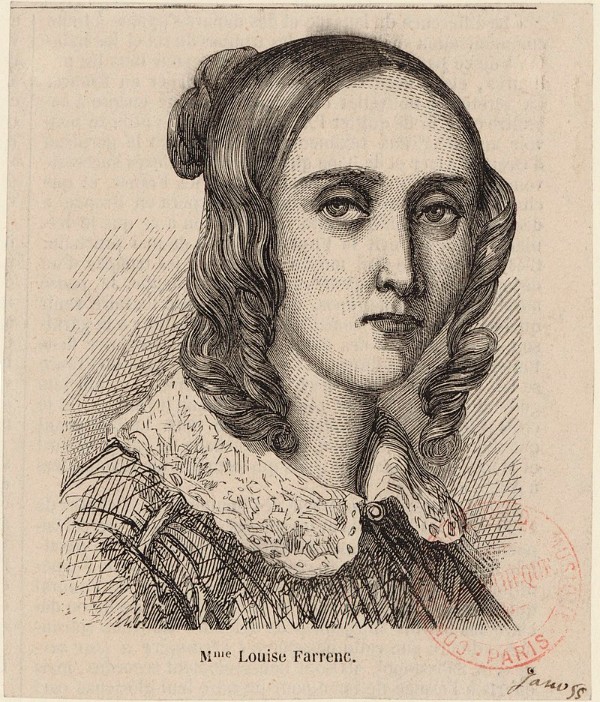
Ludwig van Beethoven, Countess Anna Maria Erdődy and Dorothea von Ertmann
Piano Sonata No. 29 in B-flat major, Op. 106
Nickname: Hammerklavier
Year written: 1817, when Beethoven was 46
Dedicated to: Archduke Rudolf
- This sonata was nicknamed the Hammerklavier because Beethoven, feeling patriotic after the Napoleonic Wars, had begun to use German-language instructions instead of Italian in his sheet music.
- It is his longest sonata, clocking in at around 45 minutes.
- This is the only sonata that includes metronome markings. (Metronomes had only just been patented in 1815.) However, the marking is an enigma to modern audiences; it is much faster than sounds natural (138 beats per minute for the first movement), and music lovers still argue over whether it should be taken literally or whether Beethoven’s sense of tempo was affected by his hearing loss.
A sample of what the sonata sounds like at Beethoven’s indicated tempo
- The trio of the brief second movement scherzo borrows the opening theme of Beethoven’s Symphony No. 3, the Eroica, recasting it in a minor key.
- The third movement, Adagio, is the longest movement Beethoven ever wrote for solo piano; it can last up to 25 minutes.
- The fourth and final movement features a slow introduction to gently guide listeners from the long Adagio into the Allegro finale.
- The first public performance of the sonata was in 1836, nearly two decades after its composition, when Franz Liszt played it in Paris. Despite its age, it proved influential to up-and-coming Romantic-era composers.
Piano Sonata No. 30 in E major, Op. 109
Year written: 1820, when Beethoven was 49
Dedicated to: Maximiliane Brentano
- This sonata is shorter and smaller in scale than its predecessor.
- Its dedicatee was Maximiliane Brentano, the daughter of his friends and patrons, Franz and Antonie Brentano. Maxe, as she was known, was 18 when this sonata was written. This wasn’t her first Beethoven dedication; years earlier, he’d written a piano trio movement for her, inscribing it “for my little friend Maxe Brentano to encourage her with her piano-playing.”
- The opening movement is labelled “Vivace ma non troppo – Adagio espressivo”, while the second movement is a prestissimo.
- The final movement is a theme and six variations, and takes up more than half of the runtime – an example of how Beethoven was ignoring conventions he himself had helped to establish later in life.
Piano Sonata No. 31 in A-flat major, Op. 110
Year written: 1821, when Beethoven was 50
Dedicated to: No formal dedication
- Beethoven was delayed in writing this sonata due to his work on the Missa Solemnis combined with his chronic health issues, including rheumatism and jaundice.
- Historians believe that Beethoven may have intended for the sonata to be dedicated to Antonie Brentano, connecting it to the preceding sonata, but the dedication was never formalised.
- The first movement is marked “at a moderate speed, in a singing style, very expressively.”
- The second movement is brief, feeling like a distinguished court dance gone tipsy and tripping over itself.
- This sets up a weighty finale that seesaws between Adagio and Allegro tempo markings. The battle between the two moods and tempos has been the subject of intense musicological analysis for generations. Mid-century pianist and musicologist Denis Matthews mused that the finale’s emotional arc suggests a “gathering of confidence after illness or despair.”
Piano Sonata No. 32 in C minor, Op. 111
Year written: 1821–1822, when Beethoven was in his early 50s
Dedicated to: Archduke Rudolf
- This sonata was the last one that Beethoven completed, about five years before his death. Although it’s tempting to ascribe special meaning to this last sonata as a kind of pianistic will, Beethoven didn’t know it would be his final one.
- The opening movement is one of the most dramatically extroverted of his late works.
- The second – and final – movement is a set of variations, beginning with a solemn, hymn-like theme. Over the course of the movement, Beethoven runs fascinating experiments with rhythm and pulse, working with shifting time signatures, including 9/16, 6/16, and 12/32, among others.
- Some pianists believe that the rhythms in the third variation anticipate boogie-woogie or jazz. Others disagree. But one thing is certain: this music is a world away from the piano sonatas Beethoven began writing thirty years earlier. He had succeeded in completely transforming the genre.
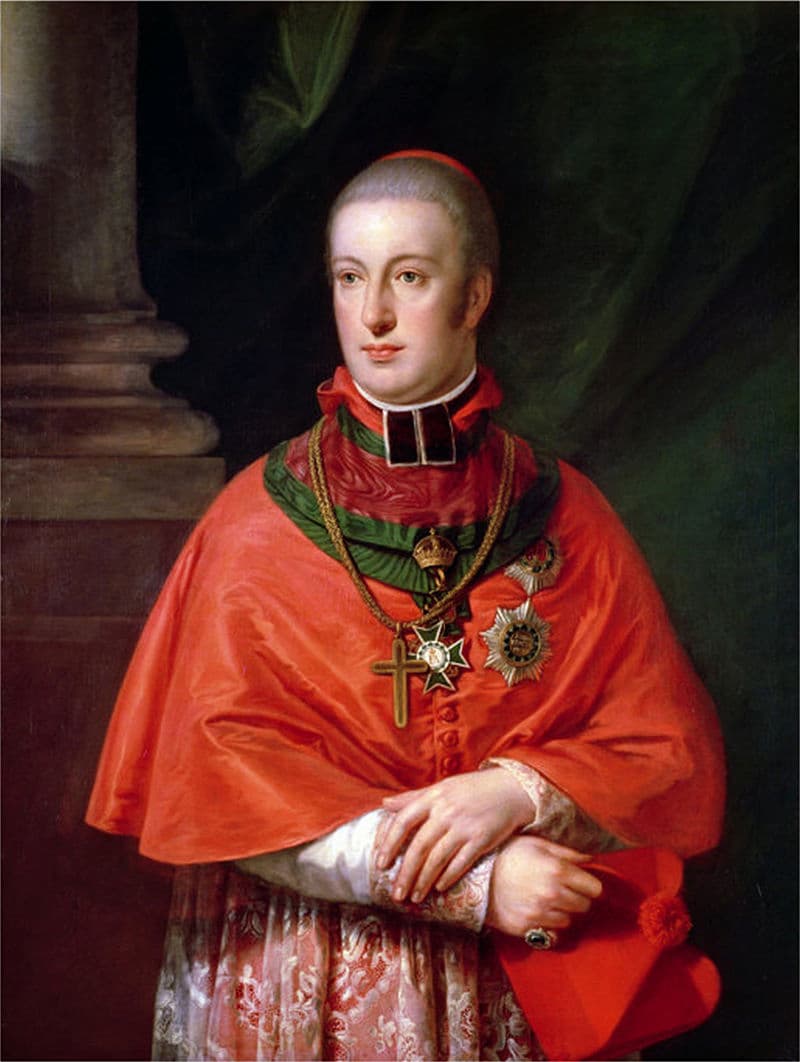
Archduke Rudolf
Conclusion
Op. 111 finishes the story, though Beethoven never framed it that way himself. He kept composing for the piano after this – the Diabelli Variations, the last bagatelles – and there’s no sign he set out to write a final sonata. He just never returned to the form.
The composer who opened his catalogue in 1795 with three sonatas dedicated, dutifully, to Haydn closed it thirty years later with a two-movement sonata that dissolves into trills and something close to boogie-woogie.
Along the way, he broke nearly every rule the form had handed him – rules he’d helped write in the first place. Piano music would never be the same.
For more of the best in classical music, sign up for our E-Newsletter