Johann Strauss Jr. (1825–1899) wrote more than 500 waltzes, polkas, quadrilles, and other dance forms. Dubbed the “Waltz King,” his name is synonymous with the Viennese waltz, a form he both refined and immortalised.
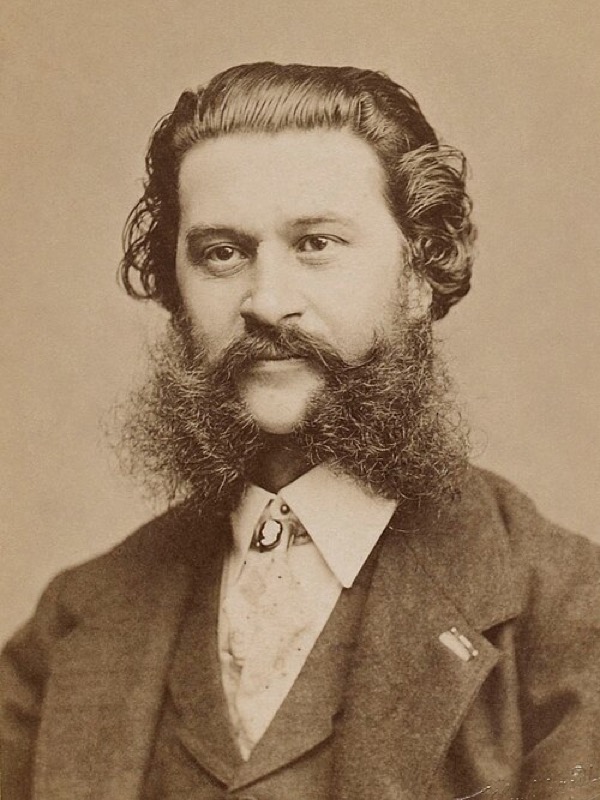
Johann Strauss II by Fritz Luckhardt
With his unique blend of charm, elegance, and rhythmic vitality, Strauss Jr. elevated a simple country dance into sophisticated, stylish entertainment that reflected the vitality, sophistication, and pleasure-seeking spirit of imperial Vienna.
His compositions remain among the most beloved and recognisable melodies in classical music, and to celebrate his birthday on 25 October, let’s listen to his concert waltz Frühlingsstimmen, Op. 410 (Voices of Spring).
Johann Strauss II: Voices of Spring, Op. 410 (Soprano and Orchestra)
The Soprano Behind the Waltz
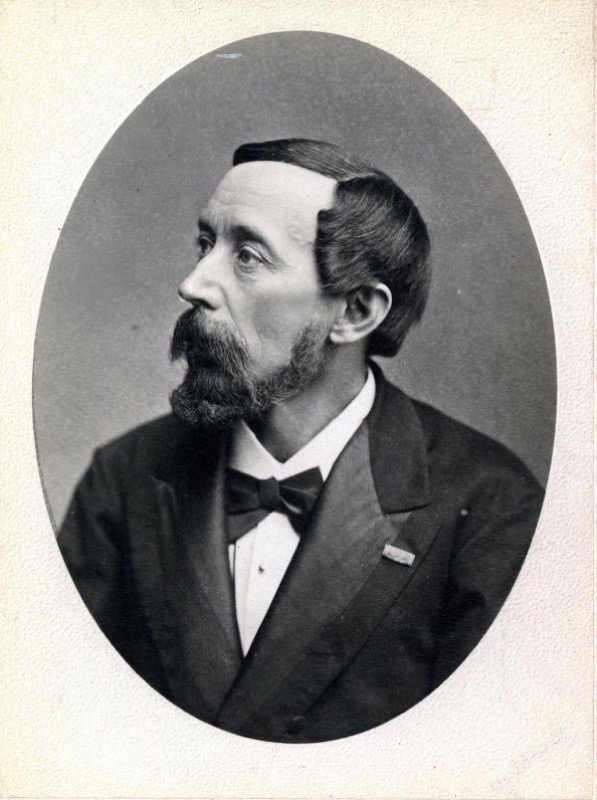
Richard Genée by Fritz Luckhardt
You probably know this famous waltz only in the orchestral version, but it was initially performed with a soprano soloist singing a text by Richard Genée. We know him best for his libretto for Die Fledermaus by Johann Strauss II and for the operetta Der Bettelstudent by Carl Millöcker.
Voices of Spring, however, was actually written for Bertha Schwarz, who went by the stage name of Bianca Bianchi. Born in Heidelberg, she scored her greatest successes in Vienna, where she was a prominent member of the Vienna Court Opera for many years.
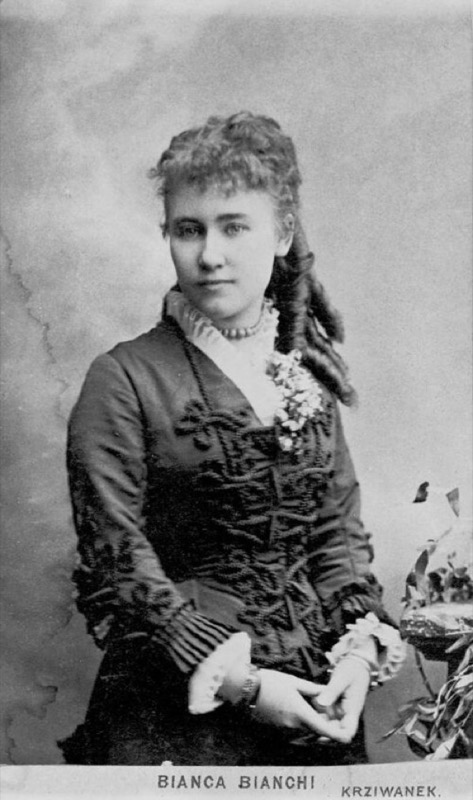
Bianca Bianchi
Just how famous was Bianchi? Well, when an asteroid was discovered on 4 September 1880, it was named “218 Bianca” in her honour. Strauss Jr. was sufficiently impressed by the vocal artistry that he composed the sparkling waltz Voices of Spring for her.
Johann Strauss II: Voices of Spring, Op. 410
When Spring Takes Flight
Bianca Bianchi sang this concert aria at a grand matinée charity performance at the Theatre an der Wien, but apparently it was not a great success at its premiere. It really started to make waves, however, when Strauss took the work on his 1886 tour of Russia.
The poem celebrates the arrival of spring, and as sunshine warms the world, our hearts also open to love and longing. It’s all about joyful awakening, tinged with a hint of romantic longing.
The lark rises into the blue,
the mellow wind mildly blowing;
his lovely mild breath revives
and kisses the field, the meadow.
Spring in all its splendour rises,
ah, all hardship is over,
sorrow becomes milder,
good expectations,
the belief in happiness returns;
sunshine, you warm us,
ah, all is laughing, oh, oh awakes!
Johann Strauss II: Frühlingsstimmen (Voices of Spring), Op. 410 (arr. A. Grünfeld for piano) (Alfred Grünfeld, piano)
Vienna’s Piano Celebrity
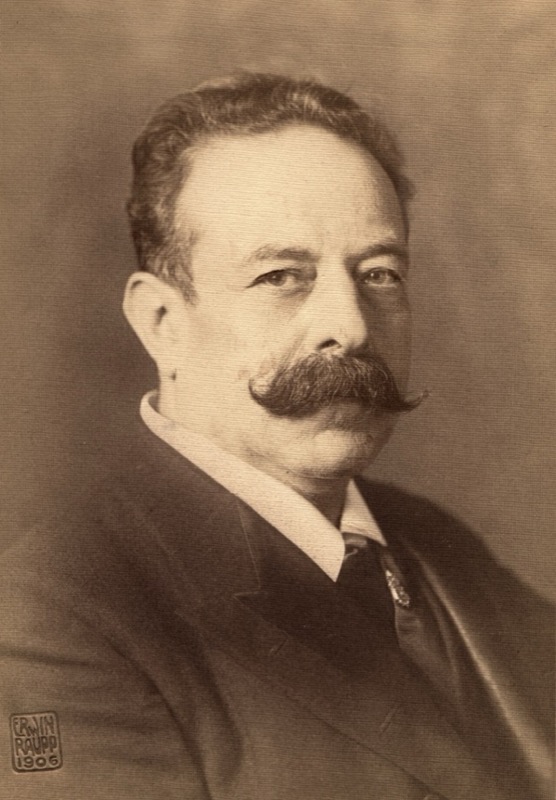
Alfred Grünfeld (1906)
Johann Strauss Jr. dedicated his Voices of Spring to the pianist and composer Alfred Grünfeld. Born into a German-Bohemian merchant family in Prague, Grünfeld studied at the Prague Conservatory and the Neue Akademie der Tonkunst under Theodor Kullak.
He moved to Vienna and gave his first concert before Emperor Franz Joseph and his family in 1875. Soon, he was well connected in musical circles and a regular guest at his friend Johann Strauss Jr.’s home.
Grünfeld enjoyed huge popularity in Vienna, and admirers often waited outside his house to catch a glimpse of him or ask for an autograph. The famed and feared critic Eduard Hanslick wrote, “Grünfeld is by nature bursting with life and urgent energy; in performances of compositions suited to these facets of his talent, such as Liszt’s Hungarian Rhapsody or Strauss’ Persian March, Grünfeld will delight any audience.”
Grünfeld was highly interested in the possibilities of sound recordings, and he made his first record for HMV in June 1899. On his 1905 Welte piano rolls, including the one I featured in this article, we also find a piano paraphrase of Voices of Spring. Apparently, the Waltz King said of Grünfeld, “My waltzes never sound as good as when you play them.”
Johann Strauss II: Frühlingsstimmen (Voices of Spring), Op. 410 (version for piano 4 hands) (Matthieu Idmtal, piano; Alessandro Deljavan, piano)
Bringing the Waltz Home
Brahms, Mahler, and Bruckner greatly admired Johann Strauss Jr. Even Arnold Schoenberg eventually arranged several waltzes for chamber orchestra in the 1920s. Since nearly all of Strauss’ music was originally composed for orchestra, we tend to overlook the significance of his works published in four-hand piano arrangements.
This medium was a cornerstone of 19th-century music-making, and sheet music was the primary way music circulated. Amateurs and connoisseurs thus brought orchestral and operatic music into their own salons.
Of course, there was substantial money in fashioning these scores for four hands. After a public premiere, publishers often released four-hand versions within days or weeks. These editions varied in format, from lavishly decorated editions to more affordable versions for the growing middle class.
To be sure, stacks upon stacks of Strauss waltzes for four hands could be found in Viennese households. In terms of arrangements, countless versions of Voices of Spring have been produced, including an interesting piano trio version that lets us hear the composition’s intricate and seductive inner voices.
For more of the best in classical music, sign up for our E-Newsletter
Johann Strauss II: Frühlingsstimmen (Voices of Spring), Op. 410 (arr. for piano trio) (Trio Picasso)