Based in Scotland, David Arthur is a BAFTA and RTS award-winning filmmaker. As an editor, he has worked across a remarkably diverse range of genres in documentary and drama, from feature films such as the Sundance-winning indie musical God Help the Girl, to Winners, which won a BAFTA and was selected as the UK submission for Best Foreign Film at the Oscars.
David has recently ventured into directing, and his second short film as writer and director, Swan Songs, is a black-and-white visual feast featuring some of the most moving music from Handel, Bach, Mozart, Mendelssohn, and Schumann. Swan Songs premiered at the Glasgow Short Film Festival and has since won 7 awards on the international film festival circuit. You can watch it below for an exclusive online premiere of Swan Songs and read David’s creative exploration of music and memory, grief and consolation.
SWAN SONGS | SHORT FILM
What is the story of Swan Songs?
It’s a dream-like story that unfolds over a single day, set against the backdrop of a neglected park. An estranged father and daughter reunite through their love and knowledge of music, but they must also face a darker truth that has driven them apart. Elysia Welch is the daughter and “listener”, Stephen McCole plays her father, and my friend Lee McKellar plays a supporting role as a park attendant.
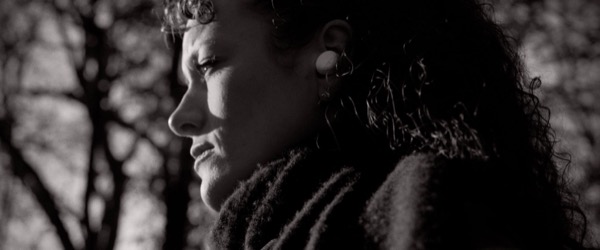
Elysia Welch in Swan Songs short film directed by David Arthur
Can you talk about the soundtrack choices in general?
I wanted to create an emotional soundtrack to the cycles of grief that the protagonist goes through. It’s also a selection of some of my father’s own favourite pieces, including Bach’s dramatic St Matthew Passion, which opens the film. The more brooding prelude from Wagner’s Tristan & Isolde always feels to me like the beginning of a film noir: full of mystery and darkness, but it can swing quite suddenly into a place of sentimental feeling, like the rawest grief.
Johann Sebastian Bach: St. Matthew Passion, BWV 244: Part I: Kommt, ihr Töchter, helft mir klagen (King’s College Choir, Cambridge; Academy of Ancient Music; Stephen Cleobury, cond.)
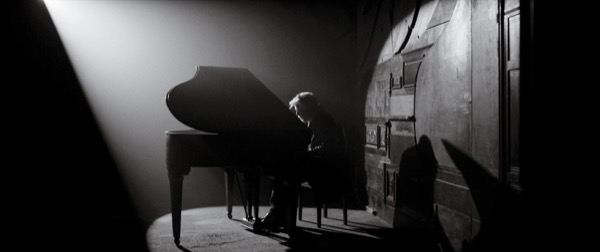
Stephen McCole in Swan Songs short film directed by David Arthur
Richard Wagner: Tristan und Isolde: Act I: Prelude (Royal Swedish Opera Orchestra; Leif Segerstam, cond.)
For the finale and the reveal of what happened to the father, Schumann’s Träumerei (from Scenes of Childhood) felt as though it offered a sense of catharsis, as well as associations with Schumann’s own mental health issues and attempted suicide. I always loved the clip of Vladimir Horowitz playing this piece to a quiet, weeping audience, all caught up in their own stories of what this piece means to them.
Vladimir Horowitz plays Schumann’s Träumerei
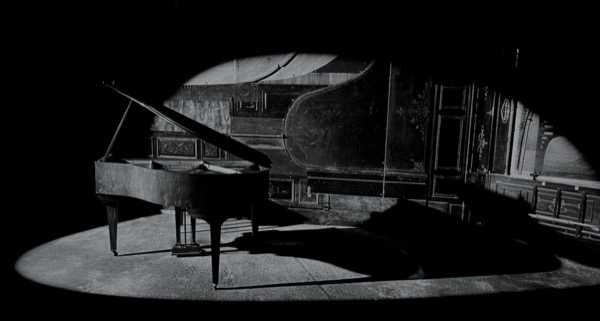
I also naively thought it might be an easy piece for a pianist to play, as a hand double. Turns out I was wrong; it isn’t as simple as it seems. Two skilled piano players agreed to play it, but then backed out, thoroughly intimidated once they began to practise the piece. Eventually, Derek Barron, who plays for the Scottish Ballet, stepped in at the last minute and saved the day. Although the piano he plays happened to have a broken string on one of the important keys for this piece, Derek had to roll with that too!
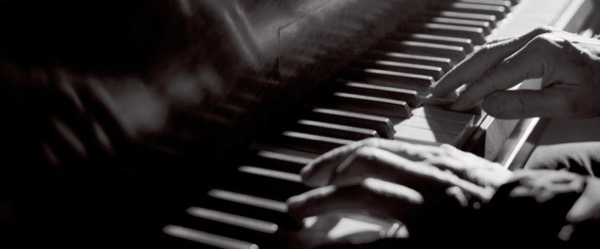
Swan Songs short film directed by David Arthur
You even chose to contrast the piano version with an orchestral arrangement of Schumann’s Träumerei.
I stumbled across this version and think it’s quite rare to hear this piece performed with a full orchestra. It was recorded in Bulgaria in the ’90s, and after some digging, I tracked down the recording’s very generous owner to a small vintage music shop in Sofia. I played this version on location to create a mood for the actors, and Elysia and Stephen reacted to the music and each other in a beautiful way to create this shared moment between the characters. In the film, after this track cuts out, sound mixer Scott Paterson and I worked hard on the sound design around that moment to make you feel the fracture of a relationship ripped apart.
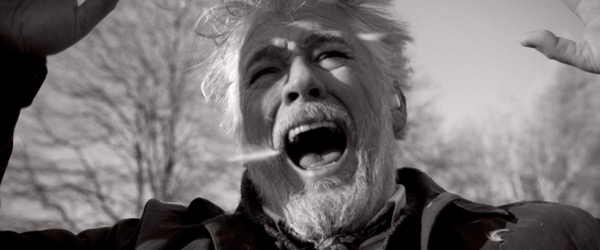
Stephen McCole in Swan Songs short film directed by David Arthur
There was also a beautiful, harmonious soundtrack accompanying the fighting scene between the daughter and the park keeper.
This one was from the Naxos music label, and Martin Hewett in particular was so helpful in putting together the soundtrack for this. The intention was to use the lush Mozart aria ironically against the bread fight with the park attendant. Again, we played music on location, and I just said to Stephen to “conduct”, which he did, but then as we kept rolling he gradually went to this new place of conducting and weeping… You hope for moments like these when an actor can swing the door wide open on a character’s soul. And as an editor, this is very satisfying too because it meant I could then cut a lot of dialogue I had written about the father’s demons because that look on Stephen’s face, along with the music, said it all for me in that moment.
Wolfgang Amadeus Mozart: Vesperae solennes de confessore, K. 339: V. Laudate Dominum (Greta de Reyghere, soprano; Capella Brugensis; Collegium Instrumentale Brugense; Patrick Peire, cond.)
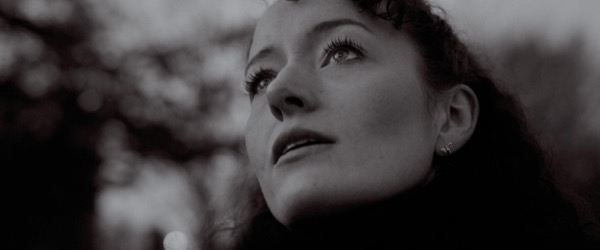
Elysia Welch in Swan Songs short film directed by David Arthur
Does the Handel anecdote reveal the rebellious character of the father?
The story Elysia Welch tells at the end, about Handel’s Messiah, is something my father insisted on. Famously—or famously to my father, anyway—at the first performance of Messiah in London, King George stood up during the “Hallelujah” chorus because he thought it was over (it wasn’t; there were still about 20 minutes to go), and because everyone else in the audience stood up in old-fashioned reverence for the monarchy, it has since become a tradition for the audience to stand at that moment. We went to several performances together, and my Dad always said we must stay seated at that moment when everyone else stands because otherwise we would be showing support for the royal family. We stayed seated, but I don’t think anyone ever noticed our “protest”.
George Frideric Handel: Messiah: Part II: Aria: He was despised and rejected of men (Iestyn Davies, countertenor; Academy of Ancient Music; Edward Higginbottom, cond.)
Before filming, I took both of the lead actors to see Messiah at the Royal Concert Hall in Glasgow, and we stayed seated at that moment so they could have that experience too… Elysia used to sing in a choir, so she was familiar with Messiah; Stephen is also a DJ and more into dance music, so it was maybe a bit of a change of scene for him. In the end, we filmed that final scene slightly under pressure, in the last dying embers of daylight, with some local youngsters watching on, and Elysia nailed it in one take. Her character spends the whole film listening, so it was important to me to have that moment and hear how she was going to walk away from this tragedy.
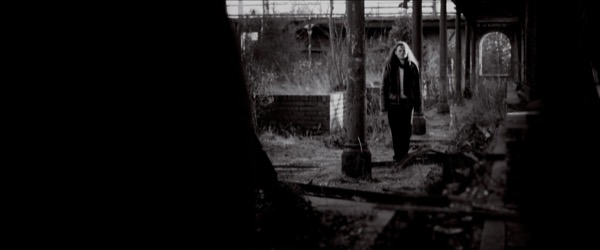
Elysia Welch in Swan Songs short film directed by David Arthur
Why did you choose to film the story in a neglected park? Apart from representing the childhood space that we can’t get back, it occurs to me that ruins are important sites in the 19th-century Romantic imagination. Schumann and Mendelssohn, at least, belonged to a generation that looked back on earlier cultures, including Bach’s music.
Yes, it felt like a fitting backdrop for this music from the past, and visually there is something tragic about the faded Victoriana in that park. The monuments and Winter Gardens have been left neglected, but it clearly used to be a place of civic pride, and you can still feel its once grand historic past.
My own father also used to take me and my sister to places like this—old quarries and the ruins of war bunkers around the coast of Fife—places that nature has started to reclaim. Springburn Park also has the contrast of the flats nearby, and in this way it also reminded me of how we grew up: living in council flats but escaping into nature, as well as into music.
The park also has a personal resonance for me. A close friend of mine from my university days was sectioned in the mental health hospital right beside the park, and he later took his own life. So I also associate this place with him.
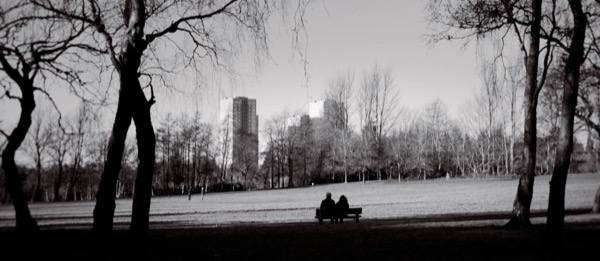
Swan Songs short film directed by David Arthur
What does the unicorn in the park symbolise?
A magic that’s been lost, maybe… I spoke to someone in the park who told me that the unicorn’s horn had blown off after a storm and that a local dog walker had found it and was keeping the horn safe in their garage. Now it’s just a horse, faded and broken. Using the father’s commentary here was also a way to bring a bit of humour in too, hopefully.
How is this film, in a way, an extension of your previous creative projects?
Even though this film is personal, I hope it can still convey a core emotion about coming through grief. I tackled this before in my previous short, Red Ash, and Swan Songs is a kind of sequel for several reasons.
Red Ash: Award Winning & BAFTA Qualifying Short Film
Red Ash, for similar budgetary reasons, is also set in a park over one day, embracing those limitations to see what kind of story we could tell. Swan Songs plays by the same rules; we never leave that park. There are some little resonances between the two films, like a repeated line of dialogue: “What took you so long?”, references to dinosaurs, and using the same train sound. There was also an absent brother character in Red Ash that I wanted to explore further: about what happened to him and why he died. During filming at that location for Red Ash, we were interrupted by a woman who was looking for her father and was very worried that he might have gone towards the train tracks. So I followed all of those threads really, to expand on events that might cause this much trauma in a family, and then something uncanny happened while preparing for this film.
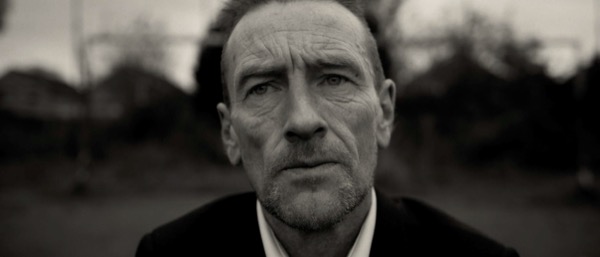
Red Ash short film directed by David Arthur
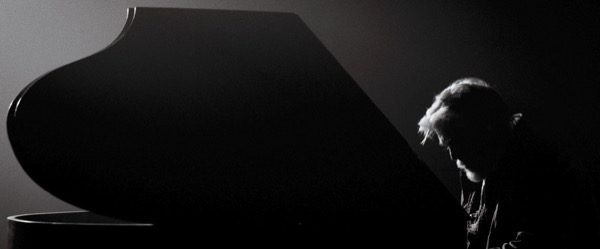
I found an amazingly helpful guy called Tom who was up for helping me with the lunacy of getting a baby grand piano into the Springburn Auditorium for the film (where the auditorium seating is beautifully made from hundreds of old pianos, but they don’t actually have a working piano due to the temperature in there). I was asking him if a baby grand could take the weight of an actor stepping onto the lid. He asked why, and I told him my plan to stage that moment in a more abstract manner, to have the character stepping off the piano with only the sound of a train. Suddenly, Tom went quiet.
I thought maybe I had crossed a line, because clearly people shouldn’t stand on pianos. He then said he knew there was a reason he had agreed to help me, and told me that he had witnessed a suicide himself while standing on a train platform. He had been dealing with the trauma of that event ever since, and that process had become embedded in his work to repair and redistribute old pianos around Glasgow. I hope this film, to some extent, conveys the trauma of those left behind—especially grieving families—after such a tragic event.
Swan Songs short film directed by David Arthur
Do these films help you to reflect on the relationship between music and memory?
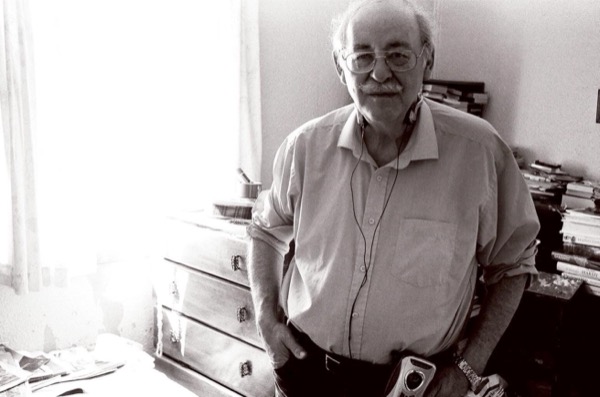
I think certain music has the power to let us time-travel, taking us back instantly to a particular memory. Swan Songs is also partly based on my memories of my father talking about the great composers, which he often did. For him, his love of their music was closely intertwined with his knowledge of their lives and the history surrounding them. All of which he would share, often whether you asked for it or not! He wasn’t one for small talk.
What does “listening” mean to you? What does it mean to truly listen—to the music, the words, etc.?
When I would listen to the stories my dad told about, say, Bach or Mendelssohn, as I got older, I began to listen more closely to the subtext of why he wanted to talk about certain composers. He was drawn to working-class composers like Elgar or to those he perceived as “underdogs” like Mendelssohn. He often focused on how certain contemporaries or critics had snubbed them or, in Mendelssohn’s case, my father was incensed that certain critics had deemed him as having failed to live up to his early potential.
These were all themes from my dad’s own life. He grew up in a working-class environment and was largely self-taught in terms of his education, showed amazing promise by getting a scholarship to Oxford, but then struggled to find work within academia and later became a private tutor for high school kids. He didn’t really go to concerts; he mostly listened to the radio, particularly BBC Radio 3, and it was through radio and books that he learned about classical music. When I was able to, I would take him to concerts like Handel’s Messiah as a birthday treat, and he loved it.
Director David Arthur’s father
As my dad had experienced barriers and exclusions himself, I think they came out in the stories he wanted to tell about the great composers. This is, of course, just my interpretation of it all, and I put that into Swan Songs. I think he would have said he just loved the music, which is undoubtedly true. He was obsessed. Incredibly, even on his deathbed, he was reflecting on the end of Elgar’s life rather than his own.
Swan Songs short film directed by David Arthur
Felix Mendelssohn: Songs without Words: No. 30 in A Major, Op. 62, No. 6, “Frühlingslied” (Spring Song) (Péter Nagy, piano)
Besides classical music, what other music-related projects have you worked on?
I’m a big music fan, so I naturally gravitate towards any projects involving music, though usually it tends to be more in the indie rock or pop context. As an editor, I’ve been lucky enough to work with some of my favourite bands like Arab Strap, Belle and Sebastian, Mogwai, and recently Frightened Rabbit. I’ve also directed some music videos and recently made a narrative film for the Hamburg-based group Songraes, which again drew inspiration from my Dad, this time around the dementia he suffered towards the end of his life. This one also gave me the opportunity to work with one of Scotland’s greatest actors, David Hayman.
Songraes – Wind
David Arthur’s website: https://sleekitcuts.com/
For more of the best in classical music, sign up for our E-Newsletter