Over the past few centuries, the idea of what a string quartet is – and what it can be – has been rewritten again and again.
It began as an outgrowth of four-part sonatas and took generations of experimentation before anyone grasped its potential.
Today we’re looking at how the string quartet evolved from an instrumental experiment to one of the foundational genres of classical music history.
The Pre-History of the String Quartet: Allegri and Scarlatti
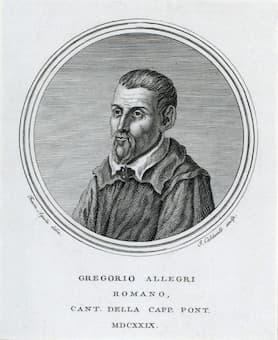
Caldwell: Gregorio Allegri (ca, 1740)
The first music written for two violins, viola, and bass viol appeared in 1650: the Sinfonia for Strings, composed by Italian composer Gregorio Allegri (c. 1582–1652).
Although 20th-century historians dubbed it the first string quartet, it wasn’t what we think of today as a string quartet – i.e., it wasn’t in sonata form, and it didn’t employ any thematic development.
Scarlatti’s Four Part Sonata No. 4
We got closer when, in the final decade of his life, Alessandro Scarlatti (1660–1725) wrote a set of four works for two violins, viola, and cello.
But instead of calling this collection of instruments a “string quartet,” Scarlatti dubbed them “four-part sonatas.”
The first “real” string quartet would have to wait a few more decades to be born. Its father was Joseph Haydn.
Joseph Haydn – String Quartet, Op. 33, No. 2, “The Joke” (1781)
The string quartet solidified as a genre almost by accident.
In the 1750s, composer Joseph Haydn (1732–1809) was hired by a baron named Karl Joseph von Fürnberg to write music for an informal chamber music ensemble that included the baron’s steward, a priest, a local cellist, and Haydn himself.
The challenge hooked Haydn. Even after accepting a job with the noble Hungarian Esterházy family in 1761, he kept writing string quartets. In fact, his Op. 1, published in the mid-1760s, was actually a set of six string quartets.
Over the years, Haydn continued developing the form, eventually standardising it into a witty four-movement work – a sonata-form opening movement, a minuet (which in his Op. 33 he provocatively relabeled “Scherzo”), a slow movement, and a lively finale.
Over time, he made another important innovation: the idea that these four very different instruments could also be equal partners.
Haydn’s Op. 33, No. 2 string quartet – nicknamed his “Joke” – demonstrates these advances with real panache. The quartet’s nickname comes from the fact that in the final movement, the players trip over several false endings before arriving at the real one.
With Haydn’s Op. 33 quartets, the genre began to find its own voice.
Wolfgang Amadeus Mozart – String Quartet No. 19 in C major, K. 465, “Dissonance” (1785)
Haydn’s musical influence was profound.
Inspired by Haydn’s Op. 33, Wolfgang Amadeus Mozart (1756–1791) set out to write a set of six string quartets specifically as a tribute to Haydn’s.
They had no commissioner, and Mozart took his time, treating them like a passion project and comparing their publication to sending children out into the world. This Haydn tribute helped cement the genre’s conventions.
It also, in the case of the final quartet of the six, helped to break them. The final quartet in the set earned the nickname “Dissonance” because its opening two minutes feature an eerie, ghostly chromaticism.
That beginning also foreshadows a uniting idea of the entire piece: Mozart playing with the tension between A and A-flat.
Haydn was delighted that Mozart had taken up the baton of quartet writing. After hearing the quartets, he is said to have told Mozart’s father that Wolfgang was “the greatest composer known to me, either in person or by name.”
Ludwig van Beethoven – String Quartet No. 7 in F major, Op. 59, No. 1, “Razumovsky” (1806)
Ludwig van Beethoven – String Quartet No. 14 in C-sharp minor, Op. 131 (1826)
Ludwig van Beethoven (1770–1827) began his revolutionary run of quartets in Haydn and Mozart’s shadows.
His first six, written as he mastered the genre, show flickers of originality, but his seventh was the true musical earthquake.
For starters, a performance clocks in at around forty minutes: nearly twice the length of a standard Haydn quartet.
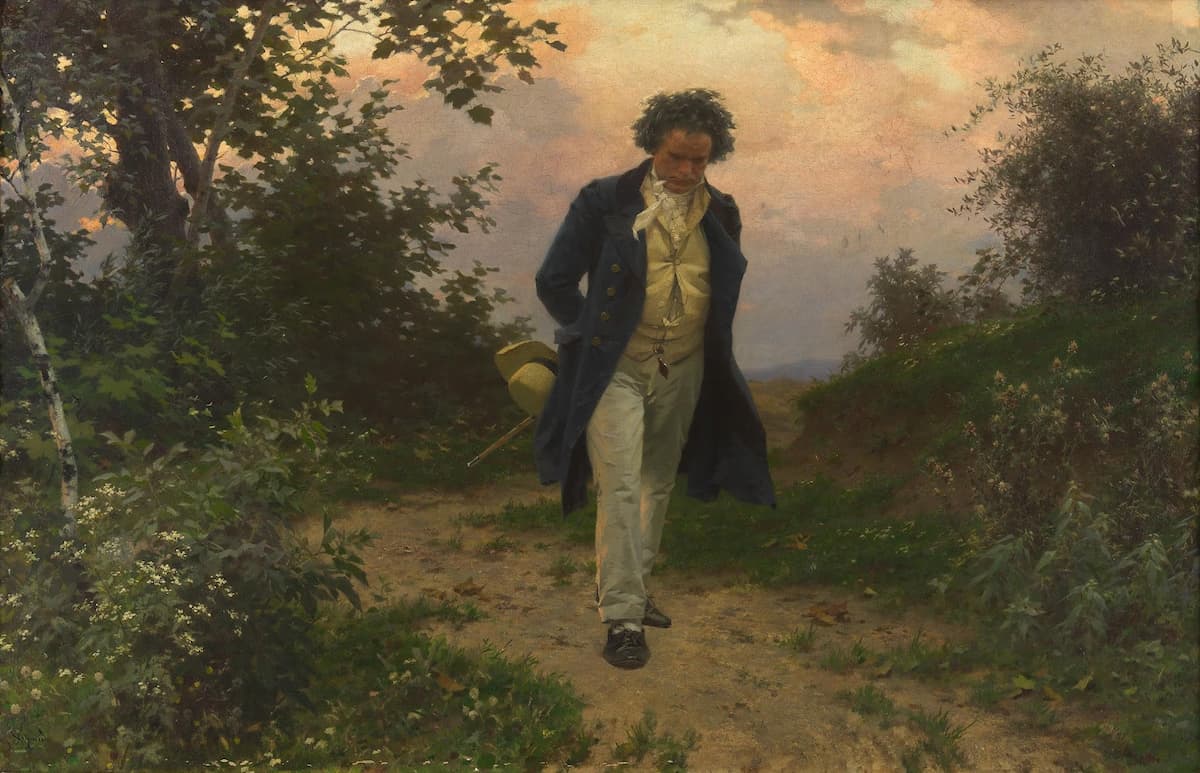
Julius Schmid: Beethoven’s Walk in Nature
Beethoven was moving away from the model of domestic, aristocratic music-making pioneered by Haydn, envisioning something with symphonic ambitions that would require the expertise of professional players to do it justice.
He continued expanding his vision. By his fourteenth quartet – written in 1826, the year before his death – his ambitions had become truly revolutionary. This work is seven movements long, played without a break as one movement moves into the next.
With his fourteenth quartet, Beethoven signalled that the genre’s conventions were not fixed: the string quartet was deeply personal, and composers could have free rein in deciding how to write one.
Franz Schubert – String Quartet No. 14 in D minor, “Death and the Maiden” (1824)
Although a generation younger than Beethoven, Franz Schubert (1797–1828) was mortally ill by 1824, having contracted syphilis two years earlier.
He channelled his thoughts and emotions about his illness into his fourteenth string quartet, nicknamed “Death and the Maiden” after his own 1817 song “Der Tod und das Mädchen,” which he used as the basis for the second movement’s variations.
The quartet is searingly personal, and Schubert never published it. There was certainly no guarantee that it would ever be preserved after his death.
But against the odds, it survived, teaching later composers how to showcase and express their own emotional vulnerability.
Johannes Brahms – String Quartet No. 3 in B-flat major, Op. 67 (1875)
Johannes Brahms (1833–1897) was born six years after Beethoven’s death. More than any other composer, he felt pressure to be the master’s musical heir. In fact, he took around twenty years to write his first symphony because Beethoven felt like “a giant marching behind” him.
Given Beethoven’s contribution to the string quartet genre, Brahms felt similarly about quartet writing as he did symphony writing. He destroyed an unknown number of his early string quartets and published only two in 1873, the year he turned forty.
Because of his perfectionism, all his surviving quartets, including his third from 1875, are obsessively, rigorously crafted.
He didn’t want to step too far away from Beethoven’s example; he treasured his Austro-Germanic musical inheritance deeply. He believed in the ability of the genre – at this point nearly 125 years old – to remain relevant in late 19th-century musical life.
With this quartet, Brahms proved that a smart composer could still bring life and beauty from the form, helping to set the table for the quartet genre to enjoy another century-plus of life.
Claude Debussy – String Quartet in G minor, Op. 10 (1893)
Over the course of his career, Claude Debussy (1862–1918) only wrote a single quartet.
Unlike Brahms, Debussy was not particularly attached to musical Austro-Germanic history or convention.
Accordingly, he used cyclic form, a type of musical structure in which a single melodic cell returns throughout multiple movements of a work. Cyclic form adds an inner cohesion that can otherwise be difficult to achieve.
He also used harmony in a new way, employing unusual chords in unusual orders, creating less of a traditional narrative than in Beethoven and Brahms, and more of a long, interesting wash of sound.
Debussy is quoted as saying, “Any sounds in any combination and in any succession are henceforth free to be used…” This quartet is dazzling evidence of that approach.
Béla Bartók – String Quartet No. 4 in C major, Sz. 91 (1928)
Béla Bartók (1881–1946) continued Debussy’s drift away from the Austro-Germanic musical legacy. In fact, Bartók’s fourth string quartet is, after Beethoven’s Op. 131, the most structurally radical work on this list.
It is built as a kind of musical palindrome; the first and fifth movements share thematic material, the second and fourth movements share thematic material, and then the central movement stands alone.
Bartók also looked to folk music for inspiration, using irregular dance rhythms and folk scales.
To give the quartet’s musical language a spiky edge, Bartók asked his players to use “snap pizzicatos,” plucking the string hard so that, on the rebound, it snaps back onto the instrument’s wooden fingerboard.
Dmitri Shostakovich – String Quartet No. 8 in C minor, Op. 110 (1960)
In his deeply personal Eighth String Quartet, Shostakovich reinvented the Schubertian idea of the string quartet as a diary entry.
It was written over the course of three days in July 1960, a tribute to (in the words of its official dedication) “the victims of fascism and the war.”
But it also seems Shostakovich included himself in that group, since in the quartet he used his musical “signature.” This signature is built from the German names for the notes D, Es (E-flat), C, and H (B natural) – spelling out “D. SCH,” short for Dmitri SCHostakowitsch.
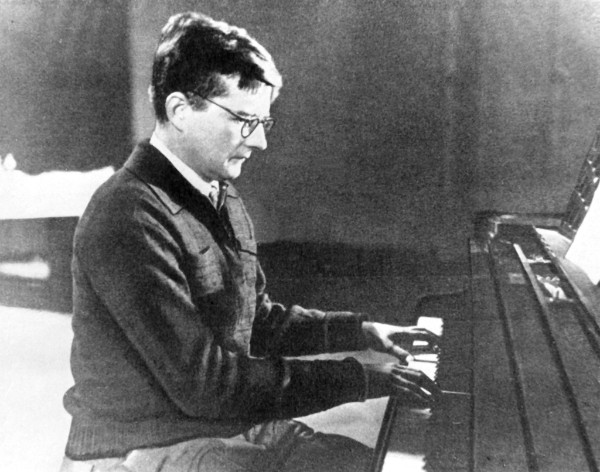
Dmitri Shostakovich
This pattern recurs in several of his most personal, meaningful works, as well as in all five movements of this quartet, recalling Debussy’s embrace of cyclic form.
Historians and listeners have debated the combined meaning of the dedication, the D-S-C-H signature, the political situation in the post-Stalin Soviet Union, and Shostakovich’s mental health around this time. Those debates will continue, but one fact beyond debate is the quartet’s emotional impact.
Haydn could never have foreseen his genial string quartet evolving into this: a way to encode private heartbreaking emotions inside a very public piece of music.
Steve Reich – Different Trains (1988)
Different Trains embraces 20th-century technology, relying on recorded tape snippets to augment the string parts.
In the work, Reich wrestles with the intersection of global and personal. Reich was a Jewish boy who travelled by train in America in the early 1940s. In adulthood, he realised that at the same time, other Jewish boys on another continent had been travelling by train, too – on their way to Nazi death camps. This work explores where their stories rhyme and diverge.
Different Trains won the 1989 Grammy for Best Contemporary Classical Composition. Like so many great string quartets before it, it expanded listeners’ ideas of what the music could do: addressing both political matters and deeply felt personal emotions while also using new technology to tell people’s stories and evoke emotion.
Conclusion
Taken together, these works tell the story of how the string quartet developed: how Haydn invented it; how Mozart and Brahms refined it; how Schubert and Shostakovich made it deeply personal; and how Beethoven, Bartók, Debussy, and Reich revolutionised it.
The string quartet has inspired some of the most inventive, intellectual, intimate classical music ever written – and composers are still writing for it today.
For more of the best in classical music, sign up for our E-Newsletter