Handel myths have circulated for centuries, and generations of music lovers have believed them.
But the truth is more complicated.
No, Handel didn’t compose Messiah with superhuman speed. No, the king didn’t stand at the world premiere when he heard the first strains of the Hallelujah Chorus; in fact, he wasn’t even present! And no, Handel certainly did not die in poverty.
Today we’re looking at what really happened, and how each legend took hold in the first place.
1. Myth: Handel was completely self-taught and had no training.
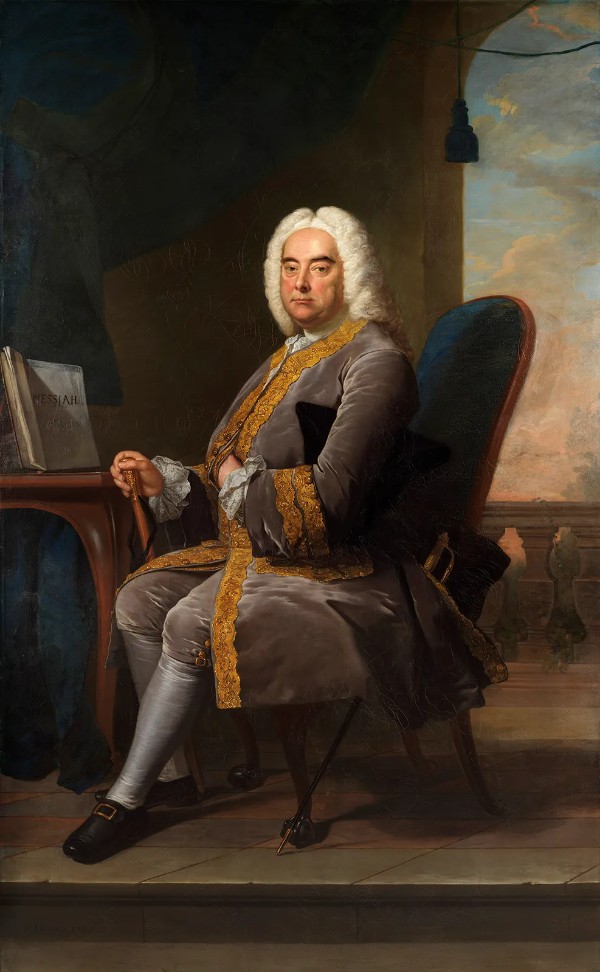
George Frideric Handel
Handel’s “Guardian Angels, Oh, Protect me” from The Triumph of Time and Truth
When Handel was a boy, his father did not want him to study music.
However, legend says young Handel arranged the secret delivery of a clavichord to a room in the family’s attic, where he taught himself what he could.
We don’t know whether that story is true, but we do know that by the time Handel was ten, his father’s opposition had softened somewhat. Local organist and composer Friedrich Wilhelm Zachow was hired as Handel’s music tutor.
Zachow taught him counterpoint, keyboard technique, and orchestration. He also had Handel copy and study scores by both German and Italian composers so that he could absorb different styles and eras of music.
Zachow was Handel’s only formal teacher. But he also informally absorbed the work of countless other composers, including giants like Alessandro Scarlatti, Arcangelo Corelli, and Georg Philipp Telemann.
In fact, he has become famous – some might say infamous – for how many composers he copied in his own work.
2. Myth: Handel was divinely inspired when he wrote Messiah; what would have taken him years, in this case, took a few weeks.
Handel’s Messiah
Handel indeed composed the 260-page Messiah in about three and a half weeks, between August 22 and September 14, 1741.
Some commentators also interpret the speed as evidence of divine inspiration.
However, Handel’s librettist did not; he believed it showed Handel wasn’t taking the project seriously! (The two quarrelled over the quality of the finished project.)
The simple truth is, Handel composed quickly. He wrote operas and oratorios under time crunches that are shocking to imagine today.
In fact, he got started on his next oratorio, Samson, the day after finishing Messiah. It took him just six weeks to finish that score, proving that Handel’s speed in writing Messiah was impressive, but not uniquely miraculous.
3. Myth: King George II stood up during Handel’s Hallelujah Chorus, starting a tradition that continues today.
Handel’s “Hallelujah Chorus” from Messiah
If you’ve ever been to a performance of Messiah, the audience has probably stood during the “Hallelujah Chorus.”
At some point, someone probably explained that it was a tradition begun after the king stood at the premiere, and the entire audience followed suit out of respect for him.
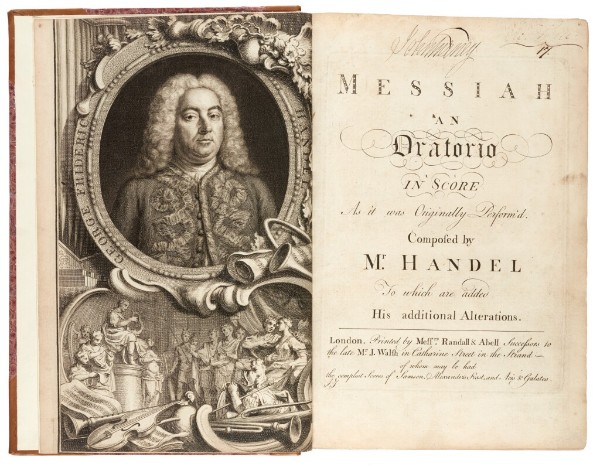
Handel’s Messiah © sothebys-md.brightspotcdn.com
However, the world premiere of Messiah was in Dublin, where the royal family was decidedly not in attendance. And we have no evidence that King George II attended the 1743 London premiere, either.
So where did the tradition start? The earliest known reference to it dates from 1780, when poet James Beattie wrote in a letter that the king had stood at the premiere (a fact that we now know to be false), and that “hence it became the fashion in England for the audience to stand while that part of the music is performing.”
In the end, the first person to start this centuries-long tradition remains a music-history mystery.
4. Myth: Handel and Bach knew each other since they were both German and born in the same year.
Handel’s Music for the Royal Fireworks
Remarkably, Handel and Bach were both born in 1685, Handel in early March and Bach a few weeks later. Not only that, but they were born only about eighty miles apart – Handel in Halle, Bach in Eisenach.
Despite that, they never met.
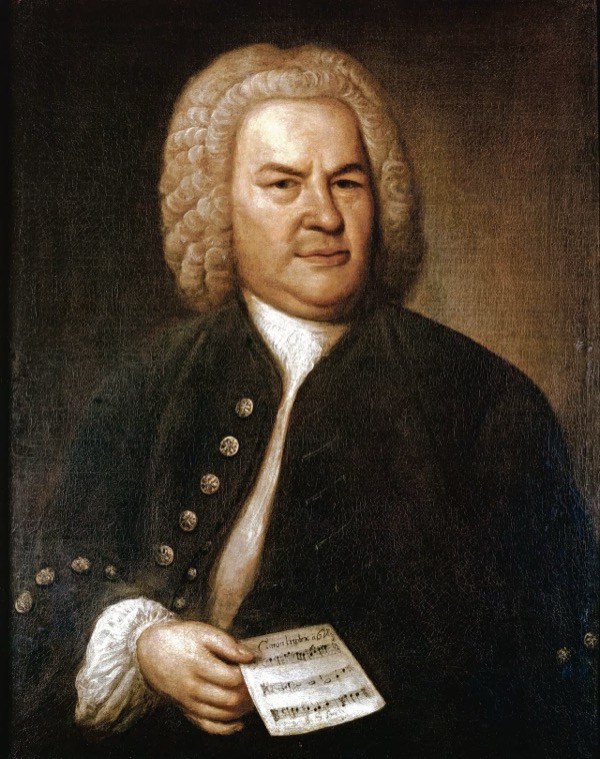
Johann Sebastian Bach
We know that Bach tried to meet Handel twice. In 1719, when Handel was visiting his hometown of Halle, Bach travelled from nearby Köthen to meet him – but Handel had just left for London again and missed him.
Ten years later, during another of Handel’s visits to Halle, Bach got sick with a fever and sent his son Wilhelm Friedemann in his place. Wilhelm Friedemann invited Handel to Leipzig to meet his father, but Handel never took him up on the offer.
They would not have another chance: Bach died in 1750.
5. Myth: Like all composers, Handel died poor.
Handel’s Water Music
On the contrary, Handel died wealthy.
By the time he died in 1759, he had accumulated a substantial estate that was reportedly worth around £20,000: quite the legacy for a Baroque composer. (That said, some of the income came from his work as an impresario and performer/conductor, not only from his composing.)
In recent times, as people have become more interested in the connections between music history and race, commentators have noted that some of his wealth can be ascribed to his ownership of shares in the East India Company – which, during Handel’s lifetime, relied on slave labour.
Handel never married or had children, but he left generous bequests to servants, friends, and charitable causes. One of those beneficiaries was the Foundling Hospital, which he had supported throughout his career with benefit performances of Messiah: a real full-circle moment.
His funeral matched his social standing: he was buried in Westminster Abbey, with an estimated 3,000 people in attendance.
So where did the legend of Handel’s poverty actually come from? The stereotype of composers is that they die in penury, and people may be misremembering the financial troubles he endured while presenting operas in the 1730s.
But by the end of his life, Handel’s fortunes had recovered completely.
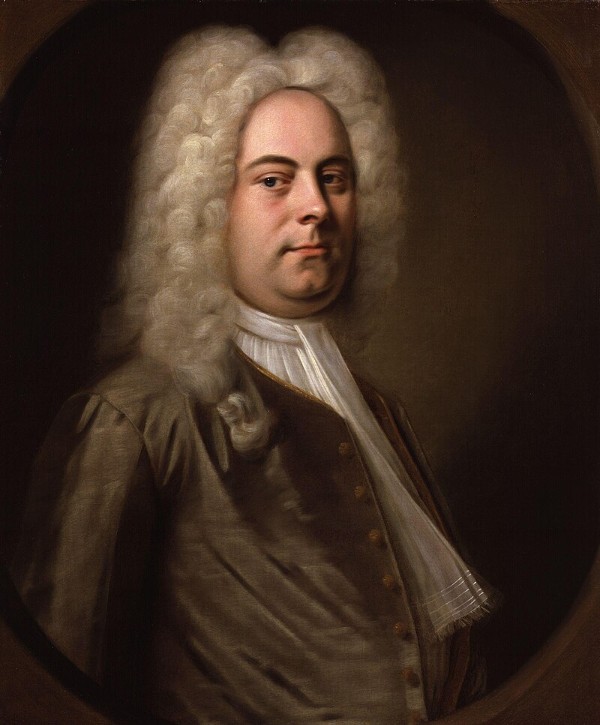
Balthasar Denner: George Frideric Handel, ca 1726–1728 (London: National Portrait Gallery)
Conclusion
Handel’s actual life turns out to be more practical and more complicated than the old myths suggest.
In the end, he was less a messenger from God and more a hardworking professional who composed fast – and who clearly valued earthly wealth and stability.
For more of the best in classical music, sign up for our E-Newsletter