The five composers here represent two different kinds of silencing by the Nazis.
Mendelssohn and Mahler were already dead by the time Hitler came to power. Both had converted to Christianity, but that meant nothing to a regime that measured Jewishness by ancestry alone. The regime attacked their legacies and stripped their names from streets and concert programs.
Meanwhile, the other three composers here – alive when the Nazis came to power – faced a more immediate danger: not only being banned from performance and jobs, but deported to camps.
But all five composers experienced some version of the same brutal truth: in the Nazi regime, a composer’s music could easily be erased.
Felix Mendelssohn
Mendelssohn’s A Midsummer Night’s Dream Overture
Composer Felix Mendelssohn had a complicated relationship with Judaism.
He was the grandson of Moses Mendelssohn, an internationally renowned philosopher and theologian who advocated assimilating Jewish people into German society.
During the Mendelssohns’ lifetimes, German Jewish people faced violations of their civil rights. As a result, Felix converted to Lutheranism. He was baptized as a child with his siblings in 1816; he married the daughter of a pastor; and his father urged him to adopt the Christian surname Bartholdy.
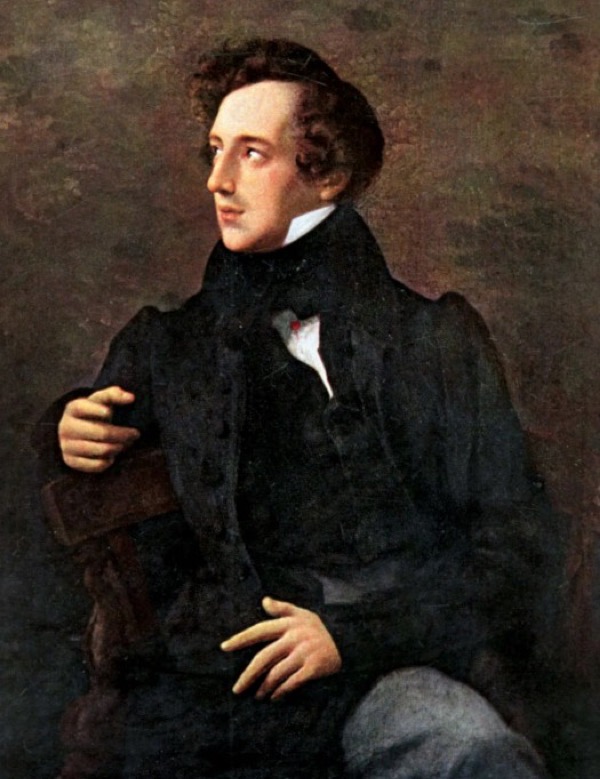
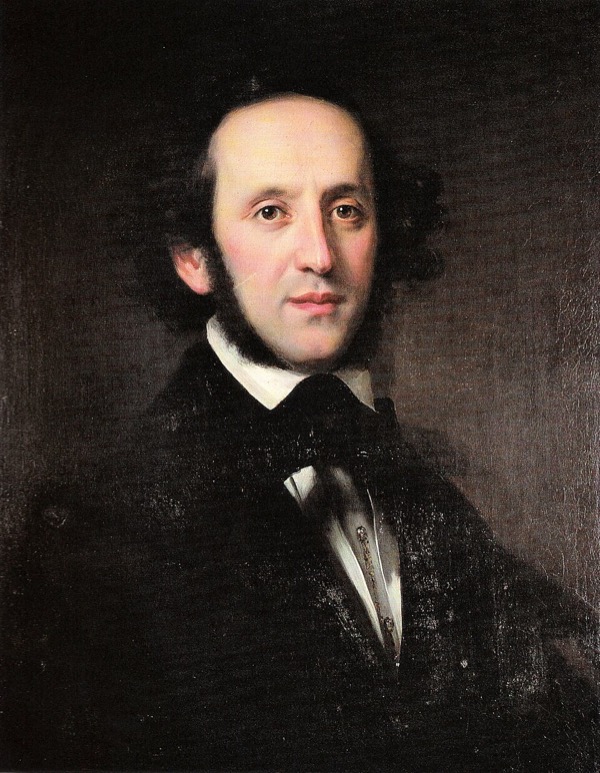
Felix Mendelssohn
A century later, the Nazis came to power. They believed that even Jewish people who had converted, or were descendants of Jewish people, were suspect, and in the Nazis’ eyes, the grandson of Moses Mendelssohn was unquestionably Jewish.
That ancestry meant his music was doomed. In 1940, Mendelssohn’s name appeared in the Lexicon of Jews in Music, and the Nazis tore down a statue of him in Leipzig. They also commissioned music to try to replace Mendelssohn’s program music for A Midsummer Night’s Dream – a chilling venture that ultimately failed.
Gustav Mahler
Mahler’s Symphony No. 1
Gustav Mahler was born into a Jewish family in 1860.
He grew up to become one of the great conductors of his generation, spending the early part of his career accepting a series of ever-more prestigious posts.
In 1897, he was a leading candidate for the biggest position in Austria: director of the Vienna Court Opera. In February of that year, he was baptised and converted to the state religion of Catholicism, a necessary prerequisite for the job – and a few months later, he was hired.
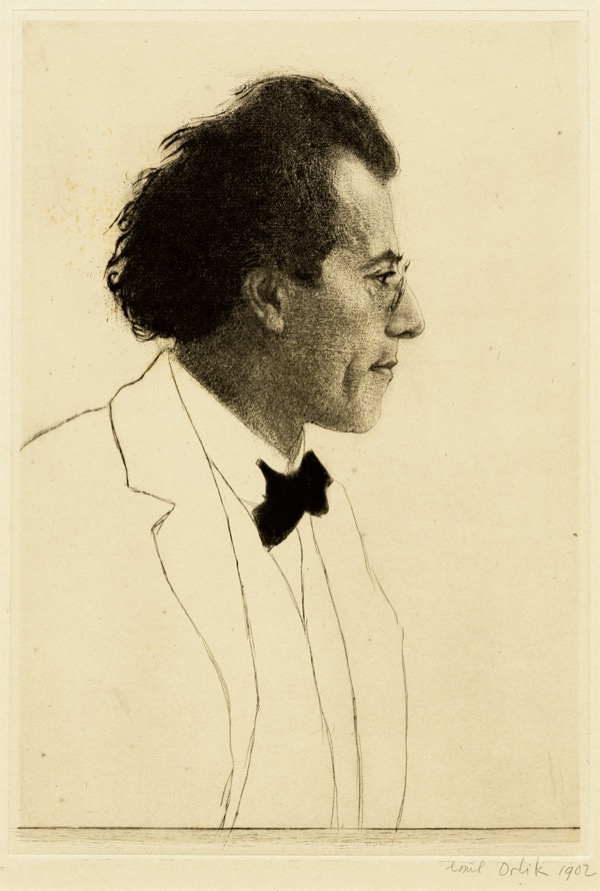
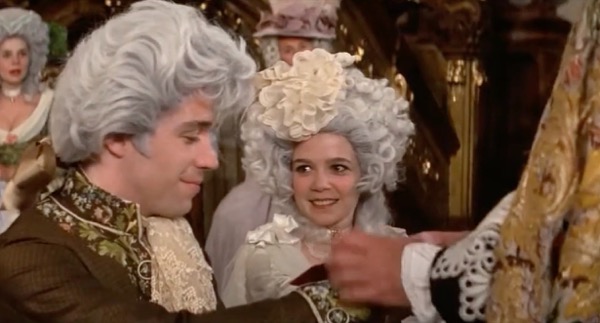
Emil Orlík: Gustav Mahler, 1902
Mahler died in 1911, and the Nazis came to power two decades later. As with Mendelssohn, Mahler’s conversion didn’t satisfy them, and they removed his music from programs.
A street named after him, the Mahlerstraße, was renamed to Meistersingerstraße. This new name calls to mind the infamously anti-Semitic Richard Wagner, who wrote the nationalist opera Die Meistersinger von Nürnberg.
Within weeks of the war’s end, the occupying forces organised performances of Mahler’s symphonies by Jewish conductors. These performances became important symbols of the end of Nazi cultural control.
Erwin Schulhoff
Schulhoff’s “5 Pieces for String Quartet” arranged for orchestra
Erwin Schulhoff was born in Prague in 1894 to a prosperous Jewish merchant family. Antonín Dvořák, Prague’s most famous musician, took note of the boy’s talent shortly before he died in 1904.
By the 1920s, Schulhoff had built a reputation as one of Europe’s foremost musical innovators, combining Dadaism, jazz, and the atonality of the Second Viennese School into a style entirely his own. His 1919 piece In futurum, composed entirely of rests, anticipated John Cage’s 4’33” by three decades.
When the Nazis took power in 1933, his Jewish ancestry and increasingly overt Communist sympathies – in fact, he was so enthusiastic about the ideology, he’d set the Communist Manifesto to music in 1932 – made him a target on two fronts simultaneously.
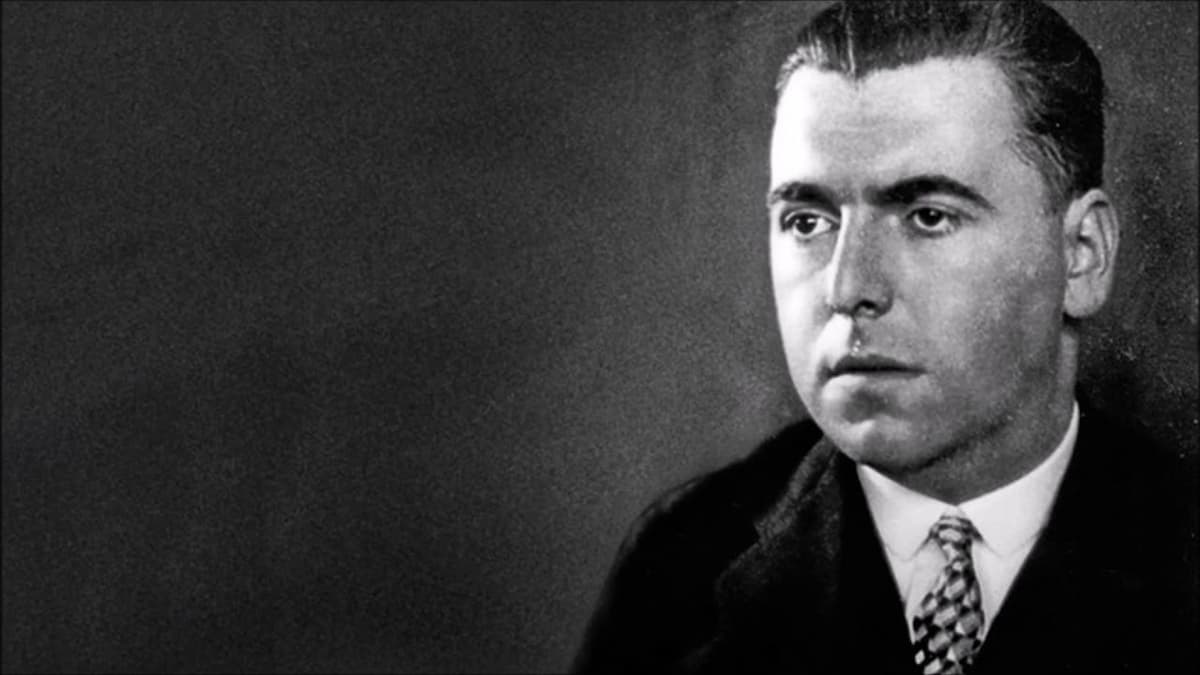
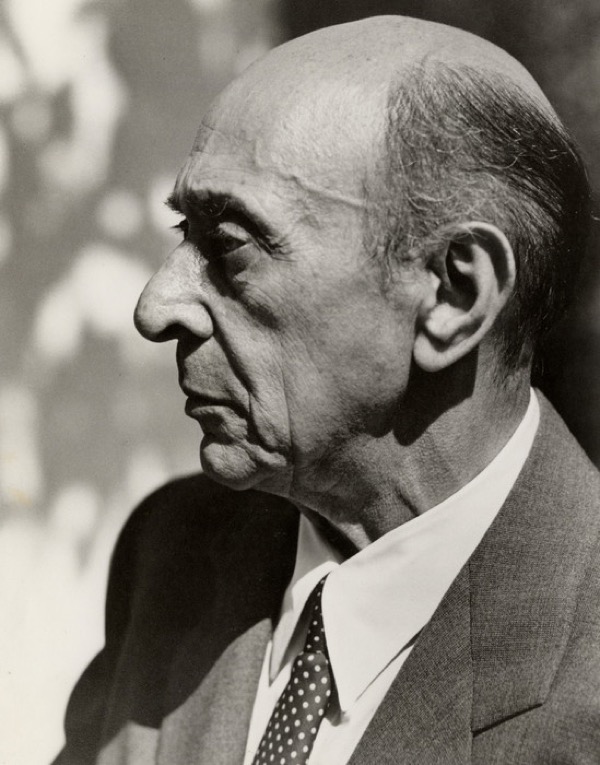
Erwin Schulhoff
His works were labelled “degenerate” and banned by the Nazis. After the 1939 occupation of Czechoslovakia, he had to perform under a pseudonym to survive in Prague.
In 1941, the Soviet Union granted him citizenship, but Germany invaded the USSR days before he could leave.
He died of tuberculosis in the Wülzburg internment camp in Bavaria in August 1942, at the age of 48. His father, deported separately to Theresienstadt, died the same year.
Viktor Ullmann
Ullmann’s “The Emperor’s Farewell” from The Emperor of Atlantis
Viktor Ullmann was born in 1898 in Teschen in present-day Poland, then part of the Austro-Hungarian Empire. His parents were of Jewish descent who had converted to Catholicism due to his father’s Austrian military career.
He studied under Arnold Schoenberg in Vienna and later worked as Alexander Zemlinsky’s assistant in Prague, building a respected career as a composer, conductor, and critic through the 1920s and 1930s.
His Catholic upbringing meant he felt, by his own account, little connection to his Jewish identity. However, Nazi racial law measured ancestry, not individual personal beliefs, and after the 1938 occupation of Czechoslovakia, he faced escalating restrictions.
He sent his two eldest children to England, but he and his wife were deported to Theresienstadt in September 1942. There, he became one of the camp’s most prolific cultural organisers, founding the “Studio for New Music” and composing about twenty works, including the opera Der Kaiser von Atlantis (The Emperor of Atlantis), which tells the story of the emperor’s desire to kill.
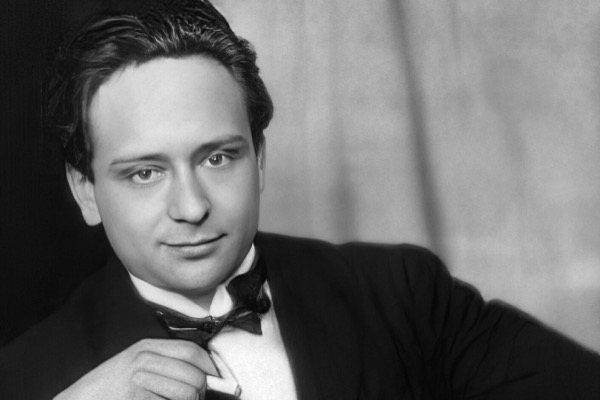
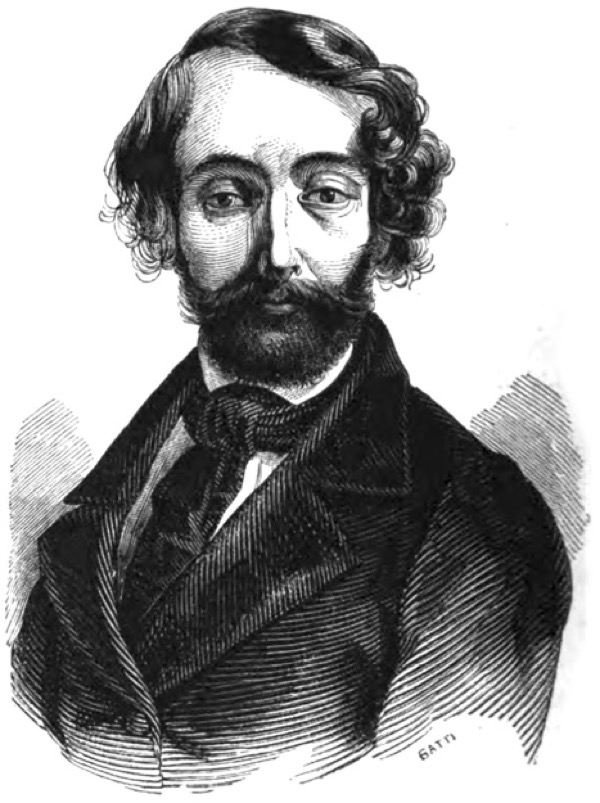
Viktor Ullmann
Only at Theresienstadt did he begin engaging directly with Jewish material, setting Yiddish and Hebrew folk songs.
In October 1944, he was deported to Auschwitz and murdered in the gas chambers two days after arrival, at age 46. Much of his work was lost during the war, but Der Kaiser von Atlantis has been performed.
Pavel Haas
Haas’s Study for String Orchestra
Pavel Haas was born in 1899 in Brno to a wealthy, prominent Jewish family.
He studied there with composer Leoš Janáček and became one of his most famous students. His opera Šarlatán premiered to acclaim in Brno in 1938, the same year the Nazis took over Czechoslovakia.
Once the Nazis took over, performances of Haas’s music were banned outright due to his Jewish background, and he was forbidden to work. Haas divorced his non-Jewish wife in a desperate attempt to shield her and their daughter from the coming persecution.
He was deported to Theresienstadt in December 1941, arriving so depressed he initially couldn’t compose. Fellow prisoner Gideon Klein coaxed him back to work, and Haas went on to write his best-known piece, the Study for String Orchestra. The Nazis later filmed a performance of the piece for their propaganda film disguising the camp’s true conditions.
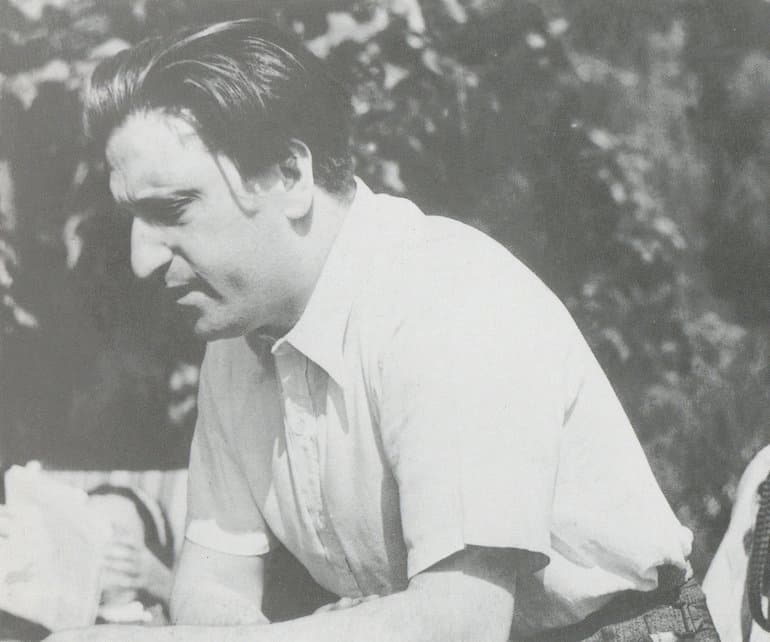
Pavel Haas
A month after that filming, Haas was deported to Auschwitz. At the selection ramp, a fit of coughing caused Dr Mengele to send him to the gas chambers instead of conductor Karel Ančerl, who survived to tell Haas’s brother the story after the war.
Haas died 17 October 1944, aged 45.
Conclusion
It is difficult to know how to process the horror of these stories. Schulhoff, Haas, and Ullmann’s stories are especially gutting. We lost not only the music they wrote, but also the music they would have written had they lived.
But the stories of Mendelssohn and Mahler are also chilling: their erasure from European concert programs in the 1930s and 1940s shows how easy it can be to silence beloved composers in service of ideological goals.
One of the best ways we can pay tribute to these silenced composers is to make sure we listen to the work they left behind.
For more of the best in classical music, sign up for our E-Newsletter