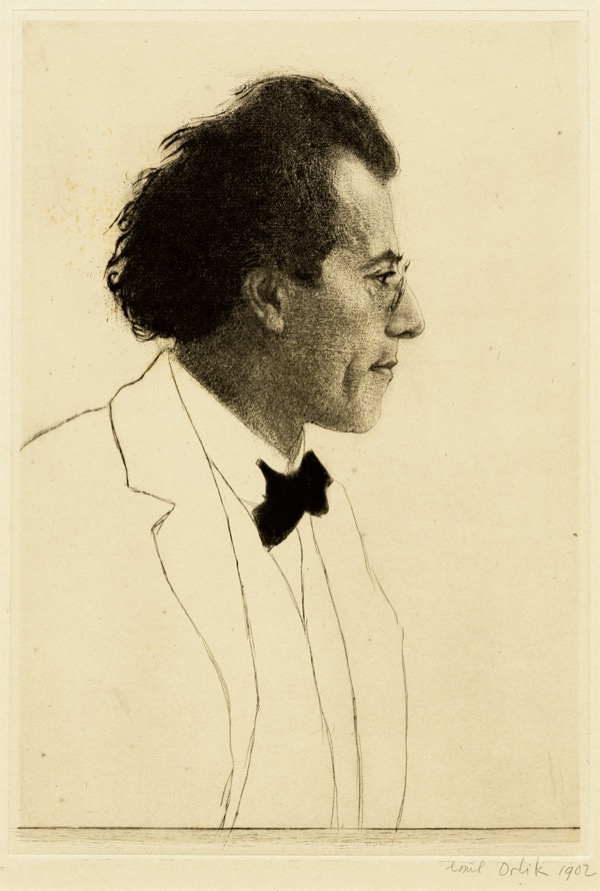
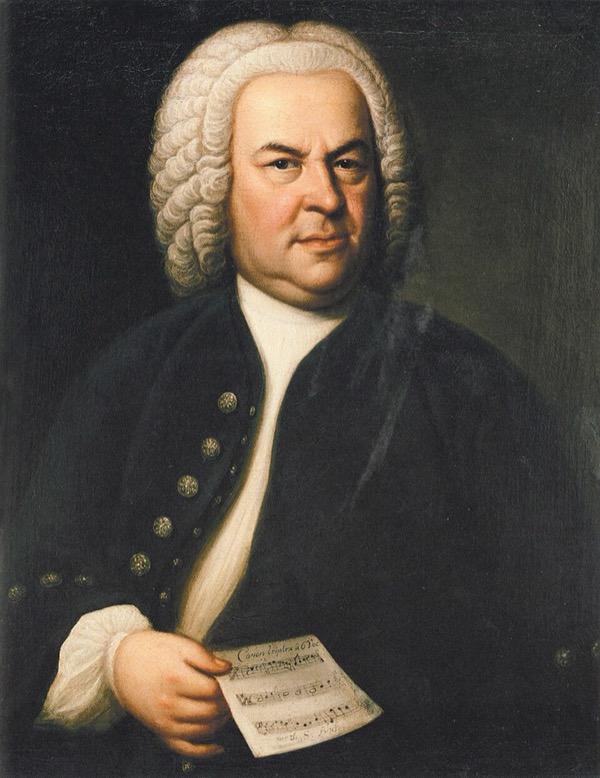
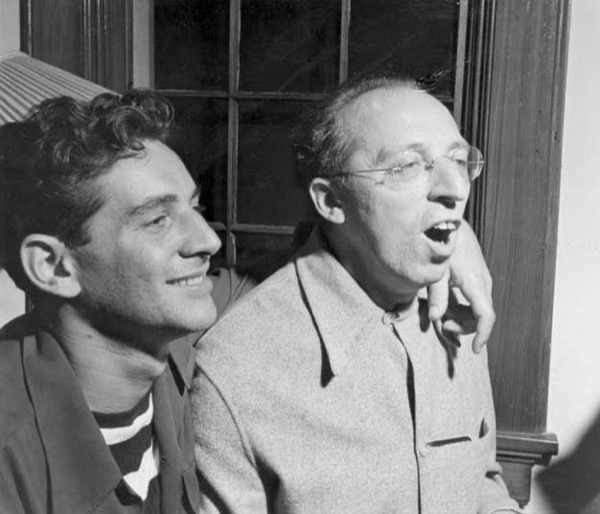
Not every composer targeted by the Nazis died in the Holocaust. The five men on this list got out before it was too late.
Every one of their escape stories was dramatic. One sent a coded telegram to his wife; another signed a film contract at just the right moment; another reconverted to the faith he’d left decades earlier, just before leaving for America.
None of these men left Europe unscathed. Reputations painstakingly built in Vienna and Berlin had to be rebuilt from nothing in Los Angeles, Paris, or New York. Some, like Korngold, found new success in America that eclipsed anything they’d achieved before. Others, like Zemlinsky, never recovered what they’d lost.
These are the stories of five composers who survived the Nazi purge of “degenerate” and Jewish music – and how they were able to rebuild.
Arnold Schoenberg
Schoenberg’s “A Survivor from Warsaw”
Born in Vienna to a Jewish family, Arnold Schoenberg converted to Lutheranism in 1898. That conversion meant nothing to the Nazis; they viewed Jewishness as a racial matter, not just a religious one.
In 1933, when they came to power, Schoenberg taught in Vienna and at the Prussian Academy of Arts in Berlin. He was purged from that position upon the implementation of Nazi civil service rules targeting Jewish academics.
Schoenberg fled Austria and Germany via Paris, where he reconverted to Judaism. In October 1933, he departed for Los Angeles.
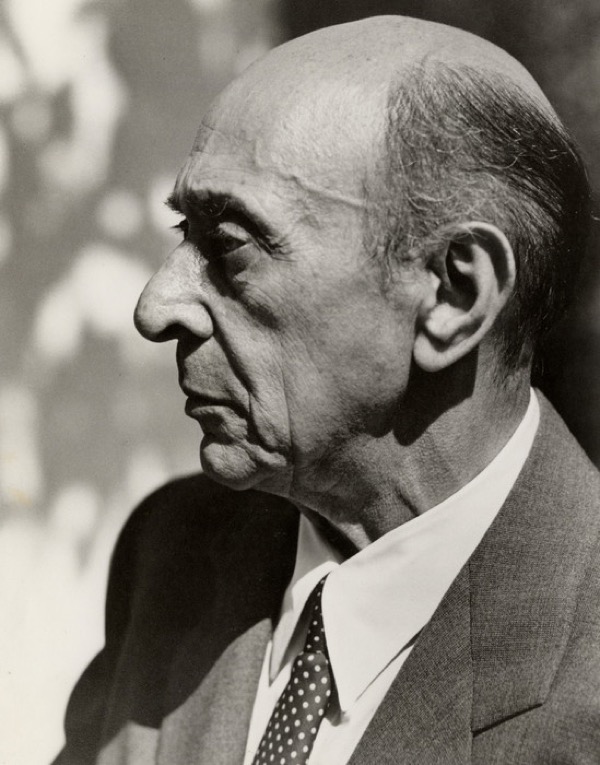
Arnold Schoenberg, Los Angeles, 1948
His atonal, twelve-tone works were later condemned as degenerate and featured in a 1938 Entartete Musik (Degenerate Music) exhibition.
Kurt Weill
Weill’s Kiddush
Composer Kurt Weill was born in 1900 in the Jewish quarter of Dessau, Germany, to a cantor and his wife. His first composition was called “Mi Addir: Jewish Wedding Song”, written when he was thirteen.
During the 1920s, he lived in Berlin, where he became involved in the new music scene of the legendary Weimar Republic. In 1928, he wrote the satirical The Threepenny Opera.
Works after The Threepenny Opera include Rise and Fall of the City of Mahagonny (1930), Die Bürgschaft (1932), and Der Silbersee (1933) – all of which were targeted in some way by Nazi thugs, leaving presenters increasingly hesitant to mount Weill’s works.
He fled Germany in 1933 and settled in Paris; two years later, he relocated to America, where he spent the next chapter of his career writing for musical theatre.
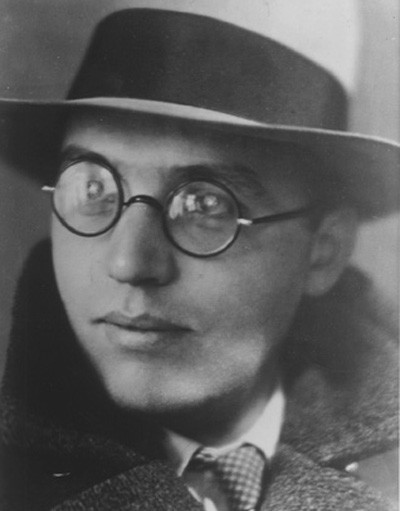
Kurt Weill, 1928 (photo by Thiele)
Between his Jewish ancestry, his love of satire, and his left-wing politics, his music was banned by the Nazis and included, along with Schoenberg’s and others, as an example in the Entartete Musik exhibition.
Erich Wolfgang Korngold
Korngold’s “Passover Psalm”
Erich Wolfgang Korngold was born in 1897 in Brno to a Jewish family. His father, Julius Korngold, was one of Vienna’s most powerful music critics, and Erich became one of the most impressive prodigies in music history.
By the 1920s, he was one of the most celebrated opera composers in the German-speaking world, with Die tote Stadt performed across Europe.
Hollywood took note. He wrote his first soundtrack in 1934, scoring A Midsummer Night’s Dream for Warner Bros.
He returned to California to do more film work, placing him in Hollywood during the Anschluss on 12 March 1938, the day when Nazis crossed into Austria. He came to believe that his Hollywood work may well have saved his life.
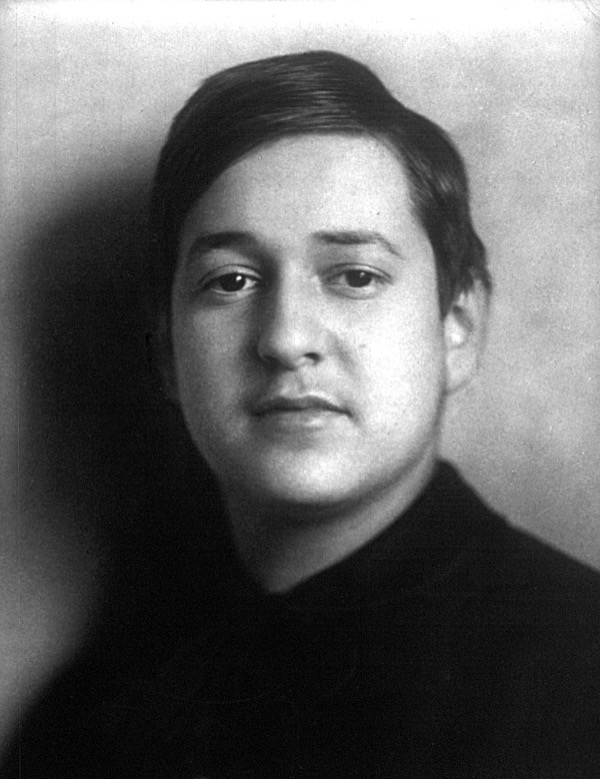
Erich Wolfgang Korngold, 1912
Korngold stayed in America and shaped the sound of movie music for generations to come. However, he never fully returned to the European concert-music mainstream in his lifetime.
Ernst Toch
Excerpts from Toch’s Cantata of the Bitter Herbs
Ernst Toch was born in 1887 in Vienna to a Jewish leather-dealer’s family. By the late 1920s, his style had evolved from a Brahms-inspired personal language into something edgier and more avant-garde.
His Jewish heritage made him a target. In 1932, the year before they came to power, the Nazis stopped a rehearsal of his opera Der Fächer in Cologne by physically seizing the conductor’s baton.
The following year, Toch left Germany to attend an international musicological conference in Florence, Italy. He travelled to Paris instead and sent his wife a message: “I have my pencil,” their code for her and their daughter to join him.
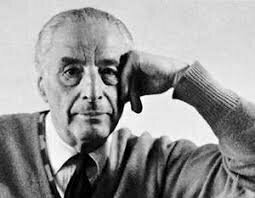
Ernst Toch
After stints in London and New York, he settled in Los Angeles, where he scored Hollywood films. His autobiographical third symphony won a Pulitzer Prize in 1956.
Although he escaped, his family didn’t emerge unscathed from the Holocaust. His wife’s sister was murdered in a concentration camp.
Alexander Zemlinsky
Zemlinsky’s Der Kreidekreis
Alexander Zemlinsky was born in Vienna in 1871 into a family with Jewish, Catholic, and Bosnian Muslim roots. His mother’s line converted to Judaism before his birth, and he played organ at the family synagogue. Zemlinsky himself converted to Protestantism in 1899.
He made a living as a composer and teacher; his students included the future Alma Mahler (who he would fall in love with) and Arnold Schoenberg (who would marry Zemlinsky’s sister).
In 1933, when the Nazis came to power, he was preparing the Berlin premiere of his opera Der Kreidekreis when Hitler’s rise stalled the production. The Nazis banned the work outright due to his heritage soon after. That same year, he lost his position at the Berlin Academy of Music.
He moved to Vienna, where he kept composing. After the Anschluss in 1938, he fled through Prague and relocated to New York.
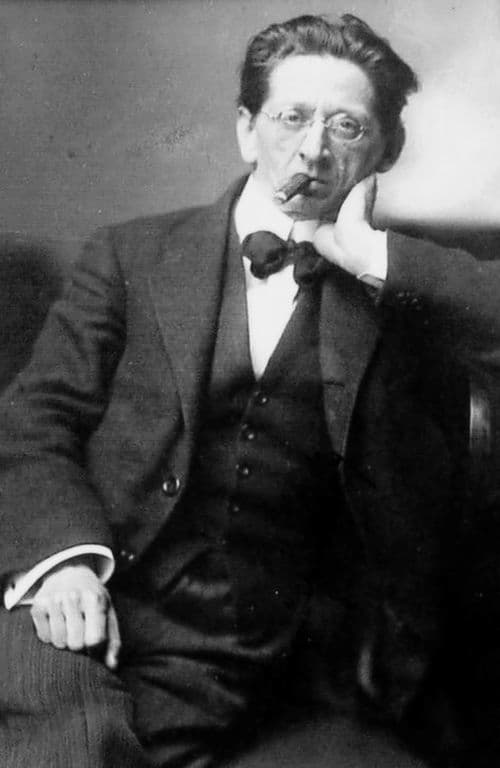
Alexander von Zemlinsky
Unlike Schoenberg, Zemlinsky didn’t live long enough to gain his footing again in America. The Met rejected his last opera, and he died in 1942, largely forgotten until a revival of interest decades later.
Conclusion
Each of these five composers’ survival stories is impressive and worth remembering. Schoenberg rebuilt an academic career in California; Weill reinvented himself on Broadway; Korngold became one of the most influential film composers in Hollywood history without ever fully reentering the concert hall he’d once dominated; Toch carried the grief of a sister-in-law murdered in a camp he’d escaped by months; and although Zemlinsky never regained the standing he’d had in Europe, he lived out his final years as a free man.
One of the best ways we can honour their bravery and resilience is by learning their stories and listening to their music.
For more of the best in classical music, sign up for our E-Newsletter