Many pieces of music have names that, on deeper reflection, are really oxymorons: the two words contradict each other. Some familiar oxymorons include jumbo shrimp, deafening silence, awfully good, original copy, and bittersweet, giving us a way to express the large version of a small thing, the emphatic silence that follows a noise, and so on. Together, the words create something more than the individual words can.
In music, we have works such as Bartók’s Concerto for Orchestra. If a concerto is a soloist (or group of soloists as in a Triple Concerto), who’s the named soloist here? Each section of the orchestra becomes the soloist at different times. This becomes clearest in the second movement, the Game of Pairs (II. Giuoco delle coppie: Allegro scherzando), where pairs of instruments, starting with the bassoons, take turns as soloist.
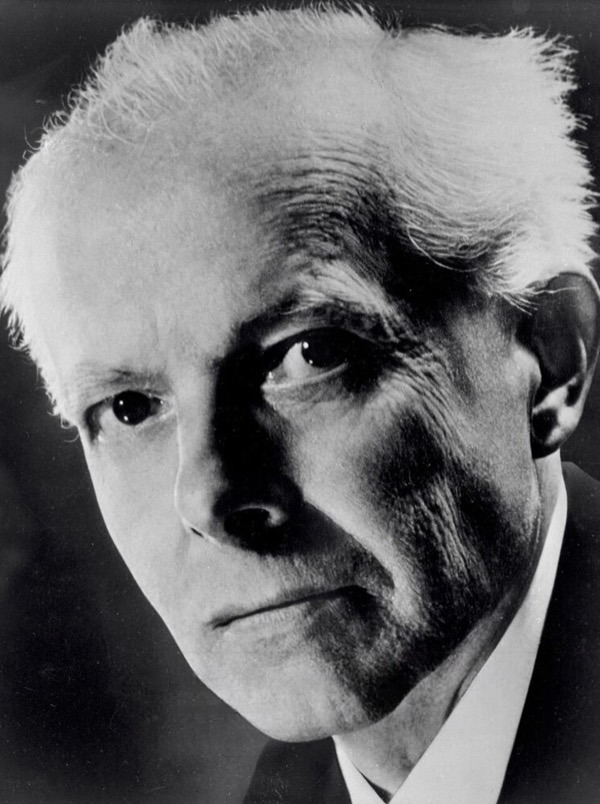
Béla Bartók, 1943
Béla Bartók: Concerto for Orchestra, BB 123: II. Giuoco delle coppie: Allegro scherzando (Belgian Radio and Television Philharmonic Orchestra; Alexander Rahbari, cond.)
The same might be said for Rachmaninoff’s Symphonic Dances. When you think of a dance party, you rarely invite a symphony! In this case, Rachmaninoff intended the pieces for a proposed new ballet by the choreographer Fokin, but his death ended that idea. Rachmaninoff then pulled all the material together in what is a symphony in all but name. Additionally, the three movements were intended to represent different times of day: the first as Mid-Day, the second as Twilight, and the third as Midnight. To reinforce the night theme, the work pits the forces of Death, represented by the Dies irae melody from the Requiem, against the forces of Redemption, represented by the triumph of the final Alleluia, taken from the Russian liturgy.
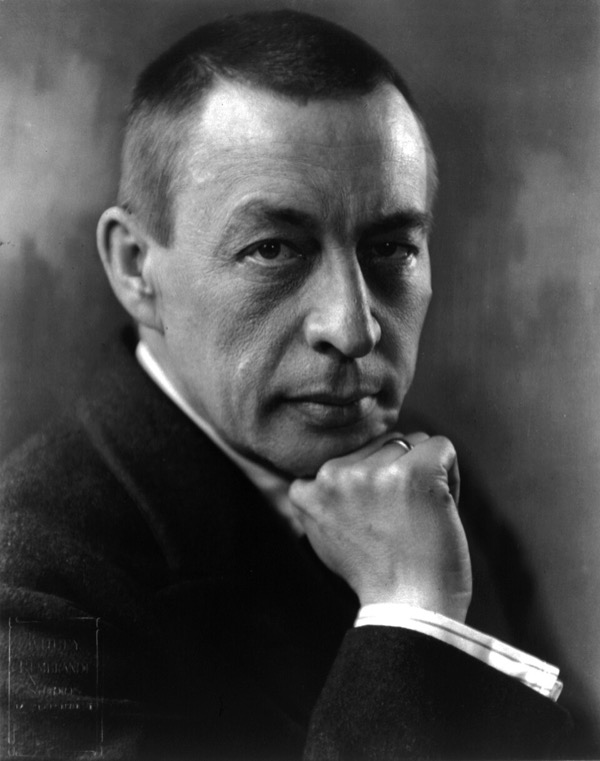
Sergei Rachmaninoff, 1921
Sergei Rachmaninoff: Symphonic Dances, Op. 45: III. Lento assai – Allegro vivace – Lento assai – Come prima – Allegro vivace (Detroit Symphony Orchestra; Leonard Slatkin, cond.)
We can always count on Erik Satie for titles that puzzle: Trois morceaux en forme de poire (Three pieces in the form of a pear). Debussy had been telling Satie for some time to pay more attention to musical form, so Satie created these pieces, which he said were ‘pear-shaped’. In English, we hear the title as ‘3 Pieces in the form of a Pair’, which is not what Satie meant. The pun comes not only from the idea of a pear as a musical form (when what Debussy meant was sonata form, or rondo form), but also from the French pun on the word ‘poire’, which can mean ‘nitwit’. Besides, there are 7 pieces, not 3, with 4 pieces framing the middle three movements, numbered I., II., and III.
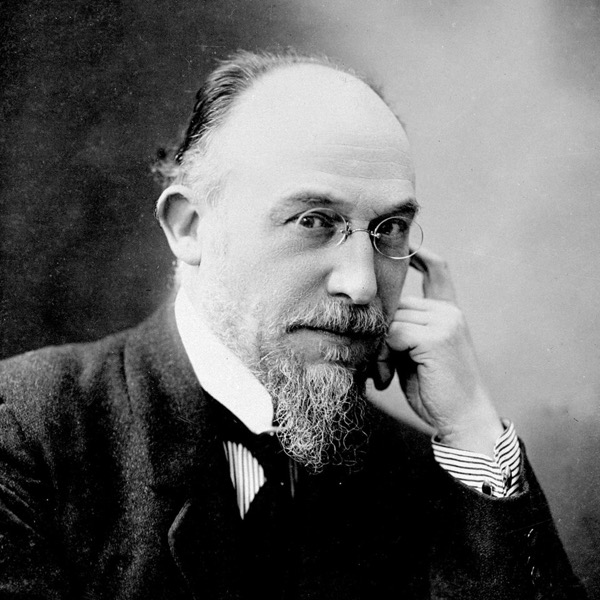
Erik Satie
Erik Satie: Trois Morceaux en forme de poire: II (Enleve) (Olof Höjer, piano; Max Lorstad, piano)
We could also look at Felix Mendelssohn’s many Songs without Words. Songs, by their very definition, have words. Mendelssohn wrote nearly 50 of these lyrical works, and, together with his sister Fanny, they invented a new genre of music. Felix Mendelssohn never intended the music to be set to words, saying ‘What the music I love expresses to me, is not thought too indefinite to put into words, but on the contrary, too definite’ (Mendelssohn’s italics). He knew what he was expressing in purely musical terms and didn’t need words to add anything to that idea.
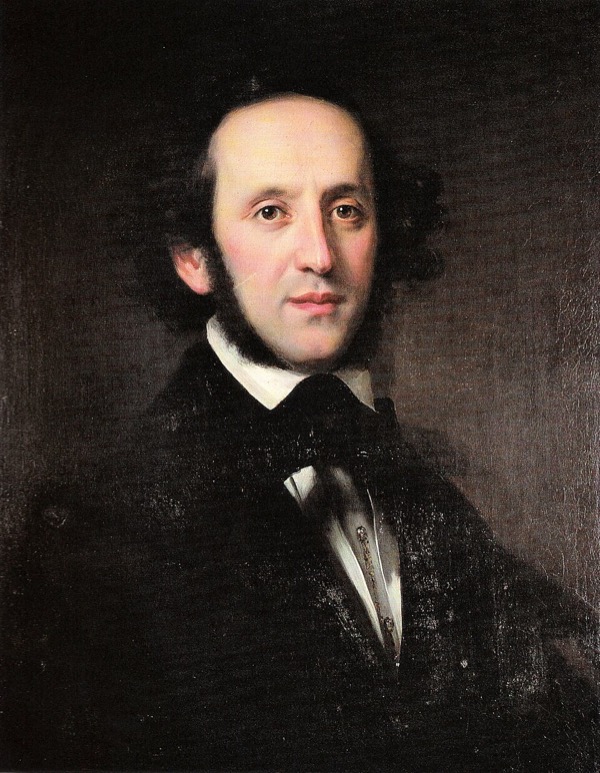
Eduard Magnus: Felix Mendelssohn (Berlin State Library)
Felix Mendelssohn: Lieder ohne Worte (Songs without Words), Book 7, Op. 85: No. 41 in A Major, Op. 85, No. 5, MWV U191 (1847 version) (Christopher Williams, piano)
Of course, we could always add the American Quartet written by Antonín Dvořák, a Czech, Beethoven’s removal of the dedication of his third Symphony and its renaming to its less personal title as the ‘Eroica’.
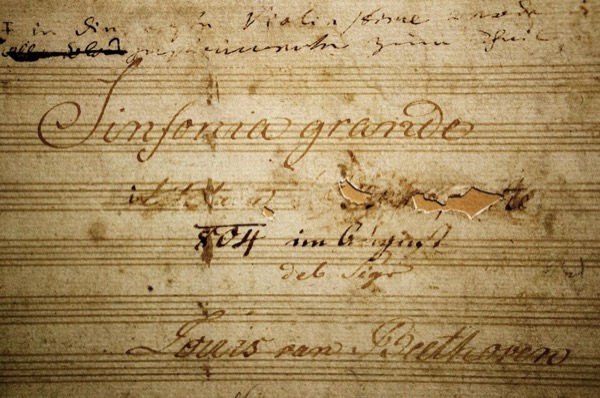
Beethoven: Symphony No. 3 title page, with the dedicatee’s name (Napoleon Bonaparte) forcibly removed.
The final movement of Haydn’s Joke Quartet (Op. 33/2) plays a joke on the listener’s expectations with a grand pause at the end…or is it the end? The silence is followed by a sudden, loud sixteenth note, then the violin plays the A theme, but with rests added that break up the music every 2 measures. The rests grow longer, and you’re never quite sure when the piece ends. In fact, the music ends abruptly and leaves the listener hanging in mid-phrase – is the joke that Haydn has fled the room? The oxymoron lies in the non-musical parts of a string quartet!
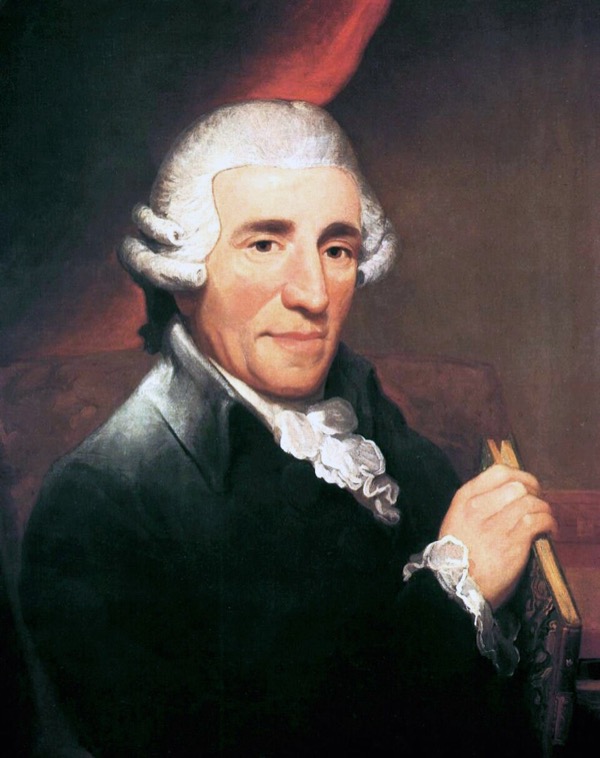
Thomas Hardy: Joseph Haydn, 1791 (London: Royal College of Music)
Joseph Haydn: String Quartet No. 30 in E-Flat Major, Op. 33, No. 2, Hob.III:38, “The Joke”: IV. Finale (Kodály Quartet)
It may be the title, or it may be hidden in the music, but oxymorons are everywhere!
For more of the best in classical music, sign up for our E-Newsletter