Ernest Chausson (1855–1899) studied under the composers Jules Massenet and César Franck at the Paris Conservatoire from 1879 through 1883, ultimately studying only with Franck. He had a keen appreciation for the innovations of the day, both French and German (he attended the premiere of Parsifal in 1882), and, as secretary of the Société nationale de musique from 1886, was in touch with the most important French composers of his day, including Duparc, Fauré, and Debussy. Chausson’s premature death at age 44 in a bicycle accident cut short the life of an observant and innovative composer. His sixty-some works seem to combine a sense for formal musical construction and composition with the colours of Wagner‘s world.
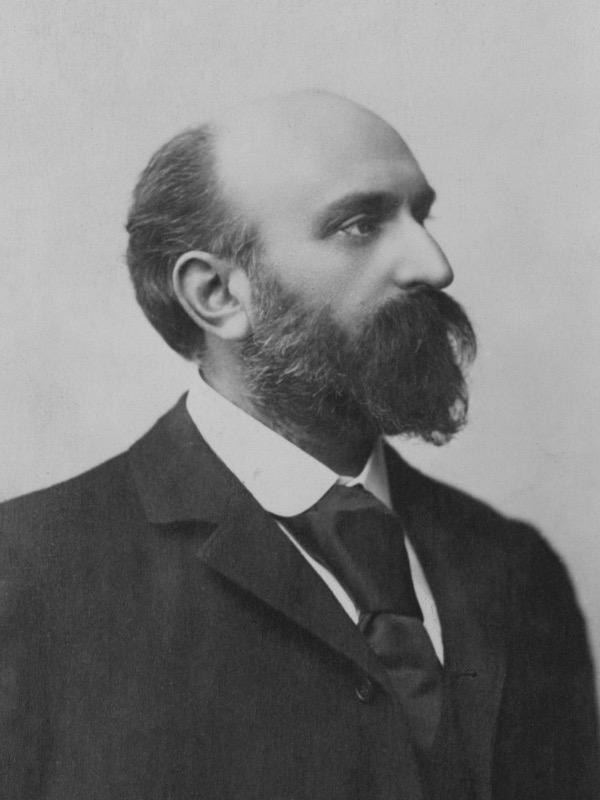
Ernest Chausson, 1897 (Gallica, btv1b8416388k)
His 1893 vocal work, Poème de l’amour et de la mer (Poem of Love and of the Sea), sits easily between genres, but is it an orchestrated song cycle, a secular cantata, or a symphonic monologue?
The work is in three parts separated by an orchestral interlude, but it’s not that simple. The first part is called La Fleur des eaux (The flower of the waters), which is made up of 3 texts: ‘L’air est plein d’une odeur exquise de lilas’ (An exquisite scent of lilac fills the air), ‘Et mon cœur s’est levé par ce matin d’été’ (My heart awoke that summer morning), and ‘Quel son lamentable et sauvage’ (What wild lament). With the scent of lilac in the air, our poet falls in love. The sun is dazzling on the sea, and, as if to be a reminder, the water kisses the sands. The sky is the colour of her eyes, the breeze carries her scent, and he desires to see his beloved as all the world reminds him of her. The end of the day brings their separation, and now the sea, booming, drowns out the sound of his sobs. Will she return? Are the wind and the waves mocking him?
Ernest Chausson: Poème de l’amour et de la mer (Poem of Love and of the Sea), Op. 19: No. 1. La fleur des eaux (Marie-Nicole Lemieux, contralto; Bordeaux Aquitaine National Orchestra; Paul Daniel, cond.)
The brief orchestral interlude moves us from the inconclusive ending of the first part through a short tour of melancholic motifs. We were left on the seaside, alone, at the end of the first section, and now a melancholic theme seems to depict our poet’s unhappiness.
Ernest Chausson: Poème de l’amour et de la mer (Poem of Love and of the Sea), Op. 19: No. 2. Interlude (Bordeaux Aquitaine National Orchestra; Paul Daniel, cond.)
The final section, despite its morbid title, seems to have a happier musical content, at least at the beginning. La Mort de l’amour (The death of love) sets the texts ‘Bientôt l’île bleue et joyeuse’ (Very soon the happy blue isle) and ‘Le vent roulait les feuilles mortes’ (The wind bowled the dead leaves along), and closes with ‘Le temps des lilas’ (The time of lilac).
Despite the optimistic section titles, this movement is really about the death of love. Spring was a time of happiness, and our love bloomed like the flowers. With the change of wind, the flowers withered, and so our love withered, too.
Ernest Chausson: Poème de l’amour et de la mer (Poem of Love and of the Sea), Op. 19: No. 3. La mort de l’amour (Marie-Nicole Lemieux, contralto; Bordeaux Aquitaine National Orchestra; Paul Daniel, cond.)
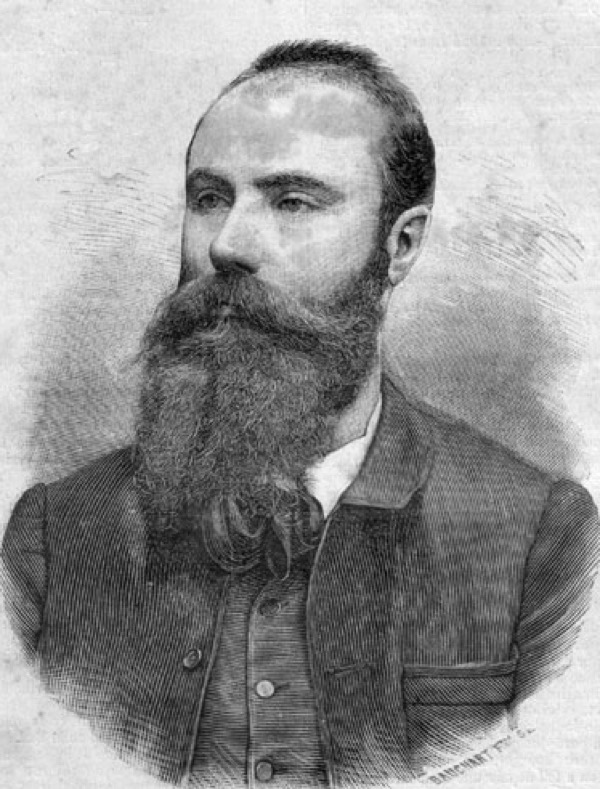
Maurice Bouchor
The poetry came from Chausson’s friend Maurice Bouchor (1855–1929), and he worked on the music for some 8 years. While he worked on his opera Le Roi Arthus, he set the vocal work aside. When he picked it up again in 1893, he revised it. The premiere, with piano, was given on 21 February 1893 in Brussels, with the composer at the keyboard and tenor Désiré Demest singing. The orchestral premiere occurred 2 months later in Paris on 8 April, with the orchestra conducted by Gabriel Marie and soprano Éléonore Blanc as soloist.
The music moves between melancholy and pain, and the orchestral interlude serves as the balance between the two sections. It’s only on a second hearing that we can finally understand the role of that brief but important orchestral break, which provides a sense of foreboding about what lies ahead.
In this unique musical setting, which has an overarching design yet seemingly unrelated individual sections, we can grasp how innovative Chausson was in its construction. The flow of the texts, from the opening optimism to the realisation that the death of all that is green with the coming of autumn signals his own internal loss, is a subtle signal that few composers could achieve.
For more of the best in classical music, sign up for our E-Newsletter