Winsor McCay (1866–1934), with his comic strip Little Nemo in Slumberland, changed so many things about the 20th-century comic strip to make it flexible and funny – more than a delivery system for a joke or a story.
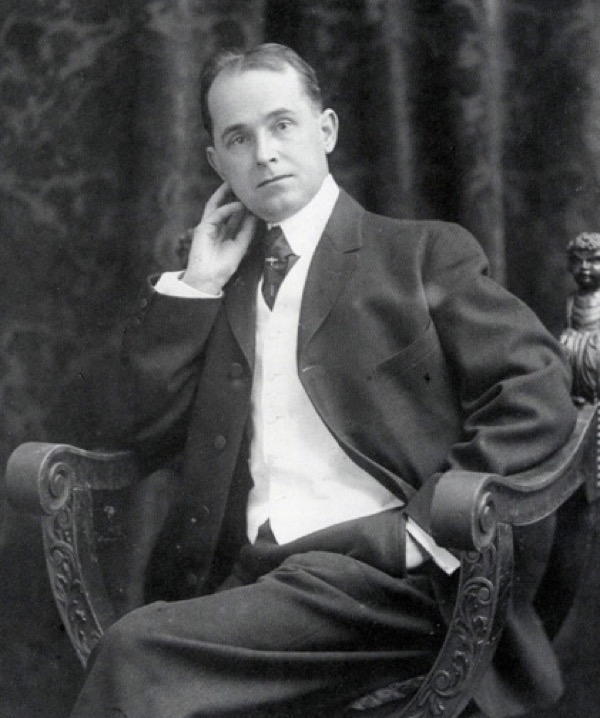
Winsor McCay, 1906
Little Nemo in Slumberland ran from 1905 to 1914, and again from 1924 to 1927. It first appeared in the New York Herald (1905–1911) and then in the New York American (1911–1914). When McCay returned to the Herald (now the Herald Tribune) in 1924, he revived the strip, and it ran until 1927 when he left the paper.
Little Nemo (meaning ‘No one’) starts the evening in bed before entering the dream world that takes him to Slumberland, where all normal rules seem suspended. In the first strip from 1905, Little Nemo is asleep in bed when a courtier appears and tells him that King Morpheus of Slumberland has requested him. Then there’s the flying horse, a race with kangaroos and tigers, until Nemo falls from his horse… and finds he’s fallen from his bed.
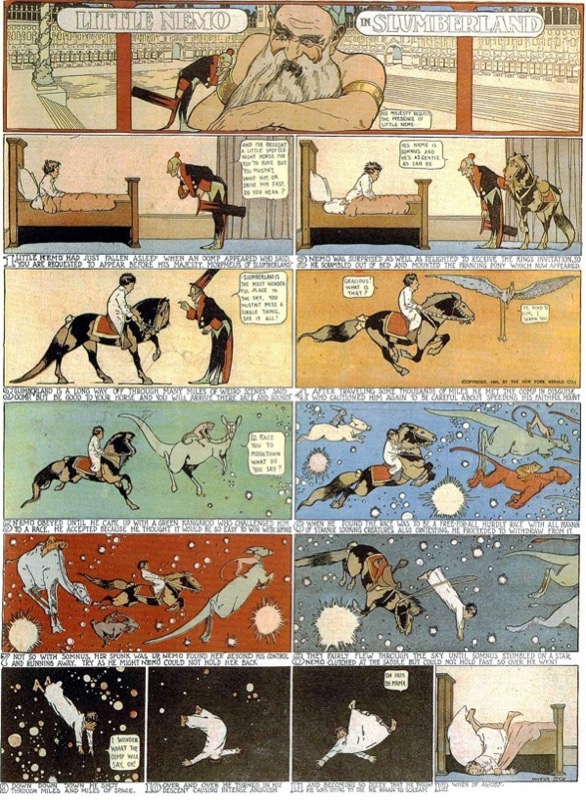
Winsor McCay: Little Nemo in Slumberland, October 15, 1905
This was the model for Little Nemo’s night world: bedtime becomes the entryway to a fantastic world where dimensions shift and reality changes. In this 1908 strip, Little Nemo’s bed grows legs and walks around town. He’s joined by the cigar-chomping Flip, who is always getting him into trouble.
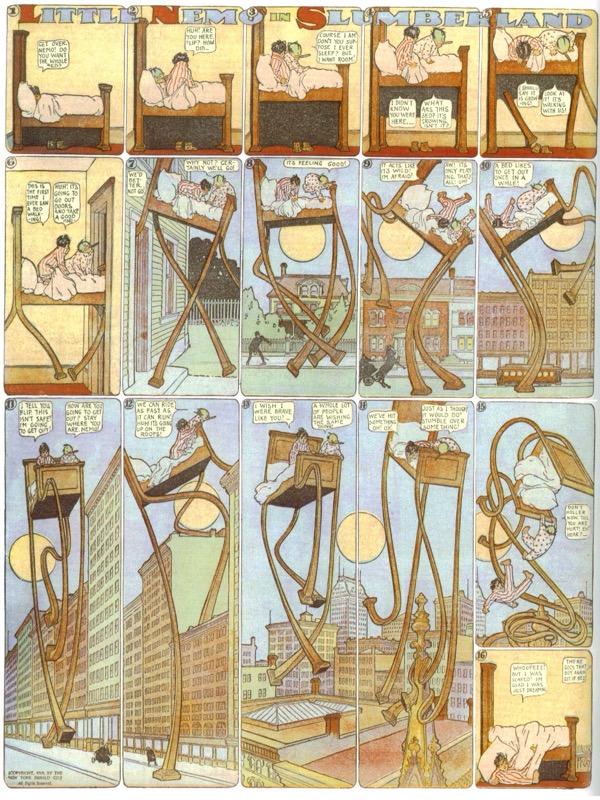
Winsor McCay: Little Nemo in Slumberland, July 26, 1908
In McCay’s creation of Little Nemo’s dream world, all those fears we have in dreams have a place: falling, running, chases, etc. To convey this in his illustrations, McCay changed panel size as needed, as in the walking bed comic above. Proportion and scale were important to maintain.
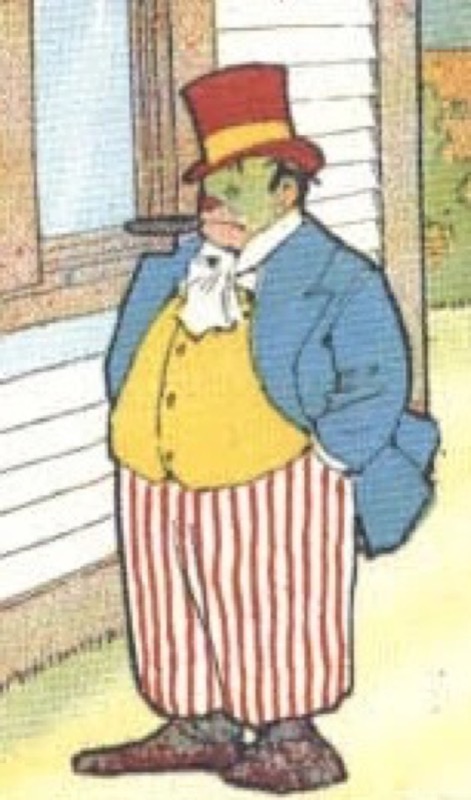
Flip
Often Little Nemo’s dreams were blamed on something he’d eaten: doughnuts or cheese.
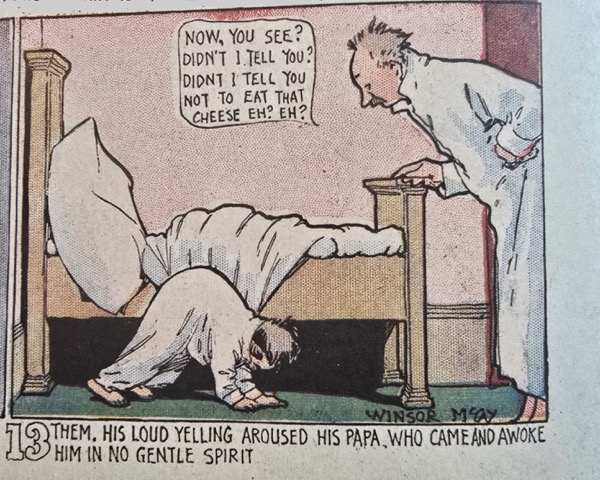
Blaming it on the cheese
McCay’s drawing style was very much influenced by Art Nouveau, with elaborate architecture that followed the styles of the day, particularly as designed by the Chicago firm of McKim, Mead & White. Structures like those that appeared in the 1893 World’s Columbian Exposition in Chicago, as well as Luna Park and Dreamland in Coney Island, and the Parisian Luxembourg Palace, would be part of Little Nemo’s World.
The comic strip ran weekly and in colour, with McCay carefully detailing the colours to the pressmen. The characters in the strip are all outlined in black, to make them clear.
American composer Karen Amrhein (b. 1970) used McCay’s comic strip as inspiration for her symphonic poem Little Nemo in Slumberland. Originally composed for Harlan Parker and the Peabody Wind Ensemble, the work was later reorchestrated for orchestra.
It opens with a fanfare for trumpet quartet as the clock strikes nine.
Karen Amrhein: Little Nemo in Slumberland: I. Fanfare (Dreams of Little Nemo) (Slovak Radio Symphony Orchestra; Kirk Trevor, cond.)
The King’s messenger appears to Little Nemo and summons him to the king, and his dreams begin. King Morpheus’ theme is slow and stately. Morpheus’ messenger picks up the pace with running notes in the flute and clarinet. Little Nemo’s theme enters with a dance-like urgency. Flip’s theme slows down and adds notes of chaos, as he does in the comic. The Princess’ theme comes in on the piano and combines with the earlier themes.
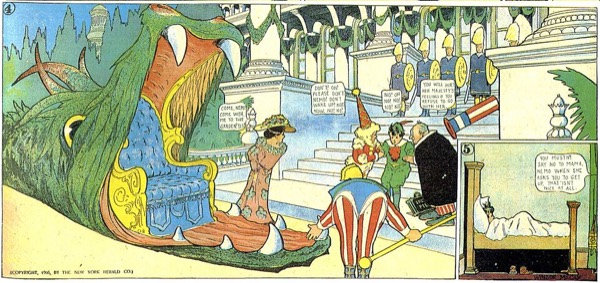
Little Nemo and The Princess
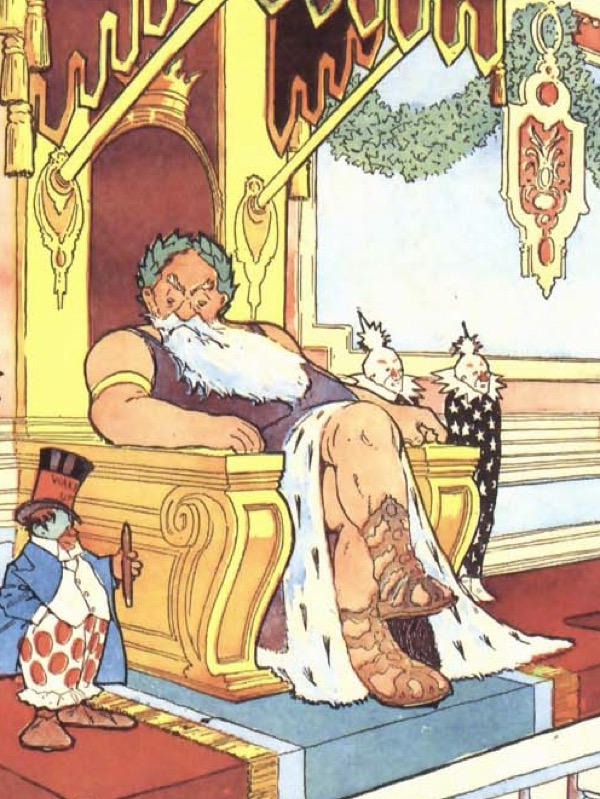
King Morpheus and Flip
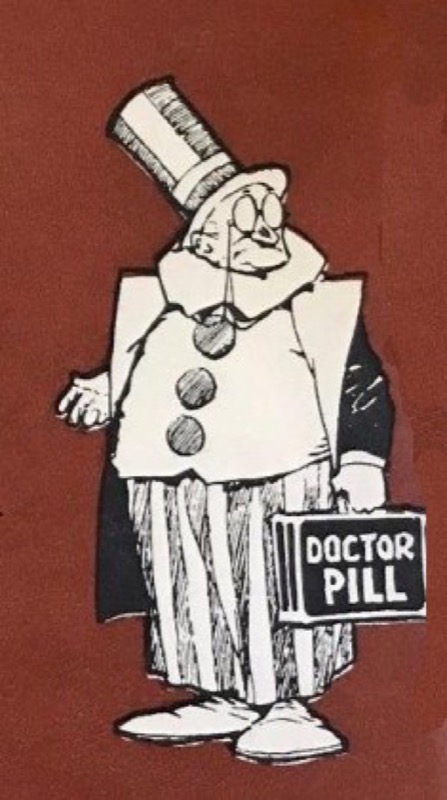
Doctor Pill
Karen Amrhein: Little Nemo in Slumberland: II. King Morpheus, Morpheus’s Messenger, Little Nemo, Flip, the Princess (Slovak Radio Symphony Orchestra; Kirk Trevor, cond.)
Doctor Pill enters with a sharp, angular trumpet line. Now that the cast is assembled, the adventure begins. The time signature changes every measure: 6/8 to 2/4 to 5/8 to keep everything unsettled. Nemo has a fugue in the violin section. He visits King Morpheus, and then Flip interferes. The themes for Little Nemo, King Morpheus, and Flip all appear simultaneously. Nemo awakens… and falls out of bed with a crash.
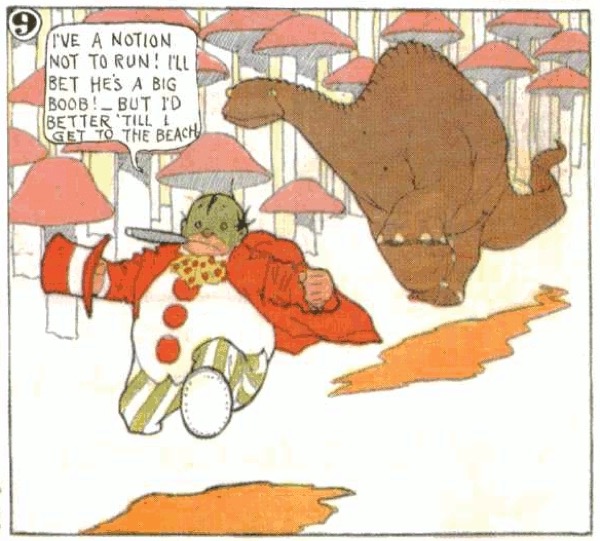
Flip being chased by a dinosaur
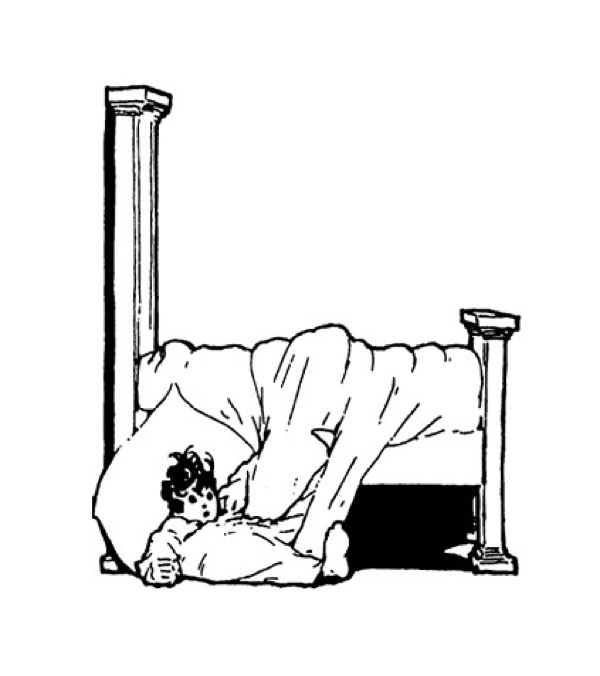
Little Nemo falls out of bed
Karen Amrhein: Little Nemo in Slumberland: III. Doctor Pill, Nemo’s Adventure (Slovak Radio Symphony Orchestra; Kirk Trevor, cond.)
The clock chimes 11 and Nemo’s back home.
Karen Amrhein: Little Nemo in Slumberland: IV. The Clock Strikes Eleven (Slovak Radio Symphony Orchestra; Kirk Trevor, cond.)
The work closes with a fanfare farewell with a trumpet quartet.
Karen Amrhein: Little Nemo in Slumberland: V. Farewell, Little Nemo (Slovak Radio Symphony Orchestra; Kirk Trevor, cond.)
When McCay returned to the renamed New York Herald Tribune in 1924, the wildness of the early strips was lost, as was the varying panel size. The strip had little continuity, and readers were no longer fans. When McCay left the Herald in 1927, the strips were so little valued that the copyrights were sold to McCay for a dollar.
Many attempts brought the beloved strip to the stage, starting with a 1908 version with music by Victor Herbert. This wasn’t a success and ended its run in 1910.
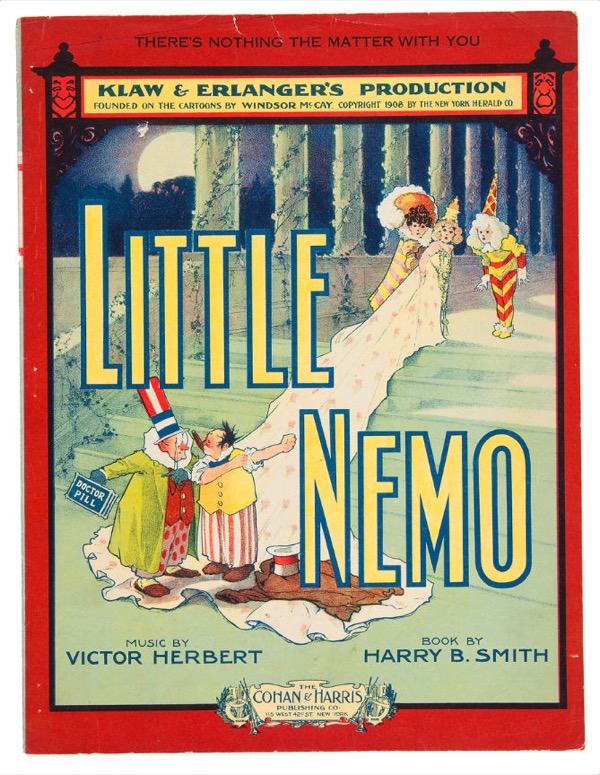
Victor Herbert’s Little Nemo
McCay himself staged Little Nemo on the vaudeville circuit. A Toronto theatre company staged Little Nemo in 2012, and a troupe in Ohio staged it in 2013.
On the silver screen, McCay made one of the first cartoon films in 1911 with the Little Nemo characters. It starts with a live-action sequence of how the film came together, with much emphasis on the fact that the little film took more than 4,000 images to animate, all made by McCay. The cartoon section shows the possibilities of the form in the hands of a master.
Little Nemo (1911) Winsor McCay
In his 1989 video, Runnin’ Down a Dream, Tom Petty used images from Little Nemo (and some of the story situations) to create a dream world that captures the original strip’s quickly evolving, random actions. And, of course, it ends with someone falling back into bed.
Tom Petty – Runnin’ Down A Dream (SUPERSCALED TO 4K) 🇺🇸
In her orchestral version, Karen Amrhein creates Little Nemo’s world, with the opening trumpet quartet almost standing for the rectangle of the newspaper page where the comic appeared. The main characters and how it all grows increasingly chaotic are beautifully put together, especially where the themes combine for maximum confusion. Long live Little Nemo and the chaotic nature of our inner dream worlds!
For more of the best in classical music, sign up for our E-Newsletter