What is the oldest violin in the world? The answer is almost certainly sitting in a museum in Cremona, Italy – and it has a story worthy of the title.
Built around 1566 by Andrea Amati, the founding father of the modern violin, the instrument known as the “King Charles IX” has survived a royal court, a revolution, and nearly five centuries of history. It has outlasted the monarchy it was made for, the palace it once lived in, and the other instruments that were built alongside it.
This is the story of how it was made, how it survived – and where it is today.
Andrea Amati and the Beginning of the Modern Violin
The history of this violin – and the modern violin, period – begins around 1505, the approximate birth date of instrument maker Andrea Amati.
Andrea Amati became the patriarch of an entire violin-making family. His sons’ and grandson Nicola’s violins are some of the finest ever made, and Antonio Stradivari himself may have studied with Nicola.
Andrea Amati’s “King Charles IX” Violin
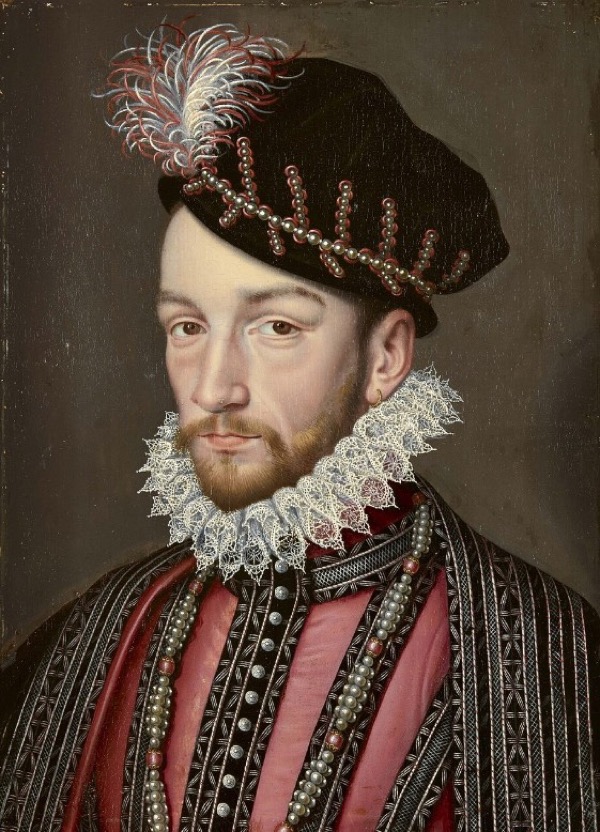
Charles IX of France
In the late 1560s, Andrea Amati built a series of instruments for the court of teenage King Charles IX of France.
The label inside references the monarch: “Fait par André Amati en 1566 sous le règne de Charles IX” (“Made by André Amati in 1566 during the reign of Charles IX”).
Legend holds that an entire orchestra of instruments was sent to celebrate his marriage to Elisabeth of Austria in 1570 – and that this violin was among them.
The instrument was sent by carriage from Cremona to Paris, where it ended up in the custody of the French court, where it remained for over two centuries.
Because of its first owner, it would come to be known as the “King Charles IX.”
Danger for the “King Charles IX” During the Revolution
In 1789, disaster struck the French monarchy when revolutionaries invaded the Palace of Versailles.
In early October, a group of Parisian women gathered in protest of the cost of bread and marched on Versailles. By the time the group arrived, it had turned into an armed mob.
The palace was violently ransacked – but the violin survived.
King Louis XVI and his wife, Marie Antoinette, agreed to protesters’ demands, withdrawing from the lavish palace to more modest accommodations in Paris. After the King and Queen’s departure, the palace was closed.
In 1792, shortly before the execution of Louis XVI, the new revolutionary government ordered that ownership of the art inside be transferred to an organisation called the Louvre.
The Louvre was founded as a public museum that would enable everyday people to enjoy treasures previously reserved for the royal family and their court.
Between 1793 and 1794, the furnishings and objects within the palace that wouldn’t go on exhibit were auctioned off.
At some point in the hubbub, the orchestra of Amati violins vanished. It is presumed that many were destroyed or lost.
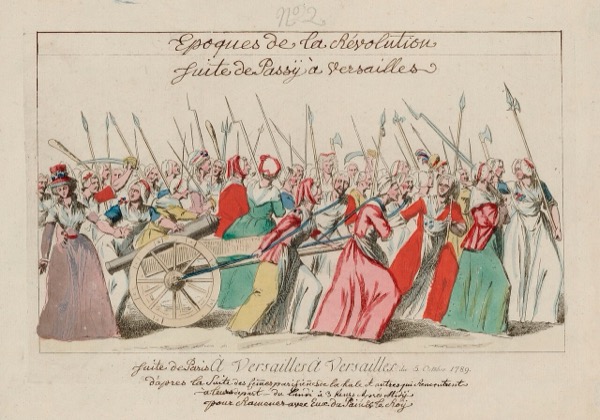
March on Versailles
The “Charles IX” Violin and Nineteenth-Century Collectors
The violin’s trail goes cold until the nineteenth century, when it resurfaces in the hands of a string of collectors.
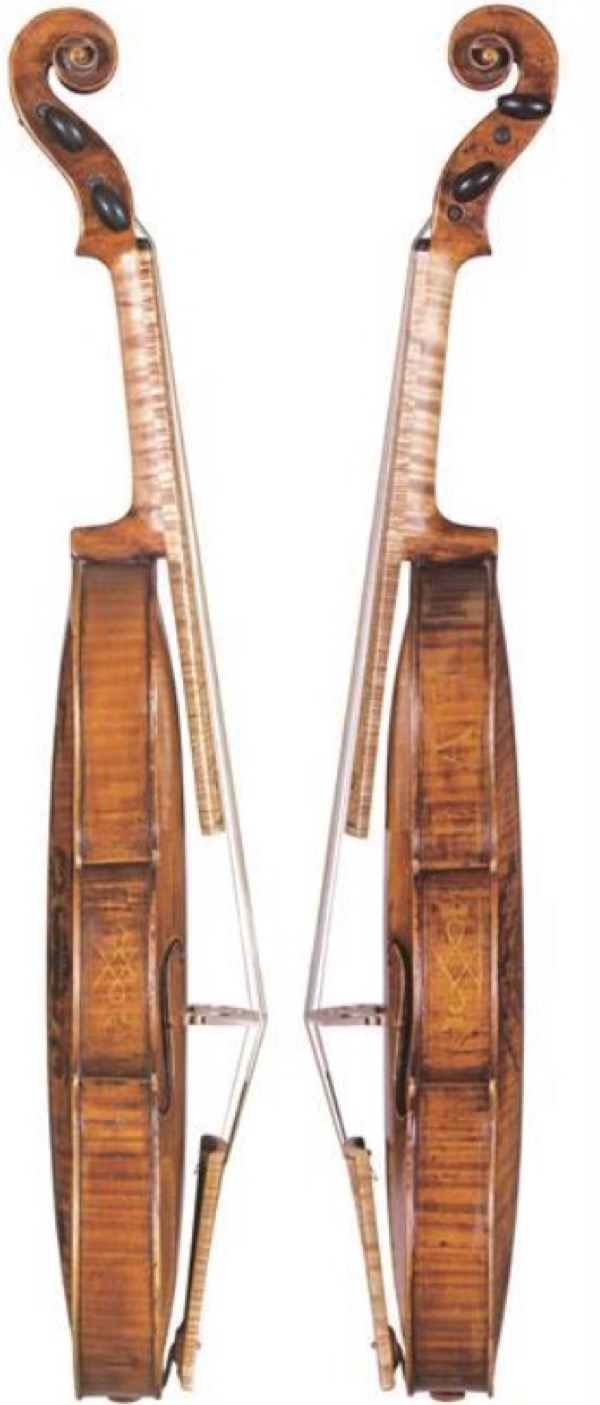
The “Charles IX” violin
At some point in this century, the instrument was modernised, leaving only some of its original portions intact.
Although Amati had created the template for the modern violin, later advances in playing styles, repertoire, and performance spaces made modernisation of early instruments inevitable – lengthening fingerboards, reshaping necks, and installing heavier bass bars to support modern string tension.
Despite these modifications, the instantly recognisable gilded paintwork on the ribs and the heraldic pattern on the back of the violin remained visible, though faded.
The “Charles IX” Violin Bought by Virtuoso Willy Burmester
Willy Burmester playing the second movement of Mendelssohn’s violin concerto
Having spent most of its life at the French court or sequestered in private collections, the instrument was acquired by German violinist Willy Burmester in 1906.
Burmester was born in 1869 and was a celebrated soloist. He studied with Brahms‘s friend, Joseph Joachim, and was famous for his interpretations of Paganini‘s virtuoso works.
In 1904, shortly before he acquired the “Charles IX”, Finnish composer Jean Sibelius dedicated his violin concerto to Burmester.
However, Burmester wasn’t able to travel to Helsinki to give the premiere, and a frustrated Sibelius withdrew the dedication and gave it to a thirteen-year-old prodigy violinist named Franz von Vecsey instead.
The “Charles IX” Violin and the Henry Hottinger Collection
Soon after Burmester’s spat with Sibelius, the “Charles IX” passed into the hands of yet another collector named Kurt Frankel. Relatively little information is available on Frankel today, but according to Tarisio.com, he owned the instrument between 1909 and 1950.
In 1950, the “Charles IX” was bought by Henry Hottinger, an investment banker born in 1885 in New York City and a founding member of the firm Wertheim & Co.
In addition to being a businessman, he was also a serious amateur violinist.
He bought his first Stradivari in 1935, at the height of the Depression – an experience that sparked his lifelong interest in collecting.
Over the decades, he acquired many first-rate examples of Cremonese instruments, including this one.
By the 1960s, he owned over thirty violins, including twelve Stradivaris and five del Gesus – an achievement that will likely never be repeated, due to the ever-increasing value of the violin market.
In 1967, his collection was sold to the Rembert Wurlitzer Co., a famous New York City shop that dealt in fine historical instruments.
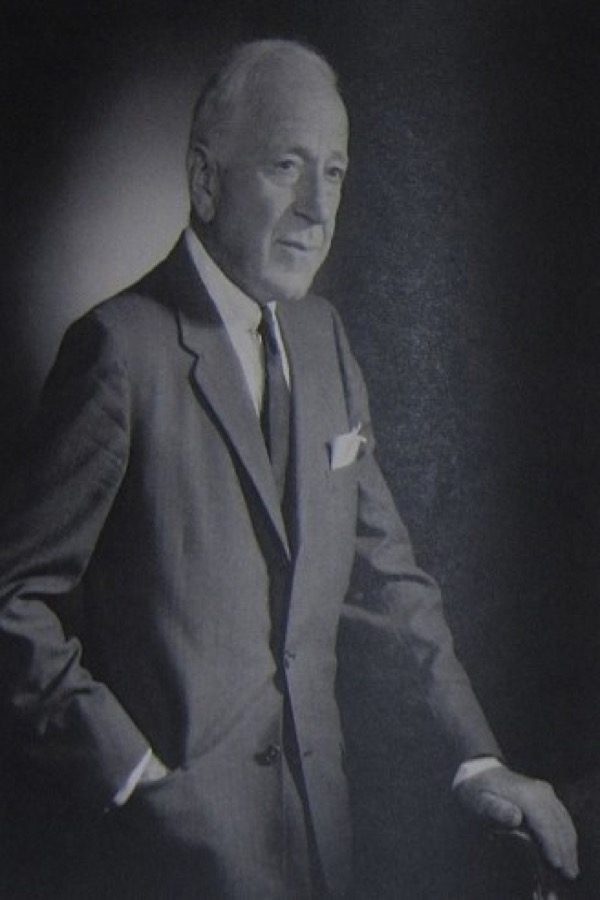
Henry Hottinger
Where the “Charles IX” Violin Is Today
In the mid-1960s, after centuries away, the “Charles IX” returned home to Italy.
It was displayed at the Stradivarius Museum in Cremona, which later became known as the Museo del Violino. The museum moved into a new building in 2013, where it is located today.
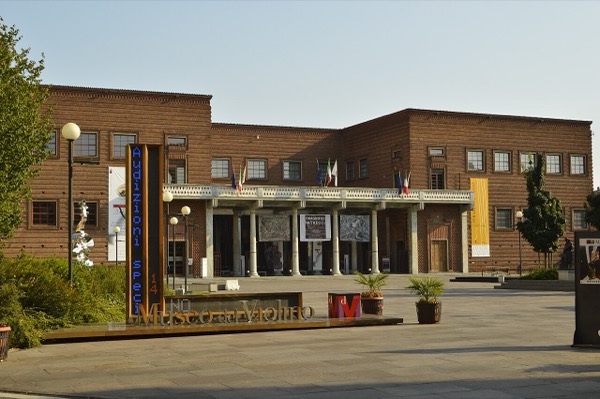
Museo del Violino
Interestingly, aside from the time spent in the French royal court and with Burmester, the instrument doesn’t seem to have been used much for music-making.
Today, this instrument is probably best appreciated as a work of art and a historical artefact, rather than as a travelling concert instrument.
That said, the “Charles IX” can still be played. In fact, in 2014, violinist Marco Rizzi performed Robert Schumann‘s second violin sonata on this instrument. It was built almost three centuries before the sonata was written.
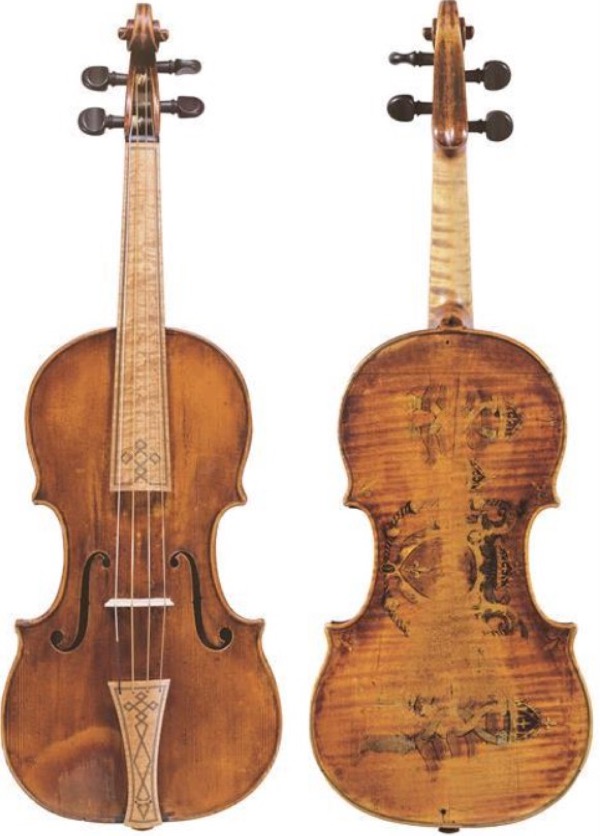
The “Charles IX” violin
violino Andrea Amati Carlo IX 1566 c. in concerto
In 2026, the “Charles IX” violin celebrates its 460th birthday. Although exact dates can’t always be verified after so many centuries, historians agree that it is one of the oldest surviving violins – if not the oldest surviving violin – in the world.
The fact that it’s still with us is one of the miracles of classical music history.
For more of the best in classical music, sign up for our E-Newsletter