
It’s well known that Johann Sebastian Bach had 20 children. Several of his sons became accomplished composers in their own right.
But what about the next generation?
Wilhelm Friedrich Ernst Bach (1759–1845) was the grandson of Johann Sebastian – and the last member of the family to pursue composition professionally.
Today we’re taking a look at his life, his career, and five of his most interesting works.
Wilhelm Friedrich Ernst Bach’s Background and Training
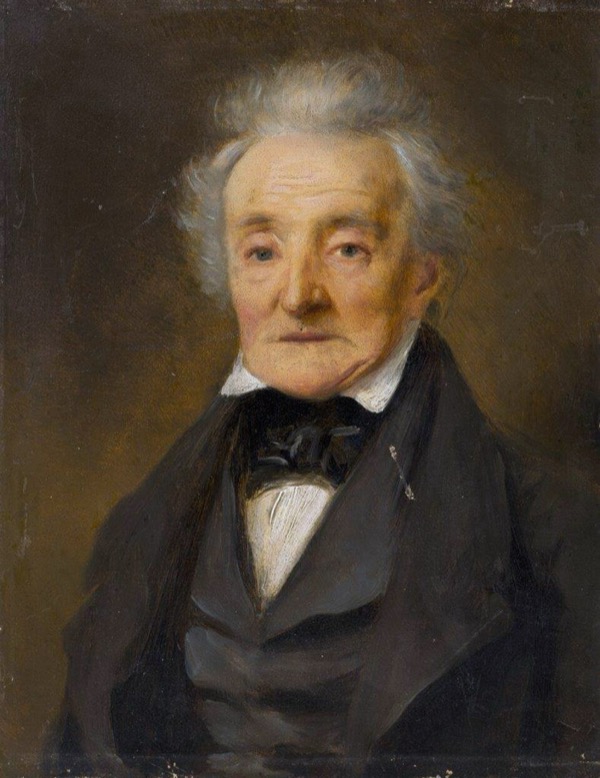
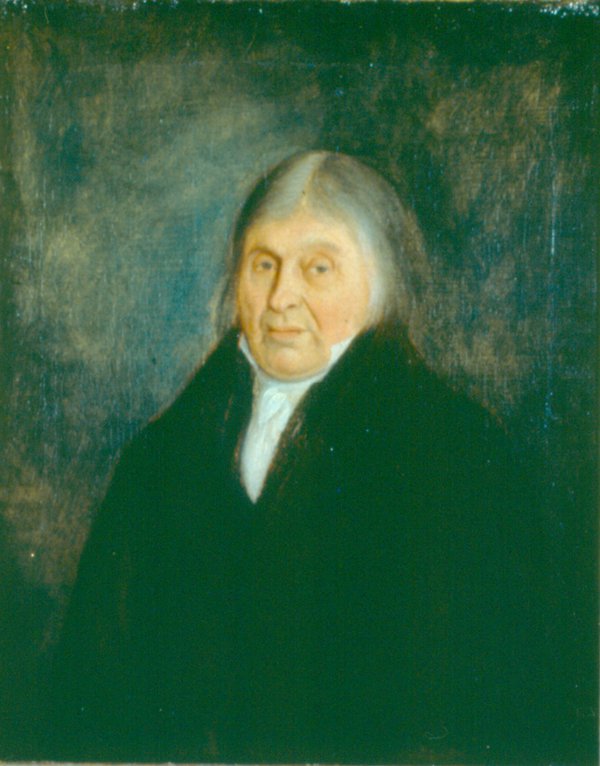
Wilhelm Friedrich Ernst Bach
Wilhelm Friedrich Ernst Bach was born on 24 May 1759.
He was the son of composer Johann Christoph Friedrich Bach (the fifth son of Johann Sebastian Bach) and his wife, singer Lucia Elisabeth Münchhausen. We wrote about their marriage here: https://interlude.hk/christoph-friedrich-bach-and-lucia-elisabeth-munchausen/.
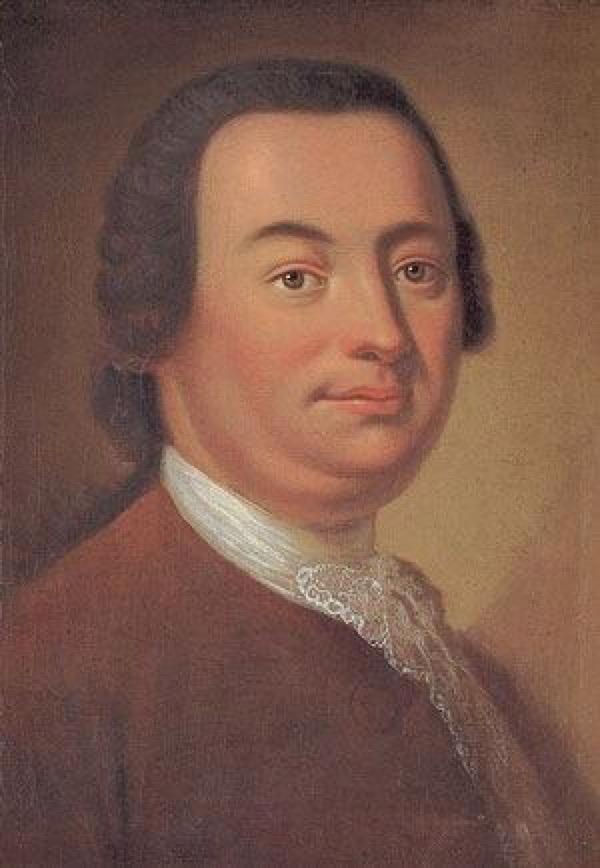
Johann Christoph Friedrich Bach
Wilhelm was one of eight children, only half of whom survived infancy. He was the only boy to live to adulthood, and therefore the only one who pursued music professionally.
His music education began under his father. Later he went to Hamburg to study with an uncle, Carl Philipp Emanuel Bach, usually referred to as C.P.E. Bach.
In 1778, when he was nineteen, he and his father went to London to visit yet another uncle, Johann Christian Bach, whom Wilhelm studied with until Johann Christian died in 1782.
He may have been the only person ever to study with three of Johann Sebastian’s sons.
Wilhelm Friedrich Ernst Bach’s Career
After Johann Christian Bach’s death, Wilhelm returned to the Continent, embarking on a concert tour in the Netherlands and France.
In 1786, he was named the Kapellmeister in Minden, Germany, a small town a hundred miles south of Hamburg.
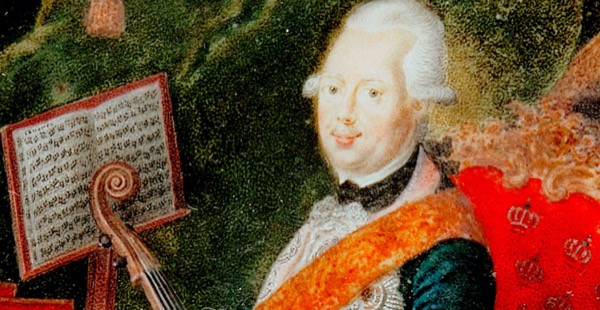
King Friedrich Wilhelm II
The following year, his life and career took a turn when King Friedrich Wilhelm II of Prussia visited Minden.
The king was impressed by a work of Wilhelm’s that he heard during his trip, and hired Bach as Kapellmeister for his own court.
In 1788, Wilhelm Friedrich Ernst Bach became Kapellmeister in Berlin, a position he held for over twenty years. Part of his duties included teaching music to Prussian princes.
He married twice. In 1798, he married a woman named Charlotte Elerdt. She had two daughters, Caroline and Juliane, before dying young in 1801.
He remarried a woman named Wilhelmine the following year and had two more children: Auguste and Friederike.
Of the four children, only Caroline and Auguste survived past childhood.
Caroline lived until 1871, becoming the last surviving direct descendant of Johann Sebastian Bach.
Wilhelm Friedrich Ernst Bach’s Retirement
In 1811, at the age of fifty-two, Wilhelm retired from his Kapellmeister duties after the Prussian royal family granted him a pension. He continued living in Berlin, where he appeared as a pianist and composer.
He reappeared in music history in 1843, when he travelled to Leipzig, where a monument to Johann Sebastian Bach was being dedicated.
While there, he met a young Robert Schumann, who described him as “a very old, agile gentleman of 84 years old with snow-white hair and expressive features.”
He also corresponded with Felix Mendelssohn, who, with the help of his Bach-loving family, had done much advocacy for Johann Sebastian Bach’s music.
Wilhelm died a few years later, in 1845.
He was open-eyed about his legacy, acknowledging the discrepancy in talent between himself and his grandfather, and is remembered for his wry remark, “Heredity can tend to run out of ideas.”
Today we’re looking at five of Wilhelm Friedrich Ernst Bach’s works.
Symphony No. 2 in G major
Wilhelm Friedrich Ernst Bach: Symphony No. 2 in G Major (Das Kleine Konzert; Hermann Max, cond.)
This is a slender, spirited three-movement symphony.
The outer movements are sparkly and mischievous, with a serene, noble slow movement that prominently features horn calls reminiscent of genteel hunting horns.
Sestetto Concertante
This is an elegant work for clarinet, two horns, violin, viola, and cello, written around 1800.
The varied, unconventional instrumentation would have helped it to carry in a large aristocratic space, and it is easy to imagine it as background music for a charming, gossipy, candlelit event.
Westphalens Freude
Wilhelm Friedrich Ernst Bach: Westphalens Freude (Rheinische Kantorei; Das Kleine Konzert; Hermann Max, cond.)
“Westphalens Freude” (“Westphalens Joy” or “Triumph! Triumph Westphalia!”) was a cantata published in 1791, composed for orchestra, chorus, and vocal soloists.
This is the work celebrating King Friedrich Wilhelm that so impressed the monarch that he invited Bach to work in Berlin.
Toccata
Just like his famous grandfather, Wilhelm wrote works for solo organ.
Although this Toccata may not be as forcefully virtuosic as Johann Sebastian’s, it is pleasantly triumphant and explores a range of the instrument’s timbres.
Das Dreyblatt
This is an unusual (to put it mildly) work written for one keyboard, three players, and six hands.
The centre player is to be a large man, and the ones on the sides are to be petite women.
In an era when playing piano duets was one of the few socially acceptable times for unmarried men and women to be physically close, this piece takes the sexual subtext of the genre and makes it quite explicit!
Conclusion
Wilhelm Friedrich Ernst Bach may not have matched his grandfather’s towering genius – as he himself cheerfully admitted.
But his long life gave him a unique vantage point on musical history, bridging the world of Johann Sebastian Bach and the early Romantic era of Schumann and Mendelssohn.
If you’d like to explore more of the Bach family tree, we’ve written more about it here: https://interlude.hk/the-bach-family-eight-fascinating-relatives-of-johann-sebastian/.
For more of the best in classical music, sign up for our E-Newsletter





I have found this blog on Bach’s grandson to be thoroughly interesting and such engaging and enriching listening! I am so glad I was able to take the time to listen!