Vache Baroque co-founding music director Jonathan Darbourne delves into the supernatural sounds and music of their new production with Out of Chaos.
‘This music crept by me on the waters’
(Shakespeare’s The Tempest, Act 1, Scene 2)
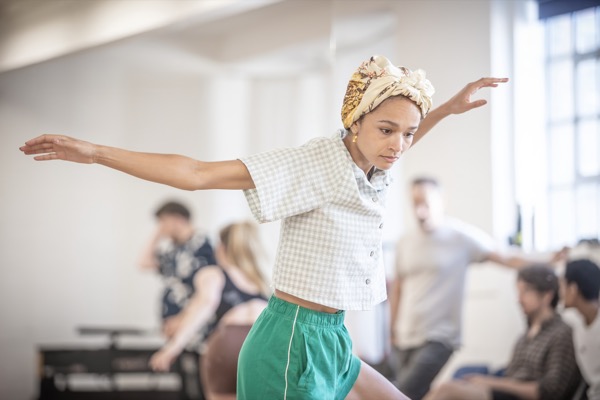
© Craig Fuller (Miranda played by Leah Haile)
Spoiler alert – Vache Baroque’s summer spectacle this year – Shakespeare’s The Tempest – is neither play nor opera but a wonderful hybrid, full of theatrical and musical wizardry. Following the scent of the baroque craze for semi-operas, we’ve teamed up with Paul O’Mahony and his experimental company Out of Chaos to put sound at the heart of the drama. Our mission is to trick the most opera-shy of theatre-goers unsuspectingly into enjoying o****. If you know one of them, invite them along.
The Tempest is often referred to as Shakespeare’s most musical play, but, more than this, it’s one of his most sound-filled. Throughout the story, sound (and noise) is used not just for effect and entertainment but as a magic wand, casting spells over various characters and plot developments.
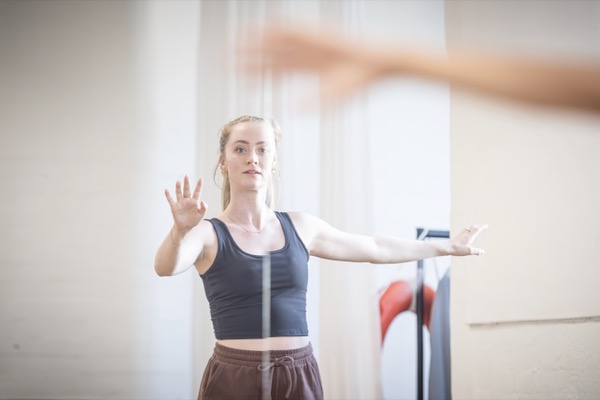
© Craig Fuller (Ariel played by Stephanie Hershaw)
Take the scene in which Prospero’s spirit servant, Ariel, causes a banquet to appear for the shipwrecked courtiers, using ‘solemn and strange music’ to amaze (Alonso: ‘What harmony is this?’ / Gonzalo: ‘Marvellous sweet music!’) and confuse them (Alonso: ‘The winds did sing it to me…’). This is typical of the play – much of the time characters are never quite sure who or what creates the things which are heard, and therefore where they come from. Ferdinand, when hearing what the audience knows to be Ariel’s song ‘Come unto these yellow sands’, asks ‘Where should this music be? I’ th’ air, or th’ earth?’ As Shakespeare directs the chorus at the end of the song to be performed ‘dispersedly‘, even the audience could be confused depending on where the singers were placed in the performance area. Ferdinand goes on to say about Ariel’s next musical offering ‘This is no mortal business nor no sound / That the earth owes’.
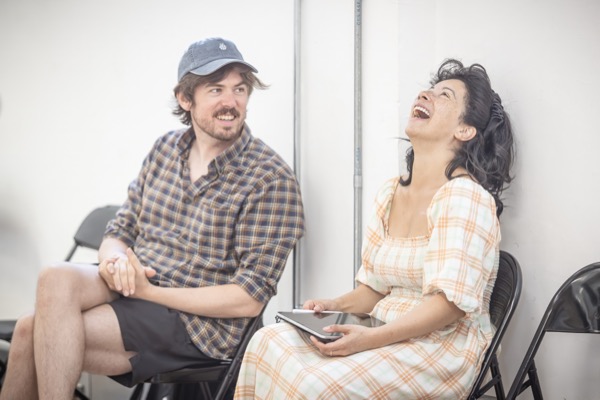
© Craig Fuller (Antonio played by Conor Prendiville and Alonso played by Isabelle Peters)
These sorts of things scream ‘PLAYGROUND!’ to a musician, and so this play was an obvious choice for VB’s collaboration with theatre group Out of Chaos, especially as precedents for remoulding the play into a ‘semi-opera’ had already been set during the late-17th century. (This style of show with half text/half music was all the rage at that time with English audiences, who disliked the fully sung operatic dramas more popular in Italy.) In fact, if you asked the average artsy Londoner in the mid-18th century what they thought of The Tempest, they’d think you were talking about a musical version put together by Thomas Shadwell in the 1670s, with text by John Dryden and William Davenant, and music by various composers including Matthew Locke and Henry Purcell. Our version sticks loyally to Shakespeare’s text (not a difficult decision), and uses music from the Shadwell compilation (Locke, Purcell, Pelham Humphrey, John Weldon), as well as pieces by composers contemporary to Shakespeare (John Dowland, Thomas Morley, Robert Johnson, Johannes Kapsberger) and from the later 17th century (François Couperin, Marin Marais).
Dido, 2020
Further inspiration for a 2026 reimagining of such a hybrid production comes from high-society Jacobean theatre, which, inspired by lavish masques, was hell-bent on impressive costumes, stage effects, and machinery. Since The Tempest may well have been performed indoors at Blackfriars Theatre (pictured above, and used by Shakespeare’s theatre company in the winter from 1609 onwards), the play’s stage directions and fantastical scenarios would have been both easier to achieve and closer to the style of courtly masques than at The Globe. The wow factor of the accompanying sound and music would no doubt have been expected to follow suit. For our show, this element will be masterminded by sound artist Dan Samsa, who specialises in 360-degree soundscaping, using the awesome sonic set-up provided by the team at Martin Audio. Just as we’ll make no departure from Shakespeare’s text, all the worldly and other-worldly noises created by Dan are from recordings of the singers and instrumentalists in our company.
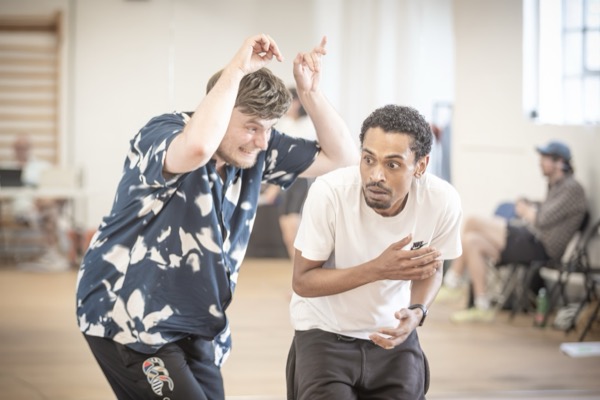
© Craig Fuller Trinculo-Bacchus played by Chorus Ross Cumming and Ferdinand played by Tré Medley
To give Dryden the closing word (as we’re rejecting his edit of the text):
‘As when a Tree’s cut down the secret root / Lives under ground, and thence new Branches shoot / So, from old Shakespear’s honour’d dust, this day / Springs up and buds a new reviving Play’. We hope our bud does some justice to this most magical of trees.
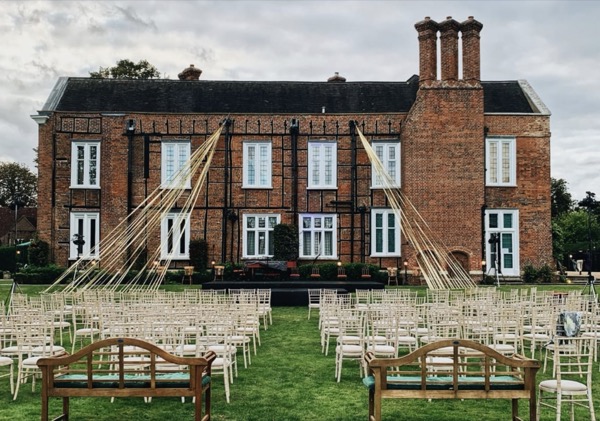
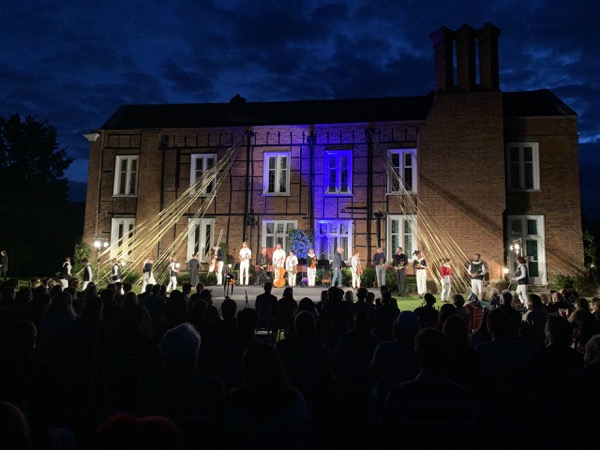
The Vache stage
© Jonathan Darbourne 2026
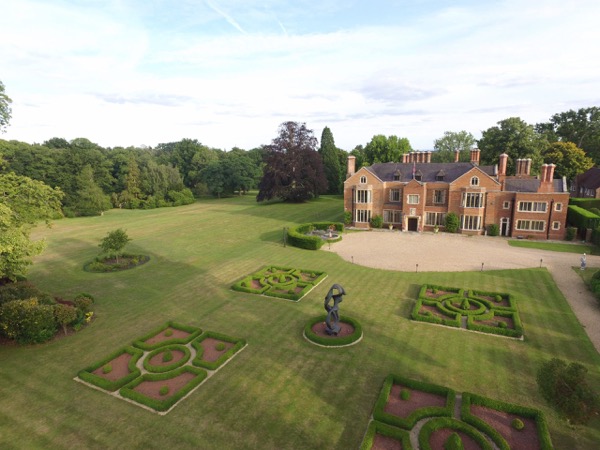
The Vache house
Dates:
Saturday 29 & Sunday 30 August 2026
Saturday 5 & Sunday 6 September 2026
Tickets £24 – £114
3pm grounds open | 5.30pm show starts | c.6.30pm interval (60 mins) | c.8.30pm show ends
https://vachebaroque.com/tempest/
Timelapse of the stage being erected:
Jonathan is co-founder and artistic director of Vache Baroque (‘one of the UK’s hottest groups’ – Opera Today), for which he has led five fully staged operas and numerous multi-artform programmes from the harpsichord. Recent highlights include a sell-out run of Charpentier’s Orphée at the Buxton International Festival, a circus-themed production of Campra’s Le Carnaval de Venise (✭✭✭✭✭ – Opera Now), and a programme inspired by Oscar Wilde’s De Profundis letter (‘an exceptional evening’ – The Observer). 2026 will see a return to BIF for a new staging of Francesca Caccini’s La liberazione di Ruggiero, a semi-opera version of Shakespeare’s The Tempest in collaboration with theatre group Out of Chaos, and various concert and recital programmes in London, Buxton, IF Opera Festival, and the Toradze International Music Festival in Tbilisi, Georgia.
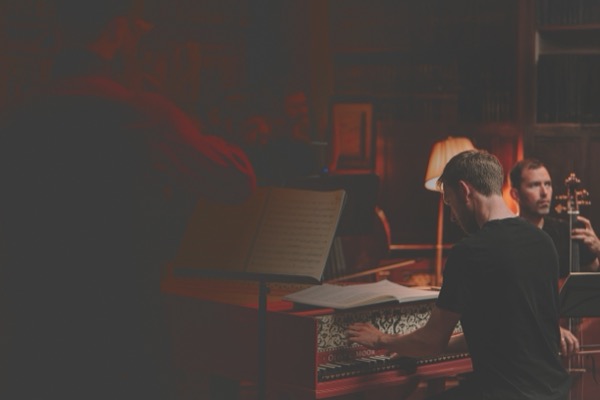
Jonathan Darbourne at the harpsichord
Alongside his own projects, Jonathan has been music director for HGO’s production of Rossini‘s La Cenerentola (2026 OFFIE winner – Sound & Music), assisted the Nederlandse Bachvereniging, and been assistant conductor and continuo player for The Grange Festival’s production of Handel‘s Tamerlano. An experienced choral conductor, he is chorus master for the NSO and has led projects ranging from the Voces8 Scholars to choir scenes in a number of Netflix productions, including The Crown and Bridgerton.
For more of the best in classical music, sign up for our E-Newsletter