Franz Liszt is one of the most celebrated figures of nineteenth-century music: a composer, conductor, mentor, and pianist who redefined modern virtuosity.
The longest modern Liszt biography is Professor Alan Walker’s three-volume work, which was published between 1983 and 1996.
However, he was not the first to write such a work.
In fact, a self-educated woman named Lina Ramann was the first person to write a three-volume Liszt biography, which she did between 1880 and 1894.
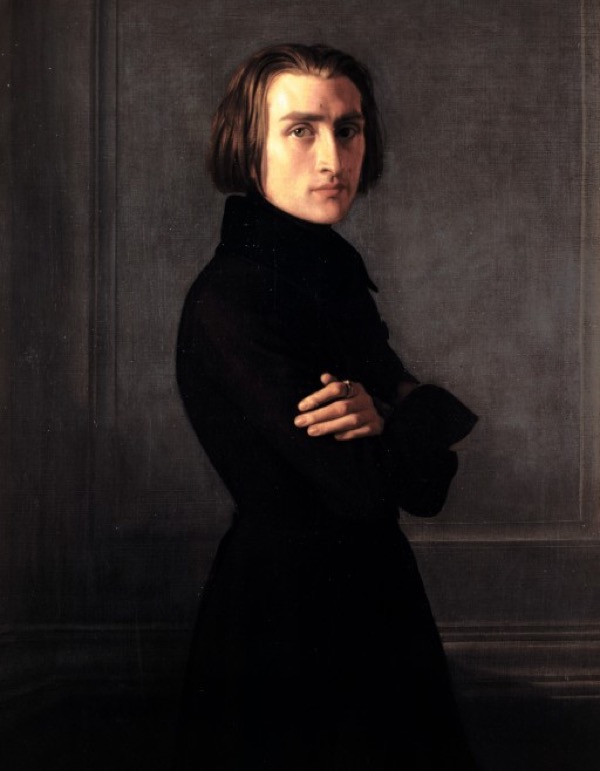
Franz Liszt
Liszt welcomed working with her and deeply valued her scholarship – and her biography still impacts how we think of Liszt and his legacy today.
Liszt’s Piano Sonata in B minor
A Self-Taught Musician in Leipzig
Lina Ramann was born in July 1833 in Mainstockheim, a small town in Bavaria halfway between Frankfurt and Nuremberg. Her father was a wine merchant and amateur musician.
As a child, she was fascinated by music, taught herself harmony and counterpoint, and began to compose.
When she was seventeen, her family moved to Leipzig, one of the most musical cities in Germany, at various times home to Bach, Mendelssohn, Wagner, the Schumanns, and others.
In Leipzig, she took her first piano lessons with Lysinka Brendel, who had once studied with legendary pianist John Field.
Lysinka’s husband, Franz Brendel, had taken over the editorship of the Neue Zeitschrift für Musik (New Magazine for Music) from Robert Schumann in 1845.
Brendel covered the careers of Richard Wagner and Franz Liszt, and he was the writer who dubbed their progressive movement the New German School – a name that is still used today.
Ramann didn’t just read the journal. She began pitching ideas, and, despite her age and gender, Brendel began publishing her work.
A School for Women, and a Life Partner
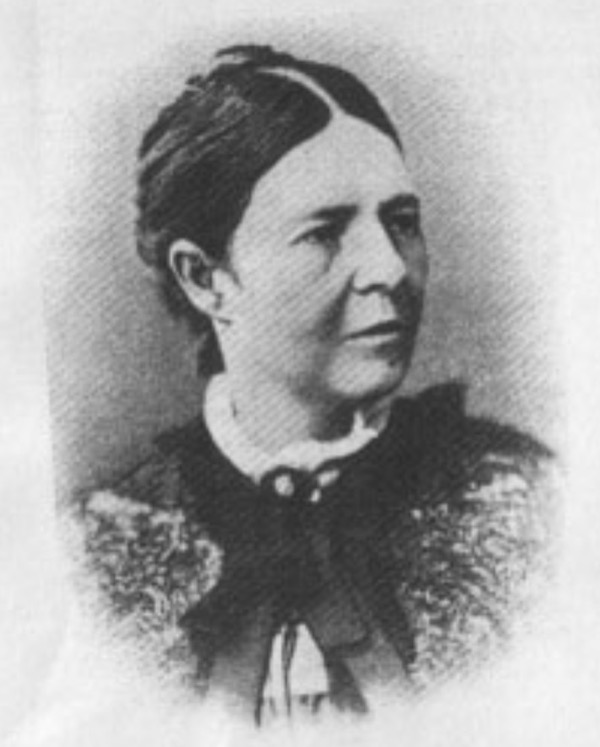
Lina Ramann
In 1853, Ramann followed a friend to America, where she taught piano and gave concerts in Pennsylvania for five years, specialising in music lessons for rural citizens. For the rest of her life, she would speak loudly about the importance of well-funded music education for all classes of people.
In 1858, at 25, she returned to Europe after an illness and founded a music school for women in Glückstadt, Germany. It later evolved into a general education school.
Back in Europe, she began partnering with a teacher and singer, Ida Volckmann, on various piano pedagogy projects.
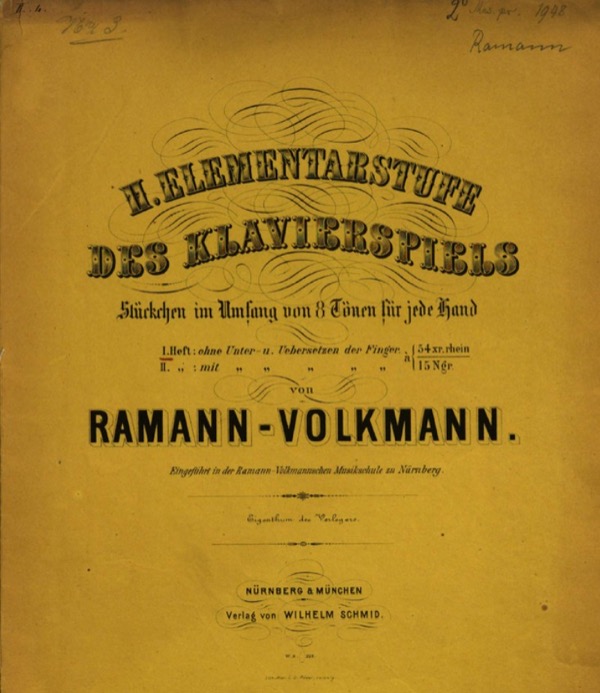
In 1860, Ramann published the first of several method and etude books, dedicating it to “Dr Franz Liszt, the founder of a new era of piano playing.” Not surprisingly, it earned his praise and endorsement.
Volckmann studied at the Leipzig Conservatory between 1860 and the spring of 1863, and that same year accepted a teaching position at Ramann’s school.
During the Prussian-Danish War of 1864, the institution had to be shut down – but their partnership endured.
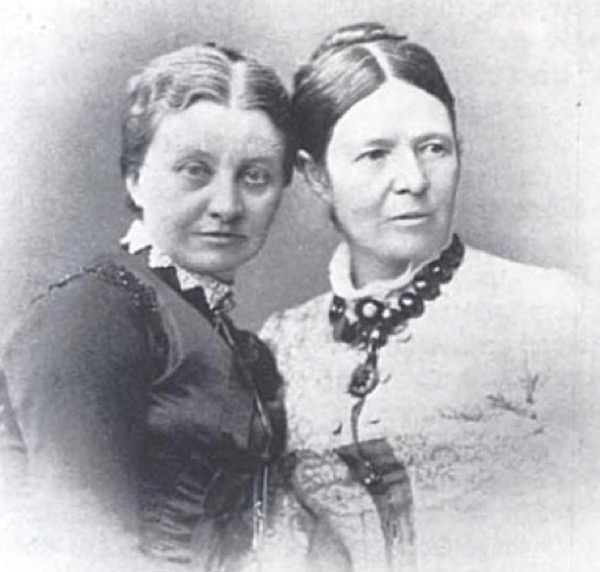
The two women would be personal and professional partners for the rest of their lives.
The Ramann-Volckmann Music School
Lina Ramann and Ida Volckmann
In 1865, they opened another school, the Ramann-Volckmann Music School, in Nuremberg.
The Neue Zeitschrift für Musik reported on the school:
“…The curriculum consists of three main classes dedicated to piano instruction – solo playing, accompaniment, ensemble playing, and practising public performance – as well as choral singing, harmony, form, music history and aesthetics, piano playing methodology, and musical pedagogy.”
The profile also underlined that fees were to be kept as affordable as possible to maximise accessibility.
The couple became fixtures in Nuremberg’s musical life, with Ramann giving music history lectures and Volckmann providing live musical examples.
“A Professor at Berlin or Leipzig”
Ramann continued writing, branching out to publish a series of lectures she’d given at the school, titled Aus der Gegenwart (From the Present).
In 1874, she published a review of Liszt’s major three-hour work Christus – and sent it to him.
An excerpt from Liszt’s Christus
He was deeply impressed by it, writing, “I already distributed [your study] to several friends, who could not believe that the author was not a professor at the University of Berlin or Leipzig!”
This kind of praise was remarkable for a woman who was almost entirely self-taught.
After the positive reception to her Christus review, she was asked if she’d consider writing a longer biography of Liszt. She said yes.
“Here Lies Your Task”
Ramann devoted the next twenty years of her life writing the biography. It ultimately ran to three volumes, published in 1880, 1887, and 1894.
She found herself deeply inspired by the calling, writing:
“I saw my path before me as if under the ray of light of a mission. All the objections that rose violently within me were drowned out – even my joy and my urge to compose gave way to the inner voice: ‘Here lies your task – here you have been assigned a historical mission.’”
She took the project as seriously as any well-respected male scholar associated with a major university would. For instance, we know of at least 37 pages of questionnaires that she sent Liszt to answer. (He respected her deeply, and he answered them.)
At the time, this was an unusual way to conduct research, since very few scholarly biographies on living musicians were ever written.
But this questionnaire-type research method would become increasingly popular in the nineteenth and twentieth centuries, as the field of musicology took shape and became increasingly disciplined.
Scholars have noted that Ramann’s writing has qualities traditionally associated with masculinity, such as assertiveness, directness, and self-certainty. It’s unclear whether this attitude was just Ramann’s strong and defiant personality shining through – or a deliberate effort to try to establish authority and preemptively squash criticism of the idea of a woman writing such a major work about such a major composer.
An English translation of Ramann’s monumental work is available for free here: https://www.google.com/books/edition/Franz_Liszt_Artist_and_Man_1811_1840/nPErAAAAYAAJ?hl=en&gbpv=0
The Battle Over Marie d’Agoult
Lina Ramann (right) and Ida Volckmann (left)
Liszt and his partner Princess Carolyne zu Sayn-Wittgenstein got along well with both Ramann and Volckmann – at least for a while.
Carolyne, who was an author herself, wanted a certain amount of control over the narrative, which could lead to conflicts.
In 1877, after one disagreement, an indignant Ramann wrote to Carolyne:
“Do you really think that I am an instrument whose mechanism can be controlled according to the will of the player? Can I see only with your eyes, think only your thoughts, feel only your feelings?”
Historians have pointed out that over the course of the project, Carolyne pressured Ramann to portray Marie d’Agoult, Carolyne’s romantic predecessor and the mother of Liszt’s three children, in a harsher light than Ramann otherwise might have. That characterisation of her helped to influence the perception of Marie d’Agoult as a spoiled, selfish countess for generations to come.
Liszt’s Années de pèlerinage, 2nd Year “Italie”, S.161, inspired by travels with d’Agoult
By the end of the long project, Liszt had pushed back against Ramann, especially about certain characterisations of events in his life (such as the way she wrote about his rivalry with Sigismond Thalberg). He even took a copy of the book and wrote notes to her in the margins. She ignored many of his suggestions, trusting her own perspective over his and establishing her independent viewpoint.
Ultimately, despite any feuds that arose during the creative process, he gave his blessing to the biography. It became the first major Liszt biography ever written – and one of the earliest examples of a serious, scholarly treatment of a living composer.
Lina Ramann’s Enduring Legacy
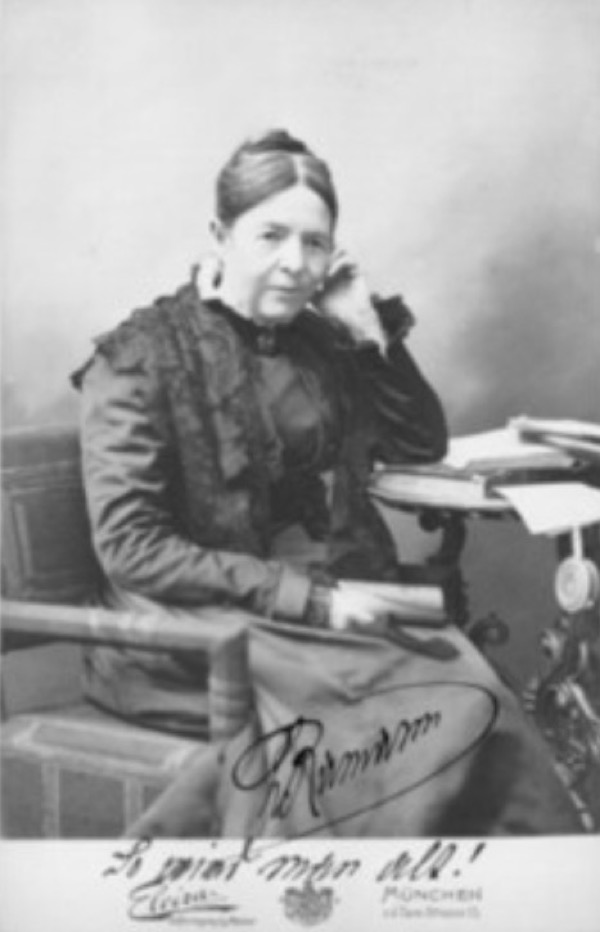
Lina Ramann
In 1890, as Ramann was preparing the final volume of her biography, she and Volckmann retired from administration, handing over their school to Liszt student August Göllerich.
Later in their lives, the couple became increasingly involved in the women’s movement, pushing for equal rights for women in Germany, as well as the fight for public access to music education, which they felt was an integral part of German national identity.
Ramann died in 1912, and Volckmann died ten years later.
New light was shed on Ramann’s work in 1984, when her notes on the Liszt project were published as Lisztiana. These notes revealed that she had pushed back more against Carolyne than first assumed.
This discovery suggests that much remains to be learned about Ramann and how she helped create the Liszt legend: one of the most influential mythologies of the nineteenth century.
For more of the best in classical music, sign up for our E-Newsletter