I’ve been writing about music and musicians for over 16 years now – and what started as a hobby has turned into a profession. I’ve reviewed concerts and recordings, interviewed musicians, written about practising and performance, repertoire and interpretation, teaching and learning, and the curious business of being a musician. Writing about music has become as much a part of my musical life as playing the piano.
But writing about music presents a particular problem. It is often said that “writing about music is like dancing about architecture” – that famous aphorism (origin unclear) which suggests that trying to explain music with words is pointless or impossible because music does not need words. And one of its great powers indeed lies in its ability to communicate without them. The writer who attempts to describe music is therefore always engaged in a kind of translation, trying to find words for something that exists perfectly well without them.
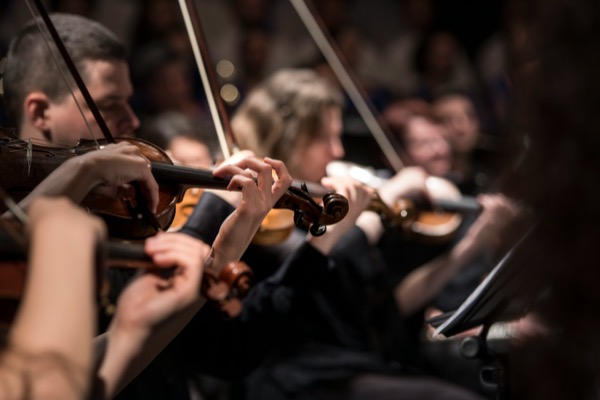
Photo by Larisa Birta on Unsplash
There are familiar traps. Technical or academic language may tell us what the music is doing structurally without conveying what it feels like to hear or play it. At the other extreme, too much poetic description can smother the music beneath layers of metaphor. A performance becomes “luminous”, “transcendent”, “ethereal”; notes “shimmer” and “glitter”, “cascade” and “soar”. Before long, the reader may wonder what the music actually sounded like…
Perhaps the most interesting writing about music happens somewhere between these two extremes: between the notes, as it were.
Writing my novel Facing the Music presented the same problem from a rather different direction. Instead of writing about real musicians performing real concerts, I was writing about imaginary musicians whose relationship with music had to feel entirely authentic.
Set at the time of the First World War, the narrative follows two close friends and musician partners – a pianist and a violinist. Music is fundamental to both of them and lies at the heart of their deep, lasting friendship. It would not have been enough to tell the reader that they were gifted musicians and occasionally place them beside a piano or violin to prove the point. Their musicianship had to inhabit them.
That meant thinking about things the novel might not always explain explicitly. What do they practise, and how? What repertoire suits them? What do they like or dislike about it? How do they rehearse together? How do they behave before a performance? What does one notice in the other’s playing that someone outside their friendship might miss? What happens when they disagree about the music?
Edward Elgar: Sospiri, Op. 70 (arr. for violin and piano) (Nicola Benedetti, violin; Peter Limonov, piano)
My many conversations and encounters with professional musicians via my blog and the Meet the Artist interview series have given me profound insights into what it means to “be a musician” and what musicians “do” all day. Perhaps the most myth-busting encounter was with a concert pianist when I was first researching the book (over 20 years ago), when I still had a rather idealised vision of what it meant to “be” a professional pianist. He lived in an ordinary house in an ordinary street in one of the leafy suburbs of south-west London. His piano room was not a Lisztian salon but an office – albeit one with a 7-foot grand piano. He talked about his work as if it were any other nine-to-five job. I am sure this is common among most musicians – one has to approach it this way to get the work done day to day. The effortless beauty audiences hear is won through patience, discipline, and simply putting in the hours.
Writing fiction also changed how I thought about writing about music more generally. In a review, one can describe a performance from the outside; in a programme note one needs to explain the music while giving the listener a way in to it, without revealing everything about it. In my fiction writing, I wanted to take the reader into the practice room, onto the concert platform, and into a musician’s physical and emotional experience of playing music.
A musician does not necessarily experience a piece as a succession of picturesque images waiting to be translated into prose, nor as a distinct structure or architecture (for example, exposition, development, recapitulation): that understanding takes place not on the concert platform but in the practice room. Playing involves an extraordinarily complicated mixture of physical and procedural memory, listening, anticipation, instinct, concentration and response. The hands are doing things the conscious mind cannot possibly supervise individually. One is simultaneously aware of what has just happened, what is happening now and what is about to happen. And sometimes one is thinking about something completely irrelevant.
Johannes Brahms: Violin Sonata No. 3 in D Minor, Op. 108: I. Allegro (Christian Tetzlaff, violin; Lars Vogt, piano)
The novelist’s challenge is therefore not to describe every note, but to decide what the music is doing in the scene. A piece of music may reveal what a character cannot say; it can evoke a memory or expose vulnerability, ambition or fear. It can become a private language between people.
In writing about music, I wanted to convey both the emotional experience of music, from the point of view of the player and the listener. Still, I also wanted to write about the physical “feel” of certain pieces under the hands, so I included piano music that I have played myself (for example, Schubert’s Opus 90 Impromptus, and a handful of Debussy’s Preludes) and/or know well, to understand both the physical and emotional demands, and the pleasures and the challenges of specific pieces.
Claude Debussy: Préludes, Book 1: No. 10. La cathédrale engloutie (Pierre-Laurent Aimard, piano)
Perhaps this is where writing about music and writing fiction finally meet. Neither is really about finding ever more elaborate ways to describe sound. It is about attending to what surrounds the notes: the person playing them, the person listening, the memories music awakens, the physical sensation of making music, the silence before the first note and after the last.
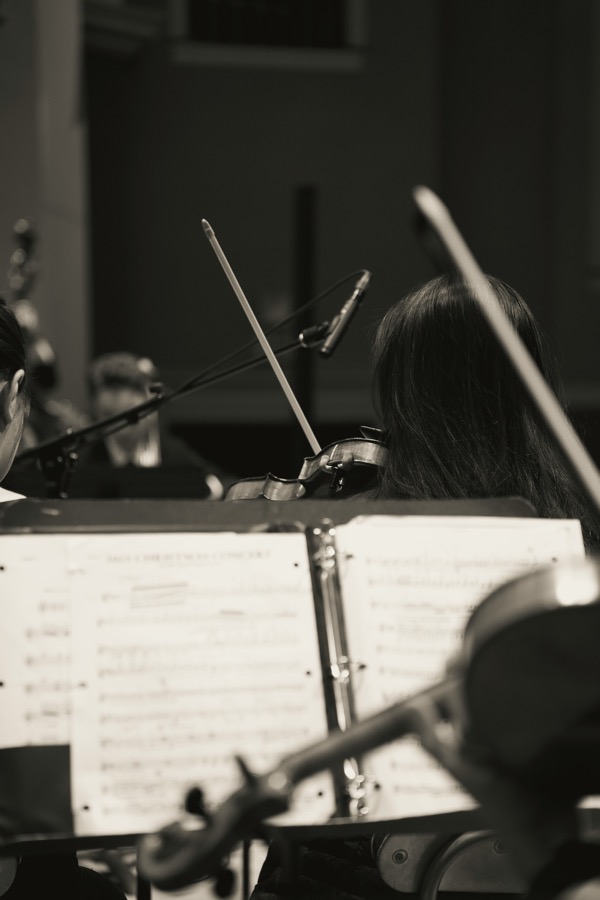
Photo by Annie V on Unsplash
It is also about knowing when not to explain, something musicians understand instinctively in performance. Not everything can or should be underlined. A phrase needs space; a silence must be allowed to remain a silence. Sometimes the most powerful thing a performer can do is resist the temptation to add anything. Writing requires a similar restraint.
After 16 years of writing about music, I find myself increasingly interested in that territory: not simply music and not simply words, but the place where the two meet – the things that happen between the notes.
For more of the best in classical music, sign up for our E-Newsletter