Antonio Salieri’s reputation has long been marred by a narrative that casts him as a jealous rival who poisoned Wolfgang Amadeus Mozart. Unsupported by historical evidence, the two composers shared a professional relationship marked by mutual respect.
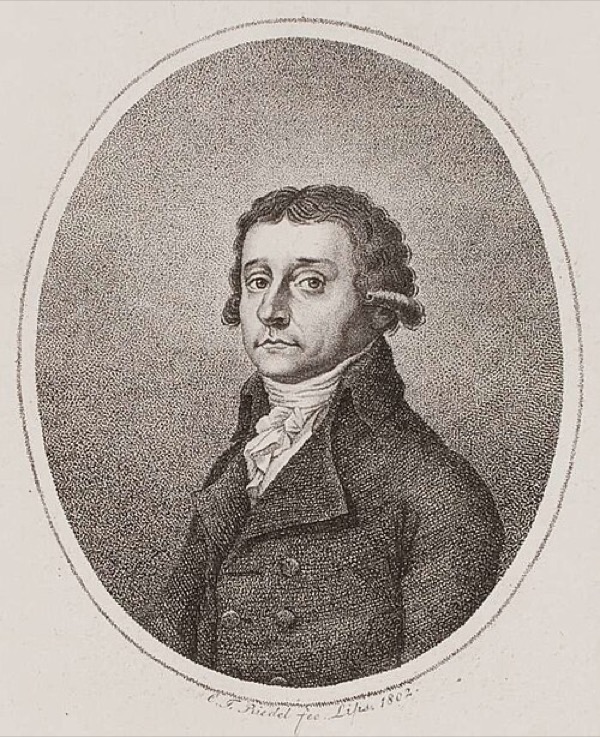
Antonio Salieri
In fact, Salieri was one of the most important musical personalities in Vienna, extremely well connected and highly appreciated. He was a pivotal figure in the development of 18th-century opera, and even as his works fell out of performance, he remained one of the most important and sought-after teachers of his generation.
All but the wealthiest of his students received their lessons for free. To celebrate Salieri’s birthday on 18 August, here are some of his interactions with two of his most famous students: Ludwig van Beethoven and Franz Schubert.
Ludwig van Beethoven: Ten Variations on a Theme by Salieri, WoO 73
Salieri and Beethoven
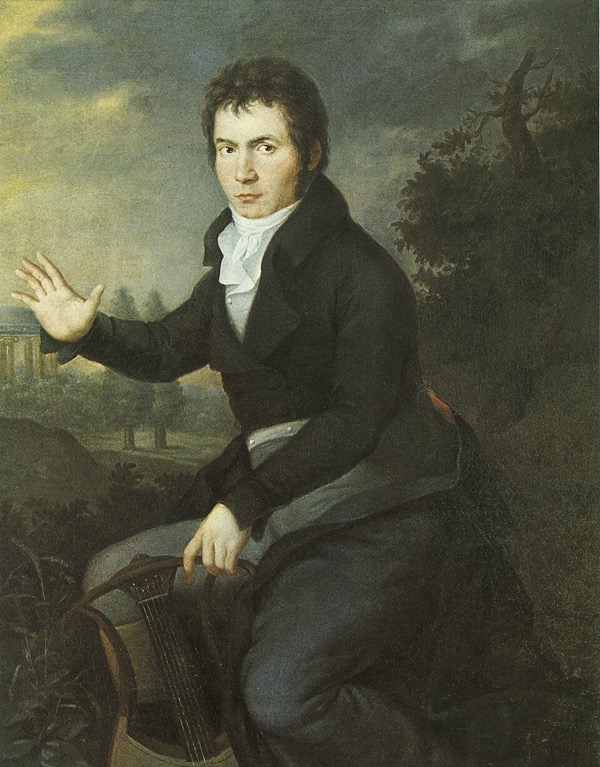
Ludwig van Beethoven, 1804 (Joseph Willibrord Mähler)
With a letter of recommendation and a hefty sum of money in his pocket, Ludwig van Beethoven arrived in Vienna in the second week of November 1792. He arrived in the city as a piano virtuoso, devoting his time to performance and study. Working briefly with Joseph Haydn, Beethoven sought to master counterpoint and also took violin lessons from Ignaz Schuppanzigh.
Salieri and Beethoven probably first met in the mid-1790s, but the only surviving evidence of any serious study with Salieri dates from the years 1801-02. At that time, Beethoven set a large number of unaccompanied part-songs with Italian words, and a scena and aria for soprano and string orchestra.
They did not have a strict schedule for their lessons, but they might well have met for several years to come. Salieri had been ready to “give gratuitous instruction to musicians of small means,” and Beethoven availed himself of this informal help.
Ludwig van Beethoven: Tremate, empi, tremate, Op. 116 (Reetta Haavisto, soprano; Dan Karlström, tenor; Kevin Greenlaw, baritone; Turku Philharmonic Orchestra; Leif Segerstam, cond.)
Italian Prosody
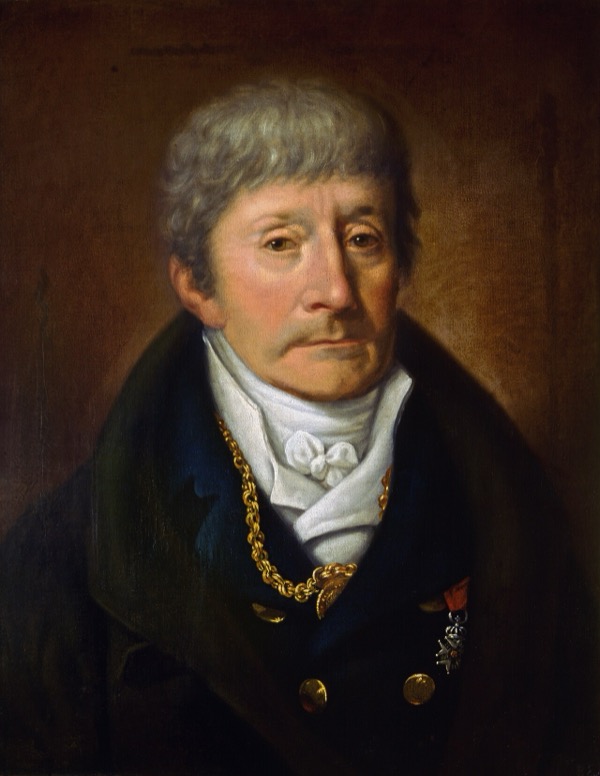
Antonio Salieri, painted by Joseph Willibrord Mähler
The topic of instruction was the setting of Italian words to music, and apparently Beethoven presented Salieri with some Italian songs. On some of these surviving pieces, Salieri showed Beethoven how to handle the verbal accents, expressions, and rhythm.
Two final pieces scored for orchestra emerged from this apprenticeship; the terzetto Tremate, empi, tremate (Op. 116) and the duet Ne’ giorni tuoi felici (WoO 93). They are more than simply exercises and may well have been intended for a concert.
We also know that Beethoven played at one of his teacher’s benefit concerts in 1795, and that he wrote a set of variations on a duet from Salieri’s opera Falstaff in 1799. Around this time, Beethoven dedicated his three Op. 12 violin sonatas to Salieri.
Ludwig van Beethoven: Ne’ giorni tuoi felici, WoO 93, Hess 120 (Reetta Haavisto, soprano; Dan Karlström, tenor; Turku Philharmonic Orchestra; Leif Segerstam, cond.)
Cooling Relations
At some point, their relationship seems to have cooled, as Beethoven believed that Salieri tried to sabotage the 1808 Akademie concert, which saw the premieres of his Fifth and Sixth Symphonies.
On the same date, Salieri had scheduled a charity concert, and Beethoven called his former teacher “my most active opponent, who played me a horrible trick.” Actually, Salieri held his charity event on the same day every year, and it was Beethoven who mixed up his booking. Nevertheless, the two composers were still capable of working together as colleagues, as when Salieri conducted the offstage ensemble in an 1813 performance of Wellington’s Victory.
Despite Salieri’s help, Beethoven never fully mastered Italian prosody, though something had no doubt been gained in the skill of setting words by the time that he turned in the direction of opera.
Ludwig van Beethoven: Violin Sonata No. 3 in E-flat Major, Op. 12, No. 3
Salieri and Schubert
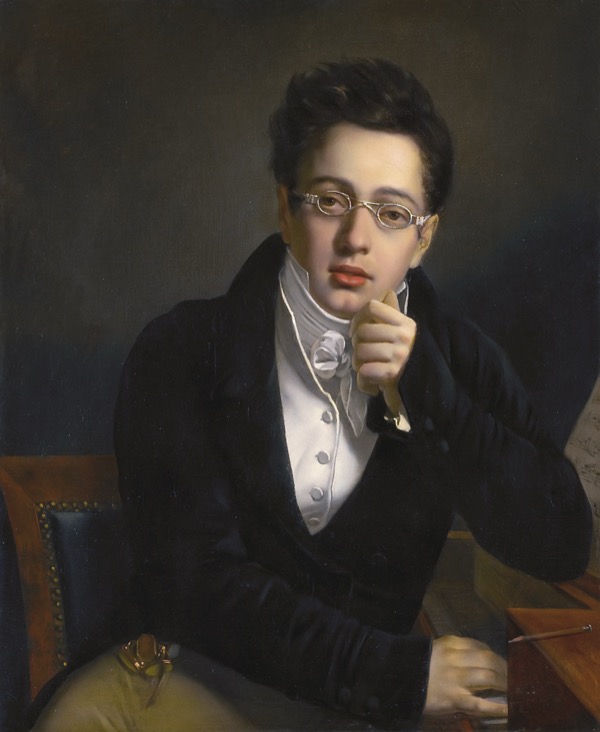
Possible portrait of the young Franz Schubert, by Josef Abel
Franz Schubert was only seven years of age when he was sent for an audition to Antonio Salieri. Salieri’s reputation as a composer had gradually declined, but he still enjoyed the power and prestige of the court music director. Salieri must have liked what he heard because he included Schubert as a mezzo-soprano on a list of nine singers fit to sing for services in the Imperial Hofkapelle.
When Schubert entered the Imperial Seminary on a choir scholarship in 1808, he received initial composition lessons from Wenzel Ruzicka, but apparently Salieri oversaw or greatly influenced the musical environment.
Just one month after Schubert’s mother died of typhoid fever in May 1812, Salieri took Schubert under his wing. At that time, Schubert was housed at the Imperial Seminary, and he needed official permission to take up private studies with Salieri.
Franz Schubert: “Rastlose Liebe,” D. 138
Two Years of Free Lessons
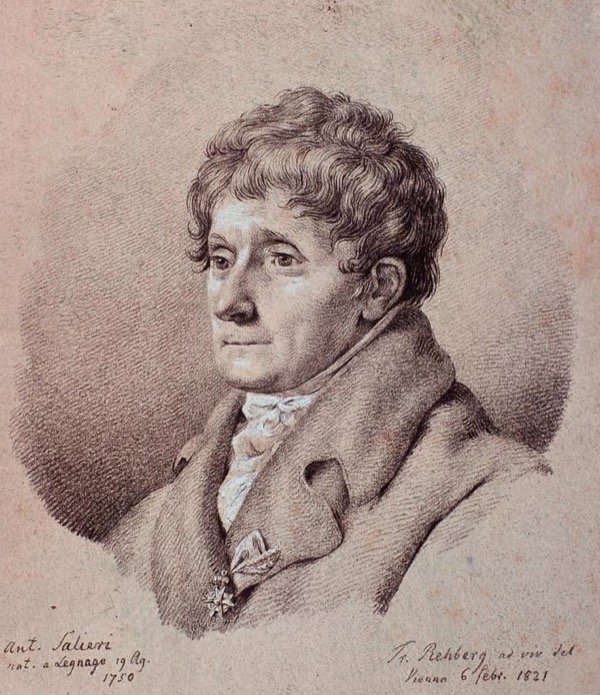
Antonio Salieri, by Reberg
For two years, Salieri gave Schubert lessons twice a week in thoroughbass and composition, free of charge. Salieri placed heavy emphasis on Italian texts, correcting declamation and phrasing, and he asked Schubert to compose multiple versions of the same text.
Schubert signed early manuscripts as “Student of Salieri.” Still, Salieri urged him to find his models in Italian opera, which seems to have conflicted with Schubert’s enthusiasm for the music of Mozart, Haydn, and Beethoven. In addition, his growing interest in poetry was not geared towards Metastasio texts, but rather the works of Goethe and Schiller.
When Schubert’s Mass in F Major, D. 105 was performed at the Lichtental church in 1814, Salieri was in attendance. Apparently, he embraced Schubert afterwards and said, “Franz, you are my student, and you will do me great honour.”
Franz Schubert: Mass No. 1 in F Major, D. 105 (Eva Csapó, soprano; Peter Maus, tenor; Gerhard Faulstich, bass; Christian Schlicke, organ; Spandauer Kantorei Berlin; Bach Collegium Berlin; Martin Behrmann, cond.)
Public Dedication
Dating from 1815, and composed during or near the height of Schubert’s lessons with Salieri, the five Goethe settings published in 1821 are “most respectfully” dedicated to Antonio Salieri. This publicly acknowledged Salieri’s role in Schubert’s development as a composer of vocal music, even as Schubert’s style was evolving toward greater independence.
At some point, Schubert interrupted his regular lessons with Salieri, but once he transitioned to high school, he found time to resume twice-weekly composition lessons with Salieri. In June 1816, Vienna was celebrating the 50th anniversary of Salieri’s arrival in the city.
The Schubert biographer Erich Deutsch writes, “In the evening the celebration arranged by his students took place at Salieri’s home. He sat at the pianoforte, surrounded by his past and present students in two semicircles, fourteen women on his right and twelve men on his left. Hummel and Moscheles, who were not in Vienna, had sent vocal compositions, and each of the students present had brought a dedicatory composition.”
Franz Schubert: Beitrag zur fünfzigjährigen Jubelfeier des Herrn von Salieri, D. 407 (Daniel Norman, tenor; Philip Langridge, tenor; Maarten Koningsberger, baritone; Toby Spence, tenor; Christopher Maltman, baritone; Neal Davies, baritone; Graham Johnson, piano)
Critique of Eccentricity
Schubert participated in that celebration by contributing both the text and the music for a vocal quartet, an aria, and a three-part canon (D. 407). And he wrote in his diary for that day,
“It must be beautiful and refreshing to see all his students gathered about him, each one striving to give of his best for his jubilee, and to hear in all these compositions the expression of pure nature, free from all the eccentricity that is common among most composers nowadays.”
“[This] is due almost wholly to one of our greatest German artists; that eccentricity which joins and confuses the tragic with the comic, the agreeable with the repulsive, heroism with howlings and the holiest with harlequinades, without distinction, to goad people to madness instead of dissolving them in love, to incite them to laughter instead of lifting them to God.”
“To see this eccentricity banished from the circle of his pupils and instead to look upon pure, holy nature, must be the greatest pleasure for an artist who, guided by such a one as Gluck, learned to know nature and to uphold it despite the unnatural conditions of our age.”
Franz Schubert: “Erster Verlust,” D. 226
A Lasting Legacy
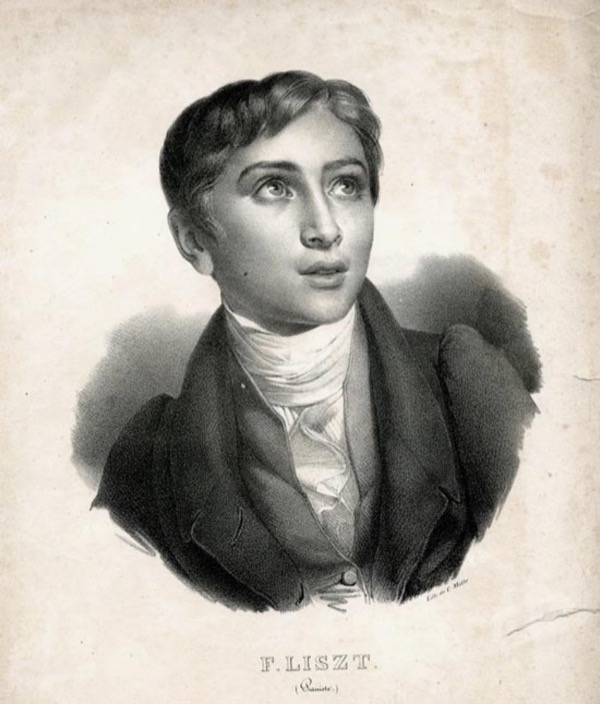
Franz Liszt
The reference to Beethoven is unmistakable, and lessons from Salieri to Schubert tapered off and ended around 1817. Various reasons are cited, most prominently that Salieri saw Schubert’s future in masses, songs, and string quartets. Salieri does not mention symphonic music, seemingly aware that Schubert and his circle were far more involved with more intimate forms of music-making.
Be that as it may, the substantial number of instrumental and compositional exercises from Schubert’s 11th to his 19th year attest to the thorough training he received from Salieri. Modern scholarship suggests that Salieri’s training was pivotal for Schubert’s technique, declamation, and versatility.
Salieri’s influence was felt in every aspect of Vienna’s musical life, and he even served as a mentor and composition teacher to a young Franz Liszt. Other important students were Anton Eberl, Johann Nepomuk Hummel, and Franz Xaver Mozart, son of Wolfgang Amadeus. To be sure, Salieri taught generously and systematically, passing on practical skills in composition, vocal writing, and musicianship.
For more of the best in classical music, sign up for our E-Newsletter