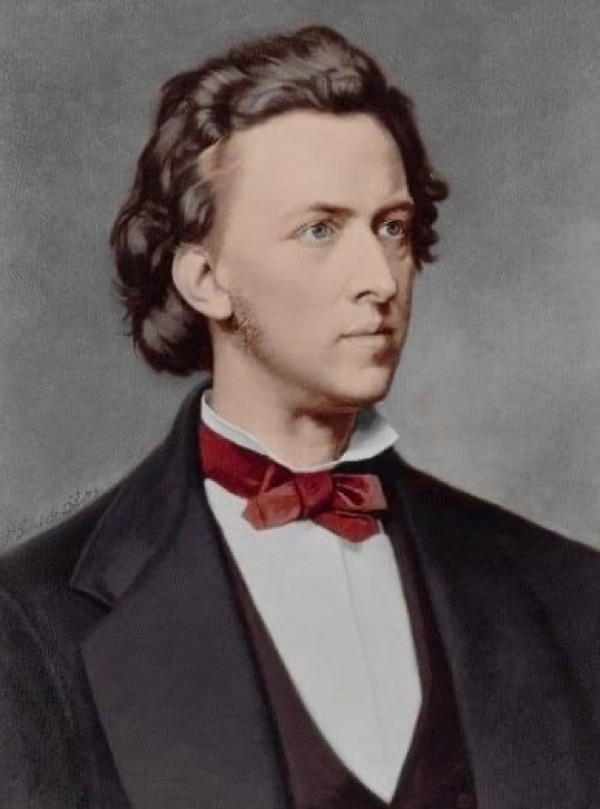
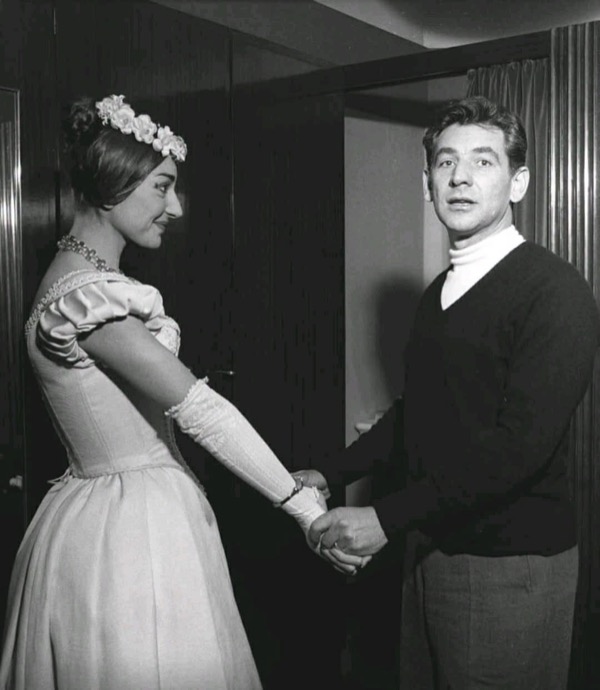
Born in Odessa on 19 October 1916, Emil Gilels was universally admired for his superb technical control and polished tone. His extensive discography, according to Bryce Morrison, “details his development from early impulsiveness and heaven-storming bravura to readings that are imbued with the greatest subtlety, delicacy and inner concentration.” (Morrison, Grove Music Online, 2001)
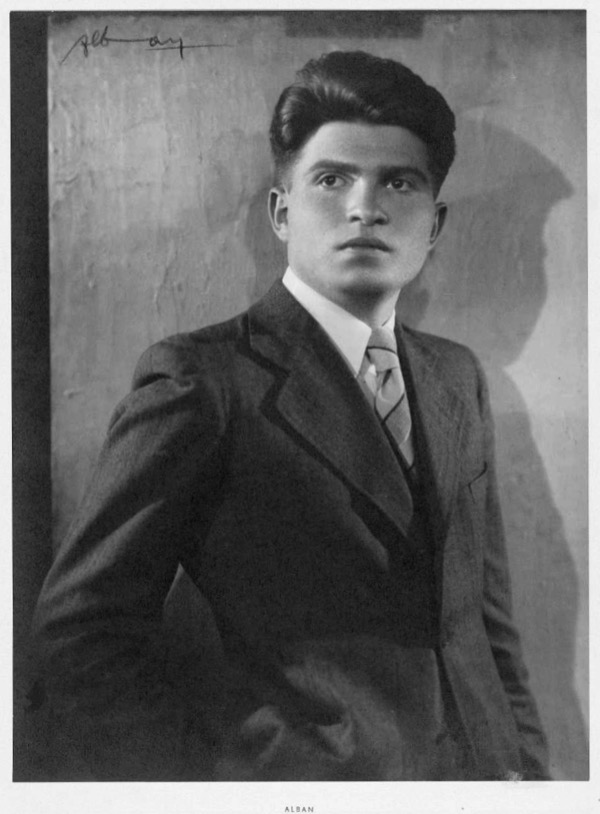
Emil Gilels by Aram Alban
In 1981, after a recital at the Concertgebouw in Amsterdam, Gilels suffered a heart attack, and his health declined thereafter. He died during a medical checkup in Moscow, only a few days shy of his 69th birthday.
At the time of his death, Gilels was in the midst of completing a recording cycle of Beethoven’s piano sonatas for the German record company Deutsche Grammophon. To celebrate his birthday, let’s have a listen to his direct and controlled reading of the famed “Moonlight Sonata.”
Emil Gilels plays Beethoven: Piano Sonata No. 12 in A-flat Major, Op. 26
For Gilels, Ludwig van Beethoven’s music was at the heart of his artistic identity. He was recording Beethoven as early as the 1950s, and we clearly hear his youthful virtuosity in his approach to the music.
Gilels established his international reputation early, with his American debut in 1955. In 1968, Gilels collaborated with George Szell and the Cleveland Orchestra to record all five Beethoven piano concertos.
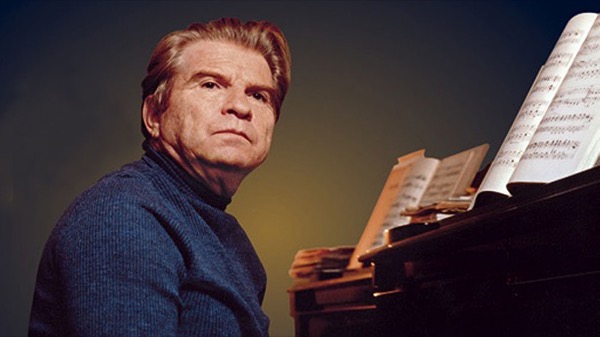
Emil Gilels
Gilels returned to Cleveland in 1977 for the 150th anniversary of Beethoven’s death, and he once again played all five Beethoven piano concertos with Lorin Maazel. The festival later travelled to New York, where the complete concerto cycle was performed at Carnegie Hall and Avery Fisher Hall.
Ludwig van Beethoven: Piano Sonata No. 14 in C-Sharp Minor, Op. 27, No. 2, “Moonlight”: I. Adagio sostenuto (Emil Gilels, piano)
In his later years, the pianist embarked on a project to record the complete Beethoven piano sonatas for Deutsche Grammophon. The cycle was never completed, and five sonatas remained unrecorded. These included the first and the last of the 32 sonatas, Op. 2 No. 1 and Op. 111.
At the Gramophone Awards in 1984, his interpretation of the “Hammerklavier,” Op. 106, was recognised, with Gilels skilfully exposing the work’s vast musical architecture. The so-called “Moonlight” Sonata, more precisely the Sonata quasi una fantasia, Op. 27, No. 2, is a watershed work.
With its famous opening movement, the sonata’s popularity can easily obscure the unfolding drama. This slow meditation is actually only completed in the concluding “Presto agitato,” a virtuoso conclusion to the famous poetic opening.
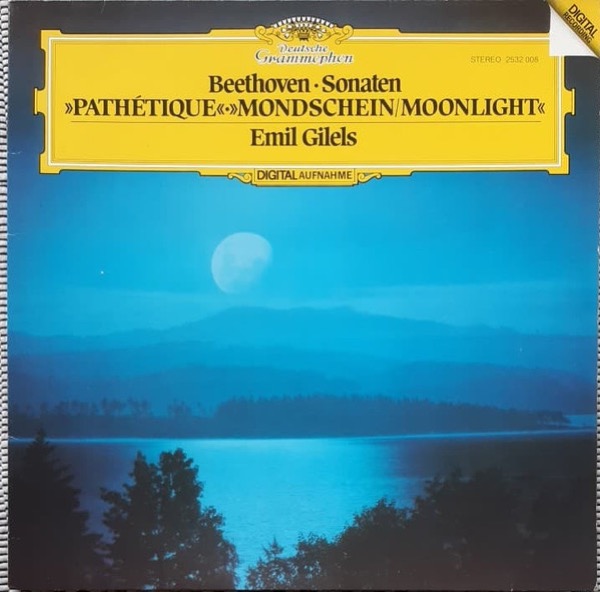
Emil Gilels: Moonlight
Ludwig van Beethoven: Piano Sonata No. 14 in C-Sharp Minor, Op. 27, No. 2, “Moonlight”: II. Allegretto (Emil Gilels, piano)
A rough chronology of Gilels’ performances and recordings of the “Moonlight” starts with a performance and recording session in Moscow in 1968. A live performance was recorded on 23 December and issued on several Melodiya and Eurodisc LPs, and later reissued.
A documented radio broadcast of a recital at Carnegie Hall in New York on 2 February 1969, which included the “Moonlight,” was followed by a Los Angeles performance on 12 March 1969.
A further radio-broadcast performance took place in Moscow in 1970. Between 9 and 17 September 1980, Gilels performed the “Moonlight” in the Jesus-Christus-Kirche in Berlin and made a studio recording for Deutsche Grammophon.
Ludwig van Beethoven: Piano Sonata No. 14 in C-Sharp Minor, Op. 27, No. 2, “Moonlight”: III. Presto agitato (Emil Gilels, piano)
In a 2006 review for The Guardian, Andrew Clements described the Gilels Beethoven recordings as a “hugely distinguished” cycle. Essentially, these late recordings show how Gilels’ interpretation of Beethoven deepened as his career progressed.
In 2020, Freya Parr wrote for BBC Music Magazine that she appreciated Gilels’ directness and honesty in his playing. However, she lamented that Gilels never gives the impression of losing control in the last movement.
In his interpretation of Beethoven’s “Moonlight,” Gilels foregoes all sense of interpretative eccentricity and instead provides a combination of directness and total control. Rather than invoking a mysterious nocturnal atmosphere, Gilels lets the music speak for itself. And thus, we clearly find the world of restless drama and discovery beneath Beethoven’s most familiar melodies.
For more of the best in classical music, sign up for our E-Newsletter