
For centuries, people have loved living with cats. The great composers have been no exception.
Today, to celebrate International Cat Day (August 8th), we’re looking at fifteen great composers who lived and worked with cats…and how those cats may have inspired their music!
Domenico Scarlatti (1685-1757)
Pulcinella
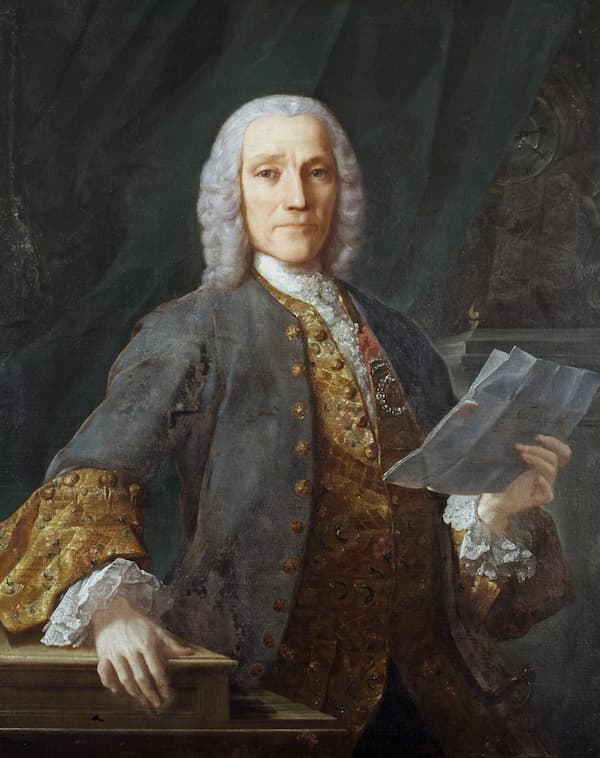
Portrait of Scarlatti wearing the Order of Santiago (1738)
We’ll begin with Domenico Scarlatti’s cat Pulcinella.
According to legend, Pulcinella had a habit of walking up and down Scarlatti’s keyboard.
One day, Scarlatti heard the cat pick out a striking theme during her walk. That theme provided the material for this one-movement harpsichord sonata.
Scarlatti’s Fugue in G minor (K. 30, L. 499), “Cat’s Fugue”
As charming as this story is, it only started appearing in the early nineteenth century, so the story may be embellished or even false.
But it’s a great story, and very well-known, so for the purposes (purr-poses?) of this article, we’re going to choose to believe that Pulcinella really existed!
Wolfgang Amadeus Mozart (1756-1791)
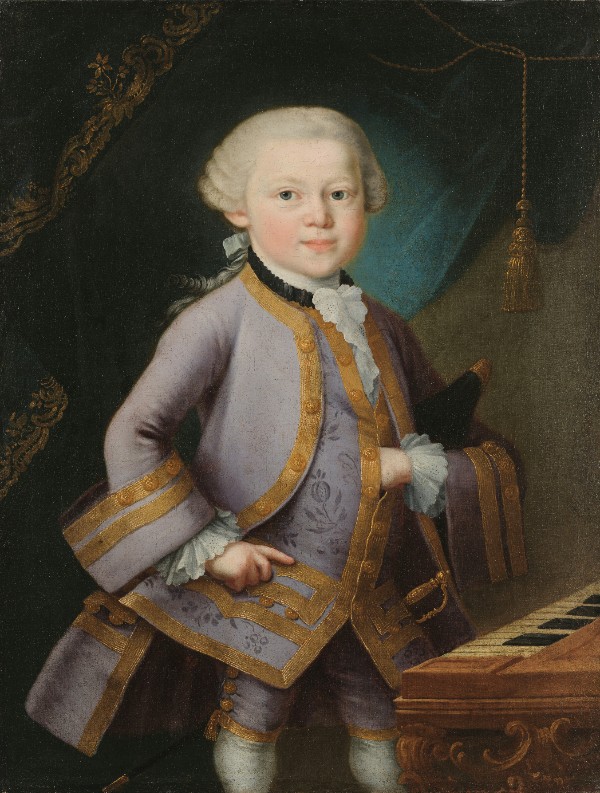
Wolfgang Amadeus Mozart
Daines Barrington was an English lawyer and naturalist who was fascinated by child prodigies.
In the spring of 1764, an eight-year-old Mozart arrived in London with his family. Mozart was so talented that some people – including Barrington – wondered if his father was lying about his age.
However, Barrington was ultimately convinced of Mozart’s age because of a cat.
He wrote:
“I must own that I could not help suspecting his father imposed with regard to the age of the boy, though he had not only a most childish appearance, but likewise had all the actions of that stage of life. For example, whilst he was playing to me, a favourite cat came in, upon which he immediately left his harpsichord, nor could we bring him back for a considerable time.”
Mozart’s desire to play with this “favourite cat” proved to Barrington’s satisfaction that he really was a child prodigy.
Frédéric Chopin (1810-1849)
Valdeck
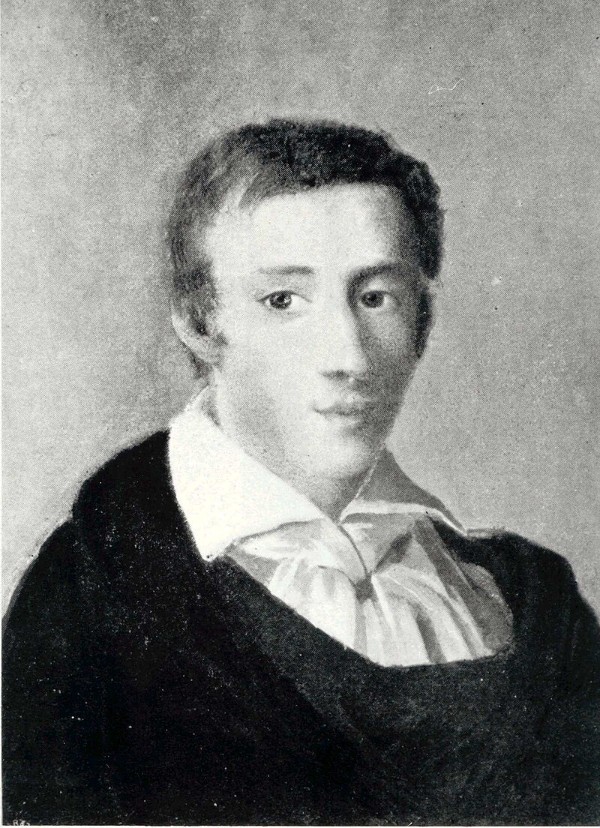
Frédéric Chopin
Between the mid-1830s and mid-1840s, composer and pianist Frédéric Chopin and author George Sand were in a romantic relationship.
They both valued having their own space and didn’t always live together, but Chopin did spend a lot of time at Sand’s apartment, and Chopin would compose there.
Apparently Sand’s cat Valdeck sometimes walked or ran across the piano keyboard, much like Pulcinella Scarlatti once had.
According to legend, the scurrying figures halfway through Chopin’s Waltz in F Major, Op. 34, no. 3 were inspired by Valdeck’s paws getting in the way of Chopin’s hands as he played.
Chopin’s Waltz in F-Major
Franz Liszt (1811-1886)
Madame Esmeralda
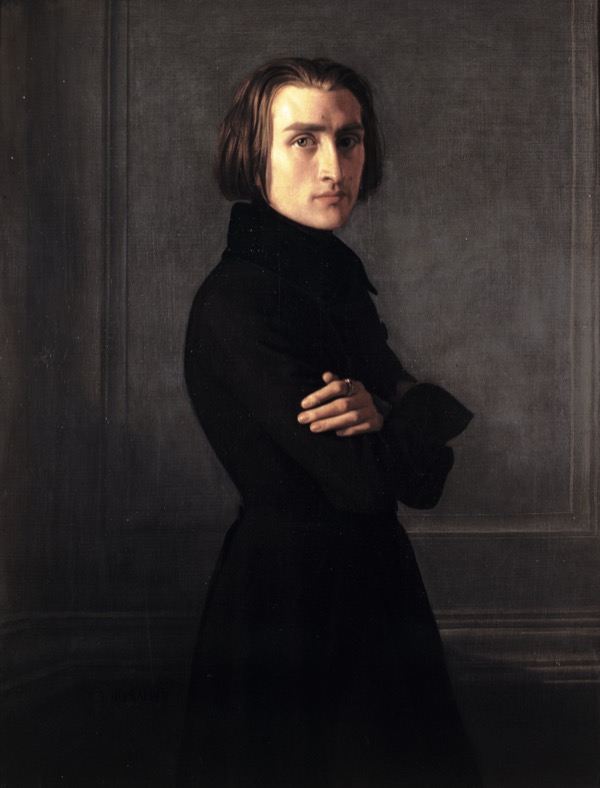
Franz Liszt
According to Liszt biographer Alan Walker in his book Franz Liszt: The Weimar Years:
“No account of daily life [in the Liszt household] would be complete without mention of Madame Esmeralda, the family cat, and a guard dog called Rappo, who romped all over the house without restraint and used to bark beneath Liszt’s window while he composed.”
Liszt’s Sonata in B-minor, 1853-54
Madame Esmeralda lived in the period between 1848 and 1861, when Liszt was working as Weimar’s Hofkapellmeister and living with his mistress Princess Carolyne zu Sayn-Wittgenstein.
Apparently the cat was named after Esmeralda from Victor Hugo’s novel The Hunchback of Notre Dame.
Alexander Borodin (1833-1887)
Fisher, Lelong, and others
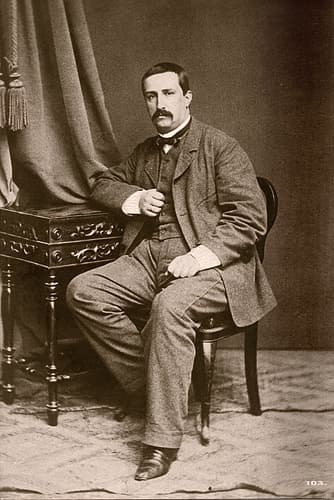
Alexander Borodin
Alexander Borodin and his wife never had children, but they did have multiple cats.
Composer Nikolai Rimsky-Korsakov wrote in his memoirs about visiting the Borodins. He reported that they would curl up on Borodin’s neck (despite Borodin’s halfhearted protests of “now, this is too much!”) and stroll across the dining room table during mealtime, eating off guests’ plates.
Rimsky-Korsakov wrote:
One was called Fisher because he was successful in catching fish through the holes in the frozen river. Another, known as Lelong, had the habit of bringing home kittens in his teeth, which were added to the household.
The Borodins would regale their visitors with stories of their cats’ biographies.
Claude Debussy (1862-1918)
Line (multiples)
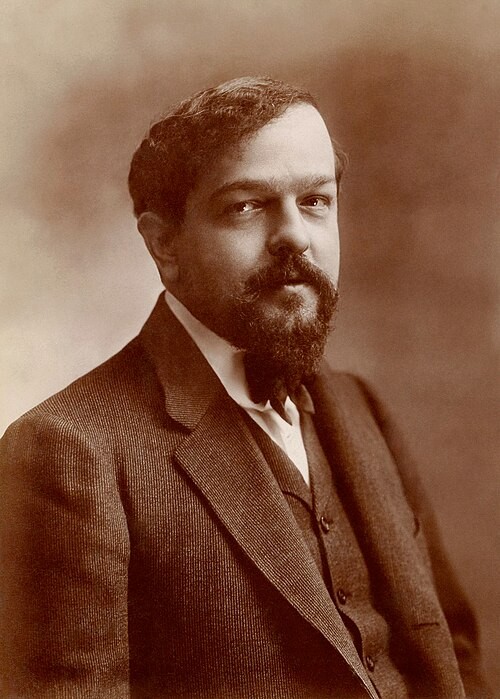
Claude Debussy
Claude Debussy kept a series of grey Angora cats who all inherited the same name from one another. According to Time Magazine, that name was Line.
Biographer Victor Seroff wrote:
“[Debussy’s cats] tiptoed, as usual, through a mass of papers on Debussy’s desk, while he was working.”
Another biographer named Eric Jensen wrote:
“[The cats were] permitted to lounge solemnly on the desk and if they so wished, to sow disorder among the pencils.”
Amy Beach (1867-1944)
Hamlet
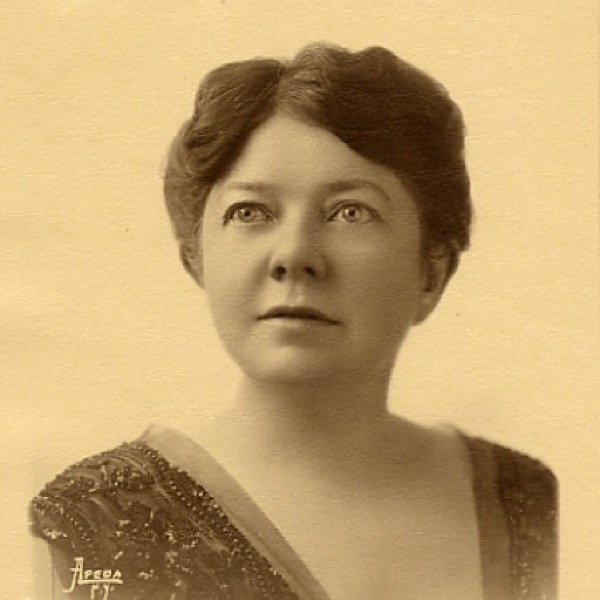
Amy Beach
American composer Amy Beach was inspired by Scarlatti’s Cat Fugue when she published her own Fantasia Fugata in 1923.
She left a tongue-in-cheek asterisk on the front page of the published score:
“For [the subject] the composer is indebted to ‘Hamlet’, a large black Angora who had been placed on the keyboard with the hope that he might emulate Scarlatti’s cat and improvise a fugue theme.”
Beach’s Fantasia Fugata
Ralph Vaughan Williams (1872-1958)
Zebedee, Foxy, and others
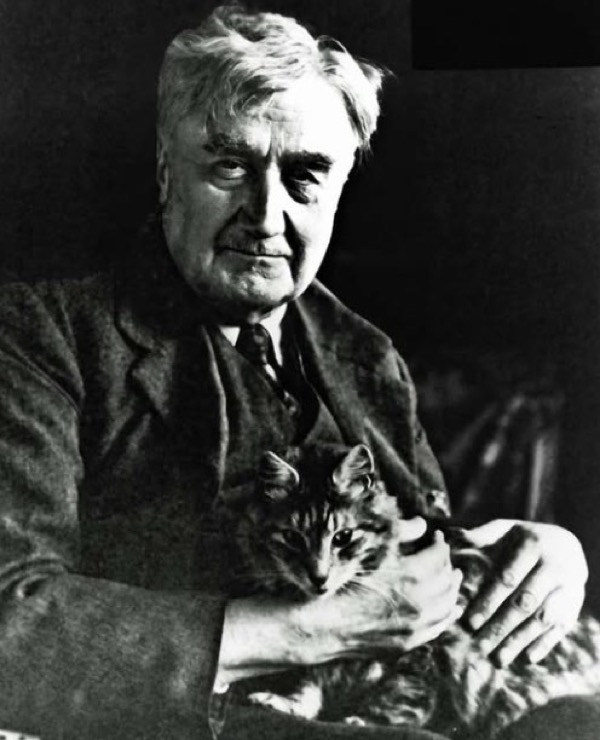
Ralph Vaughan Williams and his cat Foxy
Composer Ralph Vaughan Williams was so obsessed with his cats that he wrote letters from their point of view.
One 1953 letter to the family veterinarian contains a boarding request from the perspective of their cat Zebedee, who “very much dislike[s] noise, and vans, and removal men” and wants Mr. and Mrs. Vaughan Williams to “[fix] me up with a fish shop and so on” after the move is over.
Another contains deliberate misspellings, much like a modern-day meme:
“We are very pleased with your prezent, itt made us both purrrrrr…”
Maurice Ravel (1875-1937)
Siamese cats
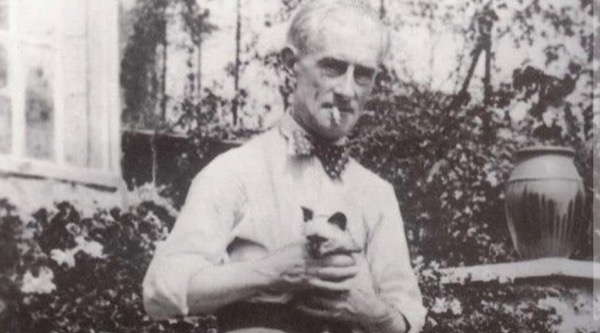
Maurice Ravel and his cat
Maurice Ravel never married (in fact, there are questions whether he enjoyed a romantic life at all), but he was never lonely in his home, because he always kept several beloved Siamese cats.
It was a great event in the Ravel household when kittens were born. Ravel even declared that his friend violinist Hélène Jourdan-Morhange (and dedicatee of his famous violin sonata) was their godmother.
In one letter to Jourdan-Morhange, he wrote:
“Your godson is in good shape, but his brother has so gorged himself that he is suffering from gastritis. This doesn’t prevent them from playing jungle on the lawn.”
He signed off with a joke:
“I lick the end of your nose.”
Ravel’s “Duo Miaule” from L’enfant et les sortilèges
Väinö Raitio (1891-1945)
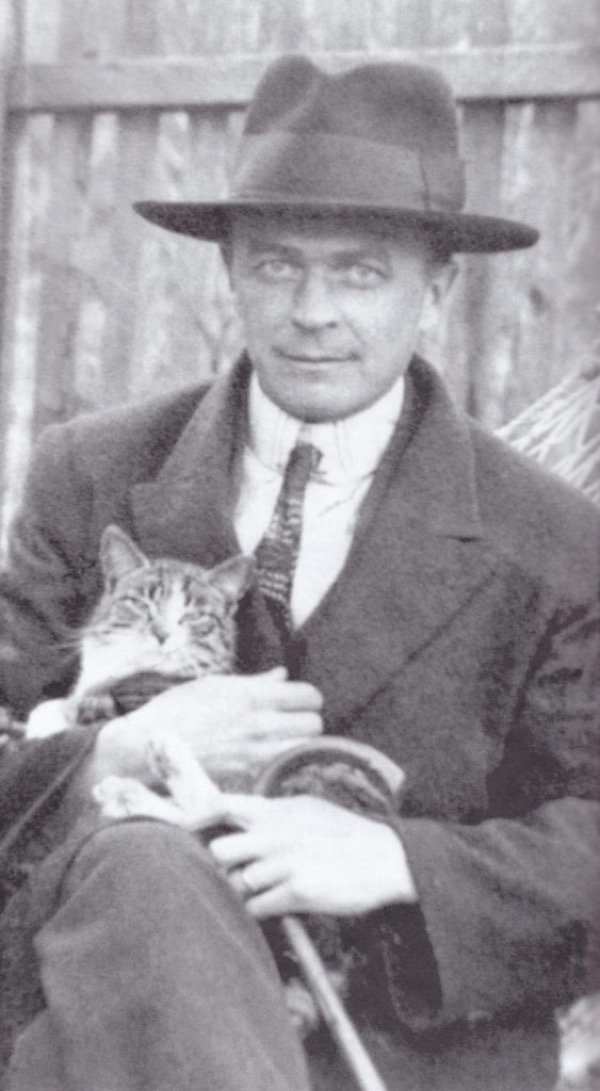
Väinö Raitio and his cat
Väinö Raitio brought twentieth-century modernism to Finland…a style that wasn’t particularly appreciated there during his lifetime.
His tone poem “Kuutamo Jupiterissa” (“Moonlight on Jupiter”) dates from 1922-23, and is one of his finest works. He wrote it after having a vivid dream of visiting Jupiter and its moons.
Raitio’s Kuutamo Jupiterissa
His dedication to the work was unusual: “I dedicate this tone poem to my cat, who came from Korso. I sent him to Jupiter in October 1922.”
Some people viewed this as a snub of the human beings surrounding him, or as performative eccentricity. But Raitio insisted that the dedication came out of genuine love for his cat. Who are we to second-guess?
Aaron Copland (1900-1990)
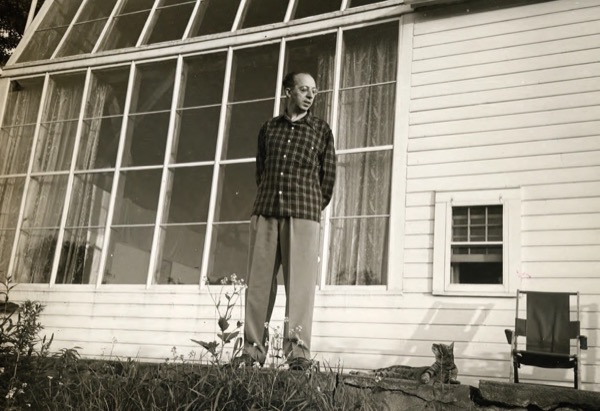
Aaron Copland and his cat
According to BBC Music Magazine, Aaron Copland had several cats throughout his lifetime, but we weren’t able to find any information about their names. And there’s an adorable picture of Copland looking at a cat outside of his home.
He wrote a couple of cat-themed works during his life, including “The Cat and the Mouse” and the song “I Bought Me a Cat.”
Copland’s The Cat and the Mouse
Copland’s I Bought Me a Cat
Peter Warlock (1894-1930)
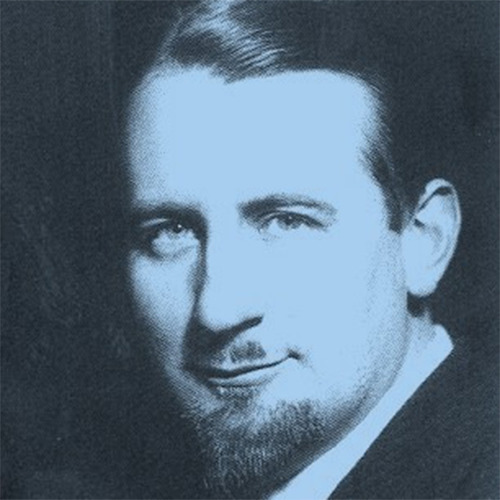
Peter Warlock
British composer Peter Warlock led a troubled and scandalous life. (He once shocked neighbours by riding a motorcycle through town naked.)
In December 1930, he died from coal gas poisoning. There was some question about whether it was murder or suicide. But one fact led people to believe it was the latter: he’d put his cat outside the room, thereby saving its life…something a murderer, perhaps, would be less likely to do.
John Cage (1912-1992)
Skookum and Losa
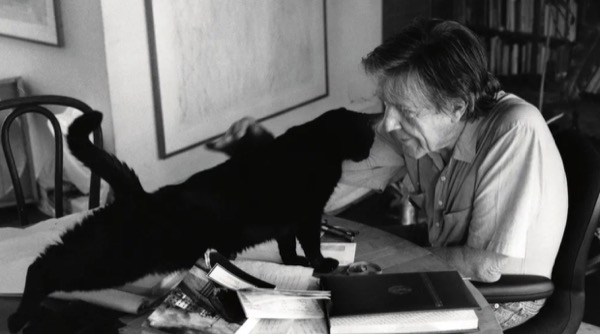
John Cage
Laura Kuhn, the former executive director of the John Cage Trust, wrote this entry in the trust’s blog on 6 September 2013: https://johncagetrust.blogspot.com/2013/09/a-memory-on-cages-101st.html
John Cage had a very close relationship with his second black cat, Losa. (His first black cat, Skookum, was tragically set loose on the streets of New York by a well-meaning worker on the roof. John was so bereft, Andy Culver told him we were going to have to send him back to Zen School.) One of their favourite games together was for John to put Losa under a cardboard box. Losa would then move around the loft, the box on his back, weirdly animated. I was horrified the first time I saw him do this. “He must be scared!” I cried. John just laughed. He said Losa liked it, and, furthermore, his new name was now Losa Rinpoche Taxi Cab. Of course, Losa would, after a time, simply shrug the box off, look disdainfully at us both, and calmly walk away.
John Tavener (1944-2013)
Mandu, Daisy, Nimrod
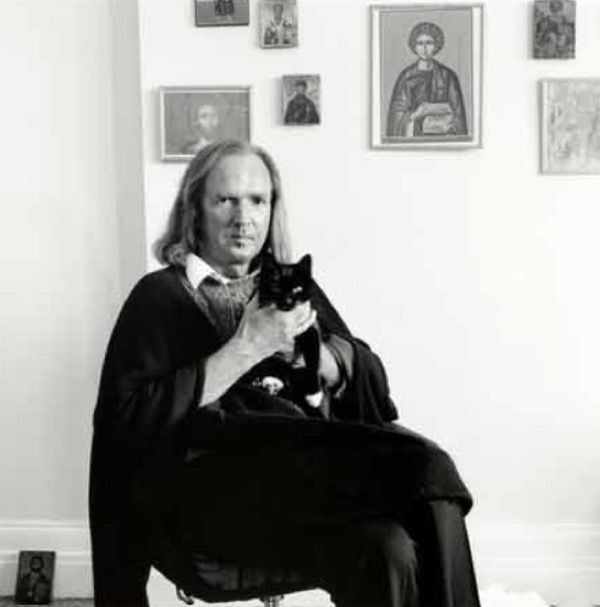
John Tavener
John Tavener wrote two cat-related works.
The first was Mandoodles, which depicts various scenes from his cat Mandu’s life: Mandu is born, Mandu plays, Mandu catches a bird, Mandu sleeps, Mandu goes out at night, and Mandu dies.
Tavener’s Mandoodles
His piano work “In Memory of Two Cats” is dedicated to two more of his cats: Daisy and Nimrod.
Tavener’s In Memory of Two Cats
Jennifer Higdon (1962-)
Beau and Squeak
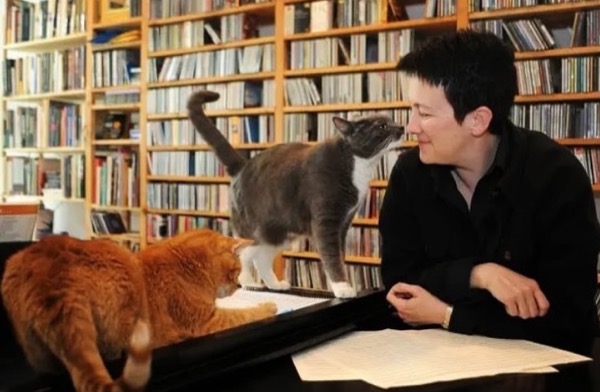
Jennifer Higdon
Jennifer Higdon is a popular Pulitzer Prize-winning American composer.
In a 2010 interview with the New York Times, she spoke of her composing anxiety: https://www.nytimes.com/2010/04/22/arts/music/22higdon.html
“Starting a piece is the worst, and that can stretch from one day to three weeks of agony. The cats run and hide.”
Final Thoughts
Musicians, tell us about your cats in the comments! And let us know which composer cat name you like best, and which cat-inspired work here is your favourite.
For more of the best in classical music, sign up for our E-Newsletter





You forgot Rossini Cats duo 🙀
https://youtu.be/nRFCQ7A4GBI?is=tFrpyr6pe4ZQvENL