Gustav Mahler was one of the most towering figures in classical music history – but the daughter who outlived him by nearly eight decades carved out a remarkable life entirely on her own terms.
Anna Mahler, nicknamed Gucki as a child for her bright, curious blue eyes, was born in 1904, just seven years before her father’s death.
She grew up in the charged intellectual atmosphere of Alma Mahler‘s Vienna salon, survived exile, war, and the loss of multiple works to Nazi-era bombing, married five times, and ultimately became one of the most respected sculptors of her generation.
The Birth of Gucki
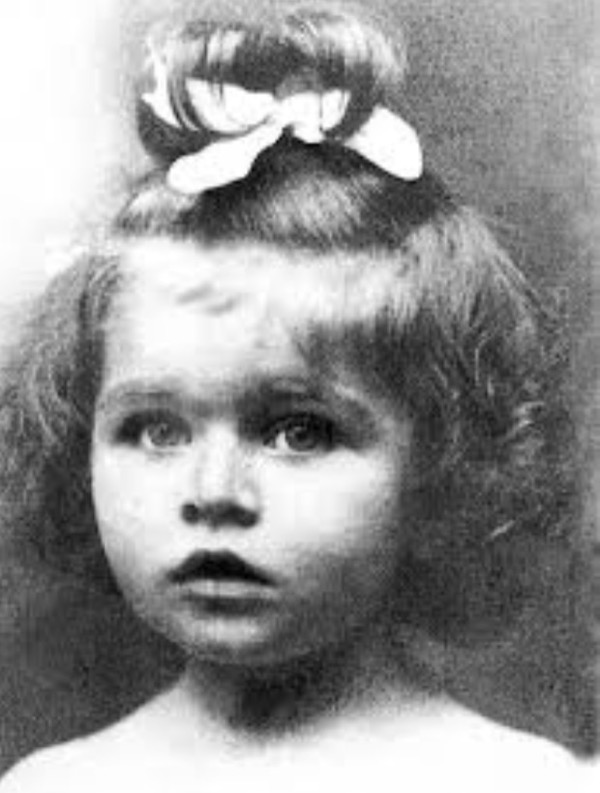
Anna Mahler as a child
Alma Mahler got pregnant for the second time in September 1903. Anna Justina Mahler, named after her maternal grandmother and paternal aunt, was born at noon on 15 June 1904, in the middle of the day in the middle of the month in the middle of the year. Her parents believed this was a good omen for her life.
As a child, she was nicknamed Gucki (from the German verb gucken, or “to look”) because of her bright blue eyes.
Gustav fretted during Alma’s pregnancy. During her labour, Gustav tried to comfort his wife by reading her Kant; she had to beg him to stop.
He also went out to buy her the cheese she craved immediately post-birth, but tied the bag onto his coat, forgot it was hanging off him, and began complaining about the odour before Alma pointed it out to him.
According to Alma’s memoirs, Gucki was born quickly, before the doctor or midwife arrived. The speed of the birth injured Alma, but Gucki was born healthy.
How Gustav Mahler Parented Gucki
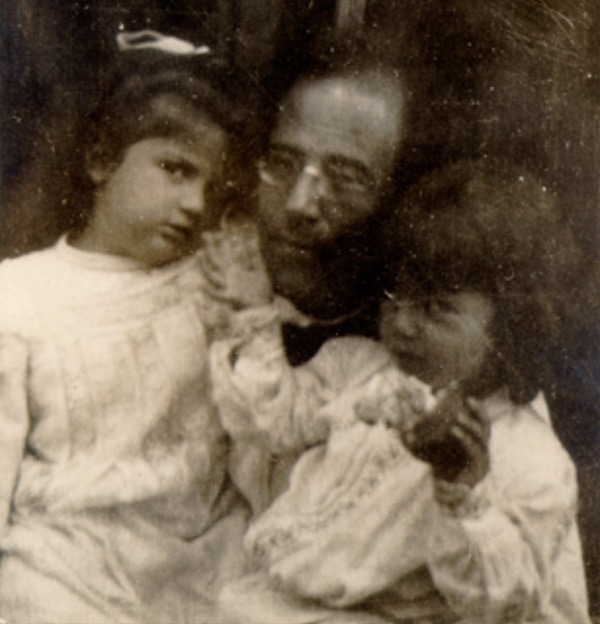
Gustav Mahler and his daughters
Shortly after Gucki’s birth, Gustav went ahead of his family to his annual rural composing retreat.
Alma stayed behind in Vienna to recover; she was bedbound due to lingering complications from both childbirth and breastfeeding.
In between composing sessions, Gustav began working on the construction of an enclosed play pit for the children, hauling sand to prepare it.
He was delighted to spend time with Gucki, and began reading her fairy tales.
The summer was a happy and productive one for Mahler. It led to the completion of his sixth symphony, sometimes nicknamed the “Tragic” – a moniker that later listeners would find hauntingly appropriate.
Mahler’s Symphony No. 6
The Death of Gucki’s Sister Maria
In the summer of 1907, Gucki came down with scarlet fever. Fortunately she made a full recovery.
However, weeks later, her older sister Maria, nicknamed Putzi, also came down with scarlet fever – and diphtheria, too. She died in mid-July 1907, leaving her family bereft and Gucki an only child.
That December, her parents left Gucki with Alma’s mother and departed for New York City, where Gustav pursued professional opportunities at the Metropolitan Opera and New York Philharmonic.
Gustav was paid handsomely for his appearances, and although the separation from Gucki was painful, he referred to it as “stocking the larder” for Alma and Gucki financially.
His ultimate goal was to be financially independent and able to devote himself more fully to composition.
The Death of Gucki’s Father
When Gustav and Alma returned to America in late 1908 so Gustav could perform another American season, they brought Gucki along, with a stern English nurse accompanying them.
The relationship between Gustav and Gucki during this time of her life was special. Once, after she lied to Alma about causing damage with a pair of scissors, Gustav knelt down and suggested that perhaps the scissors had acted of their own will. Not wanting to lie to her father, she confessed.
In 1910, Gustav discovered that Alma – who was nearly twenty years his junior – was having an affair with young architect Walter Gropius.
That same year, his health began deteriorating. In early 1910, he was diagnosed with bacterial endocarditis, and that combined with pneumonia would prove fatal. After months in health care facilities, he died in May 1911.
According to Alma’s memoirs, the last thing Gustav told her was, “Be my good girl, my child.” Even though his early death robbed her of the chance to get to know her father as an adult, she would carry the complicated weight of being Gustav Mahler’s daughter for the rest of her life.
Anna’s Early Education and Love of Art
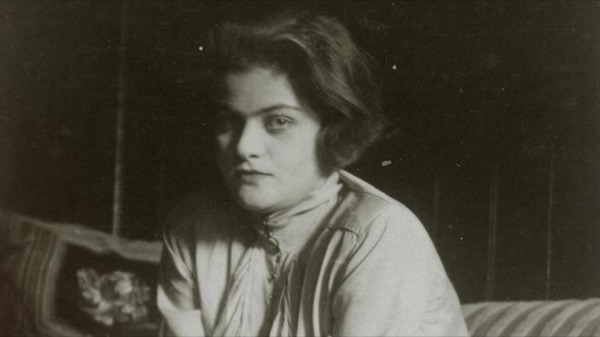
Anna Mahler as a young woman
The loss of her sister and father at such a young age in such quick succession would have left a profound mark on Anna.
Her newly widowed mother responded to the devastation of the loss by continuing her relationship with Walter Gropius, as well as embarking on another one with painter Oskar Kokoschka.
The young Anna started developing a passion for the visual arts while visiting Kokoschka’s studio.
Preoccupied by the concerns of her own life, Alma didn’t pay much attention to her daughter’s formal education. Instead, she offered something that was perhaps even more valuable: admittance into Alma’s salon, which was full of the greatest thinkers, artists, and philosophers in Vienna. She began sketching them.
She also learned how to play the piano and found herself drawn to the music of Bach. Soon she began preferring Bach over the music of Wagner.
To Alma, whose love of Wagner’s operas was foundational, it felt like a major betrayal, and mother and daughter soon began quarrelling over it.
Anna’s Early Marriages
Like her mother, Anna was famous (or perhaps, in certain quarters, infamous) for her multiple marriages.
In 1920, the year she turned sixteen, the youngest age at which she was allowed to marry, she wed a conductor named Rupert Koller. She wanted to strike out on her own, and she liked her husband’s parents. The marriage fell apart within months.
After her divorce, Anna moved to Berlin to study art. In 1924, she married composer Ernst Krenek. She was 19, and he was 24. They seem to have had a more active musical partnership than her parents, and Anna even created the piano reduction of Krenek’s 1923 opera Orpheus and Euridice.
Unfortunately, this marriage, like the one before it, only lasted for a matter of months. After Krenek left Anna to have an affair with violinist Alma Moodie, they were divorced in November 1924.
Her next marriage was to publisher Paul Szolnay in December 1929. This marriage produced a daughter – a girl named Alma born in 1930 – but did not last long-term; they divorced in 1934.
Anna Finds Her Creative Voice in Sculpture
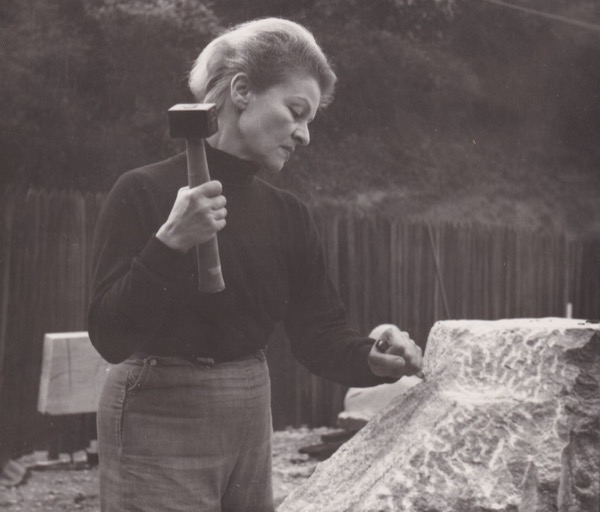
Anna Mahler sculpting
With three unsuccessful marriages under her belt by her mid-twenties, she decided to focus on her art, studying in Berlin, Rome, and Paris.
“I never wanted to become a painter,” she said once. “Colour was of no importance to me. My paintings were always two-dimensional sculptures.”
In 1930, when she was 26, she settled on a sculpture focus. She took lessons from Fritz Wotruba, one of the best-known sculptors in Austria. They became lovers, and she helped secure a stipend for him from the municipality of Vienna.
She remembered:
“Wotruba looked at my work and asked, ‘Why don’t you use stone?’ First, I thought a woman of my size could never do this. But then I tried, and it worked, and above all, it was a great joy.”
Architect Karola Bloch remembered from this time:
“Fritz Wotruba often worked in his garden on his huge, still and naturalistic figures. Anna Mahler also had monumental figures in progress. It was an amazing sight, this tiny, beautiful woman standing on a ladder hammering the marble with a strong arm…”
Tragedy and Triumph During the 1930s
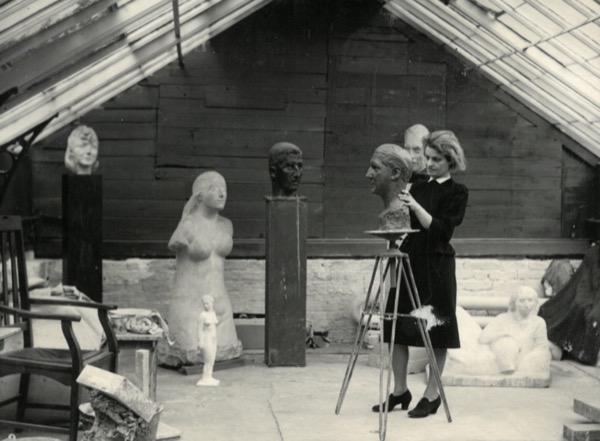
Anna Mahler sculpting
In March 1934, Anna’s 17-year-old half-sister Manon Gropius became ill with polio. Anna helped to take care of Manon, but despite receiving the best care possible, Manon died in April 1935.
Anna plunged herself further into her work. In 1937, one of her works was awarded the Grand Prix at the World Exhibition in Paris.
After the Nazis came to power, she fled Austria and settled in London. Tragically, during the bombing of Vienna, many of her works were lost.
She founded a studio in London and began making busts of important classical musicians. By the end of her career, she’d portrayed Erich Kleiber, Arnold Rose, Arthur Bliss, Eileen Joyce, Arnold Schoenberg, and others.
Another Marriage, Another Move
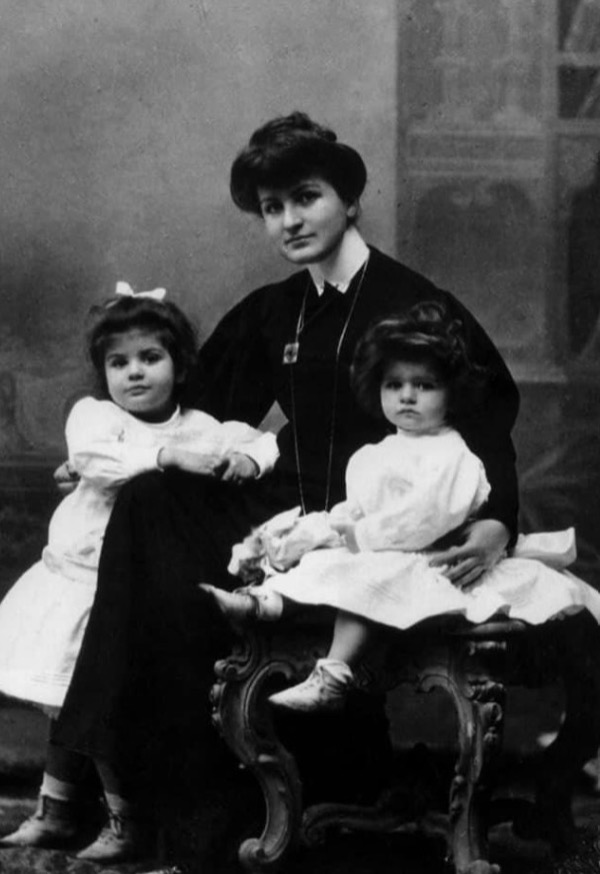
Alma Mahler and her daughters
During the war, she dated Britain-based conductor Anatole Fistoulari, who was principal conductor of the London Philharmonic in 1943 and 1944.
In late 1942, she became pregnant. They were married on 3 March 1943, and Anna gave birth to their daughter Marina that August.
Her mother Alma had moved to America in 1940, eventually settling in California.
After the war, Anna relocated to be near her, hoping for some financial aid. She moved into a home in West Los Angeles, and her outdoor studio in the driveway drew a variety of curious onlookers.
She taught at UCLA (the University of California, Los Angeles) and USC (the University of Southern California).
Financial Independence, Finally
Anna only became financially independent in 1964 after Alma died.
In 1969, she bought a home in Spoleto in Italy, a purchase that delighted her, even when the property proved to be cold in the winter.
That same year, she married her fifth and final husband, playwright, screenwriter, and film editor Albrecht Joseph. He had a decades-long career, and one of his best-known projects was the American television show Gunsmoke. Both Albrecht and Anna were in their late sixties.
Even though that marriage ultimately ended, Anna reportedly believed that he was the true love of her life, but felt they paid too much attention to one another and had to separate to continue to grow as individuals.
She died in June 1988 while visiting her daughter Marina Mahler-Fistoulari.
Conclusion
Anna Mahler lived to 83, long enough to purchase a sun-drenched home in Spoleto in her sixties, marry the love of her life, and then leave him – because even at that age, she believed growth mattered more than comfort.
She had spent a lifetime in the shadows of larger-than-life figures: a father who was a titan, a mother who was a legend, husbands who were composers and conductors and architects.
But by the end, she had made herself into something entirely her own: a sculptor, a survivor, and a woman who once stood on a ladder hammering marble with a force that astonished everyone who watched. She was clearly Gustav Mahler’s daughter – but she was also far more than that.
For more of the best in classical music, sign up for our E-Newsletter