
For a composer who wrote one of the most beloved violin concertos ever, brought works by Bach and Schubert into the mainstream, and grew up as one of the most impressive child prodigies in music history, Felix Mendelssohn is still surprisingly elusive and misunderstood.
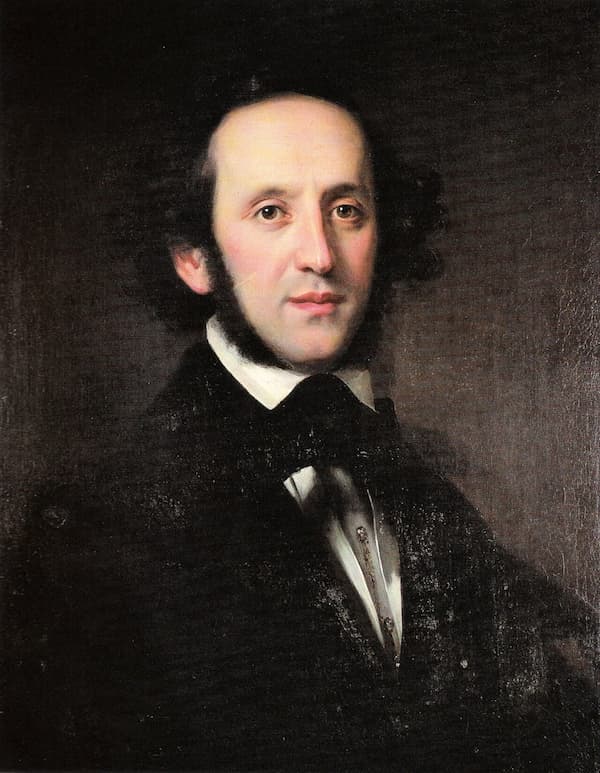
Felix Mendelssohn
His music is often played around the world, yet his reputation has long been clouded by assumptions about privilege, politeness, and supposed lack of depth.
It’s time to set the record straight. Today, we’re debunking five major myths about Felix Mendelssohn.
1. Mendelssohn was a lightweight composer.
Mendelssohn’s String Quartet in F minor
The accusation usually goes something like this: Mendelssohn wrote pretty music. Elegant music. Refined music. But not music of existential weight or particularly deep emotion.
However, that narrative collapses the moment you hear the first frantic scrubbing notes to his String Quartet in F minor, Op. 80, written after the sudden death of his beloved sister Fanny. The music is raw, volatile, and restless.
Other works reveal similar depth. The third symphony (nicknamed the Scottish) broods in dark tonal colours; the oratorio Elijah thunders with prophetic fury; and the graceful Hebrides Overture captures something vast and unsettled in its depiction of the sea and Fingal’s Cave.
Perhaps the myth originates with the fact that Mendelssohn’s emotional language is never particularly bombastic. His intensity is carefully constructed, relying on his well-trained sense of structure and pacing.
But that doesn’t make his music less heartfelt or impressive.
2. Mendelssohn was too privileged and didn’t struggle enough to be a serious composer.
Mendelssohn’s Hebrides Overture
It’s true that Mendelssohn was born into wealth. His grandfather was the philosopher Moses Mendelssohn, and his father, Abraham, was a wealthy banker.
He grew up in a rich and well-connected Berlin household, which in turn gave him access to exceptional music teachers and performers to play his compositions.
It was the perfect storm of talent and opportunity, but privilege doesn’t mean he didn’t have struggles.
For his entire life, Mendelssohn lived in a Europe steeped in antisemitism, which shaped his understanding of himself, his family, and his own identity.
The Mendelssohns felt pressured to convert to Lutheranism, and Felix was baptised into the church at the age of seven. The family also adopted an additional Christian surname, Bartholdy, making his full name Felix Mendelssohn Bartholdy.
Throughout his career, Mendelssohn worked at a punishing pace, conducting, composing, teaching, touring, organising festivals, and even founding the Leipzig Conservatory. This demanding schedule likely weakened his health.
Perhaps most tragically of all, the early death of his beloved sister Fanny absolutely devastated him; she died of a stroke, suddenly and without warning, in May 1847.
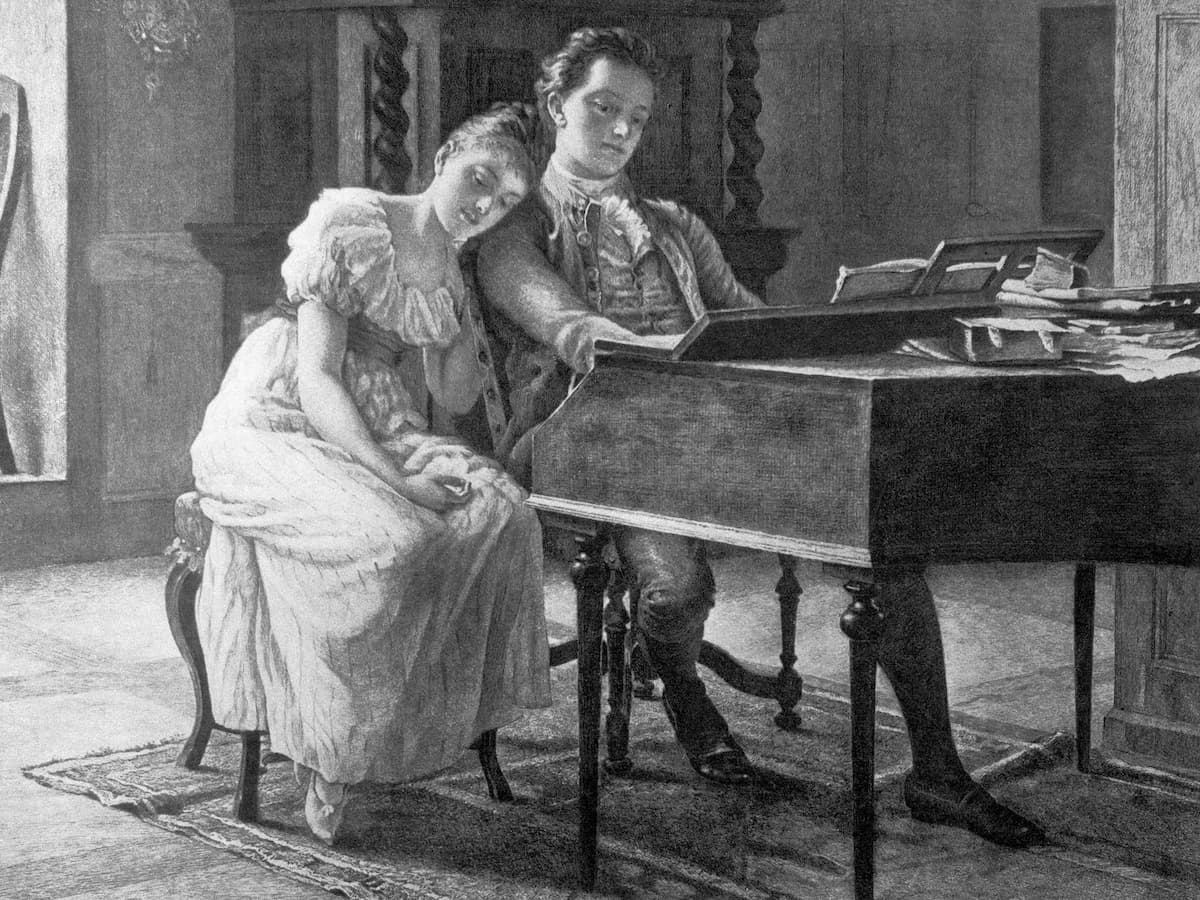
Fanny and Felix Mendelssohn © Bettmann/Corbis
The stress of the grief likely contributed to his own death, also by stroke, just a few months later. Felix was just 38.
Romantic mythology often links poverty to artistic authenticity. But Mendelssohn’s struggles with his identity, obligations, and grief were also real, and they shaped his music profoundly.
Talent plus opportunity contributed to the development of his early brilliance. Grief and exhaustion contributed to his early death.
3. Mendelssohn was musically conservative.
Mendelssohn’s Violin Concerto
Because Mendelssohn was an early Romantic who revered Johann Sebastian Bach and admired Classical form, his music is often positioned as a “safer”, more digestible alternative to the work of more radical contemporaries like Richard Wagner.
But innovators can also shape the future via their fascination with the past.
In 1829, a month after his twentieth birthday, Mendelssohn conducted the first revival of Bach’s St. Matthew Passion – launching an entire Bach revival and reshaping 19th-century musical consciousness.
His great overtures – like A Midsummer Night’s Dream, the Hebrides, and Calm Sea and Prosperous Voyage – each pioneered tone painting and atmospheric orchestration in its own way.
The violin concerto also bucked tradition: structurally, it featured several features that were extremely bold for its time.
Mendelssohn eliminated the traditional concerto introduction and had the soloist – instead of the orchestra – state the unforgettable opening theme. He also linked the three movements with transitional music: another striking novelty that encouraged later composers to experiment with form and structure.
Felix Mendelssohn wasn’t anti-modernity. He simply believed artistic progress could grow out of tradition, not just be in opposition to it.
4. Mendelssohn wrote the Wedding March – and that’s about it.
Mendelssohn’s Wedding March from A Midsummer Night’s Dream
Yes, the Wedding March from A Midsummer Night’s Dream is nearly inescapable. It became a fixture of Western weddings after being used at the marriage of Princess Victoria in 1858.
But reducing Mendelssohn to that piece is like reducing Beethoven to “Für Elise.”
The depth and quality of Mendelssohn’s output are staggering. The violin concerto remains one of the most performed concertos in the world. The octet, written when he was just 16, is one of the greatest chamber music works of the Romantic era. He even wrote the melody that became the Christmas carol “Hark! The Herald Angels Sing.” That’s barely scraping the surface.
The ubiquity of the wedding march has distorted public memory of an extraordinary catalogue.
5. Mendelssohn’s reputation declined relative to his contemporaries’ because his music wasn’t as important.
Mendelssohn’s Symphony No. 5
After Mendelssohn’s early death in 1847, shifting aesthetics tilted toward grand philosophical narratives and revolutionary manifestos, and his impeccably crafted works seemed to dim in relevance.
In addition, the notoriously antisemitic Richard Wagner began publicly attacking Mendelssohn, and of course, neither Felix nor Fanny was alive to push back. Decades later, the Nazi regime even banned his music and removed monuments in his honour.
As this history demonstrates, a composer’s reputation is never about music alone. It is also impacted by politics, aesthetics, and the composer’s gender, race, or religion.
Mendelssohn’s relative decline clearly had more to do with antisemitism and changing tastes than artistic merit.
Despite the headwinds it faced, his music never disappeared from the repertoire, and today his symphonies, concertos, and chamber works remain central to concert life.
If anything, the reassessment of Mendelssohn in recent decades has revealed how foundational his output was to Romantic-era music.
Conclusion
Felix Mendelssohn was not a lightweight composer. He was not emotionally shallow. He was not a relic clinging to the past.
He was a composer who revived Bach for a new century, reshaped the concerto form, and wrote music expressing both refinement and fury. When the solo violin enters without warning in the concerto, or when the string quartet in F minor erupts in grief, there is nothing polite about any of it.
Mendelssohn was a bridge between Classical clarity and Romantic colour – but a deeply thoughtful one who insisted that emotion be shaped by structure. His music endures today because it is brilliantly built, emotionally compelling, and unmistakably alive.
For more of the best in classical music, sign up for our E-Newsletter






Well said, Emily. Mendelssohn not only wrote music of great depth. He also was under immense pressure since childhood to use his prodigious talent to produce musical works, which undoubtedly affected his health. Even King Frederick of Prussia made huge demands on the composer. And Wagner, aside from assaulting Mendelssohn’s reputation when the composer was no longer alive to defend himself, egregiously stole from him and even admitted to plagiarizing him. Mendelssohn deserves the highest praise and recognition for his contribution to classical music. Thank you for acknowledging this in your article.