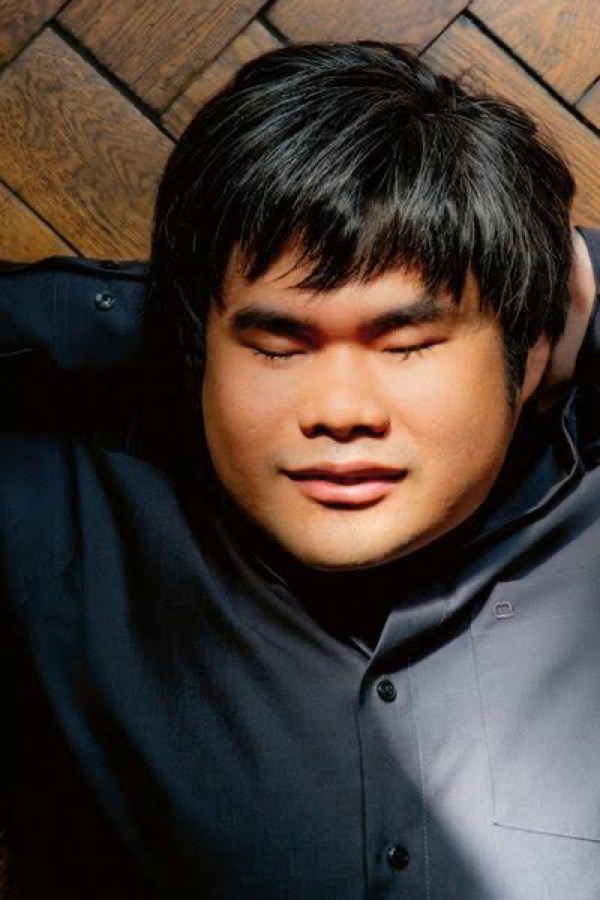
American clarinettist Richard Stoltzman was born on 12 July 1942. He has brought the clarinet firmly into the modern age.
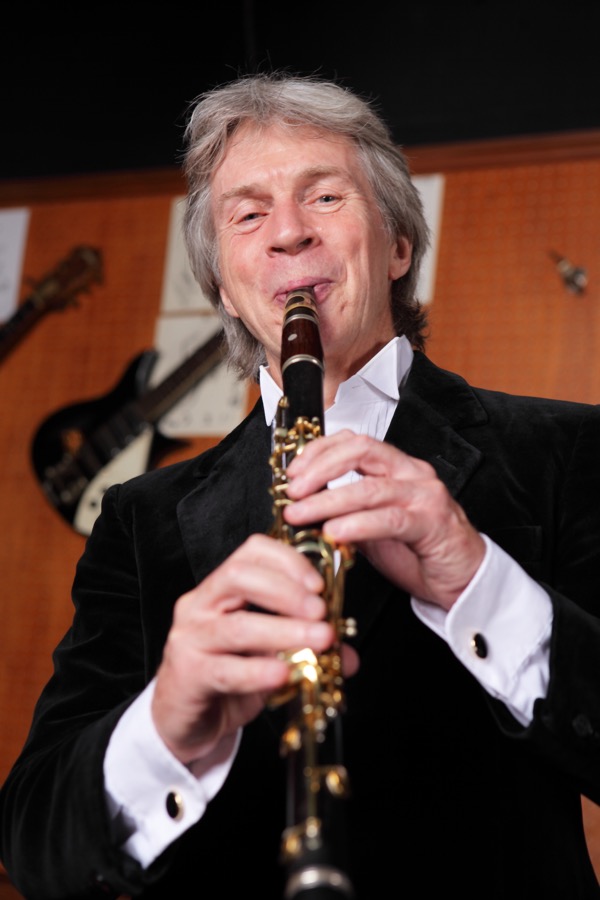
Richard Stoltzman (photo by A. Kumamoto)
The clarinet first came to people’s attention through the Classical-era compositions of Mozart, Reicha, and others. It made its way from the soloist into the orchestra at this time as well, and then just rested in the shadows while musical instrument makers continued to work on its development.
Wolfgang Amadeus Mozart: Clarinet Quintet in A Major, K. 581: IV. Allegretto con variazioni (Richard Stoltzman, clarinet; Tokyo String Quartet)
By the 20th century, the clarinet was best known for its use in jazz, notably in the hands of clarinettist Benny Goodman. It took an artist of Stoltzman’s calibre to bring the clarinet back to the classical side.
Stoltzman’s father worked for the railroad, and shortly after Stoltzman’s birth in Omaha, Nebraska, the family moved to San Francisco. His father was fond of big band music and played the clarinet in a dance band. There’s a story that the young Stoltzman found these interesting black cylinders and was playing with them until he was discovered by his father, who rescued his beloved clarinet from the child. Stoltzman started his studies at age 8 (his father bought him an indestructible metal clarinet), and when he got up to junior high school, he worked on jazz improvisation and jamming with his father.
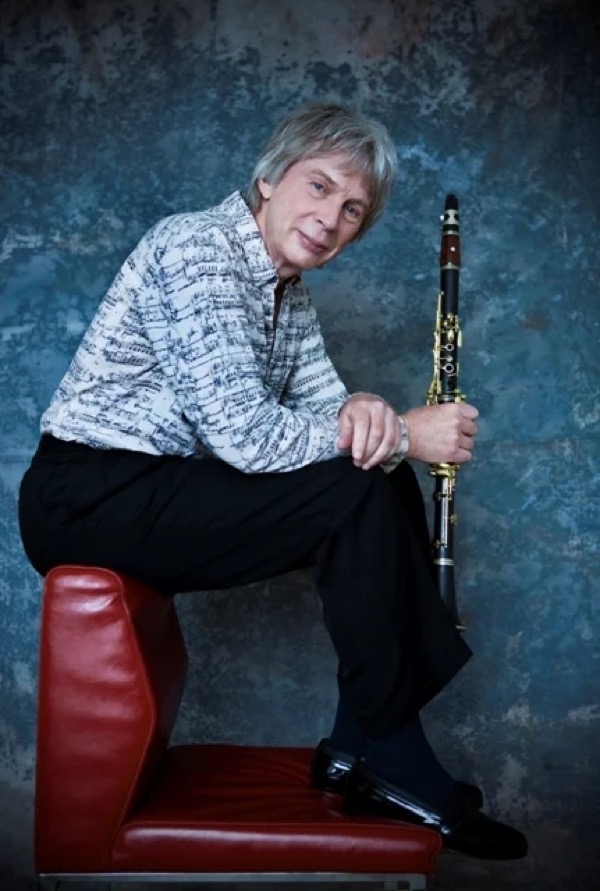
Richard Stoltzman (photo by Lisa Marie Mazzucco)
Stoltzman completed his bachelor’s degree at Ohio State University and went on to study at Yale School of Music with Keith Wilson. In New York, he worked with the clarinet teacher Kalmen Opperman and has recorded with Kalmen Opperman’s clarinet choir.
More importantly, he has appeared as a soloist with major international orchestras. As an early member of the chamber music group TASHI, with violinist Ida Kavafian, pianist Peter Serkin, and cellist Fred Sherry. The group was formed to play Messiaen’s Quartet for the End of Time and has since commissioned new works for the unique ensemble.
Olivier Messiaen: Quatuor pour la fin du temps (Quartet for the End of Time): I. Liturgie de cristal (Crystal Liturgy) (Tashi)
Stoltzman’s technical virtuosity and his ability to mimic the sound of the human voice on the clarinet have done much to bring the clarinet into popular taste.
Not content with simply the Classical clarinet concertos, he’s maintained an active commissioning program. Composers including Toru Takemitsu, Lukas Foss, Roberto Carnevale, and Einar Englund have written clarinet concertos, and Steve Reich wrote New York Counterpoint for him.
Einar Englund: Clarinet Concerto: I. Allegro moderato (Richard Stoltzman, clarinet; Deutsches Symphonie-Orchester Berlin; Lukas Foss, cond.)
Steve Reich: New York Counterpoint (Richard Stoltzman, clarinet; Eddie Gómez, double bass; Bill Douglas, piano; Jeremy Wall, synthesizer; Glen Velez, percussion)
Because of his father’s jazz interest, jazz has always been a part of Stoltzman’s repertoire. When classical and jazz meet, Stoltzman is the perfect interpreter. Leonard Bernstein originally wrote Prelude, Fugue and Riffs for jazz clarinettist Woody Herman. The work was dedicated to jazz clarinettist Benny Goodman and premiered by jazz clarinettist Al Gallodoro, formerly with the Paul Whiteman Band.
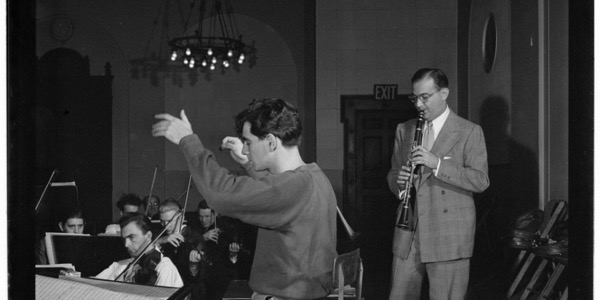
Leonard Bernstein, Benny Goodman, and Max Hollander, Carnegie Hall, New York, between 1946 and 1948 (photo by William P. Gottlieb)
Leonard Bernstein: Prelude, Fugue and Riffs (Richard Stoltzman, clarinet; London Symphony Orchestra, members; Lawrence Leighton Smith, cond.)
A number of works have been written for Stoltzman on the clarinet and for his wife, Mika, on the marimba. John Zorn’s work Palimpsest was written for clarinet and marimba for Stoltzman’s 75th birthday concert in 2018. A palimpsest is a manuscript that has been erased and written over with new material. Zorn took this to mean an eruption of the past into the present, as the old written over text emerges again. Stoltzman comments: “Mika begins by playing quite tonal music, and then the clarinet jumps in with something abstract and arrhythmic, with crazy leaping intervals, almost as if Ornette Coleman had stepped into the room, and it keeps in conflict with the steady metre of the ‘old manuscript’ underneath Mika’s part”.
Palimpsest for Marimba and Clarinet 2018 by John Zorn
In his life, Stoltzman has brought the clarinet back to life. His expansive view of the instrument’s role across all kinds of music and his beautiful musicianship have been important in establishing the clarinet as a prominent soloist in music of all genres.
For more of the best in classical music, sign up for our E-Newsletter