Born in Lublin on 10 July 1835, the Polish violinist and composer Henryk Wieniawski was, according to Anton Rubinstein, the greatest violinist of his time. He lived and worked during a period in history when many composers were searching for a national voice.
Like Frédéric Chopin, who was born in Poland but achieved fame abroad, Wieniawski spent much of his professional life outside his homeland. To celebrate his birthday, let’s highlight how this violin virtuoso promoted his nation’s musical identity.
Henryk Wieniawski: Polonaise brillante No. 1 in D Major, Op. 4
Born into Music
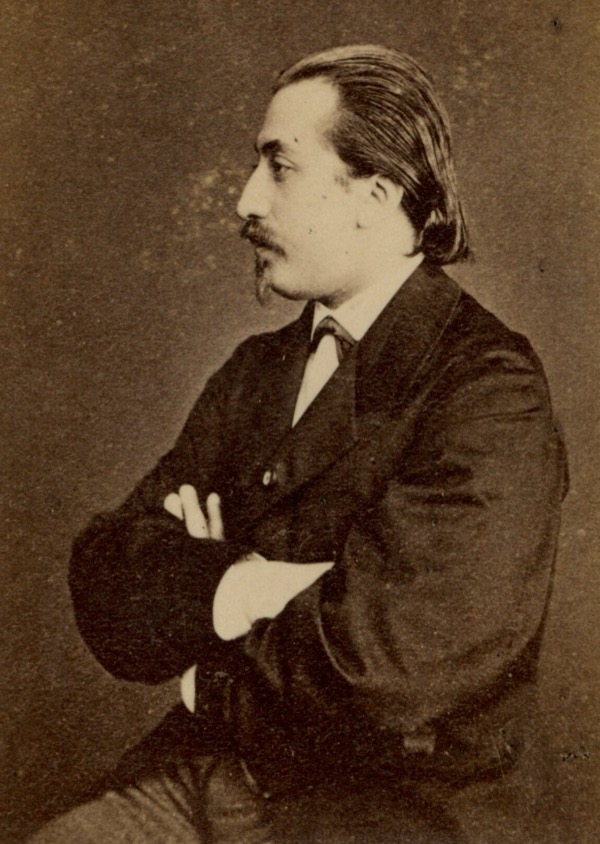
Henryk Wieniawski
Henryk was born into an exceptionally musical family, as his mother, Regina Wieniawska (née Wolff), was a professionally trained pianist who had studied in Paris. She was also the sister of the noted pianist Eduard Wolff.
As one biographer explains, she brought her musical interests into the family home, and music became an integral part of the Wieniawski children’s upbringing. It has also been said that Regina held a particular admiration for the music of Chopin and that many distinguished violinists visited Mme Regina’s salon.
His father, Tadeusz, meanwhile, was a learned man who operated an extensive medical practice as a surgeon and physician. In addition, he was politically active and openly opposed Russian rule in partitioned Poland.
Henryk Wieniawski: Deux Mazurkas de Salon, Op. 19 No. 1 in G Major, “Obertass”
From Warsaw to Paris
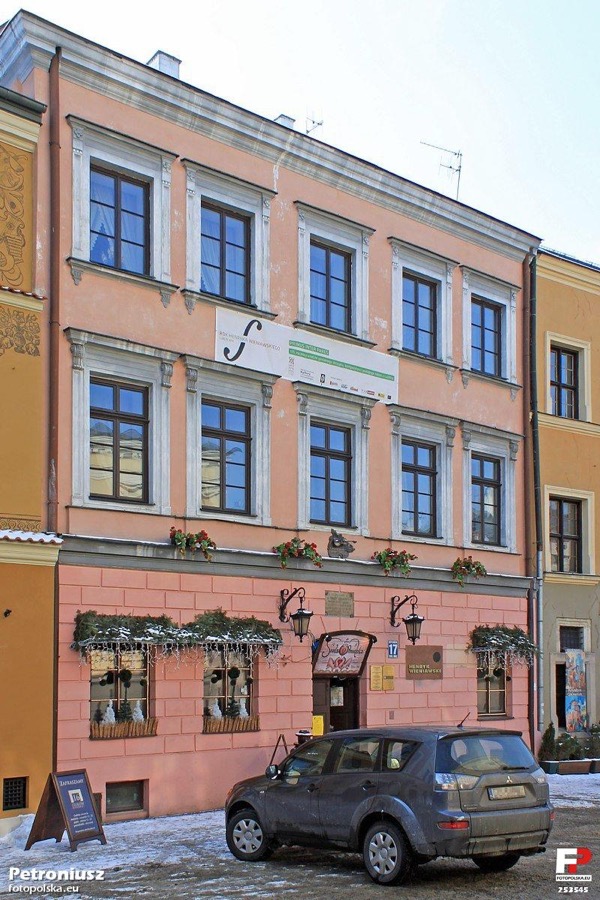
The Wieniawski family house (Kamienica Wieniawskich), Lublin
Wieniawski’s exceptional talent for the violin was discovered very early by his first teacher, and after studying in Warsaw, he gave a brilliant audition at the Paris Conservatoire in the autumn of 1843.
Henryk was admitted to J. Clavel’s class and transferred to Lambert Massart’s master class a year later. He was awarded first prize in violin in 1846 and studied for two more years as Massart’s private pupil.
He would soon be on his way to St. Petersburg, and his compositions combined the technical advances of Paganini with Romantic imagination and Slavonic colouring. His Polish nationalism is clearly evident in his mazurkas and polonaises.
Henryk Wieniawski: Deux Mazurkas de Salon, Op. 19, No. 2 “Dudziarz”
Early Polish Identity
Henryk Wieniawski composed two polonaises, with his Op. 4 inspired by and dedicated to Karol Lipiński. Lipiński was the concertmaster at the opera in Dresden, and Wieniawski even played in the Lipiński quartet.
The first drafts probably date from around 1848, when he had not yet learned counterpoint and harmony, and he revised the version we know today in 1852. The work was composed in two versions, one for violin with piano accompaniment and one for violin and orchestra.
This polonaise marks the first time Wieniawski displayed independence and maturity and already shows a certain nationalistic touch. It is a youthful work, but it already communicates the heroic spirit steeped in contrast and drama.
An 1853 review describes Wieniawski’s playing of this youthful work as a composition full of fire and inventiveness. Wieniawski played his polonaises frequently, and these works, according to a critic, demonstrate the young artist’s ingenuity, polish, and individuality.
Henryk Wieniawski: Polonaise brillante No. 2 in A Major, Op. 21
National Genre
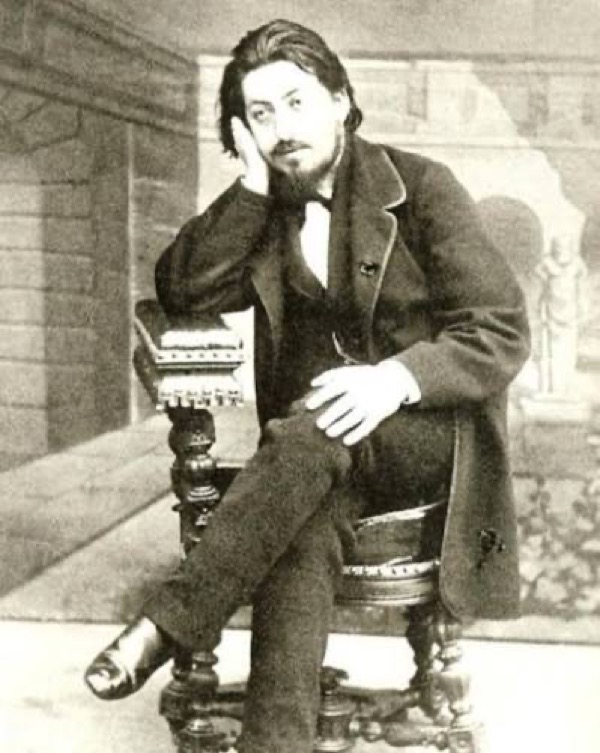
Henryk Wieniawski
While the Polonaise Op. 4 was a youthful composition, the Polonaise in A Major, Op. 21, is one of the last works he composed. And while the polonaise as a genre does not constitute a large part of Wieniawski’s oeuvre, it is nevertheless an essential part of his artistic Polish inheritance.
The Polonaise Op. 21 was completed in 1870 and initially dedicated to King Charles XV of Sweden. However, the dedications kept on changing, and eventually the work, once again in two versions, was dedicated to Francois van Hal.
The Polonaise in A Major is a typical virtuoso composition, but it is written in a mature style. After a lyrical and elegant introduction, the work launches into a characteristic polonaise theme with its characteristic rhythmic pattern. It carries a distinct sense of national identity and remains a favourite encore piece today.
Henryk Wieniawski: Souvenir de Posen, Op. 3
Mazurkas for the Salon
While the 2 Polonaises were designed for the concert hall, his Deux Mazurkas de Salon, Op. 19, belong in elegant drawing-rooms and salons. At the core of these works, as the title tells us, is the Polish folk dance called “Mazurka.” Like Chopin, Wieniawski brings this dance into the instrumental realm.
The mazurka in G Major, Op. 19, No. 1 carries the subtitle “obertass,” which more commonly is spelt “oberek.” It is the fastest and most exuberant member of the mazurka family, and its name derives from a Polish verb meaning “to turn” or “to spin.”
There is much whirling energy, but underneath, we can hear the distinctly Polish rhythmic profile, with accents falling unexpectedly on the second or third beat, a hallmark of mazurka dances.
Henryk Wieniawski: Kujawiak in A minor
Echoes of the Polish Countryside
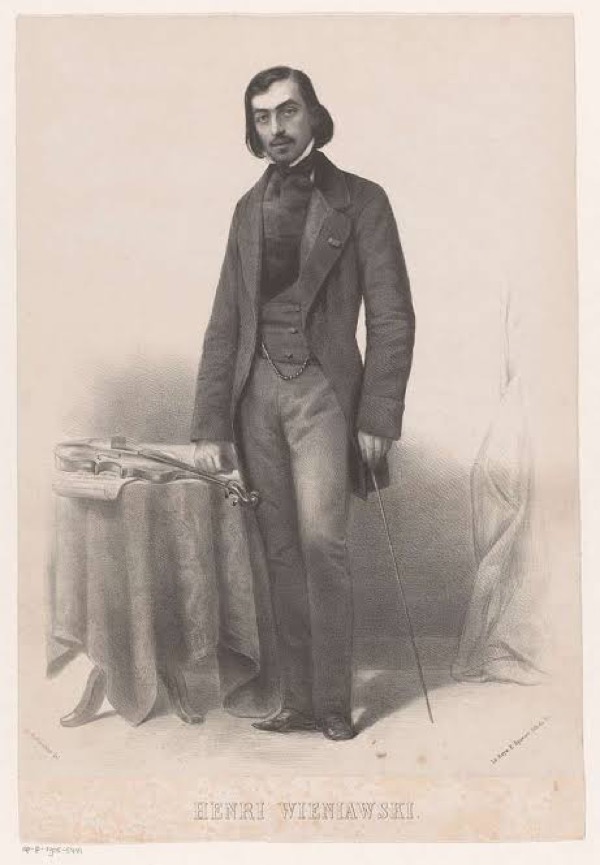
Henryk Wieniawski
The Mazurka Op. 19, No. 2 carries the subtitle “Dudziarz,” which basically means “bagpiper.” It comes from the tradition of itinerant Polish bagpipe players, often associated with village festivities and weddings.
This mazurka has a more earthy, pastoral character, with drone-like accompaniment that alludes to the subtitle. Dance rhythms and simple, memorable melodic lines alternate with passages of violinistic brilliance.
In these works, Wieniawski adapted a distinctly Polish genre for the violin, and the combination of national colour with the virtuoso style made Wieniawski famous.
Another specific branch of the mazurka family is referenced in Wieniawski’s “Kujawiak in A minor.” It is one of the five principal Polish national dances, originating in the central Polish region of Kujawy, from which it takes its name.
This mazurka variant is slow and lyrical in tempo, with a gently swaying character. It still carries the characteristic mazurka accent, but it expresses a melancholic and nostalgic quality. It unfolds as a singing cantilena, evoking pastoral landscapes.
Henryk Wieniawski: Légende Op.17
From National Dance to Artistic Language
While we find the most overtly Polish elements in specifically named national dances, Wieniawski more deeply assimilates these elements in his larger works, including his Légende and the wonderful Second Violin Concerto.
Légende is an intimate and lyrical work, yet we find Polish roots in the mazurka-like rhythmic inflections. The melody frequently leans into the weak beats, a gesture associated with Polish dance music.
The final movement of his 2nd violin concerto is labelled “à la Zingara” (in the Gypsy manner), yet the music displays many of the traits associated with distinctly Polish roots. Vigorous dance rhythms, syncopations and off-beat accents, and drone effects recalling village musicians, all point to an unmistakable Polish spirit.
Wieniawski is not quoting Polish folk tunes, but he evokes his homeland with gestures and sensibilities inherited from Polish song and dance traditions. Wieniawski seemingly follows a path forged by Chopin, transforming the essence of Polish music into an international artistic language.
For more of the best in classical music, sign up for our E-Newsletter