Writing a first symphony has never been a casual undertaking.
Throughout the history of classical music, the symphony has stood as the ultimate achievement: a genre tied to ambition, talent, and legitimacy, leading to inevitable comparisons to the past. A failed symphony wasn’t just a private disappointment; it unfolded in front of critics, patrons, and rivals.
To compose a symphony is to step directly into the shadow of giants – and for many of history’s greatest composers, that shadow proved terrifying.
From Johannes Brahms wrestling for two decades with the burden of Beethoven’s legacy, to Pyotr Ilyich Tchaikovsky suffering physical collapse while finishing his Symphony No. 1, the “first symphony crisis” is a surprisingly common chapter in music history.
Some composers feared they wouldn’t – or couldn’t – measure up. Others feared national humiliation. One nearly lost his career entirely after a disastrous premiere.
Today, we’re looking at six composers who were deeply stressed about writing their first symphony – and what their struggles reveal about the pressure of entering the symphonic tradition.
Ludwig van Beethoven – Symphony No. 1
Ironically, given the sway that his symphonies would have over future generations, Ludwig van Beethoven himself waited until he was nearly thirty to publish his first symphony.
He had already established himself in Vienna’s music world with piano sonatas and chamber works. But he also understood the heights that his predecessors, Mozart and Haydn, had brought the symphony to. Therefore, even Beethoven felt the weight of the composers who came before him.
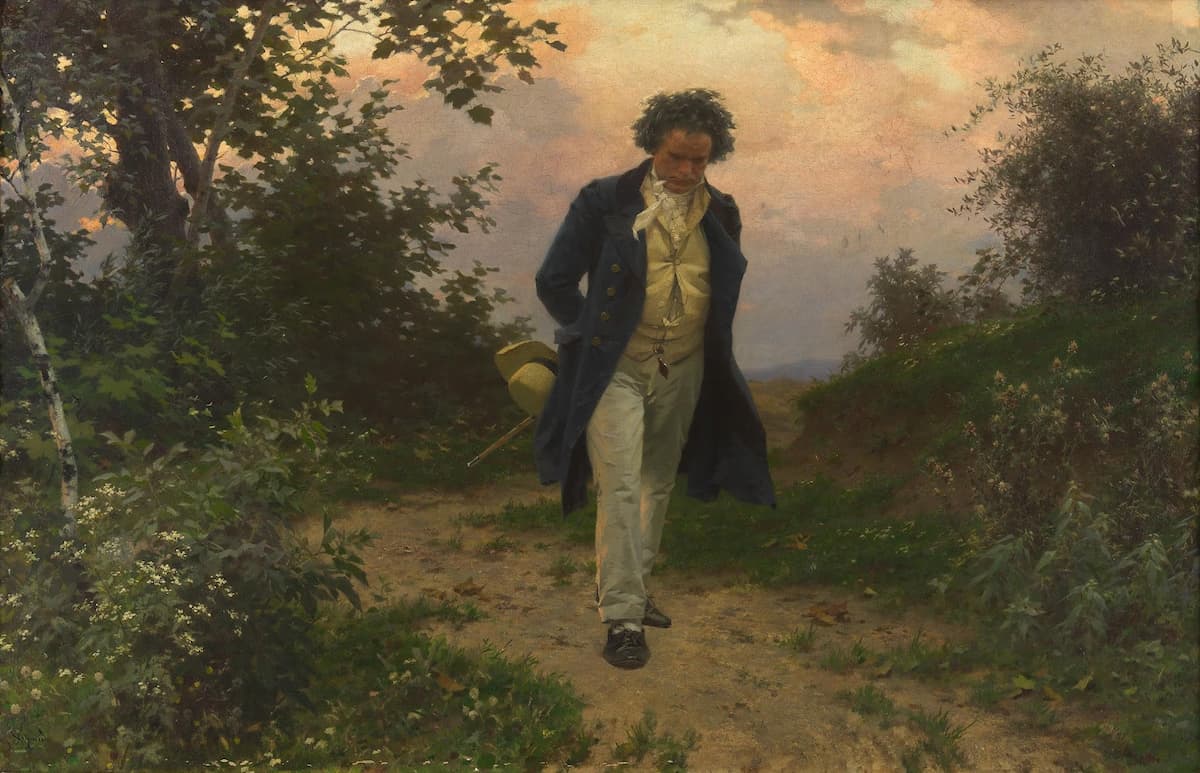
Julius Schmid: Beethoven’s Walk in Nature
Beethoven’s first symphony had several striking elements. Its slow introduction and its opening dissonances grab a listener’s ear from the start.
From there, the work’s unexpected accents and sudden dynamic changes reveal him to be a composer willing to innovate and part with the traditions of the past.
Johannes Brahms – Symphony No. 1
No one had a more infamous struggle while writing his first symphony than Johannes Brahms.
After his mentor, Robert Schumann, declared Brahms the future of music in 1853, when he was only twenty years old, Brahms felt crushed by expectations.
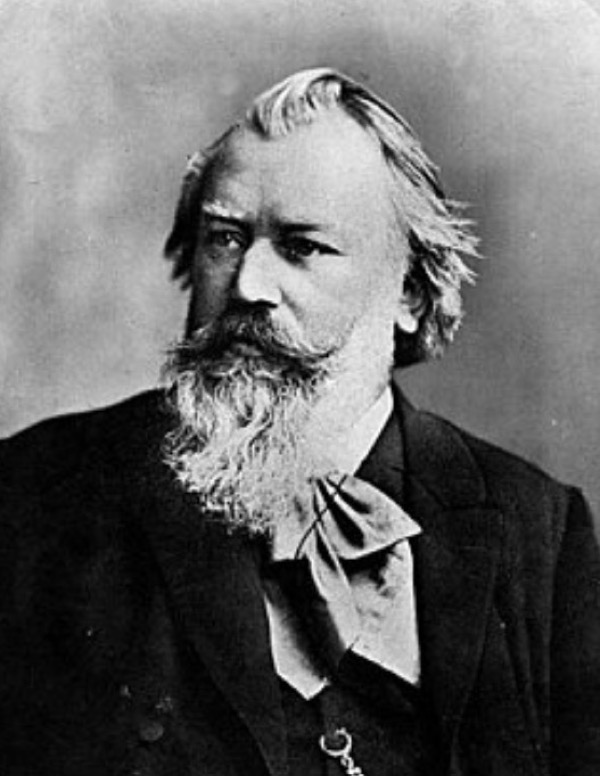
Johannes Brahms
He began sketching his first symphony soon after but, intimidated, abandoned several early attempts.
In 1872, he went so far as to tell a conductor friend, “I shall never write a symphony! You can’t have any idea what it’s like always to hear such a giant [i.e. Beethoven] marching behind you!”
However, after years of growth and artistic maturation, he finally finished his first symphony in 1876. The work’s gestation took over two decades.
Although Brahms’s symphony is recognised as a masterpiece today, it also never escaped that Beethovenian shadow. In fact, similarities between Beethoven’s final symphony and Brahms’s first garnered it the nickname “Beethoven’s Tenth.”
Pyotr Ilyich Tchaikovsky – Symphony No. 1
While writing his first symphony, nicknamed “Winter Dreams”, Pyotr Ilyich Tchaikovsky struggled with poor health, dealing with insomnia, headaches, anxiety, and depression. The symptoms got so bad that he was afraid he was dying.
At one point, doctors told him to stop working entirely. He later wrote that he feared he would die before finishing it.
Unlike Brahms, his stress wasn’t only about living up to Beethoven’s legacy. It was also about proving that a Russian composer could master the Austro-Germanic tradition of symphonic writing, while still infusing the work with his Russian identity.
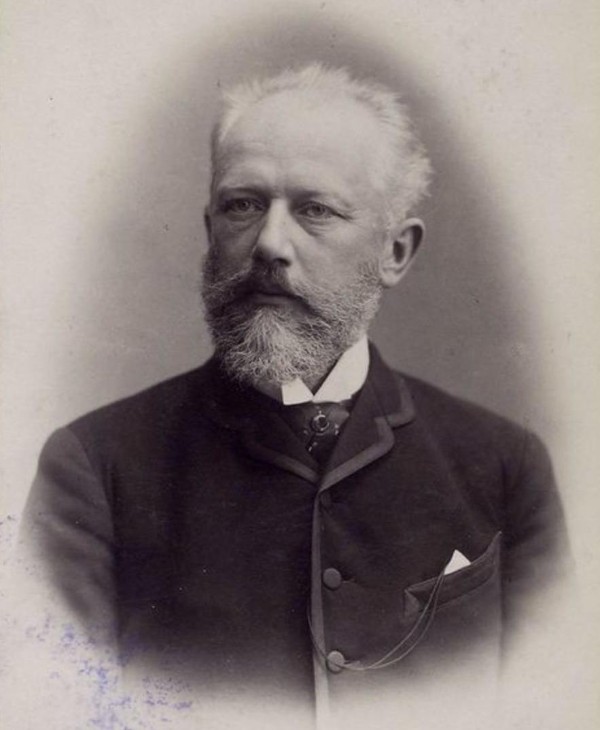
Pyotr Ilyich Tchaikovsky
At this time, a group of five nationalist composers, nicknamed the “Mighty Handful”, were rejecting European academic traditions and trying to establish a uniquely Russian school of music.
“Winter Dreams” was ultimately overshadowed by Tchaikovsky’s later symphonies, but its Russian character encouraged the blossoming of nationalism in Russian – and later Soviet – orchestral music.
Sergei Rachmaninoff – Symphony No. 1
The premiere of Rachmaninoff’s first symphony was an infamous disaster.
Storm clouds first appeared when elder composer Nikolai Rimsky-Korsakov sat in on a rehearsal and told Rachmaninoff, “Forgive me, but I do not find this music at all agreeable.”
Conductor Alexander Glazunov under-rehearsed the orchestra and made a variety of cuts. He was also an alcoholic, and possibly drunk at the rehearsals and premiere.
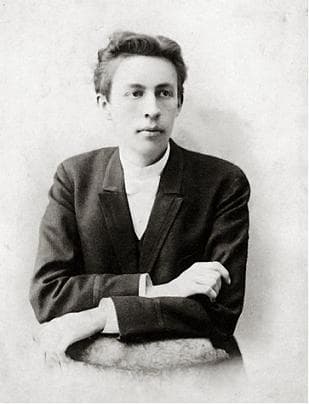
Sergei Rachmaninoff
Not surprisingly, the premiere went off the rails so badly that Rachmaninoff fled the concert hall while it was still ongoing. Critics were vicious.
After the failed performance, Rachmaninoff fell into a three-year depression that required hypnotherapy before he could compose again.
For years, the symphony’s score was deemed lost, and it was only reconstructed in 1945, after Rachmaninoff’s death. Today, the work is often reassessed as bold and structurally ambitious.
A few years after the catastrophic failure, Rachmaninoff came back with his second piano concerto, one of the most famous pieces of classical music ever written.
But his first symphony nearly ended his career before it began.
Jean Sibelius – Symphony No. 1
Jean Sibelius waited until his thirties to compose his first symphony, which was written between 1898 and 1899. It came after he heard Tchaikovsky’s final symphony performed in Helsinki in the mid-1890s.
He related to Tchaikovsky’s music, writing to his wife, “There is much in that man that I recognise in myself.”
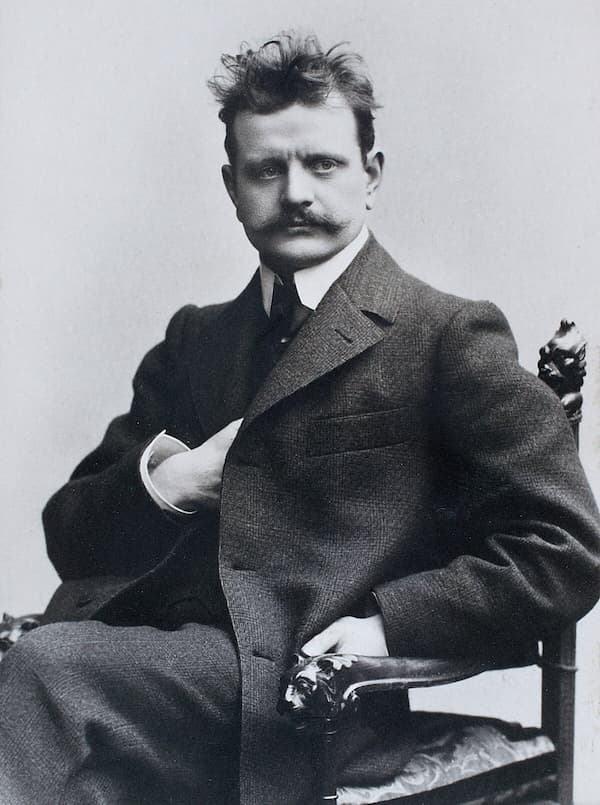
Daniel Nyblin: Jean Sibelius, ca 1898–1900
Despite that, he was Finnish at a time of tension with Russia and rising nationalism, and he wanted his music to make statements about Finnish identity.
He was unsatisfied after the symphony’s premiere in the spring of 1899, and embarked on revisions in 1900.
Unfortunately for Sibelius, his mental block surrounding symphonies would surface again at the end of his career, after he’d written seven symphonies.
His eighth symphony was commissioned and even scheduled for performance, but he never finished the score. Before he died, he burned what he’d written.
The fate of that scrapped eighth symphony demonstrates how deeply Sibelius identified with the symphony as a measure of artistic legitimacy – and how reluctant he was to release a symphony he felt was less than perfect.
Gustav Mahler – Symphony No. 1
Remarkably, Gustav Mahler – who would go on to become one of the foremost symphonists of his generation – was initially leery about presenting his first symphony as such.
In fact, at its 1889 premiere in Budapest, he didn’t even call it a symphony. Instead, he labelled it a “Symphonic Poem in Two Parts.”
Despite the hedging, critics were hostile. For years afterwards, Mahler dithered. He revised it repeatedly, cut a movement, rewrote the orchestration, and even provided a program to guide listeners through the work’s story (and then retracted it).
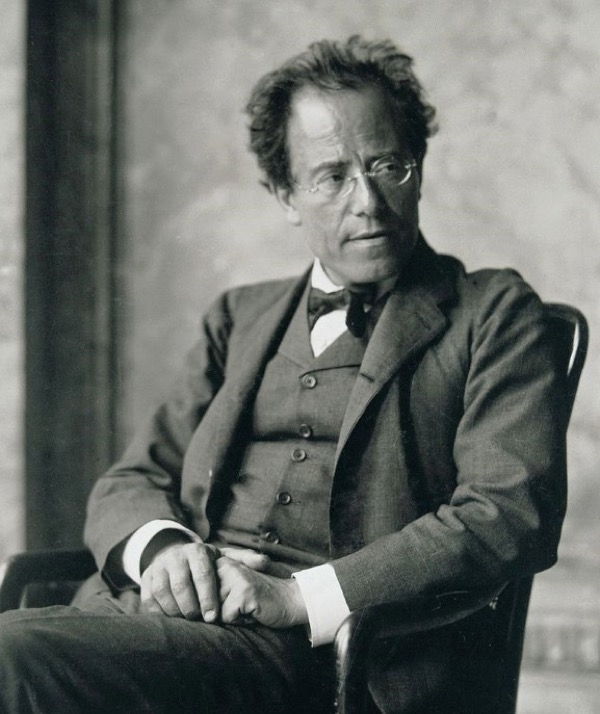
Gustav Mahler
Throughout his career, Mahler advocated for Beethoven’s music; he even arranged Beethoven’s symphonies for a larger, late-Romantic orchestra.
When it came to composition, Mahler metabolised Beethoven’s influence in his work, from using a choir in the final movement of his second symphony to employing an echo of the “fate theme” from Beethoven’s fifth in his own fifth symphony.
Mahler clearly understood the lineage behind the Austro-Germanic symphony and respected it. That was reflected in his work, from his first symphony – and beyond.
Conclusion
The first symphony is rarely just a beginning. It is a declaration to the musical world: I have something big and important to say.
For Brahms, that declaration took more than twenty years to make. For Tchaikovsky, the idea of doing so ruined his health. For Rachmaninoff, it triggered a crisis that nearly silenced him forever. Even Sibelius, Mahler, and Beethoven approached their first entries into the genre with caution, insecurity, and an acute awareness of the genre’s storied history.
The irony is striking: many of the composers who feared writing their first symphony ended up redefining the genre.
Maybe that’s the true test of a symphonist: the willingness to stand in the shadow of the past, be intimidated by it – and still write anyway.
For more of the best in classical music, sign up for our E-Newsletter