
We tend to think of classical masterpieces as fixed monuments: works that arrived fully formed and have remained unchanged ever since.
In reality, many of the most famous classical works had rocky premieres, played before confused audiences, or were outright failures before entering the canon.
In some cases, composers were responding to hostile critics or disastrous performances. In others, they recognised their own misjudgments only after hearing a piece played in public. Whatever the reason, post-premiere revisions were often a crucial part of the creative process.
Today, we’re looking at five major classical works that were revised after their first performances and how those changes helped transform early problems into lasting success.
Ludwig van Beethoven – Fidelio
Beethoven‘s only opera initially struggled to find its footing. It underwent a number of major overhauls before becoming the Fidelio we know and love today.
The first version was dated from 1805 and was titled Leonore. When it premiered, many operagoing citizens had fled the city to escape the Napoleonic invasion, so on opening night, the theater was full of French officers.
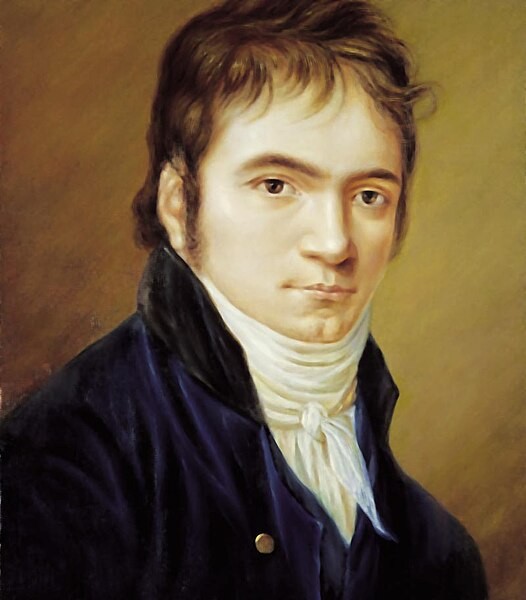
Christian Horneman: Ludwig van Beethoven, 1803 (Beethovenhaus Bonn)
Critics were sceptical, finding the opera to be too long and too repetitive, and more symphonic than operatic.
Encouraged by friends, Beethoven went back to the drawing board, condensing the original three acts into two. He even composed a new overture (one of several Leonore overtures) to replace the original.
Beethoven: Leonore Overture No. 3
Despite underrehearsal and singers struggling with the difficulty of the writing, his 1806 revision was received more positively than the first, but Beethoven was still dissatisfied.
He rewrote sections, toned down some of the vocal challenges for the soloists, and replaced the earlier grand overtures with a lighter final one (now known as the Fidelio Overture).
These changes transformed Fidelio from an overlong flop into a concise, dramatic work that triumphed at its 1814 relaunch.
Robert Schumann – Symphony No. 4
What we now call Schumann’s Fourth Symphony actually exists in two fully realised versions: the original 1841 score and a substantially revised version from a decade later.
The symphony was premiered at the Leipzig Gewandhaus in December 1841. Franz Liszt and Schumann’s wife, Clara, played, ostensibly to draw attention to Robert’s work, but the strategy backfired: the pianists ended up getting more attention than the symphony did.
Audiences seemed unconvinced by the symphony’s daring structure, which consisted of four movements knit together into a single, uninterrupted span.
Symphony No. 4, 1841 version
After that unsatisfying premiere, Robert Schumann set the symphony aside. It took a decade before he revised it.
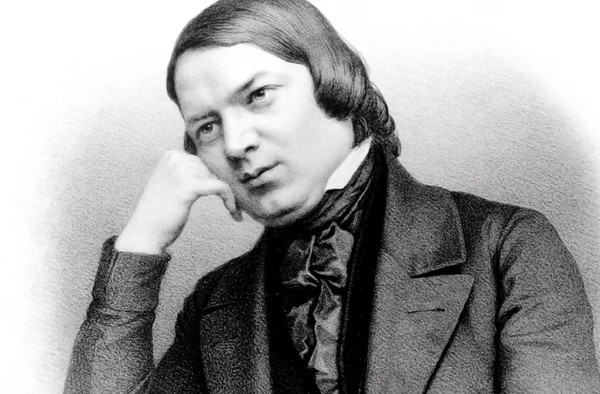
Robert Schumann
In the revised version, Schumann simplified certain passages while smoothing out transitions. He also “thickened” the orchestral texture by doubling some lines, aiming for a grander, more cohesive sound.
In the end, the new version, which premiered in 1852 under Schumann’s baton, successfully married the symphony’s innovative form with a more robust orchestral sound.
It was published as Schumann’s fourth symphony and became a staple of the Romantic repertoire.
Symphony No. 4, 1851 version
After Robert Schumann’s death, Johannes Brahms and Clara Schumann, who worked together on a posthumous collection of Robert’s complete works, fought over which version of the symphony to include.
In 1882, she published the later, heavier version, while in 1891, Brahms published the earlier, lighter version. We usually hear the revised version today, but some people side with Brahms and prefer the first version.
Anton Bruckner – Symphony No. 3
Anton Bruckner‘s Symphony No. 3, nicknamed the “Wagner“, became notorious for its disastrous premiere and the major alterations that Bruckner subsequently felt compelled to make to it.
Symphony No. 3, 1877 version
The first performance took place in Vienna on 16 December 1877. It was one of the most calamitous in music history. The originally scheduled conductor had died unexpectedly just weeks earlier, so Bruckner stepped in to conduct it himself, despite the fact that he was uncomfortable on the podium.
Things went off the rails almost immediately. The orchestra players made fun of the work in rehearsals, and when it came time for the actual performance, the bewildered audience responded with laughs and hisses. Many walked out before it ended.
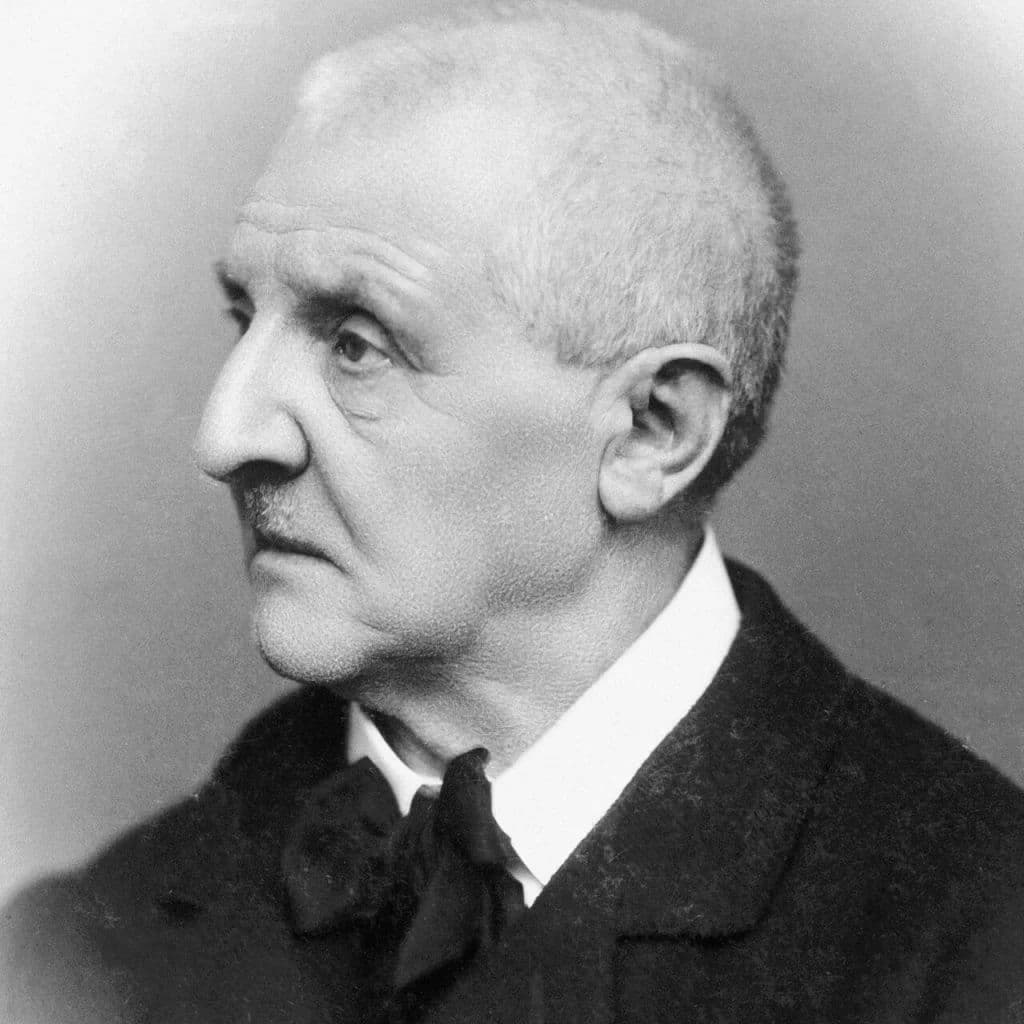
Anton Bruckner
Several factors had provoked this hostile reaction. This symphony, as originally written, was incredibly sprawling and complex, quoting themes from Wagner’s operas. These quotations drew ridicule from the many Wagner sceptics in the Viennese audience.
Stung by the failure, Bruckner lost his confidence. However, he eventually returned to the score to revise it, turning to friends and colleagues for feedback.
He ended up revising the symphony repeatedly (once in 1878, then again in 1889), effectively creating three different versions.
He made dramatic cuts to the work and removed the Wagner quotes. He also smoothed out transitions, reorchestrated certain passages, and added some dramatic touches – including a four-part canon in the finale – to give the work a sense of cohesion.
The end result was the 1889 version, which is the one most often performed today.
Symphony No. 3, 1889 version
Jean Sibelius – Violin Concerto
Jean Sibelius‘s violin concerto was a love letter to an instrument he loved deeply. He had dreamed of becoming a violin virtuoso, but ultimately came to realise he’d started too late to be truly successful. He poured his unfulfilled passion for the instrument into this work.
Violin Concerto, 1904 version
The original version premiered in Helsinki in February 1904, with Sibelius himself conducting. It did not go well.
Soloist Viktor Nováček struggled with the concerto’s fiendishly difficult solo part; the orchestra’s concertmaster noted that he was sluggish and complained about the fast runs.
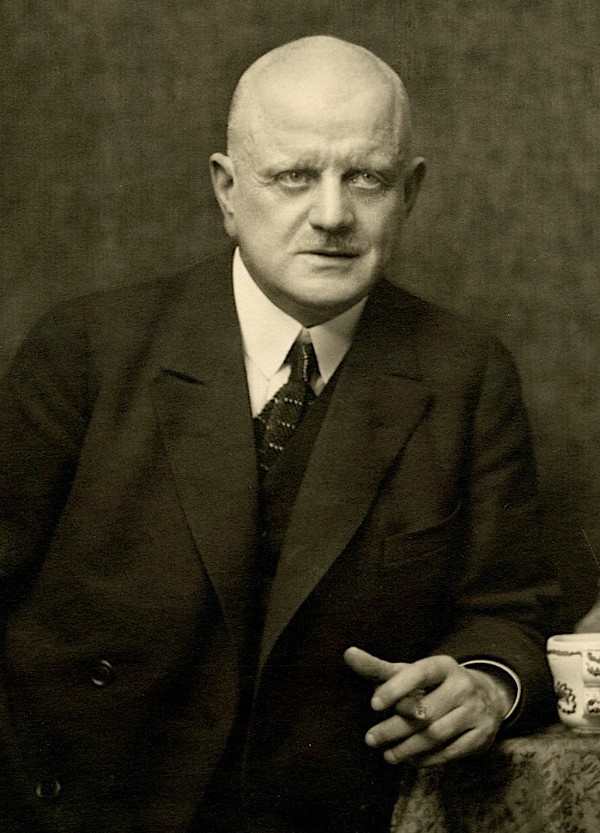
Jean Sibelius, 1923
Reviews of the premiere were, at best, lukewarm. While some praised the concerto’s beautiful slow movement, critics agreed the piece had broad structural issues.
One critic remarked that Sibelius had succumbed to writing “conventional virtuoso” display passages – implying that dazzling technique was overwhelming the music – and sneered that this “ugly rock wrecked the whole ship.” The finale was deemed overly difficult and less effective than the rest.
Sibelius ended up withdrawing the concerto from performance, determined to fix its flaws. “I shall remove my violin concerto; it will not be published until two years have passed,” he wrote, vowing that “the first movement must be rewritten, the same goes for the proportions in the [slow movement].”
True to his word, Sibelius spent 1905 making extensive revisions. He tightened and shortened the work overall, paying special attention to the first movement. He made a number of cuts to it and tossed out some of the flashiest technical fireworks.
The revised concerto premiered in Berlin in October 1905 (with violinist Karel Halíř as soloist and Richard Strauss conducting) and was a triumph.
Violin Concerto, 1905 version
The revised concerto remained ferociously difficult, but now its challenges served Sibelius’s musical ideas rather than virtuosity for its own sake.
Today, the revised Sibelius Violin Concerto is considered one of the finest violin concertos ever written and a staple of concert halls the world over.
George Gershwin – Rhapsody in Blue
Unlike the other works here, Rhapsody in Blue was a hit from its very first performance in 1924 – but it too underwent significant changes after its premiere.
Rhapsody in Blue debuted in February 1924 in New York City, with Gershwin at the piano and Paul Whiteman’s jazz band providing the accompaniment.
Gershwin hadn’t yet finished the piece, so much of the solo part was improvised.
Rhapsody in Blue, 1924 recording
This jazzy “experiment in modern music” wowed the crowd and signaled a new era by merging elements of both jazz and classical styles.
However, the version heard that night was scored for Whiteman’s band with instruments like saxophones, banjos, and percussion that weren’t typically found in orchestral ensembles.
After the initial performance was so warmly received, Gershwin and arranger Ferde Grofé revised it for larger orchestras so it could be played in symphonic halls around the world. Grofé produced new orchestrations in 1926 and later in 1942, each expanding the ensemble and altering the sound.
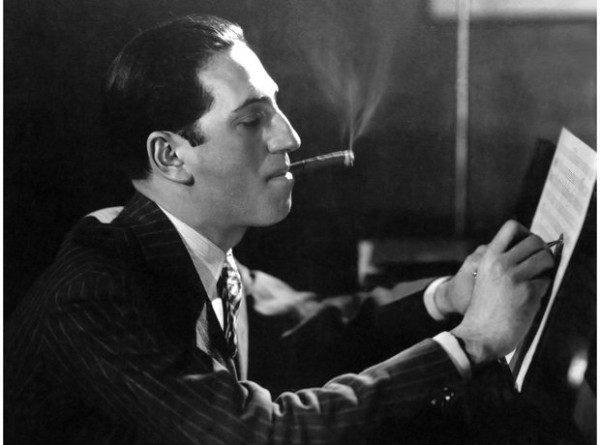
George Gershwin
In these versions, the orchestration was “classicalized,” employing a full symphony orchestra and toning down some of the original’s jazz-band quirks.
The saxophone section, which had given the 1924 version its smoky jazz-club flavour, is still present, but less prominent in the later arrangement. Meanwhile, the banjo became optional or was absorbed by the strings’ rhythmic strumming.
Gershwin also tweaked musical details in response to performers’ creative contributions. The most famous example is the opening clarinet glissando. Originally written as a straight scale, it became an iconic sliding “wail” after Whiteman’s clarinetist Ross Gorman jokingly improvised a jazzy smear during rehearsal. Gershwin loved it and insisted it be played that way from then on.
These post-premiere adaptations have helped make Rhapsody in Blue an enduring classic that sounds just as at home in a 2020s concert hall as it did in a 1920s jazz ballroom.
Gershwin: Rhapsody in Blue
Conclusion
These revision stories offer a valuable reminder that even the greatest composers rarely got everything right on the first try.
In some cases, like Fidelio or the Sibelius Violin Concerto, revision was prompted by near-disaster. In others, such as Schumann’s Fourth Symphony or Gershwin’s Rhapsody in Blue, changes reflected a composer’s evolving artistic vision or the demands of new performance contexts. What unites them all is their composers’ willingness to rethink and refine.
Seen this way, classical masterpieces aren’t immovable monuments, but living structures, reshaped and reconstructed by persistent composers determined to write at the highest levels they possibly could.
For more of the best in classical music, sign up for our E-Newsletter






Refreshing and informative!