After losing his right arm in a teenage hunting accident, Géza Zichy became one of the first professional one-handed concert pianists.
His international career would take him to the capitals of Europe, earning praise from critics and audiences alike, while his compositions helped establish an early repertoire for the left hand alone, decades before such works became mainstream.
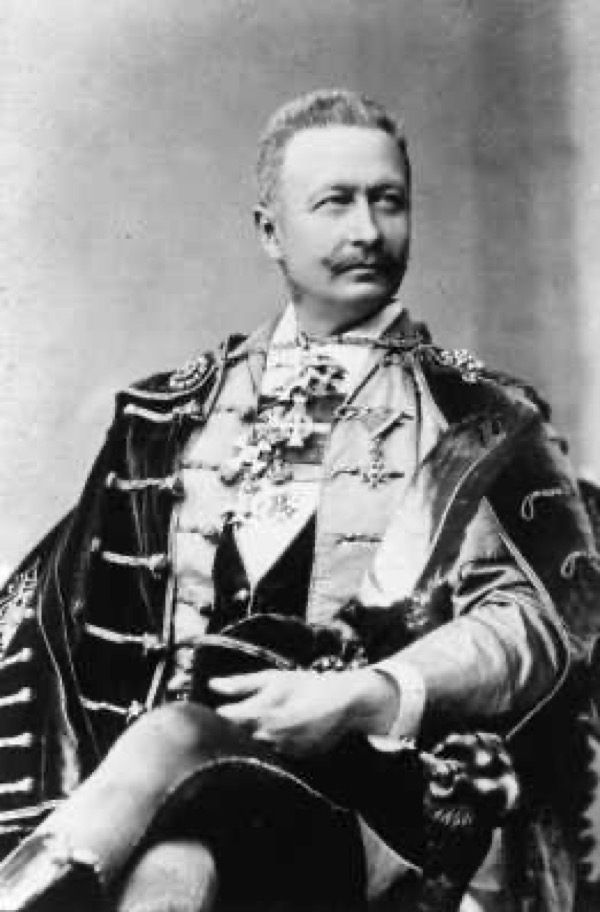
Géza Zichy
Today, we’re looking at Géza Zichy’s story: his early training, the accident that changed the course of his life, his collaboration with Liszt, his rise as a pioneering one-handed pianist, and the works – both his own and others’ – that secured his place in music history.
Early Life and Family
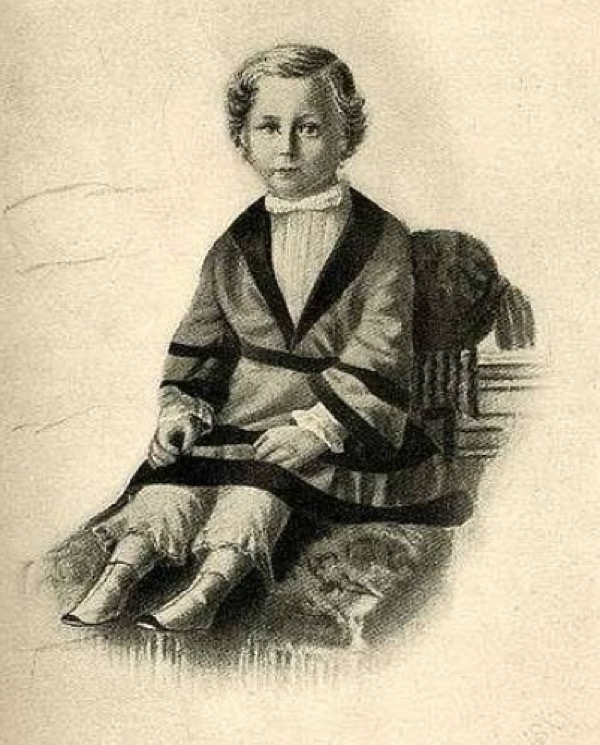
Géza Zichy as a young man
Count Géza Zichy was born to a prominent aristocratic family on 22 July 1849 at Sztára Castle in present-day Slovakia.
His father’s family was unmusical, while his mother was a talented musician.
Zichy followed in his mother’s musical footsteps. He began playing piano at the age of three, formally studying it at five, and learning violin at seven.
The Hunting Accident
In September 1863, when he was fourteen years old, he went on a hunting expedition. During the chase, he mishandled his gun and accidentally shot himself. After the injury, his right hand had to be amputated.
His first letter after his recovery was to his tutor and was written painstakingly with his left hand. He wrote, “If I will not be able in a year from today to do all things, which the others do with both their hands, I will shoot the bullet in my head.”
The language is stark, but it captures his mindset clearly.
Decades later, he wrote in his memoirs:
“I closed the door and got dressed alone. The door handle, the furniture, my legs, my teeth all helped. At lunch, I did not eat any food that I could not cut myself and did not accept the slightest service.”
Zichy’s Continuing Music Education
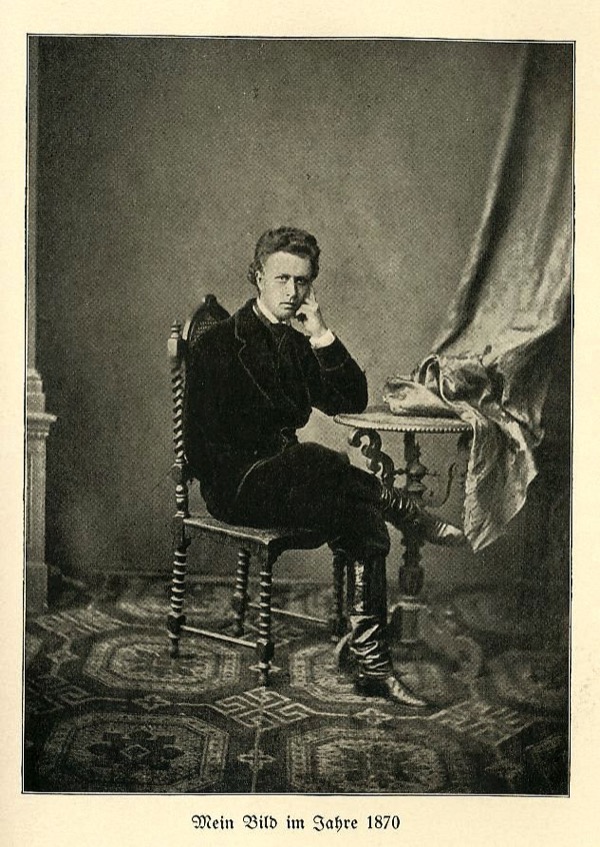
Géza Zichy, c. 1870
After several months, Zichy continued his education. He would eventually study law.
At the same time, he continued his music studies, studying under composer Karl Mayrberger.
In March 1866, when Zichy was sixteen, he made his recital debut in Pressburg (current-day Bratislava), playing arrangements of Hungarian dances for the left hand. The following year, he appeared in Budapest.
In 1871, he seemed to set his musical dreams aside, taking a job at the Ministry of Education and marrying the Countess Melanie Karátsonyi. Over the course of their marriage, they had five children together.
Studying With Liszt
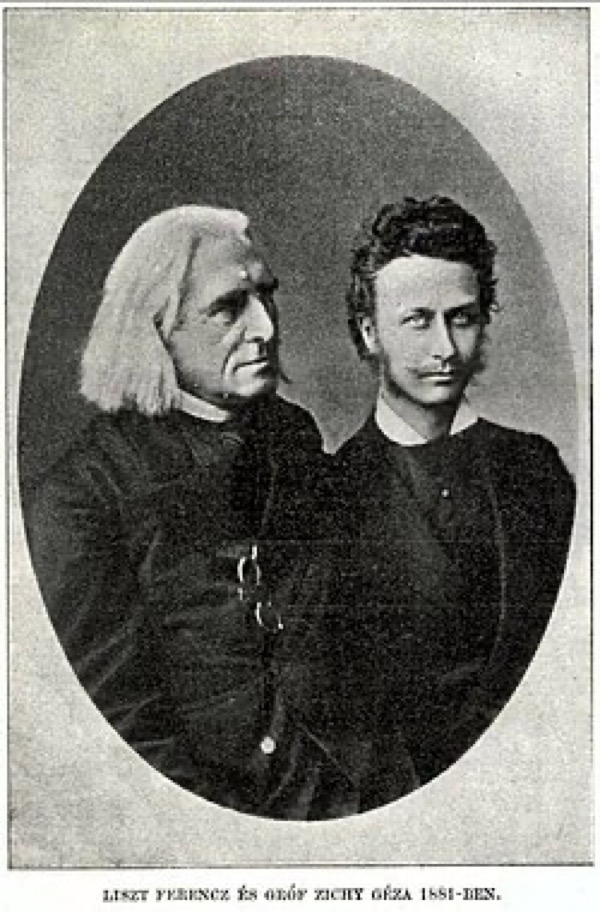
Géza Zichy and Franz Liszt
During the early 1870s, Zichy pivoted from working at the Ministry of Education to pursuing music more seriously. He began studying with German composer Robert Volkmann, a friend of Schumann, Brahms, and Liszt.
However, the pivotal chapter of Zichy’s training began in 1873, when he became a private student of Liszt in Weimar. He spent around five or six years studying with him.
Zichy’s Valse d’Adele (Performance starts at 3:20)
Liszt was deeply impressed by his one-handed pupil, and the two developed a close friendship. He even introduced Zichy as “one of his best friends” to Richard Wagner.
Liszt engaged in impromptu duet performances with Zichy, performing “three-hand” piano improvisations with him at musical soirées. Zichy played the bass while Liszt played the other two hands.
At one point, Zichy wrote a one-hand “Valse d’Adele.” Liszt transcribed it for two-handed pianists.
Liszt’s transcription of Valse d’Adele for two-hand piano
Liszt’s Support of Zichy
Liszt was hugely supportive of Zichy, extending his support to his arrangements and compositions.
He was especially taken by Zichy’s arrangement of Schubert‘s song “Erlkönig,” especially since he himself had made a solo piano arrangement for two hands, and knew how difficult it was to arrange.
Der Erlkönig-Schubert/Liszt Arr Zichy
To support his protégé, Liszt encouraged Zichy to publish a set of études. Liszt contributed a glowing preface to Zichy’s Six Études for the Left Hand Alone (1878) and even helped to arrange their publication.
Liszt also went so far as to compose his only known work for left hand specifically for Zichy: “A magyarok Istene” (“The God of the Hungarians”), a patriotic song setting which Liszt dedicated to his friend.
Franz Liszt: A magyarok Istene (Ungarns Gott), S543/R214 (Jenő Jandó, piano)
In 1883, Liszt also dedicated his tone poem Von der Wiege bis zum Grabe (From the Cradle to the Grave) to Zichy.
Franz Liszt: Von der Wiege bis zum Grabe, S107/R424 (New Zealand Symphony Orchestra; Michael Halász, cond.)
Zichy Becomes Director of the Royal National Hungarian Conservatory of Music
In 1875, at just 26, when he was still studying with Liszt, he was appointed Director of the Royal National Hungarian Conservatory of Music in Budapest, the institution that Liszt had helped found.
Zichy would hold this post for an extraordinary 43 years, from 1875 to 1918.
During those decades, he influenced Hungarian musical education while continuing to develop his own performing and composition career.
Zichy’s International Career Takes Off
By his mid-20s, Géza Zichy emerged as a true virtuoso. He was celebrated not just as a curiosity but as a serious artist.
His breakthrough on the international stage came with a series of high-profile concerts.
Zichy made a sensation in Paris in 1877. That appearance was followed by celebrated appearances in Vienna and across Germany in the late 1870s.
Being independently wealthy, Zichy began donating all his concert fees to charity, viewing his talent as a means to help others.
Géza Zichy: Liebestraum: Traumerisch, ruhig (Ferenc Szecsődi, violin; István Kassai, piano)
In 1879, after an earthquake struck the city of Szeged in Hungary, Zichy and Liszt teamed up to play a charity concert for the victims. Zichy even arranged the Rákóczi March as a three-handed piece for the occasion.
Eduard Hanslick, Vienna’s most influential music critic, attended Zichy’s 1882 Vienna recital. He wasn’t an easy man to impress, but he was dazzled by what he saw, writing, “The most astounding thing we have heard in the way of piano playing in recent times has been accomplished by a one-armed man – Count Géza Zichy.”
Liszt wrote about him, “He is an astounding artist of the left hand, so remarkably dexterous that the greatest pianists would be hard put to match him.”
He went on to wow audiences in Switzerland, Italy, Scandinavia, and Russia during the 1880s.
Zichy and Mahler
In 1891, Zichy was appointed Intendant (director) of the Royal Hungarian Opera House in Budapest, becoming the first musically trained person in that high administrative post.
His tenure there proved to be somewhat controversial. When Zichy took the job, Gustav Mahler was the Opera’s resident conductor and music director. At the time, Mahler was an ambitious young conductor on his way up in the world.
Clashes and personality conflicts quickly arose between the two men. Zichy, a genteel aristocrat-manager, found Mahler’s relentless, often abrasive rehearsal style difficult. He was also in charge of reining in the budget, which naturally put him in Mahler’s crosshairs.
Despite their conflict, Zichy acknowledged Mahler’s greatness. He later wrote that “every musician felt a great musical soul” in Mahler, but he also had trouble tolerating Mahler’s “nervous, abrupt, even rude behaviour” toward the opera’s staff.
For his part, Mahler was already disillusioned with the Opera’s internal politics and had been seeking another position. The disagreements quickly piled up and ultimately culminated in Mahler’s resignation in 1891, shortly after Zichy’s appointment.
Zichy then hired Arthur Nikisch, a prominent Hungarian-born conductor, to lead the Opera. Like Mahler, he went on to become one of the most influential conductors of his generation.
Arthur Nikisch and the London Symphony Orchestra – ‘The Marriage of Figaro’ Overture (Mozart) (1914)
Zichy resigned from the position in 1894 after his wife died suddenly of diphtheria.
Zichy’s Compositions
During the 1880s, he focused more on composing. His output was diverse, spanning piano music (including a sonata in 1887), operas, songs, and orchestral works.
Géza Zichy – Piano Sonata for Left Hand Alone
His most historically significant composition is 1902’s Piano Concerto in E-flat major, the first known piano concerto ever written for one hand.
His transcriptions were also historically important and helped provide a blueprint for future left-hand repertoire. His versions of Bach‘s Chaconne in D-minor and Schubert’s “Erlkönig” were especially successful.
Beyond piano works, Zichy had a passion for composing dramatic music. He wrote several operas and large-scale vocal pieces that, like Liszt’s works, often drew on Hungarian historical or literary themes.
His 1888 opera A vár története (The Castle’s Story) is a cycle of orchestral scenes on a historical topic. This was followed by a number of operas between 1896 and 1912.
Zichy’s Extramusical Accomplishments
Géza Zichy also pursued his numerous other passions while working as a composer, pianist, and administrator.
In addition to being a pianist and composer, he was also a poet, playwright, and memoirist, publishing volumes of Hungarian poetry and verse dramas.
In his later years, he wrote a three-volume autobiography, Aus meinem Leben (From My Life, published between 1911 and 1924), recounting his life story.
These writings reveal Zichy’s literary talent and offer insights into 19th-century Hungarian musical life.
He also remained an avid sportsman (hunting, riding, even driving a coach-and-four) and a visibly active member of high society.
Until the end of his life, he refused to let the hunting accident limit his life or career in any way.
Géza Zichy’s Idill (Idyll)
Zichy’s Legacy
Géza Zichy died in 1924 in Budapest. He was 74 years old.
His life defies easy summary. He was not simply a pianist who overcame adversity, nor merely an aristocrat dabbling in music. He was a serious artist who reshaped the technical and expressive possibilities of the piano.
His career proved that performing left-hand repertoire alone could sustain a full concert career, and his compositions – especially the Piano Concerto in E-flat major for the left hand – laid crucial groundwork for a repertoire that would later be expanded by twentieth-century composers.
Although Zichy has since been overshadowed by other composers who wrote for the left hand alone, he remains a figure whose artistry and ambition permanently altered what pianists believed was possible.
For more of the best in classical music, sign up for our E-Newsletter