The voice is the ultimate instrument. It is the first — and, in many ways, the last. Humanity has sung for as long as it has existed. While there are countless emblematic works for solo voice, it is perhaps in community — in choirs and choruses — that the voice truly finds its fullest expression. So let us look at some of the most significant choral music throughout history.

Before that, however, it is worth clarifying the difference between a choir and a chorus — terms often used interchangeably. A choir is traditionally associated with the Church. Choral music in this context frequently follows established structures such as SATB (soprano, alto, tenor and bass), and ensembles can range from small groups to large liturgical bodies. The focus is primarily on classical sacred repertoire.
A chorus, by contrast, tends to have a more secular association. It often refers to a large ensemble and frequently plays a supporting role — particularly in opera — enhancing dramatic action rather than standing alone at the forefront. The term is also widely used in theatre and musical settings beyond the strictly classical sphere.
Some of the earliest examples of organised vocal music can be found in Gregorian chant. Developed between the 9th and 10th centuries, this form of plainchant — monophonic, unaccompanied and sung in Latin — spread across Western and Central Europe. Though traditionally associated with Pope Gregory I, its origins are more complex. Gregorian chant played a crucial role in shaping medieval and Renaissance music and contributed significantly to the development of modern staff notation.
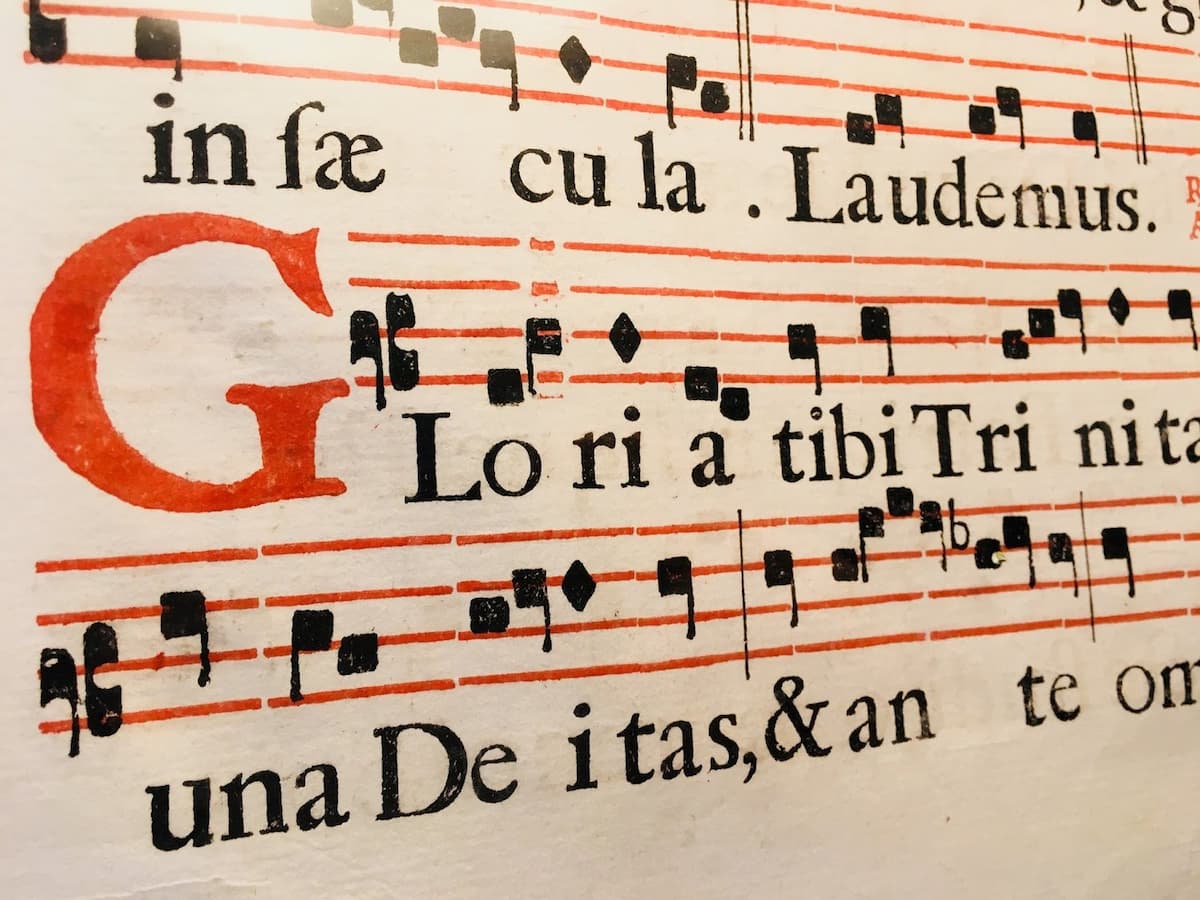
Gregorian chant
From there, choral writing became central to the Western canon. Vivaldi’s Gloria, Bach’s vast choral output — including the St Matthew Passion — and Handel’s Messiah remain pillars of the repertoire. Mozart’s Requiem, Haydn’s The Creation and Beethoven’s Missa Solemnis further demonstrate how composers turned to the choir for works of spiritual and dramatic scale.
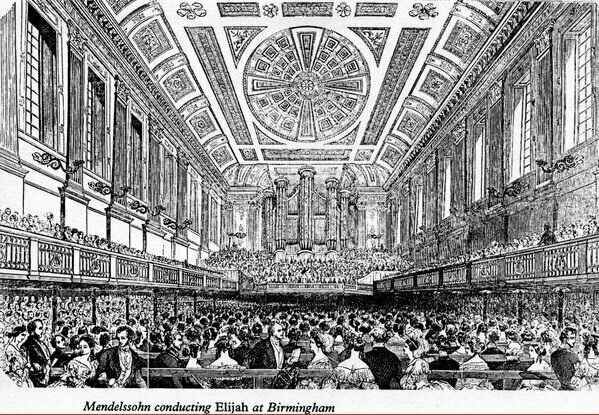
Mendelssohn conducting Elijah
The 19th and 20th centuries expanded this tradition even further. Mendelssohn’s Elijah, Bruckner’s Masses, Dvořák’s Stabat Mater, Orff’s Carmina Burana, Berlioz’s Te Deum and Britten’s War Requiem each reveal different facets of choral power — from the sacred to the theatrical, from intimate prayer to monumental statement.
Beethoven Symphony No. 9 — Ode to Joy (Excerpt)
Interestingly, although Beethoven did not write extensively for choir compared to some of his peers, one of his most iconic creations remains the “Ode to Joy” from his Symphony No. 9, the so-called “Choral” Symphony. Its inclusion of vocal soloists and choir within a symphonic framework was groundbreaking, forever altering expectations of what a symphony could be.
The Beatitudes – Arvo Pärt
In more recent times, Pärt has become one of the composers most closely associated with choral writing. Works such as The Beatitudes, composed in 1990 during his tintinnabuli period, reflect his deeply spiritual and minimalist approach. For Pärt, the human voice is both a sacred instrument and a direct line to contemplation.
Caroline Shaw – Partita for 8 Voices
Now, as we move further into the 21st century, the prominence of the voice remains unmistakable. Adams’ On the Transmigration of Souls, written in memory of the victims of 9/11, blends choir and recorded sound into a haunting memorial. Golijov’s La Pasión según San Marcos reimagines the Passion narrative through Latin American rhythms and colours. Dun’s Water Passion after Saint Matthew experiments with timbre and ritual, while Wolfe’s Anthracite Fields draws on American labour history. Shaw’s Partita for 8 Voices reinvents vocal ensemble writing with striking originality. And Whitacre has built a global reputation through his choral works, not least by embracing digital technology with his virtual choir projects, merging tradition with innovation.
If the voice was the first instrument, it has certainly not lost its relevance. Across centuries, styles and technologies, it remains central — intimate yet powerful, ancient yet continually renewed.
For more of the best in classical music, sign up for our E-Newsletter