The intertwined lives of Frédéric Chopin, George Sand, and her daughter Solange Dudevant form one of the most complex family stories of the Romantic era.
Today, we’re looking at the relationship between the three. We’ll trace the origins and evolution of their connection to each other, as well as how it impacted the final years of Chopin’s life and music-making…and address the question if Solange caused their breakup.
The Births of George Sand’s Children
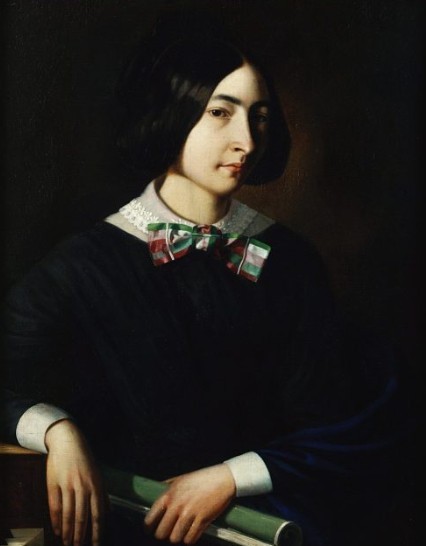
Portrait of George Sand, 1847
Aurore Dupin – later known as George Sand professionally – was born in Paris in 1804. At the age of eighteen, she married Casimir Dudevant.
The couple had two children together: a son named Maurice in 1823 and a daughter named Solange in 1828. (That said, Solange’s paternity is questioned.)
The marriage unraveled quickly, and both spouses were unfaithful to one another.
George Sand left Dudevant in 1831, and their separation was finalised in 1835.
She retained custody of the children and lived as a single mother. She also became one of the best-known writers in Europe.
George Sand first met Frédéric Chopin months later, in October 1836.
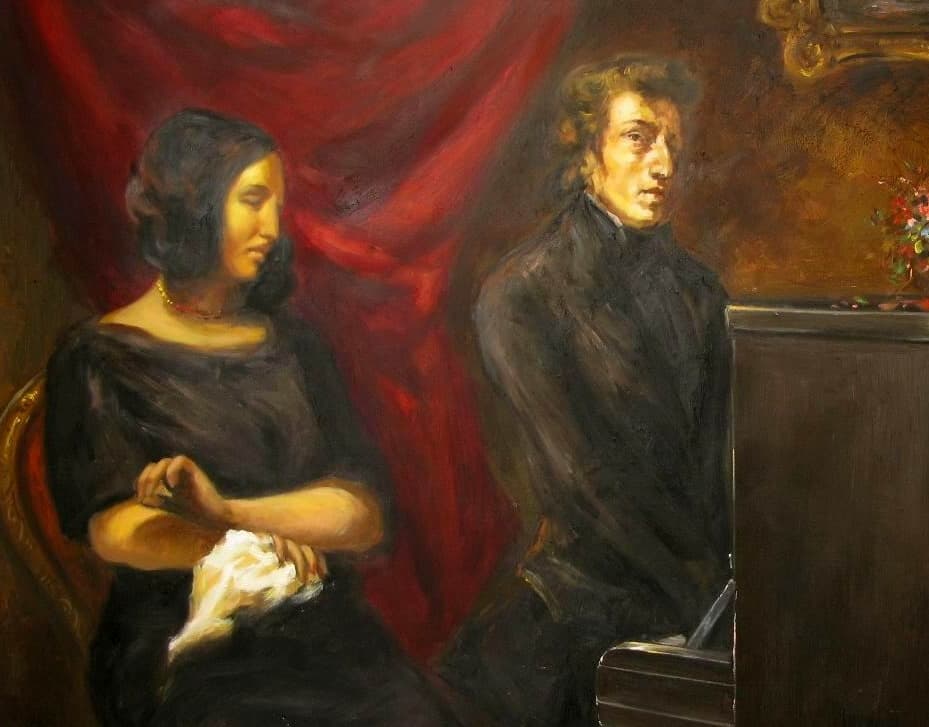
Portrait of Frédéric Chopin and George Sand by Eugène Delacroix
Although Chopin didn’t know what to make of her initially (he reportedly asked Liszt, “Is she really a woman?”), the two became friends and then a couple in 1838.
At the time, Maurice was fifteen, and Solange was ten.
Connecting with the Dudevant Children
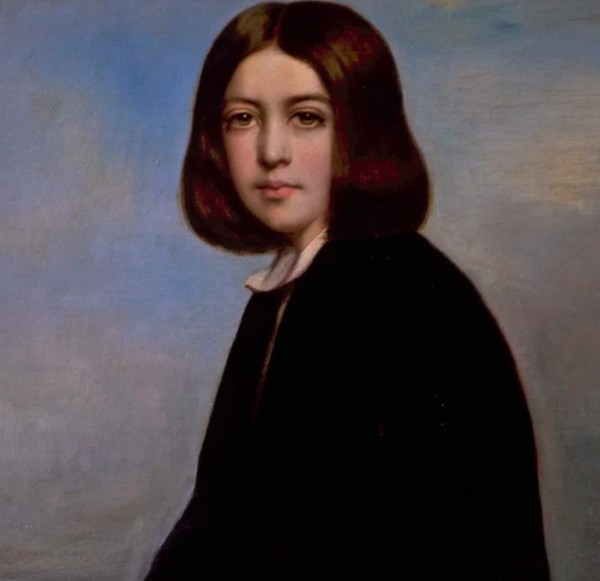
Maurice Dudevant
Because he and George Sand never married, Chopin had the freedom to decide what he wanted his relationship with the Dudevant children to be.
Even during the periods of time when he lived with them, he didn’t – and couldn’t – claim the authority that a typical biological nineteenth-century French father would have had over household children.
He held no financial power over George Sand; she was a literary celebrity renowned across Europe who earned her own money, and she had inherited her countryside estate from her grandmother. And he never formally adopted her children.
But that doesn’t mean he didn’t end up caring for them deeply. He had always enjoyed playing games with children, usually preferring their imaginative company to adults’. So even though he and Sand never married, he felt fondness for the Dudevant children.
Idyllic Early Days at Nohant
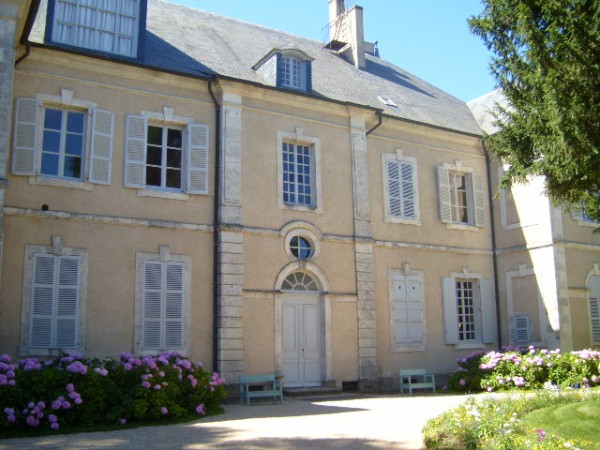
George Sand’s house in Nohant
In May 1839, Chopin joined George Sand at her beloved Nohant, the countryside estate she had inherited, and the place where she spent her summers. He found the time away from Paris invigorating and began joining the family annually.
Initially, this peaceful rural life, brightened by the presence of the two Dudevant children, provided Chopin with a calm and comforting environment that allowed him to concentrate on composition.
Many of his most beloved works came to life at Nohant: his third and fourth ballades, multiple nocturnes, his Barcarolle, his Op. 56 mazurkas, and more.
Chopin’s Ballade No. 3
It’s unclear whether he would have been so productive had he spent his summers elsewhere.
But unfortunately – if predictably – as the strong-willed Solange entered her teens, she began butting heads with her equally strong-willed mother.
Surviving letters suggest that Chopin was sensitive to the growing rift between mother and daughter, and that it began causing him considerable anxiety and stress.
Initial Tensions Brew
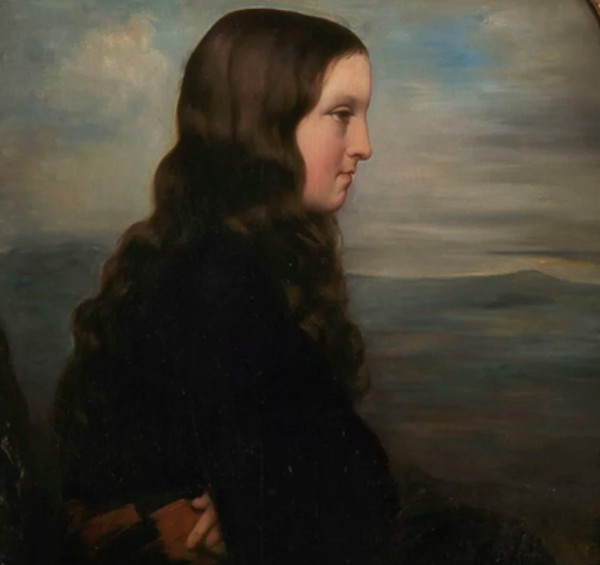
Solange Dudevant
In the summer of 1845, during the months immediately preceding Solange’s seventeenth birthday, the tensions in the household grew to such a pitch that they began affecting Chopin’s health and even creativity.
(That said, he was still putting out major works: this was the year his Berceuse and his B-minor piano sonata were published.)
Chopin’s Piano Sonata No. 3 in B-minor
The intra-family feuds between Sand, Solange, and then Chopin also contributed to the deterioration of his and Sand’s romantic relationship.
His works from this point forward tend to be more somber in character. This is often attributed to his declining health, which certainly played a role, but the stress of dealing with Sand and Solange was likely contributing, too.
Chopin Departs Nohant
The Sand/Chopin domestic arrangement began unraveling in earnest in 1846.
That year, Sand invited a young woman named Augustine Brault to join the household to serve as a companion to Solange. Personality conflicts began flaring.
Adding insult to injury, that June, a serialised version of Sand’s novel Lucrezia Floriani was published. This novel featured thinly veiled portraits of both Sand and Chopin, and the depiction of Chopin was far from flattering.
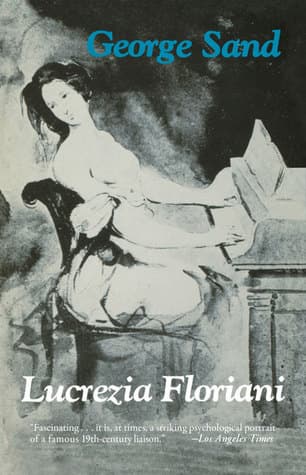
Cover of George Sand’s novel Lucrezia Floriani
In autumn, just as she turned eighteen, Solange began entertaining suitors. Chopin became increasingly uncomfortable with the goings-on and left Nohant by himself in November.
His uncertain position within the family had led to indecision about how he should respond to major events in the lives of the now-grown children.
More than ever, he felt like an outsider in their family unit. His instinct was to withdraw, and he did so into his music.
Chopin’s Polonaise-fantasy in A-flat-major (1846)
Solange Becomes Engaged
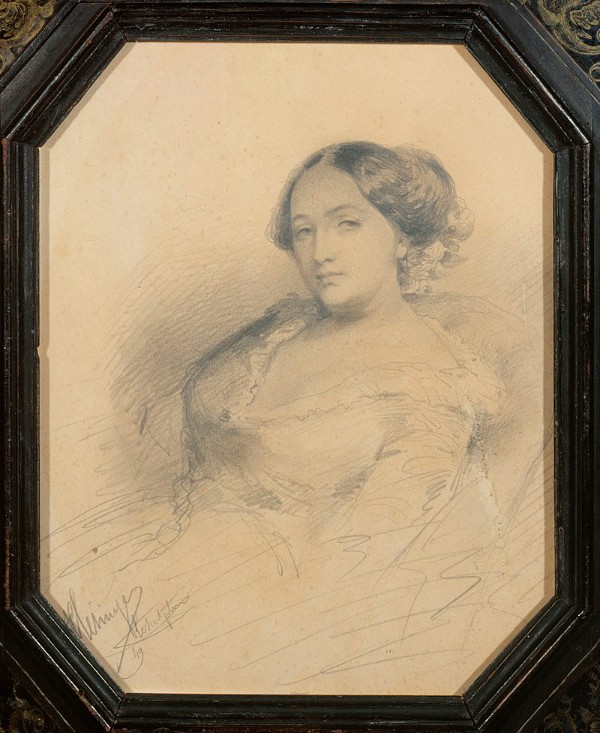
Solange, sketched by Clésinger, 1849
Solange became engaged to a young nobleman named Fernand de Preaulx, but not long afterwards, she became infatuated with a 32-year-old sculptor named Auguste Clésinger, who (in a darkly ironic twist) Sand had invited to Nohant to sculpt them.
Friends and family of the teenage Solange were nervous for her. Rumours swirled around Clésinger: that he owed debts, that he had an explosive temper, that he had impregnated and then abandoned another woman.
Yet Solange wasn’t about to listen to anyone. She and Clésinger married on 20 May 1847 after a whirlwind courtship.
Chopin disapproved, writing in a letter, “All Mme Sand’s real old friends cannot get over this extraordinary marriage; not one of them was at the wedding.”
Perhaps fortunately for him, he was feeling ill and couldn’t attend. He wrote that it was just as well, as he didn’t know “what sort of face I could have put on” at the event.
He was grimly blunt in letters to his family: “I don’t give them a year together after the first child, and the mother will have to pay their debts.”
And yet despite his skepticism about her impulsive choice of husband, he still cared deeply about her. “Solange is as charming as ever to me…and I am deeply sorry about it all.”
Mother-Daughter Fights – And Chopin Takes a Side
By the summer of 1847, violent quarrels between Sand and Solange began breaking out over money and Clésinger’s behaviour.
Despite his disappointment in her marriage, Chopin found that he took Solange’s side more often than Sand’s. He stayed in Paris and played mediator from a distance.
Sand was furious at what she interpreted as Chopin’s betrayal. She began suspecting that he found Solange attractive. (There is no convincing evidence this was the case.)
But he still cared deeply about her as a family friend. He wrote to Sand in July, “As for [Solange], I cannot remain indifferent to her.”
By this time, Solange was pregnant, and Chopin wrote to Sand that her “physical condition calls more than ever for a mother’s care.”
Sand quickly wrote a furious retort. “You choose to listen to it all and maybe believe what she says… I prefer to see you pass over to the enemy.” She was deeply hurt and insulted by his siding with her daughter over her, and (in her mind) usurping her maternal authority.
She remarked that this was a “queer end to nine years of exclusive friendship.”
And just like that, one of the most iconic romantic relationships of the Romantic Era was over.
Chopin’s Last Interactions with Sand and Solange
Solange continued communicating with Chopin even after she became estranged from her mother. He read her desperate letters and loaned her and her husband money.
Their mutual friend, mezzo-soprano and composer Pauline Viardot, reported in a letter that she’d heard Chopin say, “Pitying both from the bottom of my heart, I endeavour to give some consolation to the only one of the two that I am allowed to see.”
He tried to impart a message of hope and forgiveness. In November, he suggested to Solange that her and her mother’s estrangement might be healed eventually, and advised her to “not…take too literally everything that is said” during intractable family conflicts.
Unfortunately, the same could not be said about the rift between Sand and Chopin: that relationship was well and truly over.
The couple met for the final time in March 1848. He wrote to Solange about it: “Yesterday… I met your Mother in the doorway of the vestibule.”
During that conversation, he ended up being the one to tell Sand that Solange had had a baby and that Sand had become a grandmother.
They parted ways politely but coolly. Chopin’s tuberculosis continued to worsen, and he ended up dying in the late autumn of 1849.
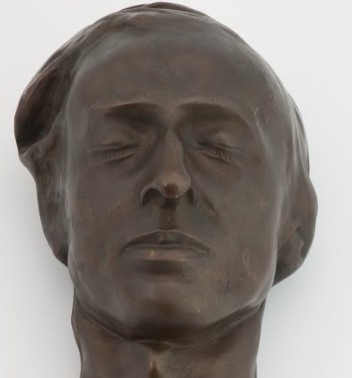
Chopin’s death mask
Sand did not attend Chopin’s funeral. Auguste Clésinger, however, made his death mask and a cast of Chopin’s hands. He would also sculpt the statue of the muse of music at Chopin’s grave.
As for Solange, her life only grew more difficult. Her first baby died a week after her birth. She and Auguste Clésinger had another daughter in 1849, but she died at the age of six of scarlet fever.
In the end, their marriage was short-lived, as everyone had feared. The couple divorced in 1852.
Conclusion
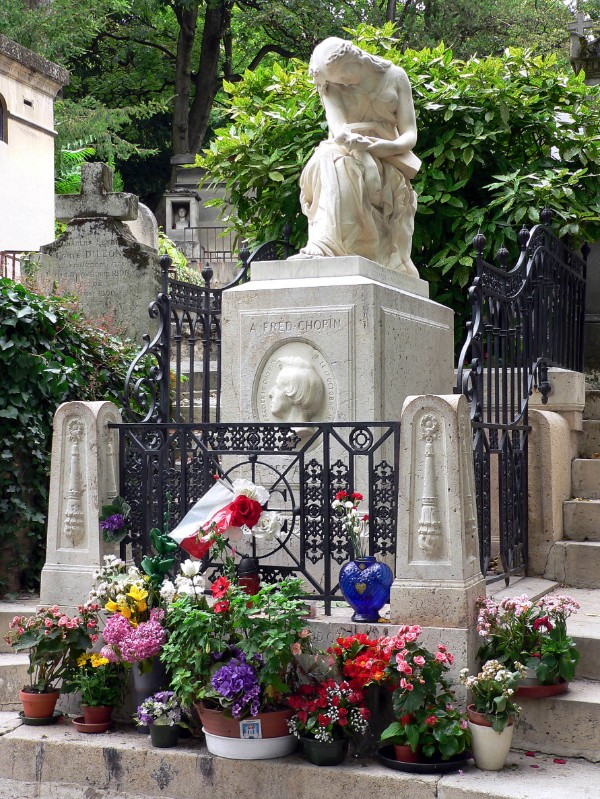
Chopin’s grave
The relationship between Chopin, George Sand, and Solange Dudevant should be remembered as a complicated, multifaceted, deeply human one.
Solange specifically may not have influenced Chopin’s musical compositions in a particularly direct way. But the security he felt being part of their family unit during an especially productive time in his life was very real…and so was the subsequent devastation he felt during the breakdown of the relationship with Sand.
It is possible that the entire affair impacted his health and, therefore, the length of his life. Of course, whether that life was shortened or lengthened by the connection with Sand and the Dudevants is up for debate.
The Chopin–Sand–Solange saga continues to fascinate historians, readers, and music lovers to this day. It’s clear why: it both demonstrates and underscores the deep humanity of Chopin and Sand, two of the greatest artists in their respective fields, and giants of the Romantic Era.
For more of the best in classical music, sign up for our E-Newsletter