As the year 1926 dawned, classical music was on the brink of technological revolution.
New tools for capturing, transmitting, and synchronising sound were changing everything about how people listened to and interacted with live music.
Radios were entering living rooms from Boston to Zagreb; electric microphones were replacing the acoustic horns that had been used for the past half century; and filmmakers were discovering that orchestral soundtracks could utterly transform every moviegoer’s experience.
A century later, it’s easy to take all of these innovations for granted. But it’s worth looking back at how unbelievably quickly they were rolled out, and, a century later, imagining what it must have felt like to witness.
The year 1926 marked the decisive pivot point when classical music became a mass-media phenomenon…and today we’re looking at how it happened.
New Radio Networks Take Shape
A New Year’s 1926 transatlantic broadcast
The year 1926 brought a notable surge in radio infrastructure worldwide.
In September, the Radio Corporation of America (RCA) created the National Broadcasting Company (NBC).
Just weeks later, on 15 November, NBC launched its first network broadcast, linking stations from coast to coast.
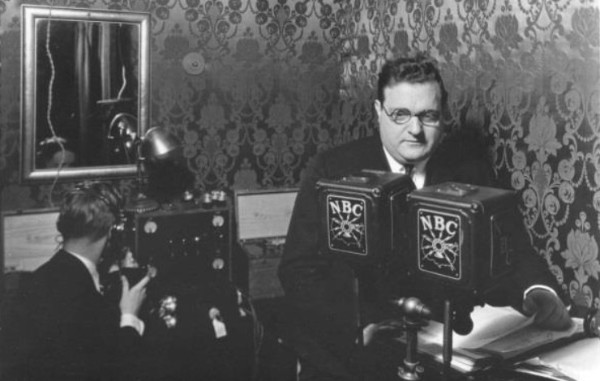
First Broadcast of NBC
The company wrote in an advertisement:
“The purpose of the National Broadcasting Company will be to provide the best program available for broadcasting in the United States… It is hoped that arrangements may be made so that every event of national importance may be broadcast widely throughout the United States.”
A recital in New York could now be heard simultaneously across the continent.
It was a development that would trigger a seismic shift in how both audiences and musicians would approach performances.
National broadcasters were making impressive strides abroad, too.
Polskie Radio began regular broadcasts from Warsaw on 18 April; Radio Zagreb became the first radio station in southeastern Europe on 15 May; and Finland’s Yleisradio and the Dutch VPRO were both founded on 29 May.
In October, the BBC inaugurated a weekly Choral Evensong broadcast, a tradition that continues today.
By the end of 1926, radio had become a truly international platform…and one increasingly intertwined with the performance of classical music.
A compilation of documentaries about 1920s radio
The Rise of Electrical Recording
As if that wasn’t enough innovation for one year, the recording industry was also undergoing its own transformation at the same time.
Electrical recording, introduced only a year earlier, became widespread in 1926.
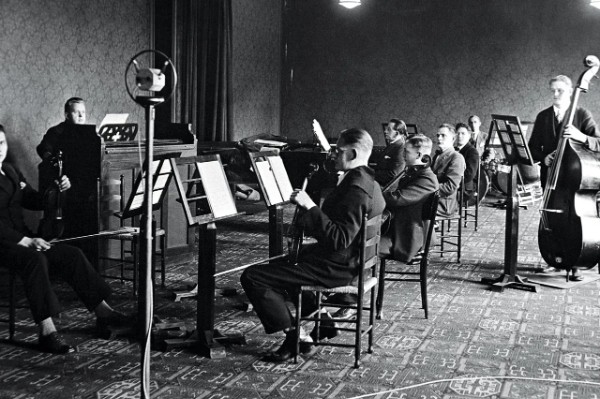
The condenser microphone revolutionised sound recording, from the studio to the commercial product © international-piano.com
Microphones and electronic amplifiers developed by Western Electric replaced the acoustic horn process that had been used since the prime of Edison’s career. After fifty years, the acoustic age had come to an abrupt and inauspicious end.
A comparison between the sound of acoustic and electrical recordings
These new electric recordings captured a far broader frequency range and dramatically increased dynamic capabilities: a miracle for music lovers who wanted to hear an orchestra’s complicated textures and extreme dynamics.
Companies like Victor and Columbia quickly embraced the technology, issuing classical discs that astonished listeners.
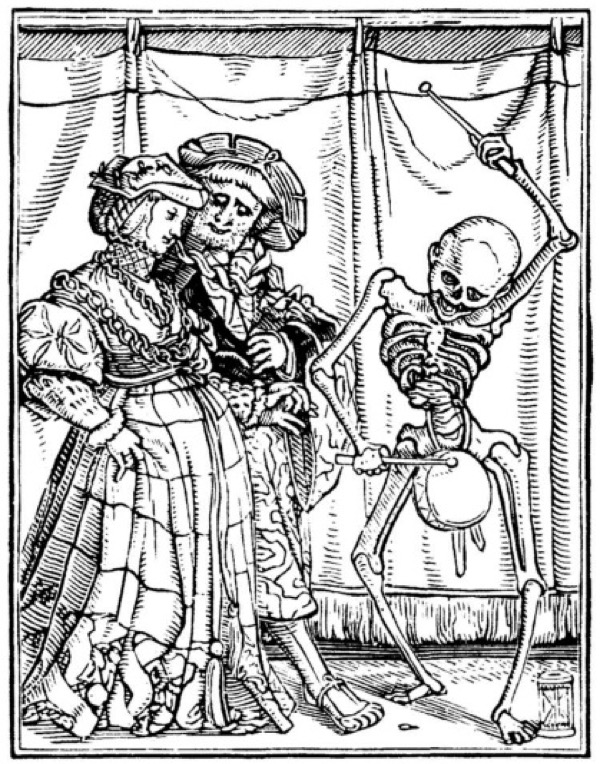
Conductor Leopold Stokowski, always eager to experiment with new technology, recorded Saint-Saëns’s Danse Macabre with the Philadelphia Orchestra using the new system. Recorded in 1925 and released in early 1926, it is one of the earliest high-fidelity orchestral recordings.
For many listeners, hearing basses, cellos, and low brass rendered with such clarity was revelatory.
Suddenly, many people who had never been able to hear an orchestra before had access to (a version of) the experience in the comfort of their own homes.
Stokowski’s Danse Macabre
Radio and Recording Companies: From Rivals to Partners
At first, phonograph companies feared radio. Why would audiences buy records if they could hear music for free over the airwaves?
But by 1926, perceptions were shifting.
Okeh Records president Otto Heineman captured the new outlook when he remarked:
“Radio has a very beneficial effect on the sale of phonograph records. People who hear the latest song and dance hits by radio want to hear them again… So they buy the records.”
Radio created demand, while records satisfied it.
Record labels began advertising their artists on the radio, and even producing their own programs: an early form of cross-media promotion that we continue to see today.
That said, not everyone embraced the change. Thomas Edison, nearing the end of his career, stubbornly refused to combine phonographs with radio receivers, remaining skeptical of the concept.
Music and Film Converge: The Vitaphone Revolution
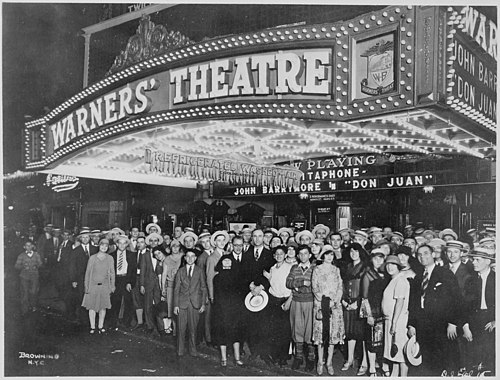
Don Juan premiered in New York City
In August 1926, Warner Brothers premiered the movie Don Juan starring the famed leading man John Barrymore.
This was the first feature-length film with a fully synchronised musical soundtrack.
Composers William Axt and David Mendoza wrote the score, performed by the New York Philharmonic and recorded using the Vitaphone sound-on-disc system.
Don Juan (1926)
The premiere also featured a short film of the Philharmonic, conducted by Henry Hadley, performing Wagner’s Tannhäuser Overture: a demonstration intended to show off the new technology.
Tannhauser Overture: 1926 New York Philharmonic Orchestra – Vitaphone in HD
It’s fascinating to see how intertwined the early history of films was with the art of classical music.
The entire project foreshadowed the impending “talkie” revolution (The Jazz Singer would premiere just a year later, in October 1927), while also cementing classical musicians as vital contributors to early Hollywood.
Conclusion
By the end of 1926, it was clear that classical music had entered a new era.
Radio brought performances into living rooms across continents. Electrical recordings transformed the sound of records and expanded the reach of orchestras. Film studios discovered that orchestral scores could elevate cinema into a richer, more immersive art form.
In important ways, these innovations democratised listening. For millions who had never set foot in a concert hall, opera house, or movie palace, classical music became part of daily life in a way it never had before.
A hundred years later, the technologies may have changed, and classical music may be more accessible than ever.
But despite how far we’ve come, we’re still living with the consequences of 1926: a year when technology reshaped both how music sounded and who could hear it.
Here’s to a hundred years of innovation that brought us so much more of the music we love so much.
For more of the best in classical music, sign up for our E-Newsletter