Pablo de Sarasate looked every inch the 19th-century virtuoso. Impeccably dressed, with a finely trimmed moustache, he carried himself with aristocratic poise. He commanded the room before he even played a single note.
Audiences who heard him perform on his Stradivarius called him a magician who could make his violin sing and dance. Yet he wasn’t merely a performer, but a composer who crafted showpieces to feature his jaw-dropping skills.
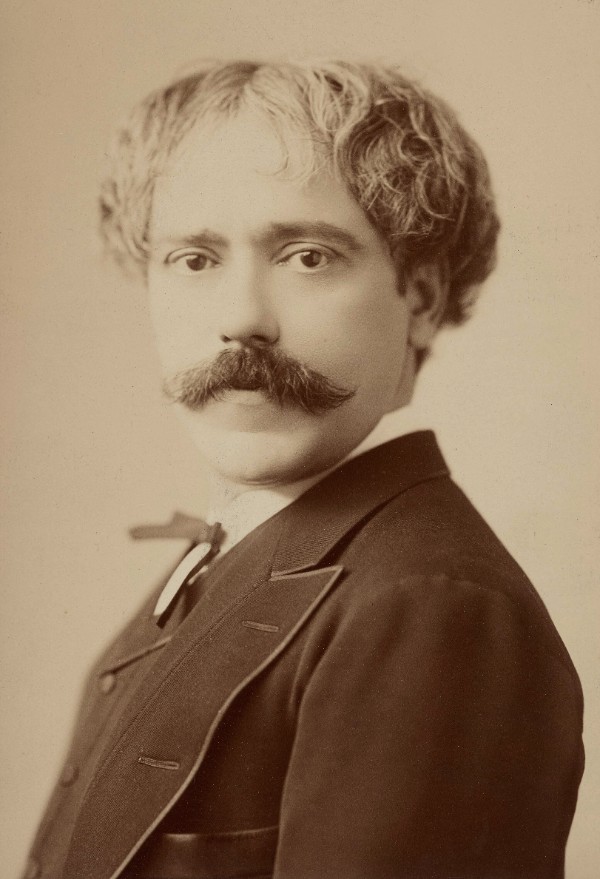
Pablo de Sarasate
His compositions, often infused with the fiery rhythms and soulful melodies of his Basque and Spanish heritage, are short and dazzling showpieces with personality. Composed mostly for violin and piano or orchestra, the crown jewel in Sarasate’s catalogue is a 1878 piece inspired by Hungarian and Romani folk melodies.
Titled Zigeunerweisen (Gypsy Airs), it is a four-part rollercoaster of incredible technical difficulties and sweeping expression. To celebrate Sarasate’s birthday on 10 March 1844, let’s compare a number of interpretations.
Pablo de Sarasate: Zigeunerweisen (María Dueñas)
Rhapsodic Lament and Virtuosic Csárdás
The Zigeunerweisen follows the pattern of a number of Hungarian Rhapsodies by Franz Liszt. A dramatic orchestral or piano fanfare introduces the soloist, who launches into a number of improvisational but accompanied cadenzas.
It unfolds as a weighty lament, and the music is decorated with shimmering trills, grace notes, harmonics, glissandi, pizzicato, and spiccati. The melody is essentially straightforward and regular, but it is punctuated by enormous technical difficulties like the flying spiccato and ricochet bowings.
After a dramatic pause, a dance of the most virtuosic kind emerges. It’s called a “Csárdás,” identified by a variation in tempo. The slow opening is called “lassú”, and it ends in a very fast tempo “friss.”
As you can tell, there are plenty of other tempo variations as well, but as the pace becomes extremely rapid, the technical challenges become substantial. We find long spiccato runs, double stops, artificial harmonics, and left-hand pizzicato.
Pablo de Sarasate: Zigeunerweisen (Itzhak Perlman)
Contained Intensity
There is something very satisfying about a Spanish violinist reclaiming Sarasate, so let’s get started with María Dueñas. In many performances, the piece sounds like a Hungarian stereotype, but with Dueñas, we hear much more Iberian elegance and aristocratic polish.
Her performance is all about balance with a focused and luminous tone. The rubato is shaped with elegance, and she shapes the fast portions with crisp articulation. Dueñas has wonderful bow control in rapid passagework and a very precise left-hand pizzicato.
There is very little expressive portamento, as the piece takes on a modern clarity. Clean articulation and great dramatic control prevent the piece from descending into sentimental kitsch.
Pablo de Sarasate: Zigeunerweisen (Diana Adamyan)
Romantic Sweep
If Maria Dueñas looked for sleeker aristocratic control, Itzhak Perlman provides unapologetic Romantic glamour. This show-stopper can easily turn into a circus act, and it takes a special violinist to turn it into art.
What Perlman offers is tonal opulence, emotional warmth, and a theatrical sweep. He produces his unmistakable golden tone, including generous vibrato. He certainly is not afraid to boldly stretch time, as he extends phrases and delays cadences. It’s unapologetically expressive.
Perlman shines in the lyrical cantabile section, beautifully sustaining the singing line. It all sounds very generous and emotionally direct. The finale is not merely a technical drill for Perlman. Of course, it’s dazzling as the left-hand pizzicato sparkles. Yet, the sound remains unmistakably Perlman.
Pablo de Sarasate: Zigeunerweisen (Augustin Hadelich)
High-voltage Intensity
Next, we turn to an interpretation by Diana Adamyan, the Armenian violinist who won the first prize in the Menuhin International competition in 2018. As with a good number of young performers, there is a sense of high-voltage aggression.
The opening section is almost raw, as her sound is penetrating and focused. Rhythmically incisive and emotionally unapologetic, the lyrical middle has a sense of the dramatic rather than the sentimental.
Adamyan, probably as expected, excels in the concluding “Friss.” The tempo is fearless, and the rhythms are razor-sharp. The harmonics are clear, the left-hand pizzicato bits, and the virtuosity always feels athletic.
Pablo de Sarasate: Zigeunerweisen (Anne-Sophie Mutter)
Architectural Clarity
For a performance that wraps intelligence into brilliance, let’s turn to Augustin Hadelich. The Zigeunerweisen invite theatricality and a sense of cultivated exoticism, tempting performers into exaggeration. Not so with Hadelich, who pairs intellectual clarity and lyrical warmth.
Hadelich’s tone is always refined and centred. The vibrato is essentially slim, and he produces a striking clarity of sound, particularly in high positions. From the very opening, Hadelich avoids sentimental heaviness, focusing on internalised drama rather than overt theatricality.
In the lyrical middle, the legato is seamless, intonation impeccable, and rather controlled. The phrases are shaped architecturally, as there is always structure beneath the emotions. He is not aggressive in the “Friss,” but makes the difficulties look almost incidental. It’s all about craftsmanship, not showmanship alone.
Pablo de Sarasate: Zigeunerweisen (Sarah Chang)
Brilliant Theatricality
For high-drama and high-gloss, we now turn to Anne-Sophie Mutter. There is nothing casual in her virtuosity, as everything funnels into a high-definition Romanticism. Mutter produces her distinctive highly projected tone. It is focused brilliance on top of a dense core.
Her vibrato can be at times deliberate and expressive, sometimes wide, sometimes tightly controlled for contrast. Basically, there is plenty of theatrical shaping of the music. Pointed articulation and strong dynamic contrasts sculpt the musical phrases.
The lyrical centre becomes almost operatic, as she does not internalise emotion, but projects them outward. The “Friss” is electrifying, polished, deliberate, and commanding. The tempo feels breathless, but it is always tightly controlled.
Romantic Warmth
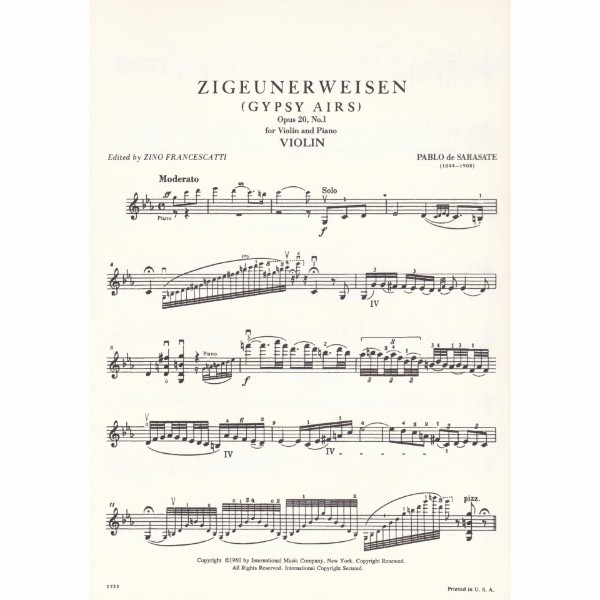
Pablo de Sarasate’s Zigeunerweisen
For an interpretation that is polished, passionate, and seductive, we take a listen to Sarah Chang. With great weight in the lower register and a glowing sound in the upper, Chang doesn’t aim for modern transparency. Instead, she really leans into dramatic intensity.
There is plenty of expansive rubato in the opening, occasionally tipping into the extreme. It certainly feels highly emotional. This emotionality really shines in the lyrical middle, as she shapes phrases with vocal warmth. If you like emotional immediacy, this is the interpretation for you.
I do like the “Friss” section, as the virtuosity is integrated into the musical line. Its tonal fullness is propelled by youthful energy.
Lyrical Humanism
Let me conclude with one of my personal favourites and the interpretations by Yehudi Menuhin. Although his jaw-dropping virtuosity is always present, his playing focuses on lyric integrity and sincerity.
In Menuhin’s hands, Sarasate doesn’t sound like virtuoso circus entertainer but more like a Romantic poet. Every emotion is sincere, and there is real human vulnerability in his playing. Even in the rapid passages, the emphasis is on the music and not the fireworks.
There are literally dozens of interpretations of Sarasate’s Zigeunerweisen, including by now, performances by little children. However, there are many more outstanding interpretations by Hilary Hahn, Leonidas Kavakos, Maxim Vengerov, Julia Fischer, Midori, Isaac Stern, Ivry Gitlis, and others. Would you like a second instalment of more fascinating readings of this dazzling showpiece?
For more of the best in classical music, sign up for our E-Newsletter