Classical music history is full of near-misses. Some of the pieces that we love best spent decades, even centuries, forgotten in archives or suppressed by families.
The rediscoveries of these classics sometimes only happened by chance or due to individuals’ persistence.
If just a few things had been different, it’s easy to imagine none of the works below ever seeing the light of day again.
Here are eight extraordinary pieces of classical music that were lost or suppressed and then dramatically rediscovered.
Monteverdi – L’incoronazione di Poppea
Written in 1643; rediscovered in 1888
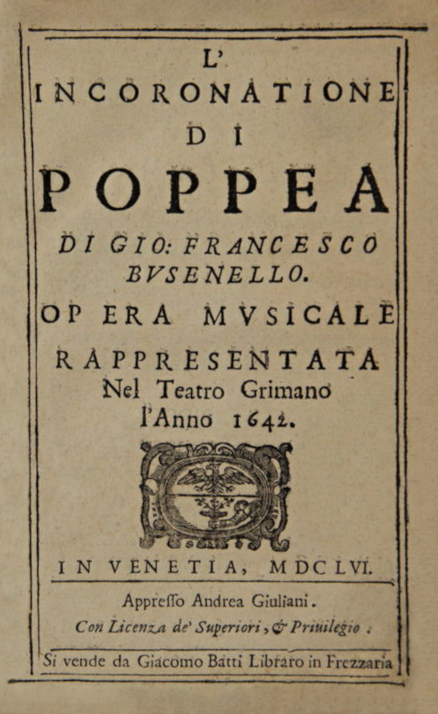
Title page of the 1656 libretto of L’incoronazione di Poppea by Claudio Monteverdi
and Giovanni Francesco Busenello
Claudio Monteverdi’s L’incoronazione di Poppea is a fictionalized version of the relationship between Roman emperor Nero and his ambitious mistress Poppea.
We don’t know the exact date that it was premiered, but it was sometime around early 1643. Monteverdi died in November that year.
It was apparently revived once in the 1650s, but after that, it vanished completely.
In 1888, a musicologist found a manuscript in Venice. In 1930, another version was discovered in Naples. Both were copies. Neither was in Monteverdi’s hand.
To make matters more confusing, a few composers rearranged portions of the opera in their own musical language in between the two discoveries.
For instance, in the early 1900s, French composer Vincent d’Indy created and even staged his own version of the work.
Later composers who worked on their own scholarship and editions included Ernst Krenek, Carl Orff, and others.
Richard Strauss even got into the game, referencing the work in his 1935 comic opera Die schweigsame Frau.
Over the following decades, it was mounted in a variety of versions, with each staging raising questions about what it really means when a major work is rediscovered and then reintegrated into the repertoire.
Bach – St. Matthew Passion
Written in 1727; rediscovered in 1829
When Johann Sebastian Bach died in 1750, his music was considered old-fashioned. Many people thought of his work as having been written solely for its own time and that it would be uninteresting to future audiences.
After its initial debut in the late 1720s, the St. Matthew Passion was mounted in 1800 in Leipzig, but otherwise it remained unplayed and unheard for over a century.
Fortunately, a smallish coterie of Bach enthusiasts kept the composer’s legacy alive. Two of the most consequential enthusiasts were Felix Mendelssohn’s grandmother, Bella Salomon, and aunt Sarah Levy, who had studied with one of Bach’s sons.
In 1824, Bella gave her 15-year-old prodigy grandson a copyist’s version of the St. Matthew Passion. Felix became obsessed with it. He decided that he wanted to mount the first-ever performance of it outside of Leipzig.
When he was twenty, after years of studying and rehearsing, his dream came true. In fact, multiple performances were sold out. The Passion was back on the musical map, thanks to a supportive family and a hyper-focused, hyper talented teenager.
Bach – Cello Suites
Written between 1717 and 1723; rediscovered in 1890
Today they’re considered to be the pinnacle of the cello repertoire, but for over 150 years, Bach’s six cello suites were treated as nothing more than dry etudes.
In fact, no autograph survives, only later copies. (One of them is by Bach’s wife Anna Magdalena Bach.)
The cello suites needed a champion, and in 1890, they found an unlikely one. That year, a 13-year-old cellist named Pablo Casals spotted a shabby edition in a Barcelona second-hand shop.
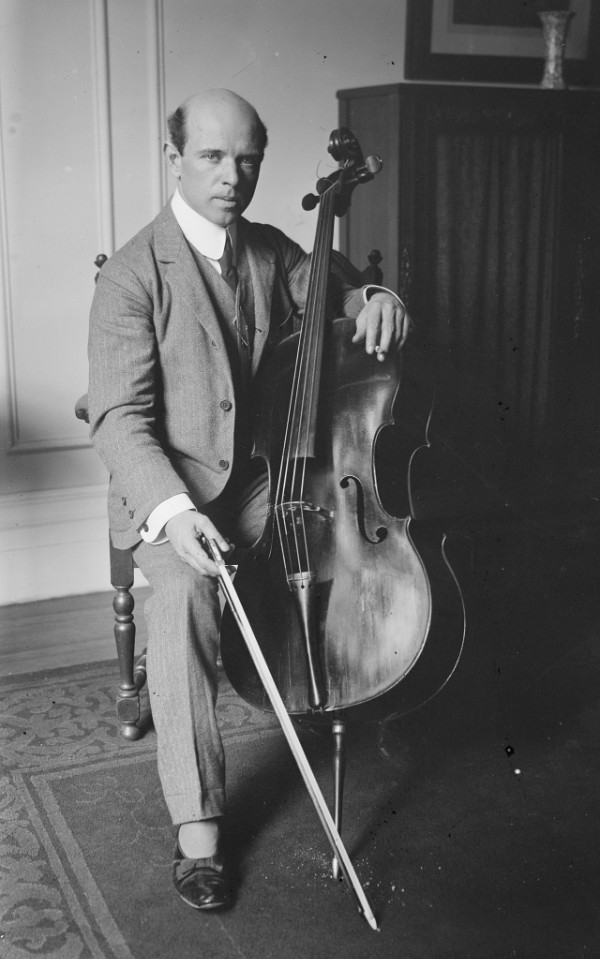
Pablo Casals
Blown away by their beauty, he bought the music and began to play and study the suites.
He spent a full decade studying the music privately before ever playing it in public.
When he did finally begin performing and recording the suites, audiences realised these weren’t dry studies at all. On the contrary, they were challenging, profound, and deeply spiritual meditations.
Nowadays, every classically trained cellist knows them.
Haydn – Cello Concerto No. 1
Written ca. 1763; rediscovered in 1961
For years, it was assumed that Joseph Haydn – the father of both the string quartet and the symphony – had written little for the cello.
At the time, only one authentic concerto in D-major was known to exist.
Scholars suspected that any others had been lost. However, there was always the hope that a copy of another might one day be found.
In 1961, those hopes were fulfilled. Roughly two centuries after its composition, a manuscript of Haydn’s long-rumoured cello concerto in C major was unearthed in the archives of the Czech National Museum in Prague.
Soon after, Czech cellist Miloš Sádlo gave the concerto its modern premiere, dazzling audiences with the “new” concerto’s tunefulness and lyricism.
Today, it stands as one of the crown jewels of the Classical Era cello repertoire.
Schubert – Symphony No. 8
Written in 1822; rediscovered in 1865
Why Schubert wrote only two movements for this symphony, when symphonies from this period all have four, remains one of music’s great mysteries.
For decades after Schubert’s early death in 1828, the manuscript sat in the home of his friend Anselm Hüttenbrenner, who received it in 1823 but never showed it publicly.
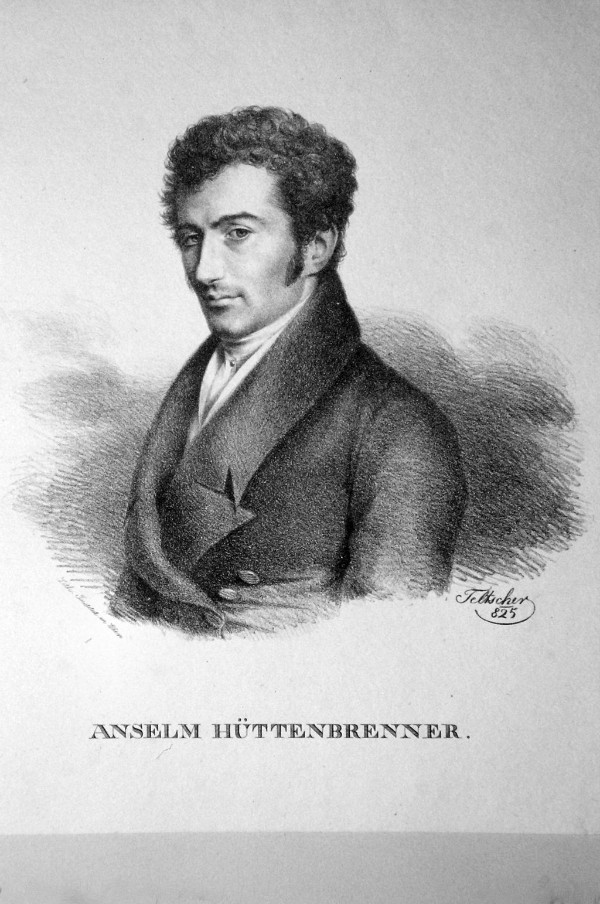
Anselm Hüttenbrenner
A few years before his death, Hüttenbrenner began confessing to friends and colleagues that the score parts were in his possession.
Finally, in 1865, Austrian conductor Johann Herbeck persuaded Hüttenbrenner to hand the manuscript over so the work could finally be premiered.
The “Unfinished” became one of Schubert’s most famous works…even without the standard four movements!
Schumann – Violin Concerto
Written in 1853; rediscovered in 1933
Robert Schumann wrote this concerto just months before his final mental collapse.
After he died in an asylum in 1856, his wife, Clara Schumann and her musical advisor, violinist Joseph Joachim, were tasked with going through his papers and manuscripts.
They suppressed the concerto’s publication, believing the work revealed signs of his illness.
The manuscript sat locked in the Prussian State Library for 80 years, with the condition (set by Joachim) that the work not be published until 1956, a century after Schumann’s death.
The story of its rediscovery is the strangest on this list by far.
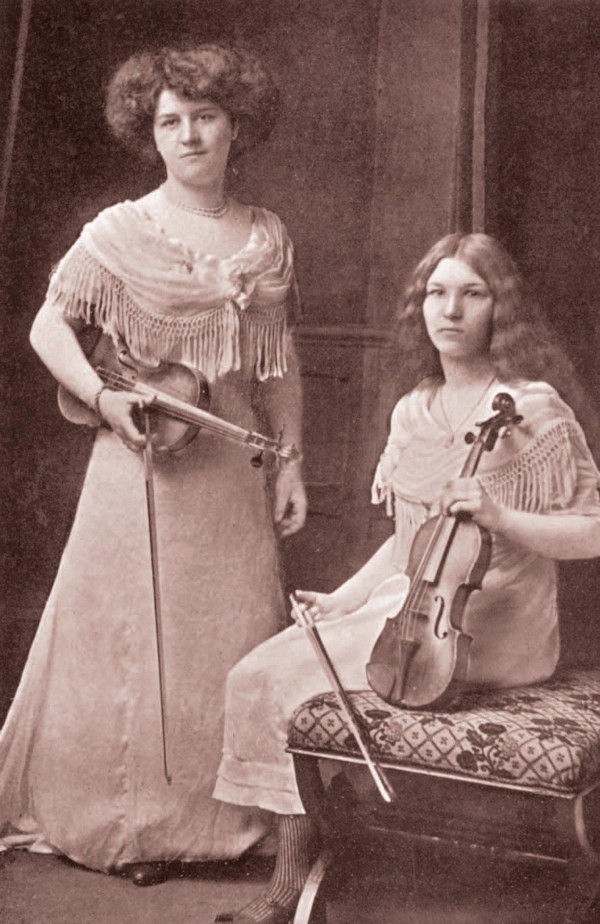
Adila Fachiri and Jelly d’Aranyi
Violin virtuoso sisters named Jelly d’Aranyi and Adila Fachiri, who happened to be Joseph Joachim’s great-nieces, were (according to them) contacted via seance by both Robert Schumann and Joseph Joachim.
Dead Schumann and Dead Joachim told Jelly and Adila that there was an undiscovered Schumann work that they’d find at the Prussian State Library in Berlin…and they did.
A few years later, a handful of violinists – including Jelly, Yehudi Menuhin, and Georg Kulenkampff – raced to be the violinist to premiere it.
Kulenkampff secured the world premiere; Menuhin gave the American premiere at Carnegie Hall (albeit with piano and not orchestral accompaniment); and d’Aranyi, having settled in London, gave its English debut.
Bruckner – Symphony No. 0
Written in 1869; rediscovered in 1924
Composer Anton Bruckner was notoriously self-critical.
After finishing a symphony in D-minor between his First and Second, he scribbled “annulirt” (“annulled”) on the manuscript and hid it away. He told friends it wasn’t worthy of being counted among his symphonies.
After Bruckner’s death in 1896, the score languished until 1924, when it was finally performed. It was eventually given the unintentionally funny title of Symphony No. 0.
The work shows a composer wrestling with his style, and deepens our picture of Bruckner’s early creative struggles and insecurities.
Sibelius – Kullervo
Written in 1892; rediscovered in 1958
Jean Sibelius’s massive choral symphony Kullervo was inspired by Finland’s national epic, the Kalevala.
Kullervo is long, rambling, and loud. Unfortunately for Sibelius, he decided that wasn’t a musical, philosophical or aesthetic direction that he wanted to go in, so he withdrew the work after its 1892 premiere. He claimed he would return to it to edit it someday. He never did.
For over half a century, it was silent. Only after Sibelius’s death in 1957 did Finnish musicians resurrect it in 1958.
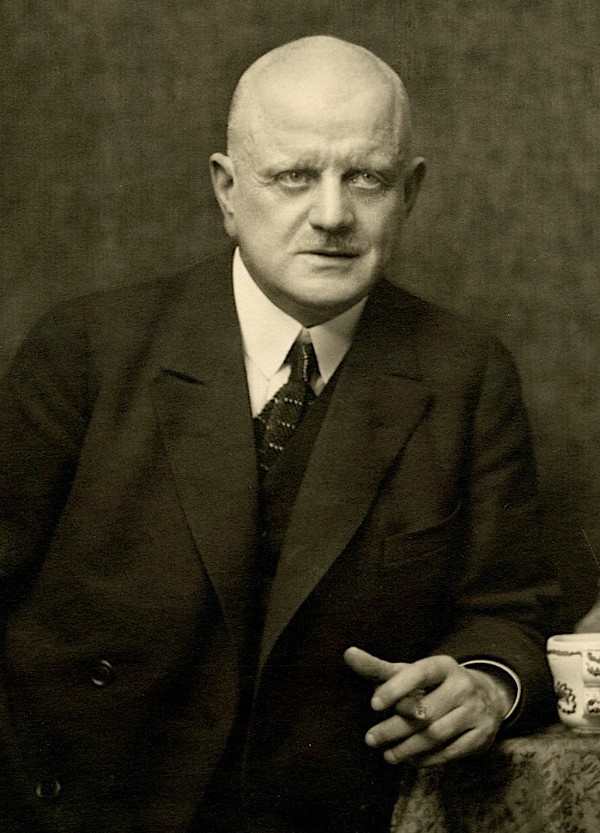
Jean Sibelius, 1923
Its rediscovery was shocking: here was a bold and youthful work, full of unchecked beauty, power, and emotion, brimming over with nationalist elements.
Suddenly, the entire context surrounding Sibelius’s later symphonic output changed.
Conclusion
The stories of these works – lost in libraries, hidden by friends, or written off by their creators — are poignant reminders of how fragile a piece of music’s survival can be.
Any one of these works could easily have been forgotten completely. And any time another one of them surfaces, music history is rewritten. Turns out the canon isn’t written in stone.
This happens frequently enough that it should make every music lover wonder: what other masterpieces are still out there waiting to be rediscovered?
For more of the best in classical music, sign up for our E-Newsletter