Christmas is always an emotionally charged time of year. It can be everything from a season of hearty celebration to crushing loneliness.
Today, we’re looking at five emotional, memorable Christmases from the lives of the great composers: Wagner, Chopin, Tchaikovsky, Schumann, and Beach. Some were melancholy; some were happy; some were both.
Wagner’s Romantic Christmas/Birthday Present – 1870
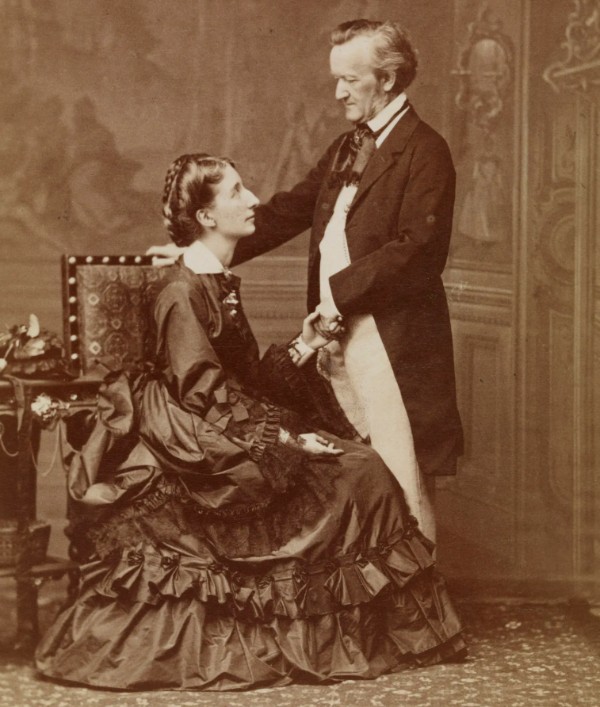
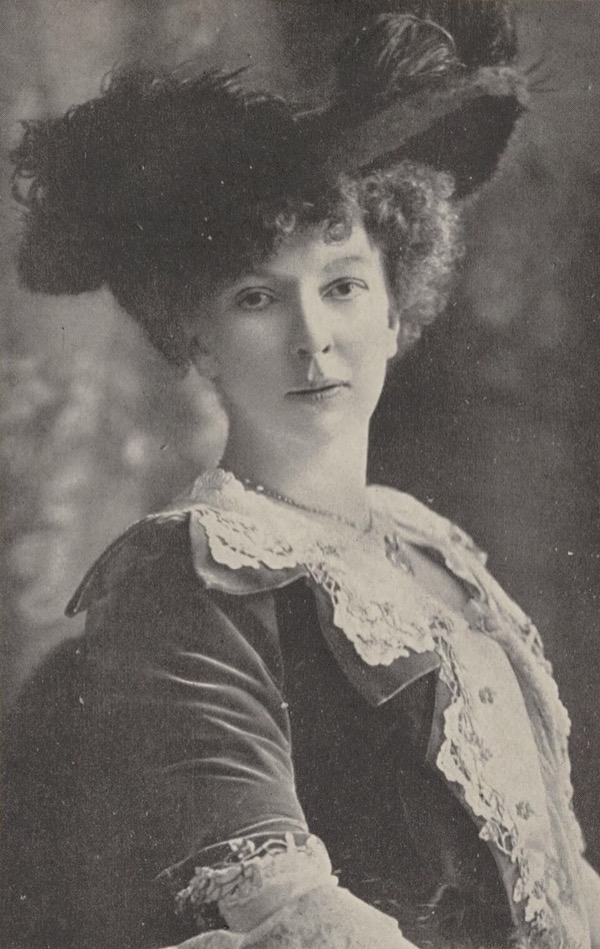
Richard Wagner and Cosima Liszt von Bülow
When composer and conductor Richard Wagner and his future wife Cosima began dating in 1863, it was a scandal. At the time, Cosima was still married to conductor (and Wagner acolyte) Hans von Bülow.
Cosima was depressed after the death of her sister, and von Bülow wasn’t particularly attentive toward her. She proved vulnerable to Wagner’s advances.
In April 1865, she gave birth to her and Richard’s daughter, Isolde. In February 1867, they had another daughter named Eva, and then in June 1869, a son named Siegfried.
After the birth of these children, von Bülow realised that there was no saving their marriage and agreed to grant Cosima a divorce. That divorce was finalised in the summer of 1870, leaving Cosima free to marry Wagner in August 1870.
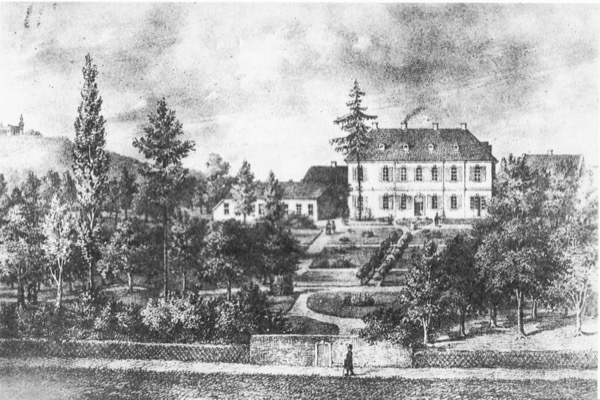
Cosima’s birthday was Christmas Eve, but she always celebrated on Christmas Day. Accordingly, on 25 December 1870, she woke up to a performance outside her window of a new Wagner work that would come to be known as the Siegfried Idyll.
Wagner’s Siegfried Idyll
Cosima wrote in her diary:
“Music was sounding, and what music! After it had died away, R…put into my hands the score of his Symphonic Birthday Greeting… R had set up his orchestra on the stairs, and thus consecrated our Tribschen [the name of Wagner’s Swiss home] forever!”
Wagner had hired friends and colleagues to perform the work especially for her, and according to legend, had even rowed them out into the middle of the lake to practice so it could stay a surprise until the big day.
Chopin’s Lonely Viennese Christmas of Homesickness – 1830

Portrait of Frédéric Chopin
In 1830, when he was just twenty years old, Chopin traveled to Vienna and later to Paris to make a name for himself as a virtuoso pianist.
The date was significant. In November 1830, as part of the November Uprising, revolutionaries tried – and failed – to replace or reform the oppressive Russian government.
Chopin no longer felt safe going back home, but he wrote letters to friends and family, desperately trying to stay connected to them and to his heritage.
On December 26, he wrote to his old schoolfriend Jan Matuszynski, updating him on his poignant Christmas in Vienna:
The day before yesterday, we played the whole morning and afternoon, then, as it was Christmas Eve and fine, clear, springlike weather, we left there at night.
After parting from Slawik, who was due at the imperial chapel, I strolled along slowly alone, and at midnight went into St. Stephen’s.
When I entered, there was no one there. Not to hear the mass, but just to look at the huge building at that hour, I got into the darkest corner at the foot of a Gothic pillar.
I can’t describe the greatness, the magnificence of those huge arches. It was quiet; now and then, the footsteps of a sacristan lighting candles at the back of the sanctuary would break in on my lethargy.
A coffin behind me, a coffin under me; – only the coffin above me was lacking.
A mournful harmony all around – I never felt my loneliness so clearly; I loved to drink in this great sight, till people and lights began to appear.
Then, turning up the collar of my cloak, as once – do you remember? – along the Cracow Suburb, I went to hear the music at the imperial chapel…
Chopin’s Scherzo in B-minor, written around 1831 and featuring a snippet of the Polish Christmas carol Lulajże, Jezuniu (“Sleep, Infant Jesus”) at 3:20
Tchaikovsky’s Devastating Piano Concerto Review – 1874
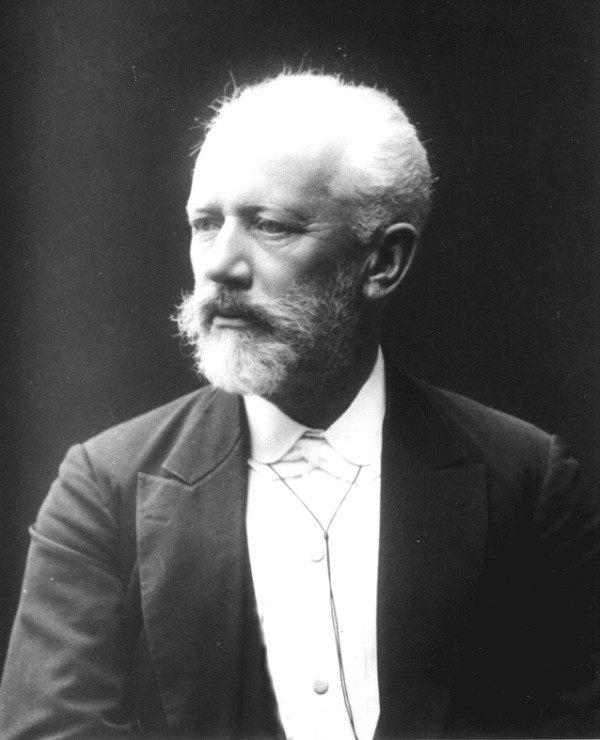
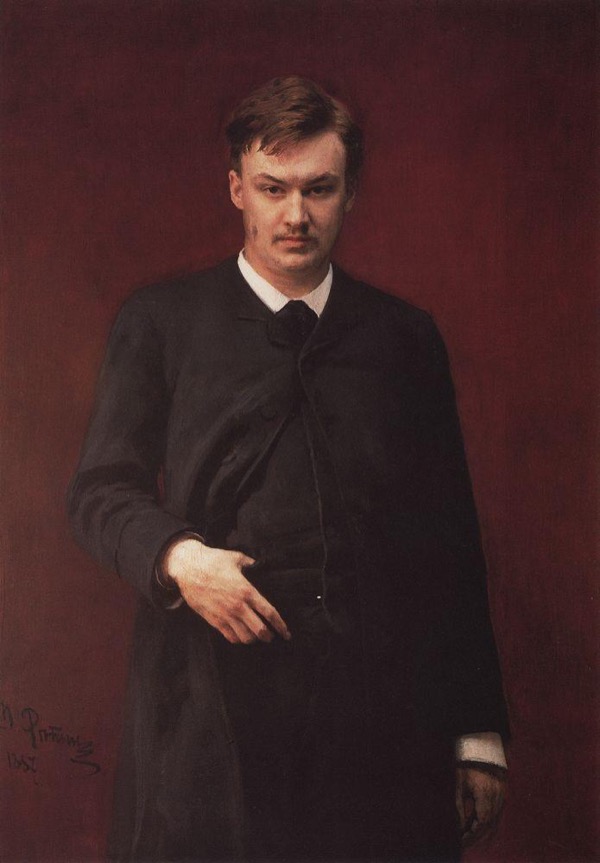
Pyotr Ilyich Tchaikovsky in 1893
In 1874, Tchaikovsky finished his first piano concerto. He wanted a virtuoso pianist to give him some feedback on the score, so he asked to meet with Nikolai Rubinstein over Christmas break, on 24 December 1874.
Tchaikovsky described what followed in an indignant 1878 letter to his benefactor Nadezhda von Meck:
We were invited to Albrecht’s house, and, before we went, Nicholai Rubinstein proposed I should meet him in one of the classrooms at the Conservatoire to go through the concerto.
I arrived with my manuscript, and Rubinstein and Hubert soon appeared…
I played the first movement. Never a word, never a single remark.
Do you know the awkward and ridiculous sensation of putting before a friend a meal which you have cooked yourself, which he eats, and holds his tongue? Oh, for a single word, for friendly abuse, for anything to break the silence! For God’s sake, say something!…
“Well?” I asked, and rose from the piano. Then a torrent broke from Rubinstein’s lips. Gentle at first, gathering volume as it proceeded, and finally bursting into the fury of a Jupiter-Tonans.
My concerto was worthless, absolutely unplayable; the passages so broken, so disconnected, so unskilfully written, that they could not even be improved; the work itself was bad, trivial, common; here and there I had stolen from other people; only one or two pages were worth anything; all the rest had better be destroyed, or entirely rewritten.
“For instance, that?” “And what meaning is there in this?” Here, the passages were caricatured on the piano. “And look there! Is it possible that anyone could?” etc., etc., etc.
But the chief thing I cannot reproduce: the tone in which all this was said. An independent witness of this scene must have concluded I was a talentless maniac, a scribbler with no notion of composing, who had ventured to lay his rubbish before a famous man…
I was not only astounded but deeply mortified by the whole scene. I require friendly counsel and criticism; I shall always be glad of it, but there was no trace of friendliness in the whole proceedings. It was a censure delivered in such a form that it cut me to the quick.
I left the room without a word and went upstairs. I could not have spoken from anger and agitation.
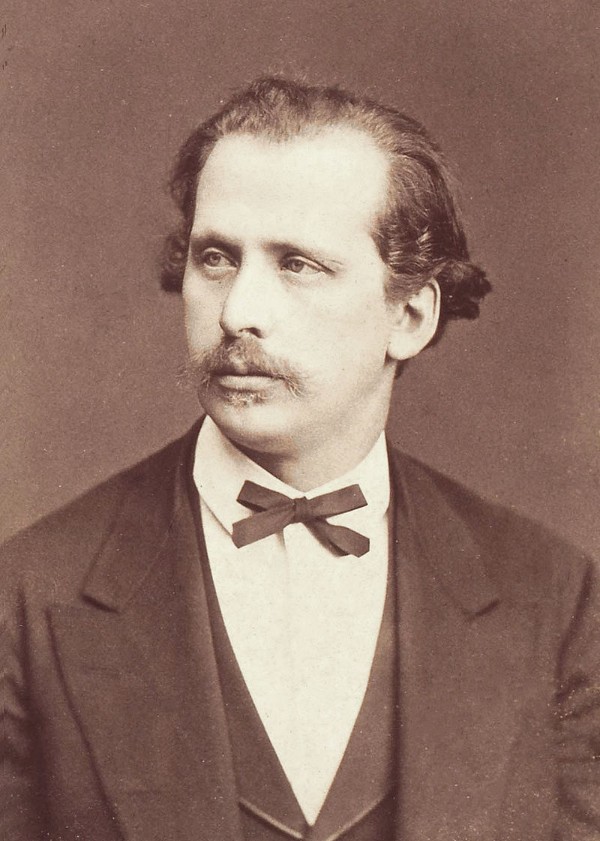
Nikolai Rubinstein
Nikolai Rubinstein may not have appreciated this particular Christmas gift, but generations of audiences have. Today, Tchaikovsky’s first piano concerto is one of the most popular pieces in the repertoire.
Tchaikovsky’s Piano Concerto No. 1
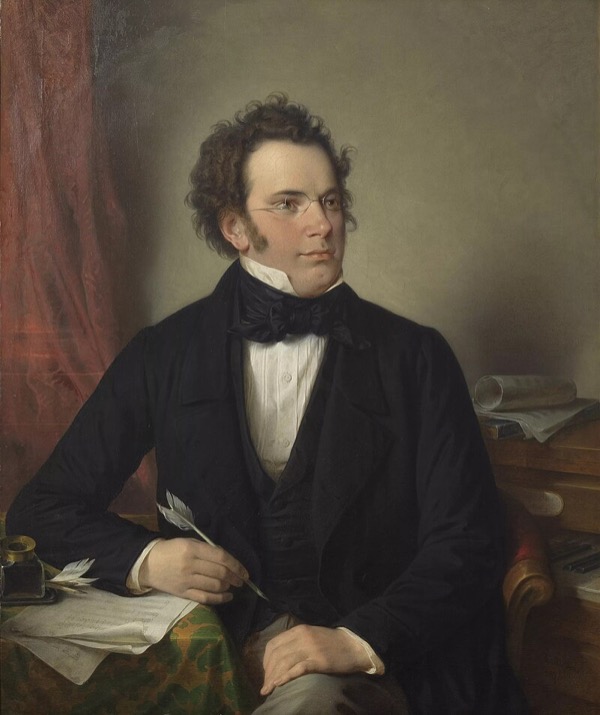
Robert & Clara Schumann’s Romantic Christmas – 1838
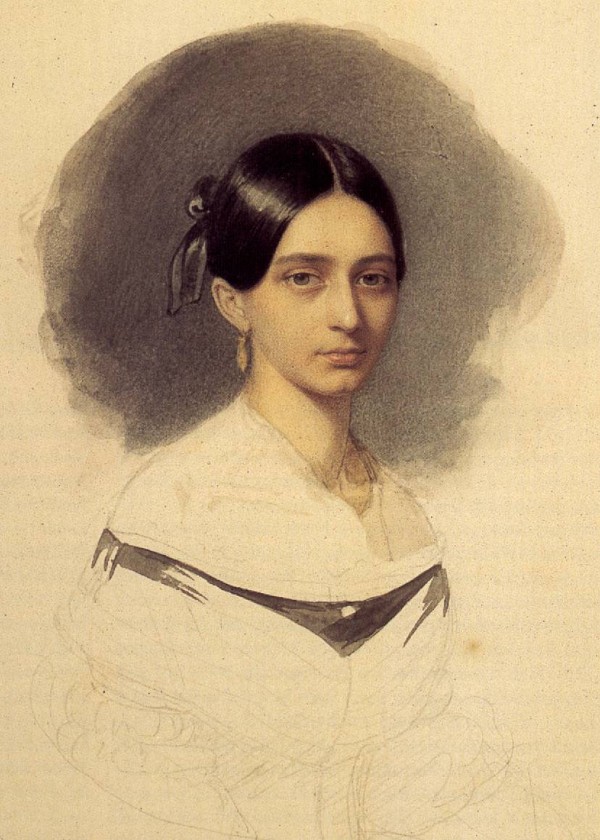
Clara Wieck Schumann
The year 1838 was a difficult one for Robert Schumann and his fiancée, nineteen-year-old pianist extraordinaire Clara Wieck.
Clara’s controlling father, Friedrich Wieck, had come down hard against their relationship, and they were forced to conduct their romance in secret.
Clara was faced with an impossible decision: would she disobey her beloved father’s orders or follow the man she fell in love with?
Ultimately, Clara chose Robert Schumann. While they waited for the emotional and legal barriers to their marriage to be removed, they wrote dozens of letters to each other.
This one dates from 18 December 1838, when Robert wrote to Clara from Vienna. He attached his Christmas present, a piano piece that was later included in his collection Bunte Blätter. (The couple frequently composed pieces for one another as gifts.)
Give you greeting, my darling girl. You have created an atmosphere of spring; I can see golden blossoms peeping forth all around me. In other words, your letters started me on composing, and I feel as if I should never stop. Here is my little Christmas gift. You will grasp its significance.
Robert Schumann’s Christmas gift, later published as Bunte Blätter, Op. 99, No. 1
He then remembered a Christmas from earlier in their relationship:
Do you remember Christmas Eve three years ago, and how passionately you embraced me? You seemed to be almost frightened at the way in which you let yourself go sometimes.
It is different now, for you are assured of my love and know me through and through. My own love, my faithful companion, my wife!
You will embrace me in quite another way two years hence, when I display your Christmas presents: a cap, various toys, and some new compositions. “How lucky I am to have such a very good husband!” you will exclaim again and again, while I try in vain to moderate your transports.
Then you will take me into your own room and show me mine: a miniature of yourself, a writing-board for composing, a sugar slipper – which I shall eat on the spot – and much besides, for you will outdo me in generosity. Don’t I know you of old!
Then, as we become quieter and the candles on the tree burn fainter, our kisses will breathe the prayer that time may make no change, but keep us united to the end.
My festival will be a sad one this year. I shall hum many a melody, and go to the window every now and then to look up at the glittering stars. In spirit, I shall spend the whole evening with you.
Amy Beach’s Christmas Gift For Her Aunt – 1880
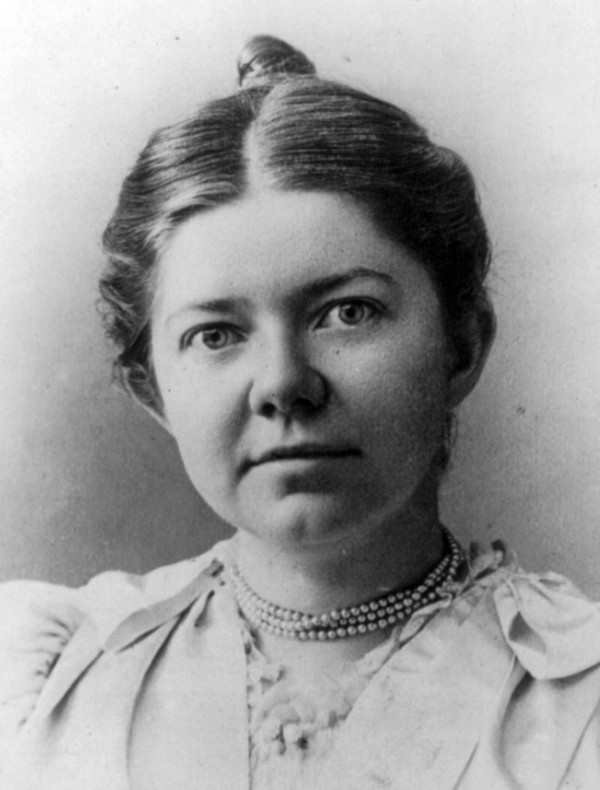
Amy Beach
Amy Beach was born Amy Cheney in 1867 in New Hampshire, and she was one of the most astonishing musical prodigies in American history.
She began composing waltzes in her head on walks when she was just four years old, then playing them on the piano once she got home.
Many years later, she recalled a story about Christmastime 1880, when she was just thirteen years old:
Christmas time was near and I, of course, was very short of pocket money. I said to my mother, “What shall I give Aunt Franc for Christmas?” Mother suggested I write her a song.
My aunt was a singer, so I wrote the little setting, copied it and sent her the manuscript for a Christmas gift. She sang it on many of her concert programs.
The song was “The Rainy Day”, with lyrics by Henry Wadsworth Longfellow, the great American poet whom Amy had recently played for in his home.
The work was published in 1883 and is still performed today. A lovely Christmas present indeed!
For more of the best in classical music, sign up for our E-Newsletter