When 18-year-old pianist Yunchan Lim stunned the world at the 2022 Van Cliburn Competition, audiences saw a once-in-a-generation talent whose playing combined a rare poetry with ferocious technique.
But Lim’s artistry didn’t come from nowhere. This is a musician who, despite his youth, has immersed himself in recordings of the great pianists of the past.
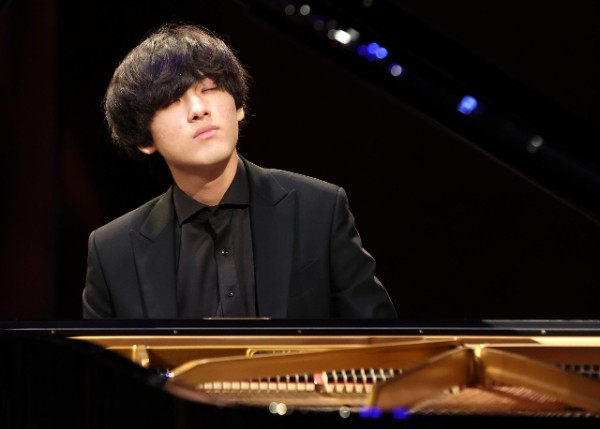
Yunchan Lim
His 2023 Apple Classical playlist, The Golden Age of Piano, is a fascinating window into the performers who shaped his imagination as a child.
From Rachmaninoff and Friedman to Landowska and Horowitz, Lim’s selections trace a century-long lineage of pianists who continue to inspire him to this day.
If you like his playing, chances are you’ll like something about the following pianists, too.
Sergei Rachmaninoff (1873–1943)
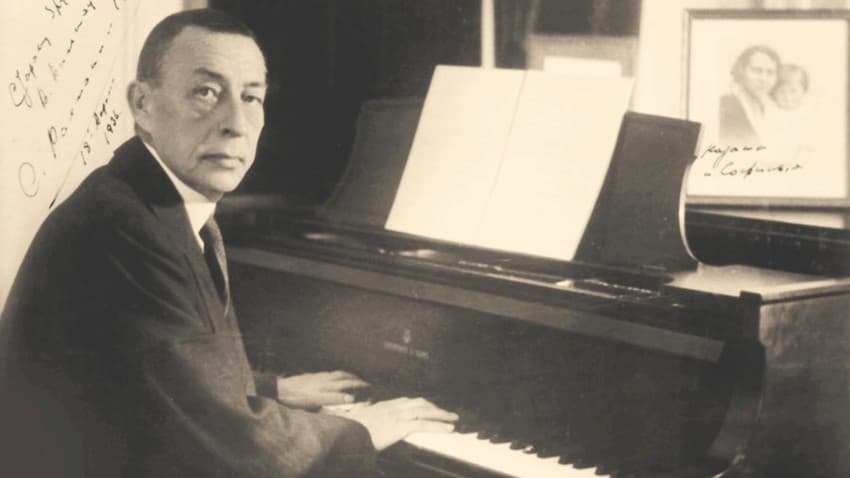
Sergei Rachmaninoff
Sergei Rachmaninoff is best known today as a composer, but during his lifetime, he was also internationally renowned as a virtuoso pianist.
Of course, Yunchan Lim won the Cliburn Competition by playing Rachmaninoff’s Third Piano Concerto. But he also venerates Rachmaninoff as a performer.
In an interview with Gramophone magazine, Lim described how the first piece he played in competition was Chopin’s Waltz in B-minor. His teacher recommended that he listen to recordings by Evgeny Kissin and Sergey Rachmaninoff: “Looking back now, it seems like starting my musical life with Kissin and Rachmaninoff was a divine intervention.”
He also told the Guardian in July 2024, “I was nine when I first heard the recording of [Rachmaninoff] playing Chopin’s Waltz. I was immediately struck by it. For me, he is the greatest, the most consummate musician.”
Interestingly, in his Apple Music playlist, Lim chose a piece of Rachmaninoff conducting: an arrangement of his Vocalise as played by the Philadelphia Orchestra.
Sergey Rachmaninov: 14 Songs, Op. 34: No. 14. Vocalise in E Minor (version for orchestra) (Philadelphia Orchestra; Sergey Rachmaninov, cond.)
Mark Hambourg (1879–1960)
Chopin’s Nocturne Op. 9, No. 2
Mark Hambourg was a Russian-born British pianist and a child prodigy who studied under the legendary teacher Theodor Leschetizky, who also taught Paderewski and Schnabel.
While studying in Vienna with Leschetizky, Hambourg impressed Brahms, and Ferruccio Busoni even called him “the greatest pianistic talent of his generation.”
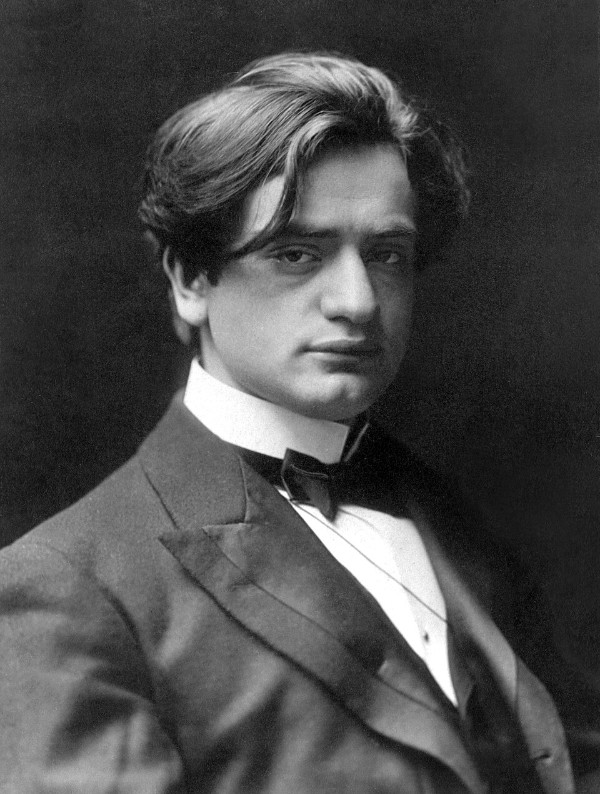
Perkins Studio: Mark Hambourg ca 1908 (Boston Public Library)
Hambourg was among the first pianists to embrace record-making, setting down his first performances in 1909.
One featured recording is Hambourg’s Chopin E-flat Nocturne, which, in the words of the Apple Classical curator, is played with a “naturalness seldom matched by any player today.”
The fast tempo is notable to modern listeners used to slower readings.
Wanda Landowska (1879–1959)
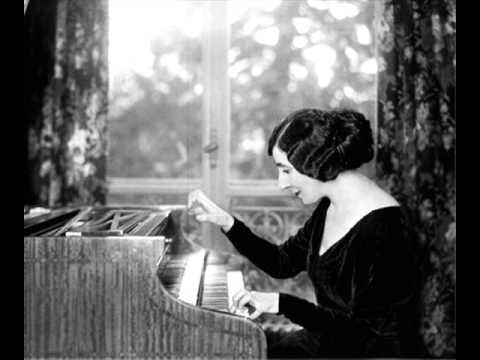
Wanda Landowska
Johann Sebastian Bach: Goldberg Variations, BWV 988 (Wanda Landowska, harpsichord)
Wanda Landowska was a Polish-French keyboard player who almost single-handedly revived the harpsichord during the twentieth century.
A visionary scholar/performer, she helped to spearhead the revival of Baroque music, proving that Bach and Scarlatti could enthrall modern audiences.
The Goldberg Variations have been on Lim’s mind for a long time. In 2022, while awaiting the results of the Cliburn, Lim admitted in an interview that he was more concerned about his upcoming Goldberg performances than the results of the competition, and in the spring of 2025, he gave a live performance of them at Carnegie Hall that was recorded for Decca and released in February 2026.
Let’s see if we hear Landowska’s influence on that record! Read and take a listen at “The Dialogue Between Bach and God: The Goldberg Variations, Yunchan Lim”
Read more about Landowska’s groundbreaking career, and why her interpretation of the Goldberg Variations is so celebrated.
Ignaz Friedman (1882–1948)
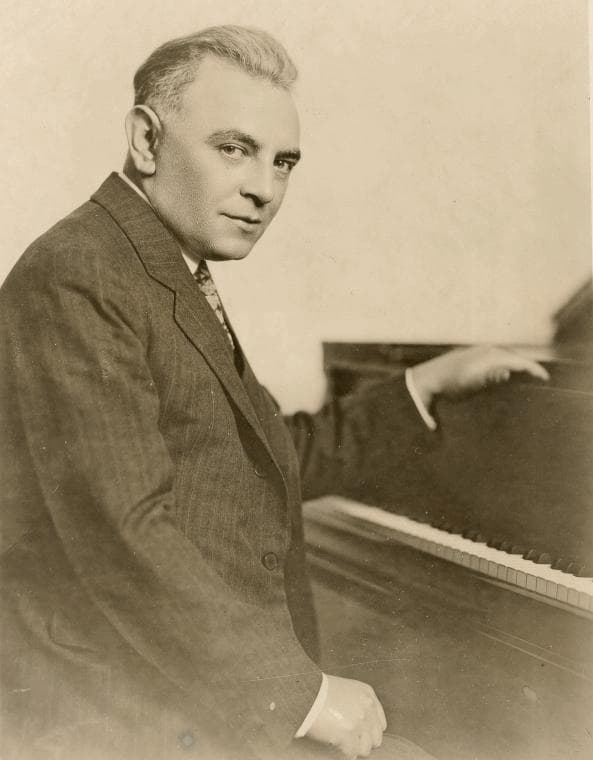
Ignaz Friedman
Fryderyk Chopin: 12 Etudes, Op. 10 (excerpts) (Ignaz Friedman, piano)
A student of Leschetizky, like Hambourg, Friedman was renowned for his sublime Chopin interpretations and singing tone.
Critics and colleagues (including Rachmaninoff) believed that Friedman was one of the greatest pianists of his generation.
Lim once told Gramophone magazine, “I first started listening to the great names when I was 13. My teacher recommended I listen to Friedman. I was walking home on my way back from school, and I was electrified. Shocked. I just stood there on the road, amazed by the freedom of the playing, and then felt almost remorseful about my own playing. That was the moment when I became determined to improve my playing.”
Read our article about why Horowitz thought Friedman’s technique was even better than his own.
Vladimir Sofronitsky (1901–1961)
Liszt’s transcription of Schubert’s Der Müller und der Bach
Vladimir Sofronitsky was a Soviet-Russian pianist best known for his inspired interpretations of Alexander Scriabin’s works. He even married Scriabin’s daughter!
He rarely performed outside the USSR, but within it he was revered for a mystical intensity at the keyboard – especially in repertoire by Scriabin and Chopin – that left his colleagues in awe.
Vladimir Sofronitsky
Lim is among those awed colleagues. His Instagram handle is actually “sofrolimsky”, a combination of Sofronitsky and Lim.
Vladimir Horowitz (1903–1989)
Liszt’s transcription of Wagner’s Liebestod from Tristan und Isolde
Vladimir Horowitz was a Russian-born American pianist often regarded as one of the greatest pianists of all time, and certainly one of the greatest of the twentieth century.
He was especially famous for his flawless technique and explosive dynamic range…as well as his struggles with his mental health and his multiple years-long breaks from the concert stage.
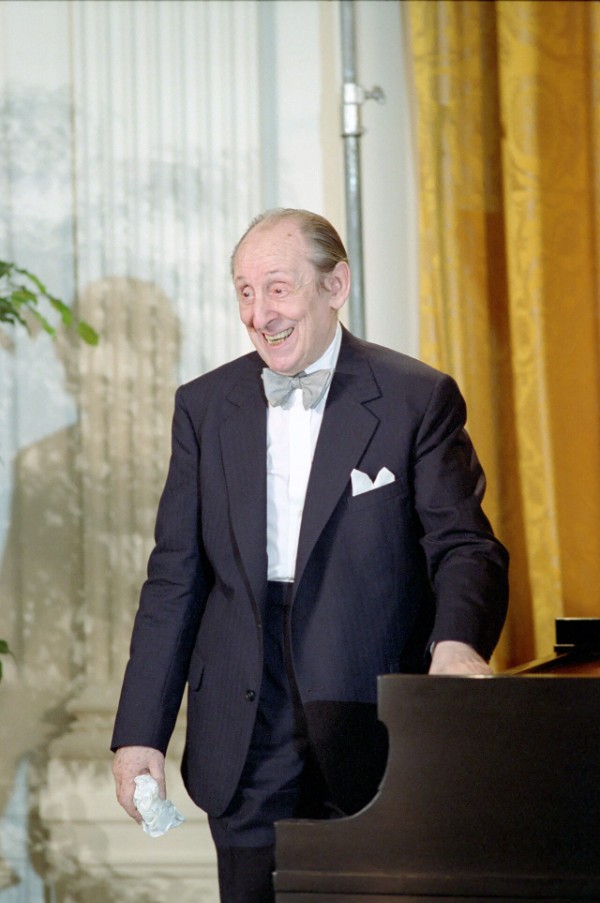
Vladimir Horowitz in 1986
Horowitz was especially renowned for his performances of Rachmaninoff’s third concerto, which, of course, is a work that Lim is also inextricably linked to.
Lim told an interviewer for the Chicago Symphony that over the course of his life, he has listened to Horowitz’s Rachmaninoff Third Concerto recording “three thousand times.” The author claims that it was said with “obvious exaggeration”…but who knows?
Read our article about Horowitz’s struggles with anxiety.
Sergey Rachmaninov: Piano Concerto No. 3 in D Minor, Op. 30 (Vladimir Horowitz, piano; RCA Victor Symphony Orchestra; Fritz Reiner, cond.)
Art Tatum (1909–1956)
Dvořák’s Humoresque
Art Tatum was an American jazz pianist universally hailed as one of the greatest technical virtuosos in the genre.
Nearly blind from childhood, Tatum developed an astonishing technique; his lightning-fast runs and inventive improvisations were unmatched in his era.
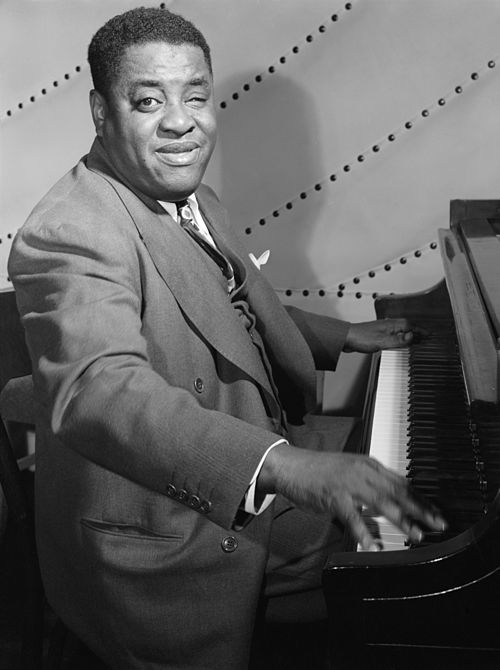
Art Tatum
He counted Horowitz himself among his many fans; Horowitz once reportedly said, “If Art Tatum took up classical music seriously, I’d quit my job the next day.”
Lim told the Guardian that he admires Tatum’s “touch” and “freedom of expression.”
Tatum is the only jazz performer featured on Lim’s Apple Classical playlist, but he’s featured twice.
Learn more about Tatum and Horowitz’s meeting.
Dinu Lipatti (1917–1950)
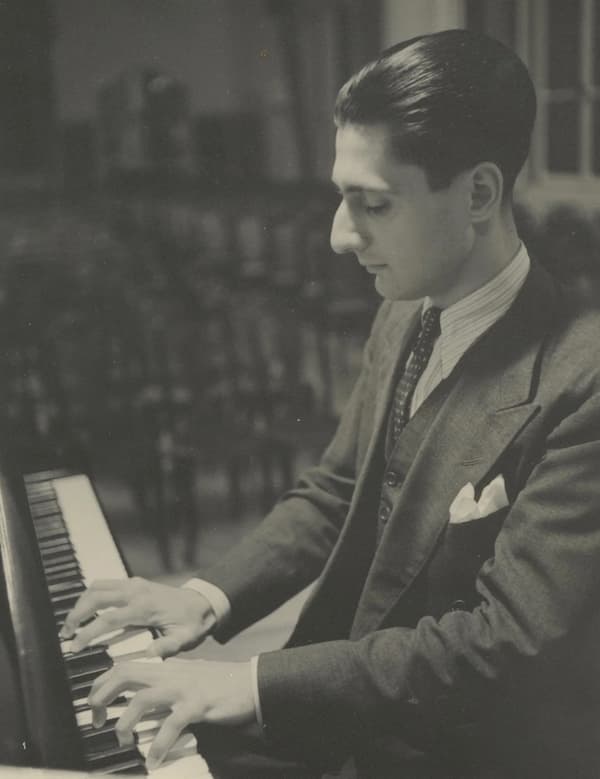
Dinu Lipatti in 1946
Franz Schubert: 4 Impromptus, Op. 90, D. 899 (excerpts) – No. 2 in E-Flat Major (Dinu Lipatti, piano)
Dinu Lipatti was a Romanian pianist whose career was cut tragically short due to Hodgkin’s disease.
Lipatti was celebrated for his luminous, unpretentious playing and clarity of tone.
A relentless perfectionist, he left only a small number of recordings behind. But the ones he did are revered, especially his Mozart and Chopin interpretations.
We explored some of Lipatti’s most famous recordings.
Stanislav Neuhaus (1927–1980)
Chopin’s Ballade No. 1
Stanislav Neuhaus was a Soviet-Russian pianist, the son of the great piano pedagogue Heinrich Neuhaus.
Though less famous internationally, Stanislav Neuhaus was highly respected within Moscow’s music world.
In fact, composer Aram Khachaturian once praised him as “the best pianist in the Moscow Conservatory.”
Youri Egorov (1954–1988)
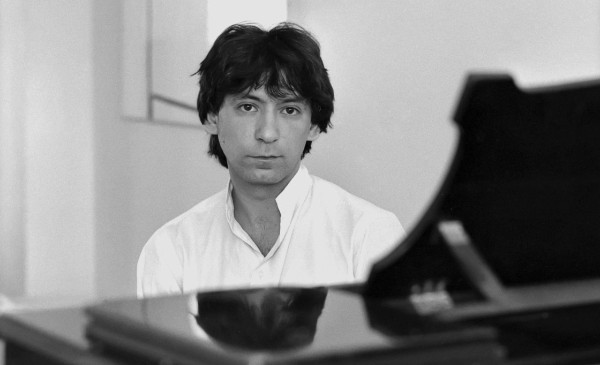
Youri Egorov
Fryderyk Chopin: 12 Etudes, Op. 25 – No. 23 in A Minor, Op. 25, No. 11, “Winter Wind” (Youri Egorov, piano)
Franz Schubert: 6 Moments musicaux, Op. 94, D. 780 – No. 2 in A-Flat Major: Andantino (Youri Egorov, piano)
Youri Egorov was a Soviet-born classical pianist who defected to the West in 1976 and settled in the Netherlands.
He had a successful – if brief – international career before his life was cut cruelly short by AIDS.
He was known for his poetic style of playing.
In January 2025, Lim posted an Instagram story sharing that he was reading the published version of Egorov’s diaries.
In the post, he quoted what Egorov once said about piano competitions: “Unfortunately, it is still the most popular way – the only way, maybe – to start your career as a musician. But if I had a lot of money, I would just open a school for talented students, and try to help them make it without competitions, to learn a big repertoire, and just start playing concerts. That’s my dream.”
It’s a bold quote for someone who jump-started his career by winning the Cliburn! In any case, it’s clear that Lim and Egorov share a deep artistic kinship with one another.
Learn more about Youri Egorov.
Conclusion
Yunchan Lim’s choices reveal an artist who reveres both discipline and freedom: the Old World grandeur of Rachmaninoff, the spontaneity of Friedman, the mystical fire of Sofronitsky, and the pure lyricism of Lipatti and Egorov. Even the inclusion of jazz legend Art Tatum reminds us that true virtuosity simply transcends genre.
Especially if you’re one of Lim’s many fans, this playlist is a great reminder to listen to and celebrate these old recordings. Doing so will be rewarding in its own right, but it will also help you to hear new things to love about Lim’s playing!
A documentary about the Golden Age influences on Lim’s Chopin recording
For more of the best in classical music, sign up for our E-Newsletter