
Over centuries of musical history, women composers have continually defied expectations to write all kinds of music…including piano concertos.
In fact, women have been writing piano concertos for the entire history of the genre.
Today, we’re looking at thirteen works written over 250 years, tracing the stories behind these incredible concertos by women.
Maria Teresa Agnesi Pinottini: Concerto per il cembalo (ca. 1750)
We know frustratingly little about Maria Teresa Agnesi Pinottini.
She was born in 1720 in Naples to an ambitious silk merchant, who would marry three times and father twenty-one children.
Maria Teresa’s older sister, Maria Gaetana Agnesi, was a polymath and mathematician. We can therefore extrapolate that women’s education was valued in the Agnesi household.
Large swaths of Agnesi’s career have yet to be researched, but she left behind a number of works, including harpsichord concertos, arias, cantatas, and at least four operas. Many of her works are currently lost.
She was widely respected by aristocratic and royal patrons, counting among them Empress Maria Theresa, who ruled Milan during Agnesi’s lifetime.
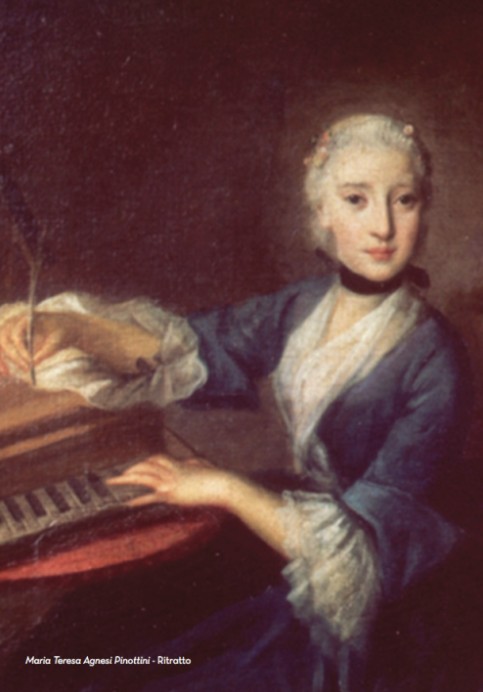
Maria Teresa Agnesi Pinottini
A Milanese scholar reported of her, “She composes with such ideas, taste, intelligence, and expression of words, with such innovative style, and with such purpose, she would surprise anyone.”
She married Pier Antonio Pinottini on June 13, 1752, but their marriage was plagued by financial problems. She died in Milan in 1795.
Marianna von Martines: Harpsichord Concerto in A-major (ca. 1772)
Marianna von Martines was born in Vienna in 1744.
The Martines apartment was in a building that at one point housed an Esterházy dowager (the mother of the brothers who would go on to hire Joseph Haydn), the librettist Metastasio, the singing teacher and composer Nicola Porpora, and, in the attic, a young Joseph Haydn himself!
Martines began taking keyboard lessons with Haydn when she was a little girl. She also studied voice with Porpora.
She ultimately branched out to studying composition with well-known opera composer Johann Adolph Hasse and Imperial court composer Giuseppe Bonno.
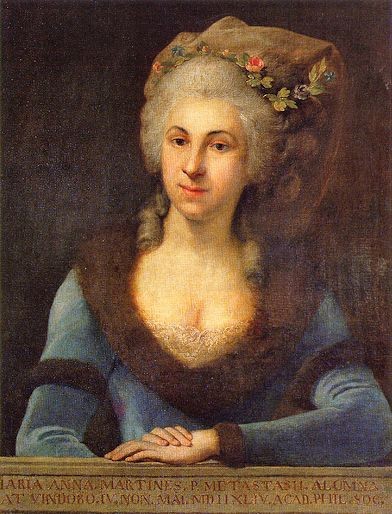
Marianna Martines
Like Agnesi, she became a favourite of Maria Theresa. Her reputation in Vienna was high, and her works were performed regularly. She is even reported to have played four-hand piano with Mozart.
Caroline Boissier-Butini: Piano Concerto No. 6, “The Swiss” (ca. 1810?)
Caroline Boissier-Butini was born to a wealthy family in Geneva in 1786. Her father wasn’t musical himself, but he encouraged her passion for music.
In her writings, she only mentions one teacher, François-Charles Mansui, who was just a year older than her and only lived in Geneva for a short time. It seems likely that, like many women musicians of her era, she was largely self-taught.
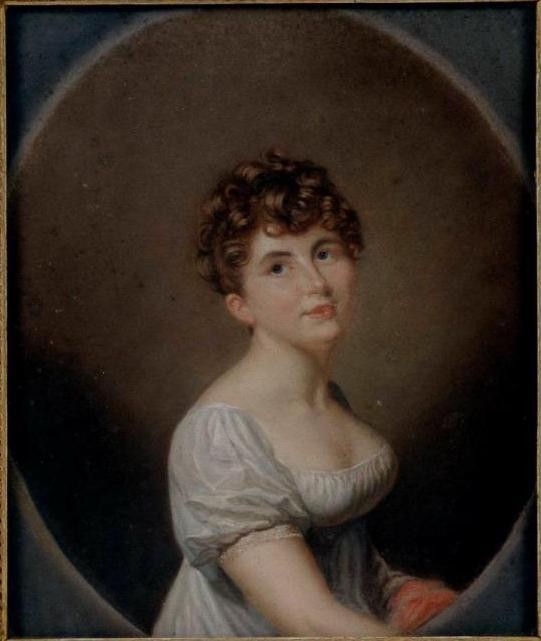
Caroline Boissier-Butini
Perhaps to help make up for it, she traveled widely to hear the great artists of her day.
Her repertoire was large, spanning from the music of Scarlatti to her cutting-edge contemporaries.
When she was twenty-two, she married Auguste Boissier, who was an amateur violinist and who, like her father, supported her music-making. The couple had two children.
She died in 1836 in Geneva, having written a variety of works for keyboard, including six piano concertos.
Clara Wieck Schumann: Piano Concerto, op. 7 (1832-33)
Clara Wieck was born in 1819 in Leipzig, the daughter of a music shop owner and piano teacher named Friedrich Wieck, who trained her from birth to become a great virtuoso pianist.
She made her debut at the Gewandhaus in Leipzig at the age of nine. That same year, she met a young man named Robert Schumann, who was so impressed by her playing that he decided to room with Wieck so he could study with him.
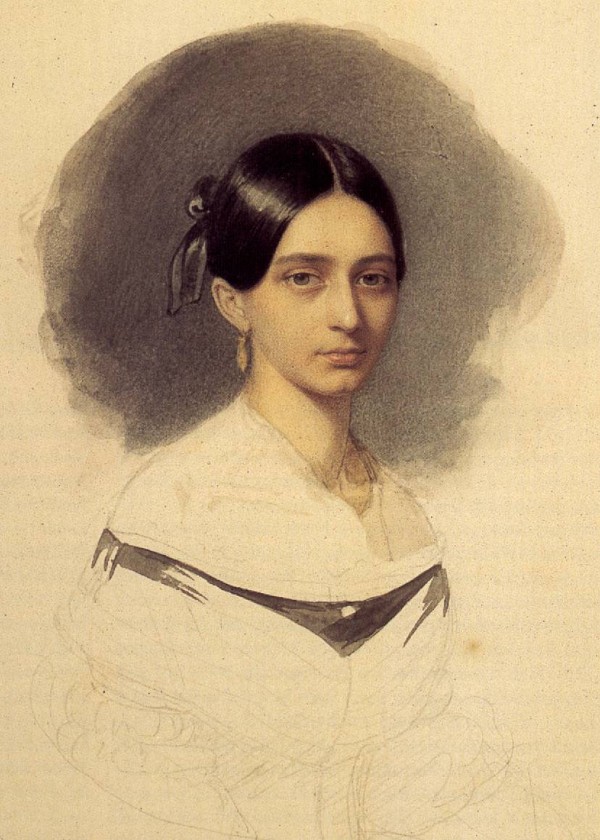
Clara Wieck Schumann
Her opus one was a set of four polonaises for piano, published in 1831, the year she turned twelve.
She began her concerto in January 1833. She revised the work several times, with the input of Robert, who was rapidly becoming a valued creative partner.
Her concerto was completed on her sixteenth birthday. It was premiered in November 1835 under the baton of Felix Mendelssohn.
Emilie Mayer: Piano Concerto in B-major (ca. 1850)
Emilie Mayer was born in a small German town in 1812.
She began studying piano when she was five. She wrote later, “After a few lessons… I composed variations, dances, little rondos, etc.”
Her mother died when she was two, and her father died when she was twenty-eight. After her father’s death, she decided to devote herself to studying music, so she moved to the nearby city of Szczecin in present-day Poland to pursue her dreams.
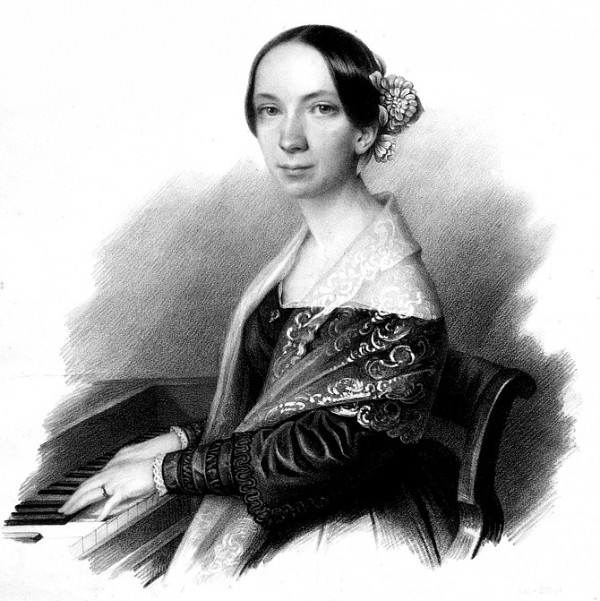
Emilie Mayer
In 1847, she moved to Berlin to continue her studies. She began writing and publishing and overseeing performances of large-scale works, including symphonies and this piano concerto.
Marie Jaëll: Piano Concerto No. 2 in C-minor (1884)
Marie Trautmann Jaëll was born in 1846 in Steinseltz, France.
She began studying piano when she was six. Within a year, she entered the prestigious piano studio of Ignaz Moscheles, who had taught Felix Mendelssohn and his sister Fanny.
At ten, she began studying at the Paris Conservatoire. She won a first prize in piano after just four months of study.
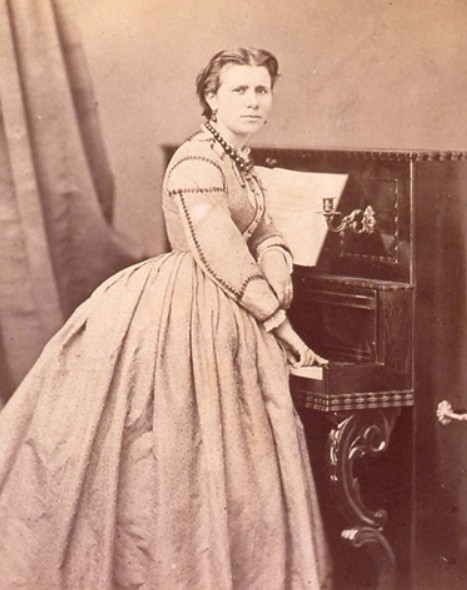
Marie Jaëll
In 1866, at the age of twenty, she married another piano virtuoso named Alfred Jaëll, who introduced his wife to Franz Liszt. Liszt became a major inspiration for Marie.
After her husband died in 1882, leaving her a thirty-six-year-old widow, she went to Weimar to study with Liszt and devote herself to learning composition.
Her second concerto dates from this frantic, emotionally turbulent time, and is a remarkable example of a piano concerto from the height of the Romantic Era.
Amy Beach: Piano Concerto in C-sharp minor, op. 45 (1899)
Amy Beach was born in New Hampshire in 1867. She was an astonishing prodigy, but her family decided not to send her to Europe to pursue advanced musical studies. Instead, at eighteen, she married a doctor twice her age.
It was unseemly for a married woman to perform publicly for money, so during her marriage, she focused on composition instead. Remarkably, she was almost entirely self-taught as a composer.
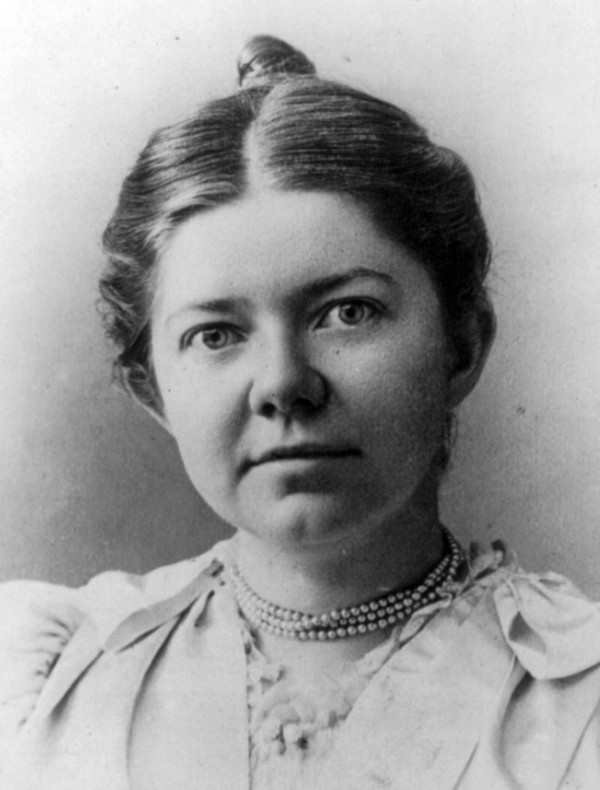
Amy Beach
In 1896, her Gaelic Symphony was premiered by the Boston Symphony, making it the first symphony by a woman to be played by a major American orchestra.
In 1899, she followed that triumph up with a piano concerto.
Initially, the concerto received a cooler reception than her symphony, but she played it often anyway. She toured it extensively after the 1910 death of her husband, a loss that enabled her to tour more easily.
Dora Pejačević: Piano Concerto in G Minor, Op.33 (1913)
Countess Dora Pejačević was born to a wealthy noble Croatian family in 1885. Education, and especially self-education, was vitally important to her throughout her life.
She was interested in politics, especially feminism and socialism. She became acutely aware of the advantages of her family’s wealth, writing:
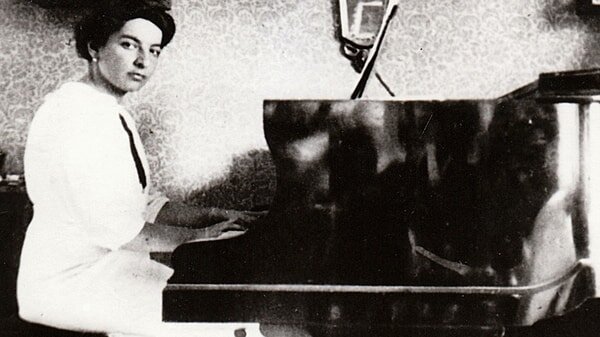
Dora Pejačević
I simply cannot understand how people can live without work — and how many of them do, especially the higher aristocracy… I despise them because of this.
She began composing at the age of twelve, and studied in cities across Europe, but she never studied for an extended period of time with one teacher. The vast majority of her musical knowledge came through self-study.
In 1913, when she was twenty-eight, she wrote this piano concerto. She was the first person, male or female, from Croatia to write a concerto.
Germaine Tailleferre: Piano Concerto (1924)
Marcelle Germaine Taillefesse was born just outside of Paris in 1892. After her father refused to support her musical studies, she changed her name to Germaine Tailleferre.
She began her piano studies with her mother, then enrolled at the Paris Conservatoire.
There she met and befriended several of her peers, creating an informal group of daring young composers known as Les Six. They became central figures in the Parisian music world of the 1920s.
In 1923, she worked with Maurice Ravel, who encouraged her to apply for the prestigious Prix de Rome.
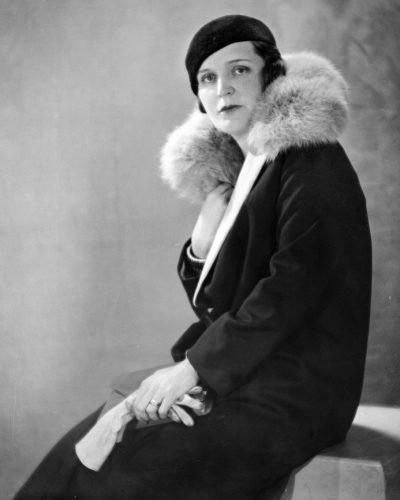
Germaine Tailleferre
However, the following year, she married an American cartoonist named Ralph Barton and moved to America instead.
He didn’t like that his wife was a professional composer. His rage toward her ran so deep that when he found out she was pregnant, he threatened to shoot her stomach to induce an abortion. (She would later miscarry.)
Fortunately, she returned to France and to music and divorced Barton.
This piano concerto was written right before her ill-fated marriage. It is written in a simple, elegant, carefree neoclassical style that was in vogue after the horrors of World War I.
Florence Price: Piano Concerto In One Movement (1934)
Florence Price was born in Little Rock, Arkansas, in 1887, to a mixed-race family.
She began her music studies with her piano teacher mother, gave her first public performance at the age of four, and published her first composition at eleven.
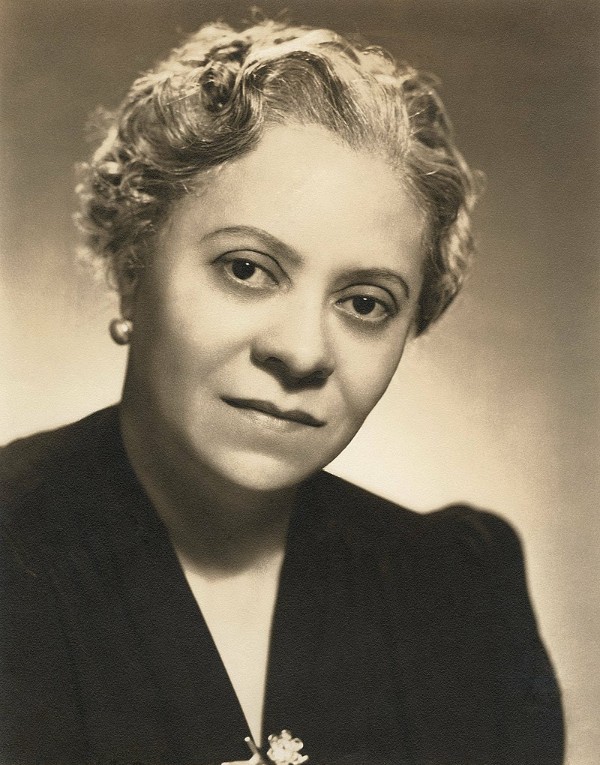
Florence Price
She attended the New England Conservatory of Music in Boston, claiming Mexican ancestry to try to blunt the impact of racism.
During the terrorism of Jim Crow, she and her family moved north to Chicago. She divorced her husband in 1931 and devoted herself to making a living in music.
In 1932, her first symphony won a Wanamaker Foundation Award. Despite the extraordinary quality of her work, Price struggled to get conductors to pay attention to her work due to her race and gender. A patron underwrote a performance of the symphony by the Chicago Symphony in 1933, making her the first Black woman to have her work performed by a major American orchestra.
Her one-movement piano concerto from 1934 combines virtuoso technique with soaring melodies and deeply felt emotion, colored by a distinctly American style.
Zara Levina: Piano Concerto No. 1 (1942)
Zara Levina was born in 1906 in Simferopol, in present-day Crimea.
She studied piano and composition at both the Odessa Conservatory and the St. Petersburg Conservatory, graduating from the latter in 1932 with a gold medal.
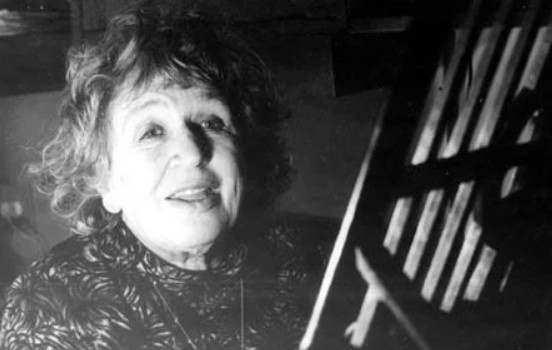
Zara Levina
During World War II, in 1942, when she was thirty-six, she wrote her first piano concerto. It’s a striking blend of the romanticism of Rachmaninoff and the biting sarcasm of Shostakovich.
Here’s a mini-documentary about the recording of this concerto:
Zara Levina: The Piano Concertos
Joan Tower: Piano Concerto (1985)
Joan Tower was born in New Rochelle, New York, in 1938. Her family moved to Bolivia when she was nine. In Bolivia, she began playing percussion, then piano.
She finished her musical training in the United States at Bennington College in Vermont and Columbia University in New York, where she graduated in 1968.
During the 1970s, she wrote a series of chamber music works for the Da Capo Chamber Players, in which she played piano.
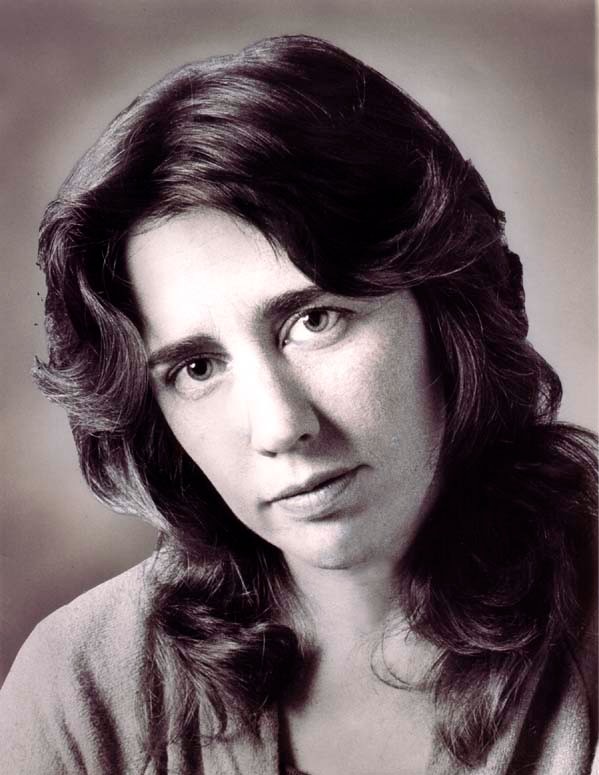
Joan Tower
In 1981, she wrote her first orchestral work, Sequoia. This piano concerto followed four years later.
Her concerto is subtitled “Homage to Beethoven.” It takes ideas from and even occasionally quotes a few of Beethoven’s piano sonatas.
Unsuk Chin: Piano Concerto (1997)
Unsuk Chin was born in 1961 in Seoul, South Korea. She studied composition in Seoul and Hamburg, Germany, where she studied under György Ligeti.
Her piano concerto has four movements, each “a very distinctive character,” according to the composer.
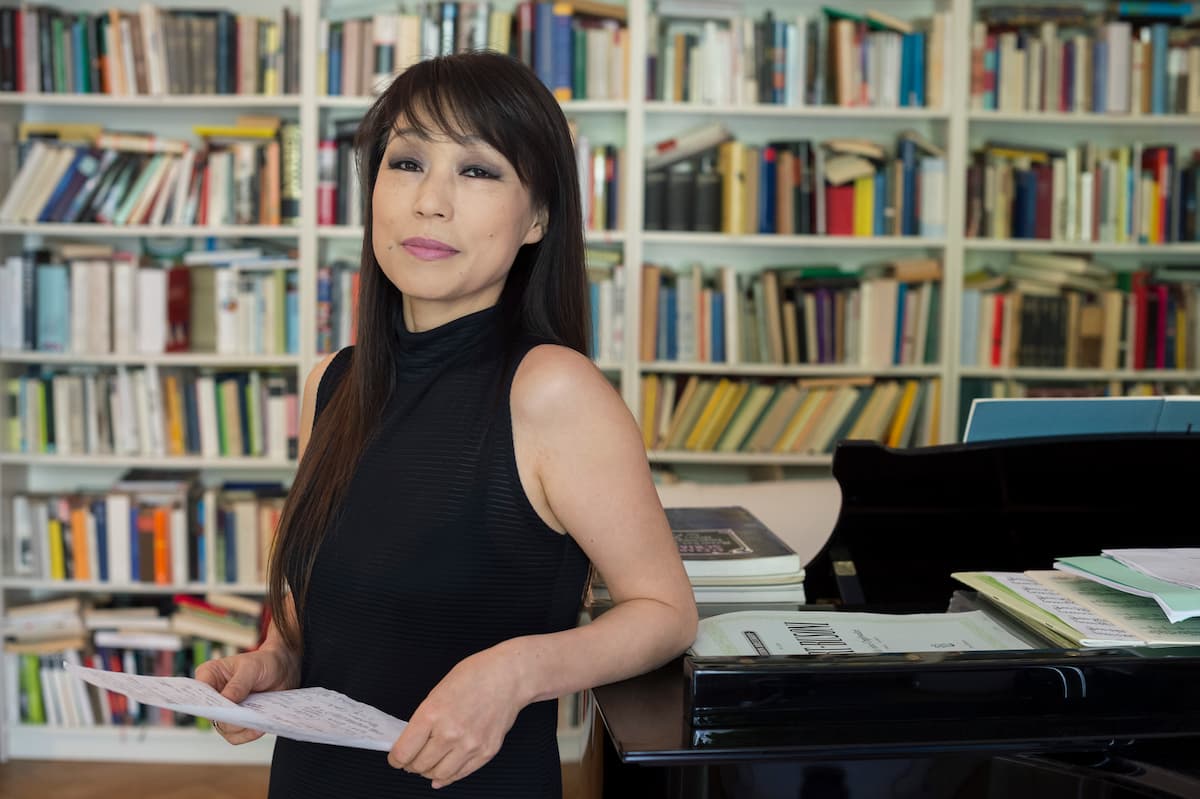
Unsuk Chin © Priska Ketterer
She writes:
Following my first three etudes for piano, this is my second major work for piano – an instrument which has fascinated me since the age of four.
This composition reflects the influences of every epoch in piano literature – from Scarlatti to the present.
I wanted to emphasise particularly the vitality, kinetic and virtuoso aspects – in short, the playful side – of the piano.
The solo part shows no evidence of the Romantic tradition, where the brilliant solo line is merely accompanied by the orchestra. Here, every orchestral part has an important function.
For more of the best in classical music, sign up for our E-Newsletter







Thank you. I got particularly interested in the last two and am having a rather serious listening session.
Marie Jaëll’s piano concerti are incredible. I rate her Piano concerto in D minor higher. It’s so dramatic!