As we noted in part 1 of our overview of the best memoirs of the great composers, music isn’t the only kind of creative work that composers can make.
Many have written autobiographies or memoirs, or sat for interviews that became biographies ostensibly in their own words (we’re exploring one such example today).
These written works offer fascinating glimpses into composers’ personalities and priorities.
Today, we’re delving into four works by four composers, noting why you might want to put their writing on your reading list.
Ethel Smyth (1858–1944)
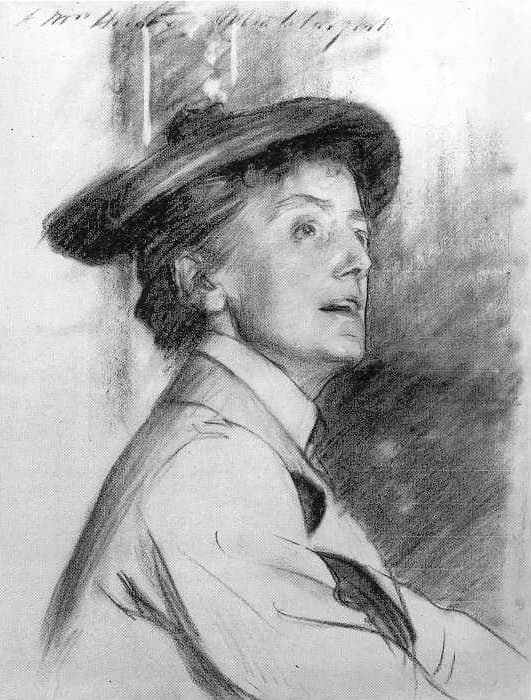
John Singer Sargent: Dame Ethel Smyth
Ethel Smyth’s autobiography, Impressions That Remained (1919), charts her career as a woman composer in a male-dominated field.
Despite its age, her memoir feels incredibly modern and immediate. Tonally, it manages to be both funny and heartbreaking in turn.
Ethel Smyth: Sonata in A minor, Op. 5 – I. Allegro moderato
In it, Smyth is strikingly open about her sapphic leanings. One of the most emotional parts of the book charts her intense and romantic relationship with married musician Elisabeth von Herzogenberg, the woman who was also Brahms’s crush and musical confidant in the later part of his life.
At the time I first met her, she was twenty-nine, not really beautiful but better than beautiful, at once dazzling and bewitching; the fairest of skins, fine-spun, wavy golden hair, curious, arresting greenish-brown eyes, and a very noble, rather low forehead, behind which you knew there must be an exceptional brain.
I never saw a more beautiful neck and shoulders; so marvellously white were they that on the very rare occasions on which the world had a chance of viewing them it was apt to stare — thereby greatly disconcerting their owner, whose modesty was of the type that used to be called maidenly. In fact, the great problem was to prevent her swathing them in chiffon.
Smyth also delves into her involvement in the women’s suffrage movement, exploring the intersection of her development as an artist and her development as an activist.
All in all, Impressions That Remained offers a colourful firsthand perspective on what life was like for talented women in the late 19th and early 20th centuries.
Dmitri Shostakovich (1906–1975)
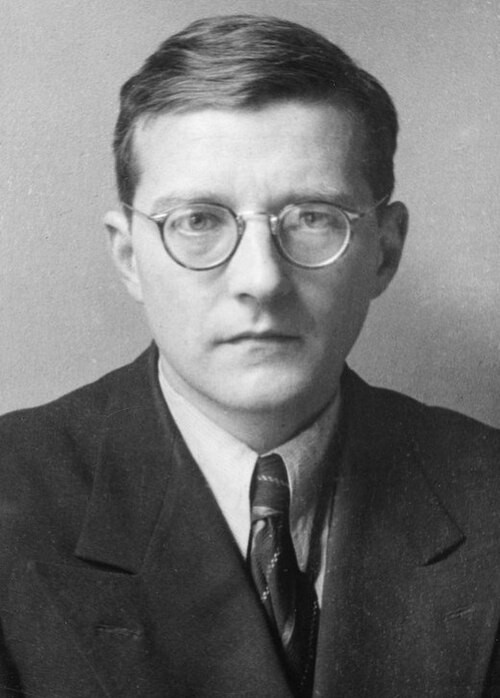
Dmitry Shostakovich, 1942
Dmitri Shostakovich never wrote a traditional autobiography, but the book Testimony, compiled by musicologist Solomon Volkov and published in 1979, is often presented as the memoir he never felt free to write.
Volkov claimed that between 1971 and 1974, he and Shostakovich met regularly to talk. Volkov would transcribe their conversations, then return to Shostakovich with the transcription to verify its accuracy.
Unfortunately, many original notes from the project have been lost, making it difficult, if not outright irresponsible, to assign the ideas in it to Shostakovich definitively.
However, taken at face value, Testimony portrays a composer struggling to create great art under the oppressive thumb of Soviet politicians.
Dmitri Shostakovich: Symphony No. 5
Even if the provenance of Testimony means it can’t be unquestioningly trusted, it’s also important to a modern understanding of Shostakovich. The book deeply impacted listeners’ and musicians’ ideas surrounding his life, as well as the meaning of his music.
Nowadays, it’s impossible to interpret Shostakovich without also delving into questions about the composer’s politics: a change we owe in part to Testimony.
Igor Stravinsky (1882–1971)
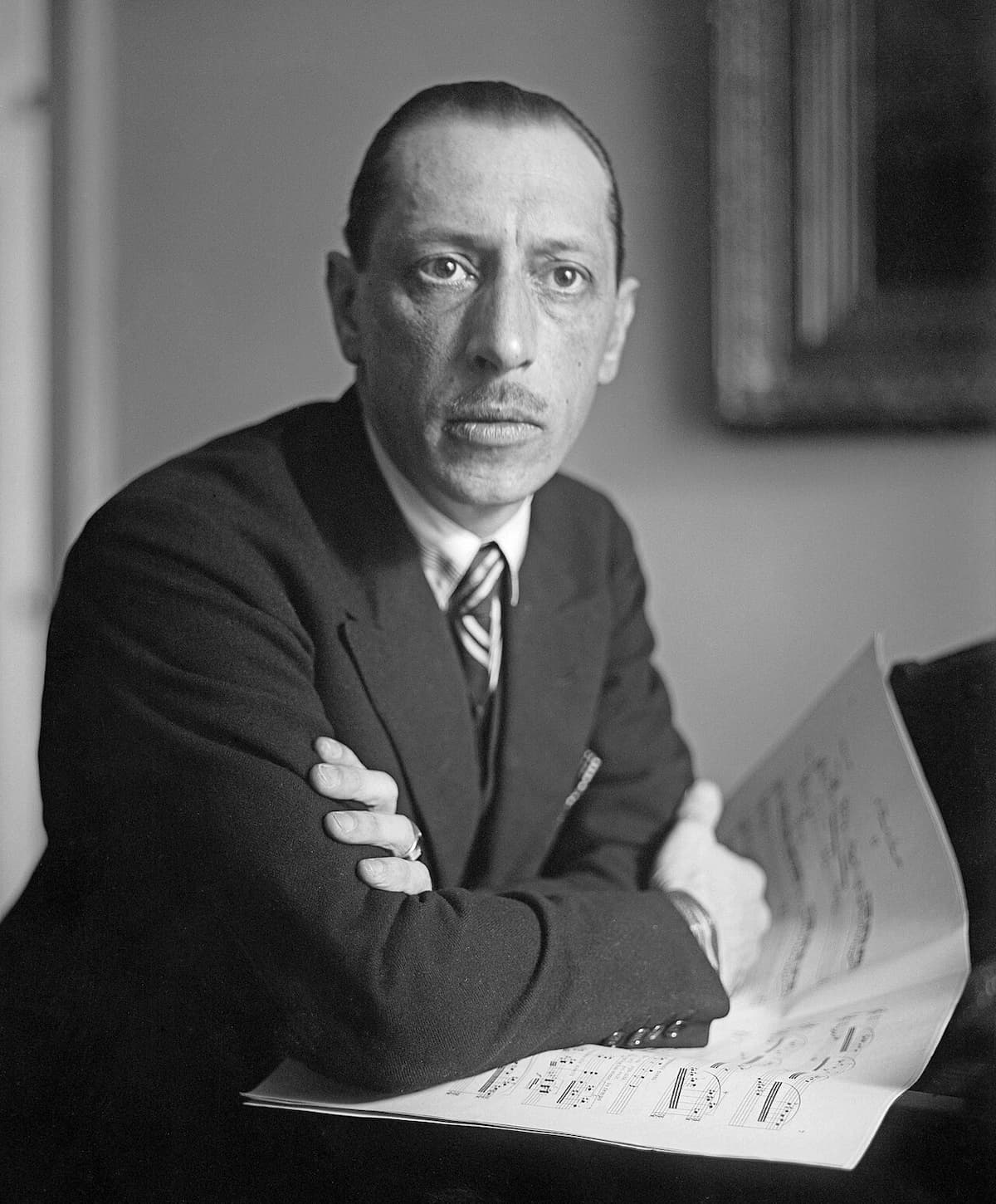
Igor Stravinsky
Igor Stravinsky’s slender autobiography, Igor Stravinsky: An Autobiography (1936), was published when the composer was 54.
Igor Stravinsky: Rite of Spring
The foreword is straightforward, starting with these matter-of-fact words:
The aim of this volume is to set down a few recollections connected with various periods of my life. It is equally intended for those interested in my music and in myself.
Rather, therefore, than a biography, it will be a simple account of important events side by side with facts of minor consequence: both, however, have a certain significance for me, and I wish to relate them according to the dictates of my memory.
As the tone of that opening suggests, Stravinsky goes on to recount his life up until the early 1930s, prioritising recounting his intellectual and artistic development, as opposed to exploring his inner emotional life, like Berlioz and Wagner had so famously done.
He also discusses his artistic philosophy, his collaborations with figures like Diaghilev, and his thoughts on the role of the composer in modern society.
John Adams (b. 1947)
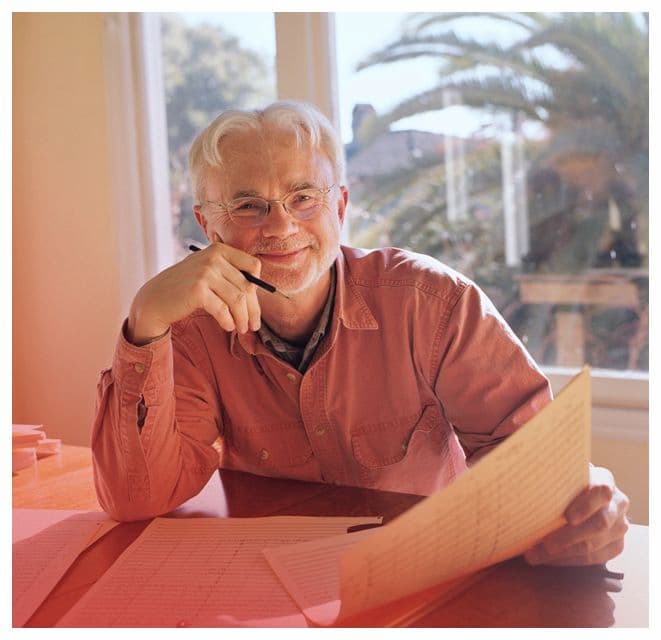
John Adams
John Adams’ 2008 memoir, Hallelujah Junction: Composing an American Life, charts his life as one of America’s most famous contemporary composers.
The phrase “Hallelujah Junction” is a reference to Adams’s 1996 work Hallelujah Junction for two pianos, a piece that in turn was named after a small truck stop by the California/Nevada border, near where Adams has a cabin.
John Adams: Hallelujah Junction
In the memoir version of Hallelujah Junction, Adams writes about his upbringing, his education at Harvard, and the growth of his career.
He also discusses his major works, including the operas Nixon in China and Doctor Atomic, and explores the challenges of balancing innovation with accessibility in modern classical music.
Reviewer Michael Upchurch wrote for the Seattle Times:
It’s the range of Adams’s musical appetites and intellectual hunger that leaves the strongest impression. This is a man who swallows whole new worlds with every fresh project he takes on – and makes his discoveries new for the rest of us.
Meanwhile, the New York Times Review of Books wrote:
Hallelujah Junction stands…among the most readably incisive autobiographies of major musical figures.
In short, Hallelujah Junction has taken its place in the canon of composer memoirs.
Conclusion
The autobiographies offer invaluable insight into these composers’ lives, providing us with understanding of the complex personal and political forces that shape their music.
All of these books help us to see the human side of the great composers. That in turn inevitably enriches our appreciation of their music.
We hope you pick one out, pick one up, and enjoy!
For more of the best in classical music, sign up for our E-Newsletter