Why do classical musicians play from memory, and when did the tradition begin?
Believe it or not, during the eighteenth and early nineteenth centuries, playing from memory was actually considered bad manners.
Most performers read from sheet music, and even great composers discouraged their students from memorising.
To play without a score seemed arrogant, even disrespectful to the composer.
Yet within a few decades, the practice had taken hold and completely transformed concert culture.
So what exactly changed?
Today, we’re looking at the fascinating history of musical memorisation, from the era when it was taboo to the moment it became a prerequisite for high-achieving soloists.
Memorisation: The Forbidden Musical Skill
During the eighteenth and early nineteenth centuries, performers typically read off sheet music while giving concerts. In fact, to do otherwise could be construed as being disrespectful.
Composers often discouraged performers from memorising their works.
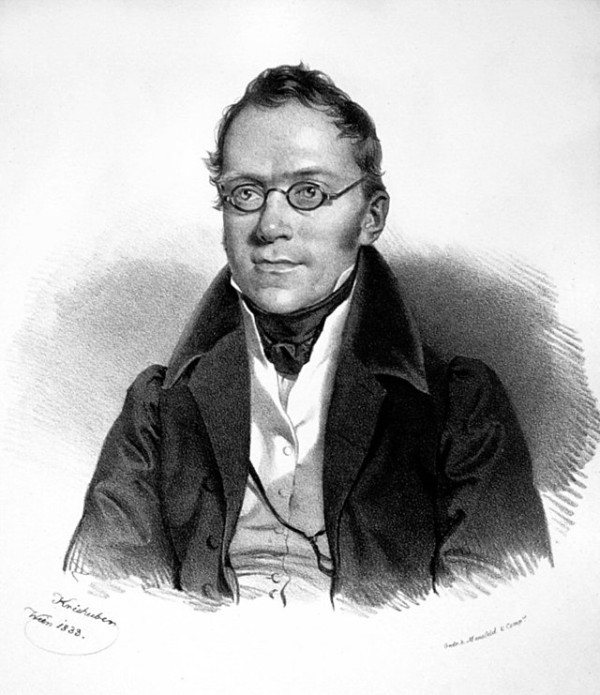
Carl Czerny
Beethoven’s piano student Carl Czerny memorised his teacher’s compositions, but Beethoven himself protested, fearing he’d get sloppy about the composer’s instructions in the manuscript.
Chopin had similar misgivings. Once, a student came to him with one of his nocturnes memorised, sparking his irritation.
At the same time, talented musicians often did memorise; they just stayed quiet about it, or even sought to obscure their accomplishment.
Once, while performing one of his piano trios in London, Felix Mendelssohn arrived at the concert only to discover his piano score was missing. He shrugged it off; he had the part memorised. But he did ask for another random book of music to prop up during the performance, so the audience would think he was reading the notes.
Mendelssohn’s Piano Trio No. 1
Even Franz Liszt, the figure frequently credited with popularising performing by memory, often used sheet music during performances, even though he could play by heart.
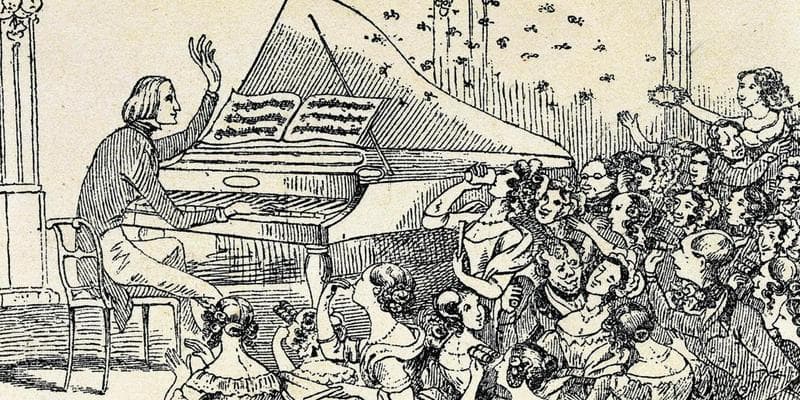
Theodor Hosemann’s 1846 caricature of Franz Liszt conducting at the piano (Public Domain)
Performing your own works with sheet music was a signifier that the work in question was a thoughtfully crafted work of art and not a spur-of-the-moment improvisation.
Simultaneously, performing others’ works with sheet music was a signifier of respect: that you cared enough about the composer’s intentions to have them always in front of you.
For years, to do otherwise was seen as indulging in unseemly self-important showmanship.
Clara Wieck Schumann’s Impact on Memorisation
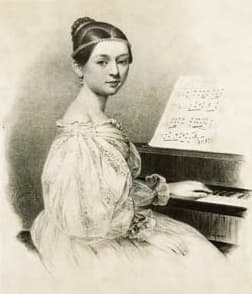
Clara Wieck at 15 years old
One of the first performers to buck this trend was the piano prodigy Clara Wieck, later Clara Schumann, born in 1819, who began her career in earnest in the 1830s.
Clara’s father and only teacher, Friedrich Wieck, was a self-taught pianist who developed his ideas about piano pedagogy in a bit of a vacuum. He had trained Clara from an early age to memorise what she played so she could concentrate on expression.
When she began touring as a child, journalists and audiences noted her habit. Not everyone was impressed.
Bettina von Arnim – a composer, author, and friend of Beethoven – reportedly said of Clara Wieck in 1837, the year she turned eighteen, “How pretentiously she seats herself at the piano, and without notes, too.”
Clara Wieck Schumann’s Scherzo No. 2
That said, Clara Schumann dreaded memory slips. Decades later, she wrote to Brahms that, despite her anxiety, “I cannot make the decision to play from the music; it always seems to me that it is almost as though my wings were clipped [when I do so]…”
Clara began her career playing a mix of her own youthful compositions; after she married at the age of 21, she focused more on interpreting the music of others, and by the time her husband died when she was 37, she’d given up composing entirely.
Perhaps this gradual transition in repertoire made her memorisation more acceptable than if she’d begun her career only playing others’ works.
Niccolò Paganini: Memorisation as Satanic Gift
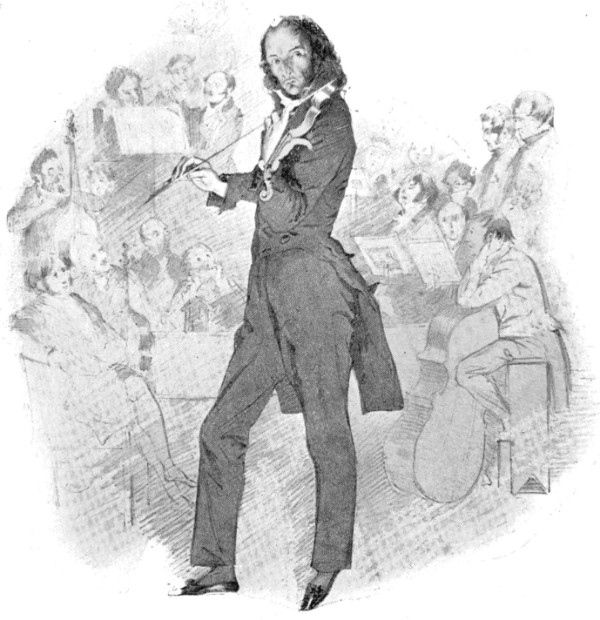
Niccolò Paganini
Another Romantic Era giant who played by heart onstage was Italian violin virtuoso Niccolò Paganini.
Paganini was not only a master of the bow; he was also a master of PR. He very consciously leaned into his devilish look and otherworldly technique, said to have been bestowed upon him by Satan himself.
One of the ways he could play into the myth was by playing his boundary-breaking violin compositions by heart.
Doing so solidified the impression of his having an invisible connection to unseen forces like demons, devils, and the like.
It also didn’t hurt that the works he specialised in – violin showpieces – are nearly impossible to play while simultaneously choreographing sheet music page turns.
In Paganini’s case, memorising made sense for multiple reasons, and that preference helped to make the practice more acceptable.
Paganini’s Caprice No. 24
Franz Liszt: The Father of Memorisation
The third performer in the trio of memorisers was pianist Franz Liszt, whose goal became to do for piano technique what Paganini had done for violin technique. It was a goal he accomplished with aplomb.
During the 1830s and 1840s, the likes of his technical feats had simply never been seen before; they verged on theatrical entertainment.
Those technical feats, combined with performing with the side of the piano facing the audience and his face in profile (a relatively modern innovation), his chin tilted up to the heavens as if channeling something spiritual…all of these onstage tricks were emphasised by his choosing to play from memory, helping to create the mythos of the Romantic Era musician in communication with the divine.
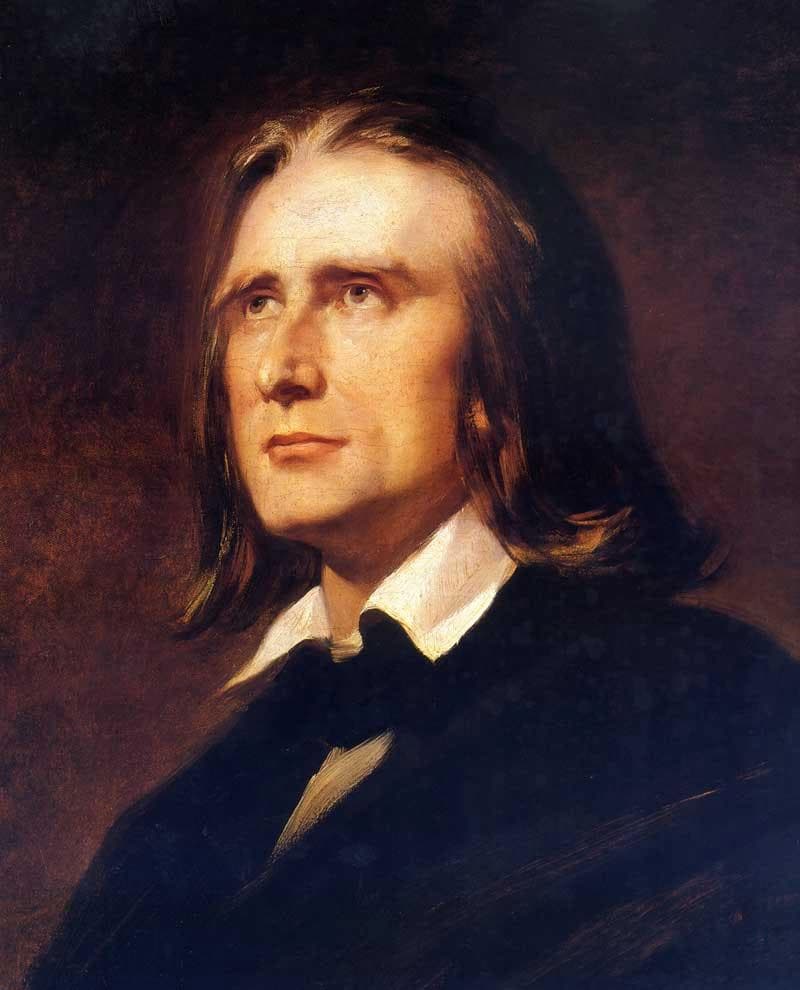
Portrait of Franz Liszt by Wilhelm von Kaulbach, 1856
It also lent a new psychological dimension to live performances: there was now the constant risk that a musician would forget where they were.
That tension created a closer bond between performer and audience, especially as concert hall etiquette became formalised, and musicians moved from being background entertainment to the primary attractions.
However, as we mentioned above, it’s important to remember that Liszt didn’t always play from memory.
When he was performing his own works, he tended to use the score (even if he may have had them memorised). That way, audiences would understand that this was not an improvisation.
Liszt’s Dante Sonata
Sustaining and Spreading the Memorisation Tradition
In the mid- and late-nineteenth century, anyone who was anyone in the piano world studied with Franz Liszt, or a student of Franz Liszt, or Clara Schumann, or a student of Clara Schumann.
These pianists carried on the teachers’ practices, including playing by memory.
Their influence even extended to conductors. For instance, Liszt’s protege, Hans von Bülow, began his musical career as a piano student of Liszt’s and memorised his repertoire.
Later, when von Bülow began focusing on conducting, he also memorised orchestral scores.
He even started experimenting with his Meiningen Court Orchestra to rehearse and perform their orchestral parts by heart.
Unfortunately, it turns out that asking an entire orchestra of people to perfectly memorise a part is incredibly difficult to do well. If an orchestra does this today, it is a major accomplishment.
Finally, someone found the limit to the enthusiasm for memorisation!
The Aurora Orchestra plays Beethoven’s sixth symphony from memory
Reasons Why Memorisation Took Off in the Nineteenth Century
Aside from the examples set by influential artists like Wieck-Schumann, Paganini, and Liszt, there are a number of reasons why this particular practice took off during the mid-nineteenth century.
- The Romantic Era prized individual expression and emotional intensity, especially when exemplified by lone heroic geniuses. A soloist playing by memory played into these ideas.
- In many people’s eyes, the arts began taking on a more spiritual resonance than they ever had before. Playing from memory felt and looked like a spiritual practice.
- The risk of a memory slip made audiences feel more invested in the performance.
- Music publishing was becoming more accessible as technology and education improved. More scores were circulating than ever before, and more people had the skills to play well than ever before.
- The modern canon – starting with Bach and continuing through to Mozart, Beethoven, and Schubert – was beginning to form. Slowly but surely, the amount of new music began declining, and canonised works were elevated as valuable cultural achievements and viewed as part of the very soul of European society, or maybe even humanity itself. It made sense for soloists to prove their commitment to the works by memorising them.
Why Do We Still Memorise Today? (Should We?)
Nowadays, memorisation is the standard for high-level soloists, especially when it comes to the five dozen or so canonised concertos they will perform for the entirety of their careers.
That said, musicians and writers have also pushed back on the practice, citing the increased anxiety that memorisation can present for players, as well as the historic expectations of figures like Beethoven, Chopin, and Mendelssohn.
Just because Liszt did it…does that mean it’s best for everyone two centuries later to do the same?
That’s a question every audience and musician has to answer for themselves!
For more of the best in classical music, sign up for our E-Newsletter