For Brazilian composer João Marcondes, composition is not simply an act of writing music. It is a process of reflection, positioning, and dialogue with history. His album Prelude to Nightfall embodies this philosophy, offering a sound world shaped by introspection, atmosphere, and a deep awareness of musical lineage.
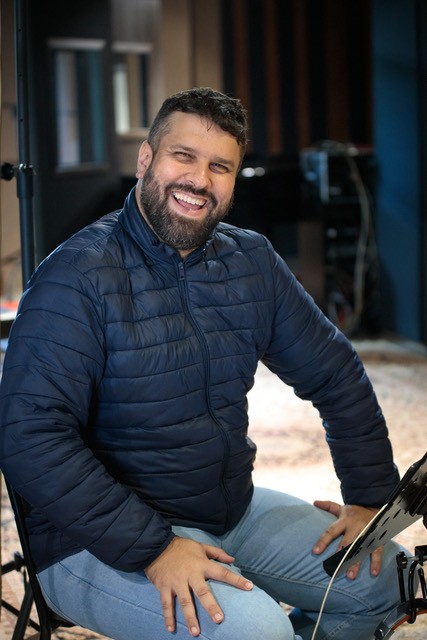
João Marcondes
“Composing a work, regardless of its instrumentation, requires the composer to reflect on their aesthetic and historical position,” he explains. For Marcondes, this means understanding “where the piece stands in the world, and how it relates to what has come before in the history of music.” This perspective places his work in conversation with composers he admires, including Maurice Ravel, Claude Debussy, Heitor Villa-Lobos, and Camargo Guarnieri. “This perspective guides me toward composers I deeply admire and helps me understand my own work in relation to theirs.”
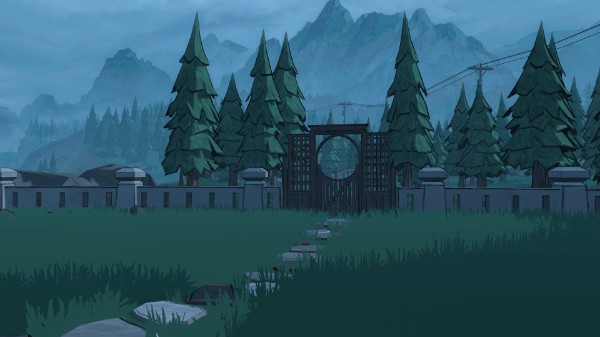
In Prelude to Nightfall, these influences converge in a distinctly atmospheric direction. Marcondes describes the album as part of a series that “leans toward a darker dimension of my work.” He continues, “the sound world becomes more nocturnal, and the atmosphere is closely connected to the way I approach composition for film.” This connection to cinematic thinking is central to the album’s identity. “There is a strong sense of environment and imagery embedded in the music,” he says, pointing to a compositional approach that invites listeners to experience sound as space and narrative.
At the same time, Marcondes’ musical language remains deeply rooted in Brazilian traditions. “For me, rhythmic influence is at the core of Brazilian musicality,” he explains. His early experiences with popular genres continue to shape his work today. “I grew up playing popular music, listening to what we call caipira music, performed by violeiros and traditional singers, and this background naturally informs everything I create.” He describes this influence as an “intuitive formation,” one that coexists with his engagement with classical music. “My engagement with the forces that have shaped classical music allows me to approach my work today with a sense of balance and conviction.” The result is a musical language in which lyricism and contemporary textures are not in conflict but are integrated into a unified expression.
This balance extends beyond his own compositions into his work as a mentor and artistic director. Through projects with Sonoras, a collective of young women composers, Marcondes has played a significant role in shaping a new generation of composers. His motivation stems from a clear observation. “After many years of mentoring young musicians, I began to notice a significant gap in the study of composition. There were virtually no women composers present.” He describes this absence as “an invisible barrier making the path into composition inaccessible.”
In response, he took action. “This led me to encourage the creation of a study group exclusively for women,” he says. The goal was not simply inclusion, but the creation of a supportive environment. “These composers did exist, and they aspired to be composers, but they did not feel comfortable in environments dominated by male composers.” By building a dedicated space, he sought to address this imbalance directly. “Through Sonoras, fifteen young women composers have already taken part, and we continue to encourage more to join and to claim this space.”
Marcondes’ interest in expanding musical possibilities is also evident in his approach to instrumentation. Discussing the ensemble used in the recently released album, Opus 4, he emphasises the creative challenges involved. “The challenge of balancing instruments is what interests me most in the study of chamber music,” he says. Rather than relying on established traditions, he asks fundamental questions. “How do we bring together instruments of very different origins within a single work? How do we shape them into elements of a new sonic identity?”
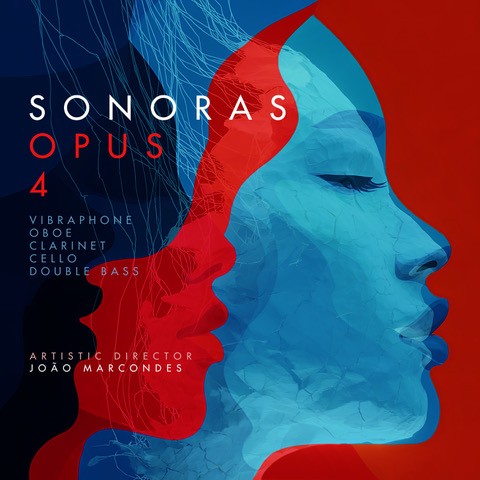
The process begins with close listening. “We begin the compositional process by first understanding each instrument individually, and then gradually combining them in pairs and groups.” Attention to sound itself becomes central. “The envelope of each instrument, its attack and sustain, guides these decisions.” For Marcondes, this is not just a technique, but a discovery. “It is as if we are searching for a new sound.”
Collaboration with performers plays a crucial role in realising this vision. Working with musicians from institutions such as the São Paulo State Symphony Orchestra and the Theatro Municipal de São Paulo provides composers with unique opportunities. “With performers of this caliber, there are virtually no technical limitations,” he explains. This environment encourages exploration. “For a young composer, having access to some of the finest musicians in Brazil is deeply inspiring.” At the same time, Marcondes emphasises the importance of human connection in the creative process. “By working in a spirit of openness, respect, and collaboration with the musicians, we are able to create an ideal environment for artistic creation.”
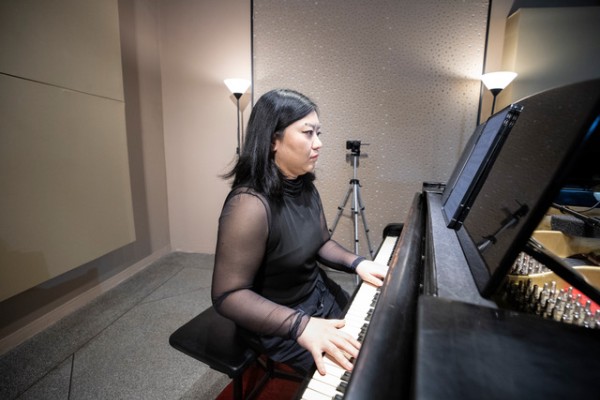
Ariã Yamanaka
Among his artistic partnerships, his collaboration with pianist and composer Ariã Yamanaka stands out as particularly influential. “In my view, Ariã is the leading young pianist active in Brazil today,” he says. Her abilities have had a direct impact on his writing. “Her level of technical control and interpretative depth allows me to compose and create without limitations.” He points to her versatility across repertoire, from Franz Liszt to Frédéric Chopin and beyond, as a source of inspiration. “This inspires me profoundly,” he adds, noting that he composed the work Ponteano for her, a cycle of thirteen complex movements. “Ariã has become a true driving force behind my creativity when writing for the piano.”
At the core of Marcondes’ work is a belief in music as a deeply human act. In a rapidly changing world, he sees artistic creation as something essential. “In a time shaped by artificial intelligence, there is nothing more human, or more meaningful, than creating art without it.” For him, music is not only a craft but a transformative force. “Music is a deeply human expression, and it is what drives me.”
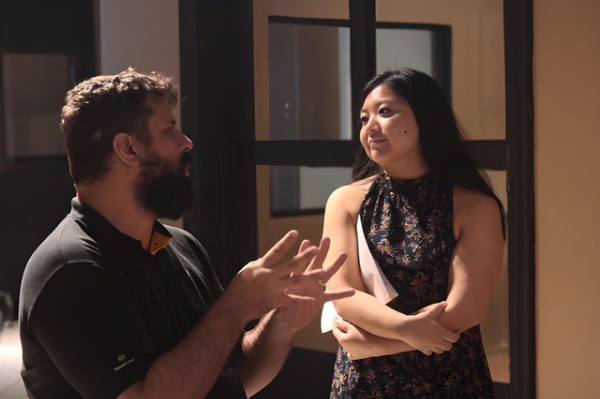
João Marcondes and Ariã Yamanaka
This perspective extends to his students and collaborators. “Through my work, nearly a hundred young composers have been able to bring their music to life,” he notes. For these emerging artists, composition becomes a way of understanding themselves and their place in the world. “Music is soul, and when we create it, we recognise ourselves as part of a larger history.”
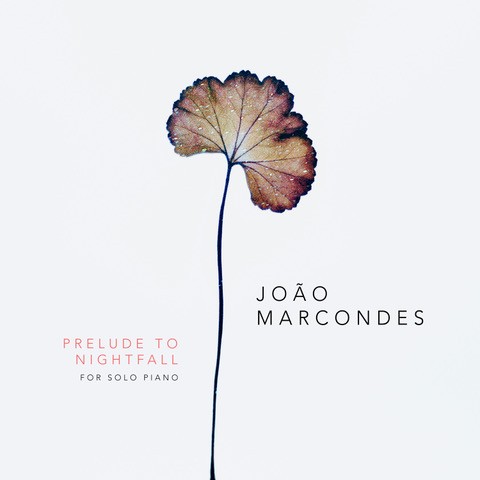
With Prelude to Nightfall, João Marcondes offers more than a collection of works. He presents a way of thinking about music that is rooted in reflection, collaboration, and imagination. It is an approach that connects past and present, individual and collective, sound and meaning, inviting listeners into a world where music becomes both an artistic and human experience.
To learn more about João Marcondes and his album Prelude to Nightfall , visit https://www.azulmusic.com.br/en/portfolio-item/prelude-to-nightfall/
For more of the best in classical music, sign up for our E-Newsletter