Frédéric Chopin is one of the most beloved composers in history, and judging by Google searches, the Internet has lots of questions about him.
Was he Polish or French? What did he actually look like? Did he ever marry George Sand? Why did he leave Poland, and why did he die so young?
Today, we’re answering fifteen of the most frequently asked questions about Chopin, addressing everything from his childhood and career to his teaching, his relationships, and his tragic death.
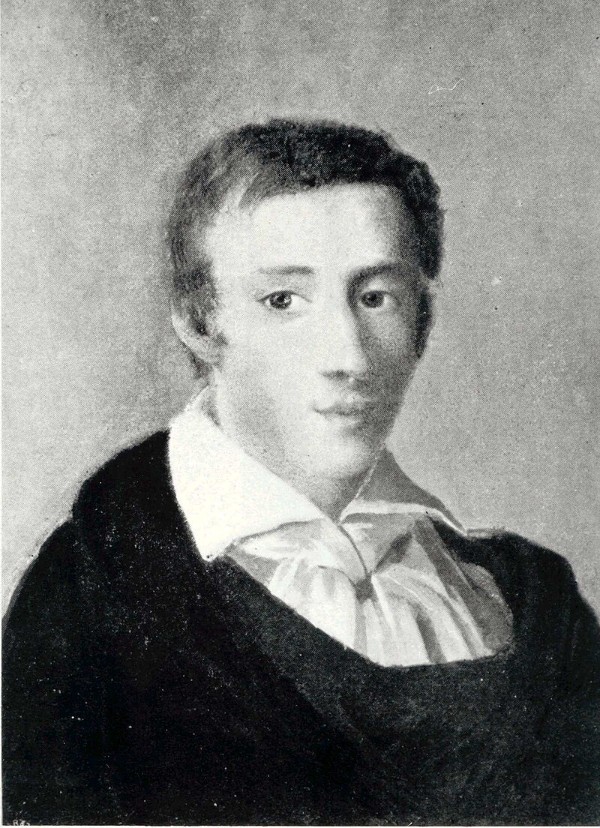
Frédéric Chopin
Is Chopin Polish?
Yes, Chopin was Polish.
He was born in 1810 in the village of Żelazowa Wola, thirty miles west of Warsaw.
His father was a French immigrant (he was a French teacher), and his mother was Polish.
When did Chopin start composing?
Chopin composed two polonaises (a type of Polish dance) in 1817, the year he turned seven. Unfortunately, those have been lost. Chances are, he composed things before these, too.
The earliest Chopin piece that has survived is his Polonaise in A-flat major, which dates from 1821, the year he turned eleven.
Chopin’s Polonaise in A-flat major, 1821
Who did Chopin study with?
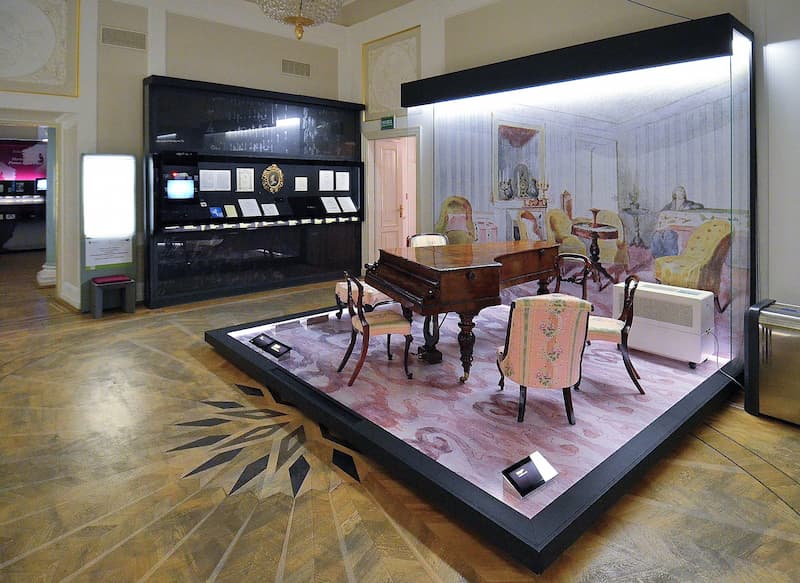
Chopin’s last piano displayed at the Fryderyk Chopin Museum in Warsaw
Chopin probably began his piano studies with his mother, who was an amateur pianist. His older sister Ludwika played piano, too.
In 1816, the year he turned six, he began studying with pianist and violinist Wojciech Żywny. (In fact, Chopin wrote the Polonaise in A-flat major above as a gift for Żywny.) Chopin worked with him until 1821.
Aside from those early teachers, he was mainly self-taught as a pianist, which is extraordinary to think about.
In 1826, he began studying composition with Józef Elsner. Elsner was one of the first composers to include uniquely Polish elements in his music: a practice he encouraged Chopin to follow.
Why did Chopin leave Poland? When did Chopin move to Paris?
After Chopin graduated from the Warsaw Conservatory, he made his debut in Vienna in 1829. Even in a capital city famous for the star power of its soloists, his playing was warmly received.
Staying in Warsaw began to feel like choosing to be a big fish in a small pond. Although his family and Polish identity were deeply important to him, he decided that he wanted to try his luck in a bigger city.
In November 1830, Chopin went out, in the words of historian Zdzisław Jachimecki, “into the wide world, with no very clearly defined aim, forever.”
He stayed in Vienna for a while, then traveled to Paris in September 1831. He would live there for the rest of his life.
Where did Chopin live in Paris?
Chopin’s Piano Concerto No. 2
Chopin moved frequently when he lived in Paris.
His first rental was a fourth-floor apartment at 27 Boulevard Poissonnière. A few months later, he moved to Cité Bergère.
In the summer of 1833, once he secured some aristocratic pupils, he moved to the posh address of 5 Chaussée d’Antin. When his roommate got married, he downsized but stayed on the street.
In 1842, he began living in the Square d’Orléans, No. 9, where he stayed for six years.
He also spent a lot of time with his longtime partner, author George Sand, at her apartment in Paris and her country home in Nohant, France.
His final apartment was 12 Place Vendôme. By this time, his health was so poor that he was unable to work, leading to financial destitution. Fortunately, his wealthy friends paid for his housing during his final illness.
Who did Chopin marry?
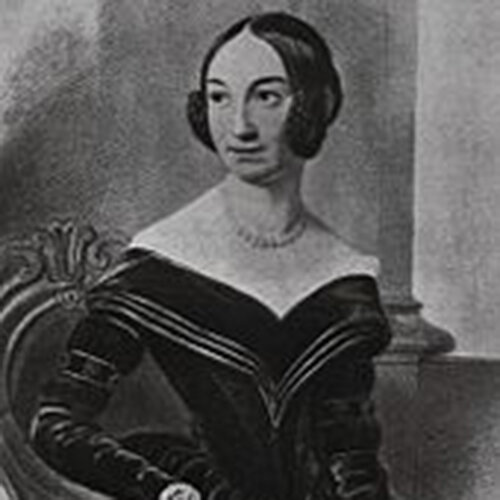
Maria Wodzińska, year 1840
Chopin was engaged to artist Maria Wodzińska between 1836 and 1837, but they never married.
His longest-lasting romantic relationship was with author George Sand. They were together between 1838 and 1847.
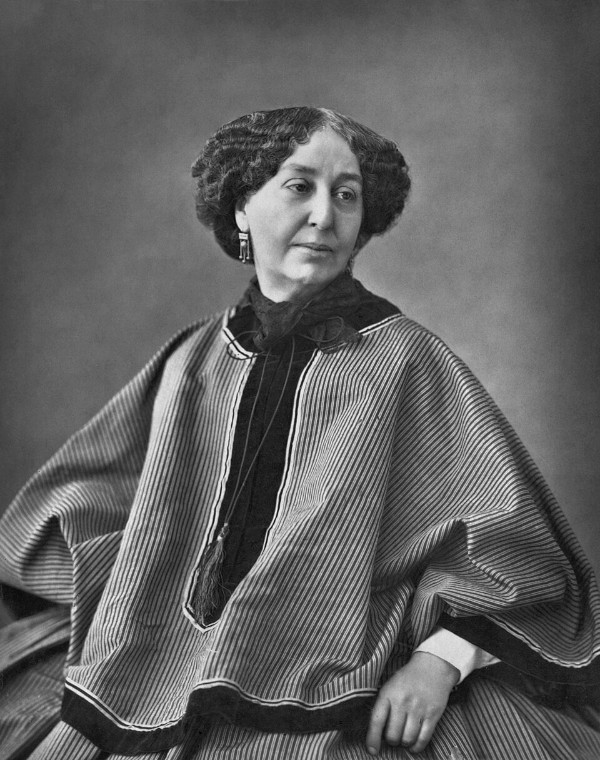
George Sand – Portrait by Nadar (1864)
Find out more about the fascinating love story of Chopin and George Sand.
What did Chopin look like?
Chopin could look different depending on the medium of the image, as well as how old he was and how ill he was.
Maria Wodzińska made and painted a sketch of him in 1836.
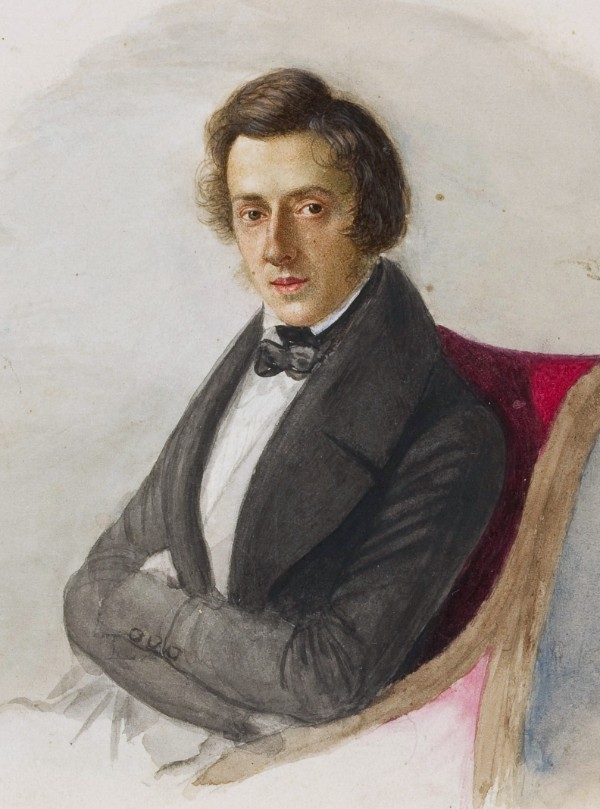
Maria Wodzińska: Frédéric Chopin, 1836 (Wasaw: National Museum)
Painter Eugène Delacroix painted a portrait of Chopin and George Sand in 1838.
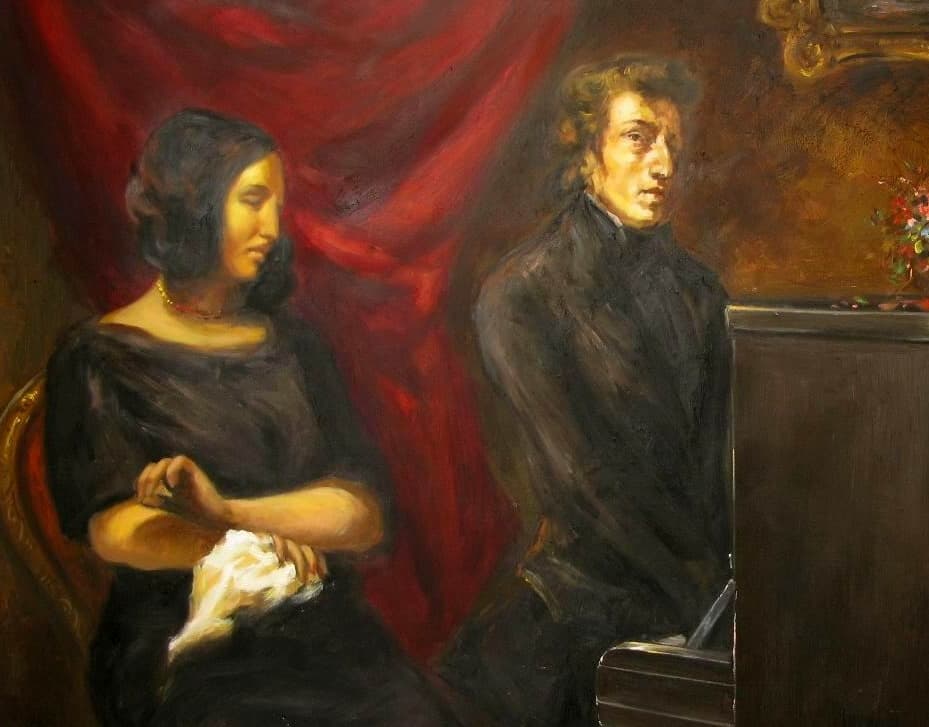
Portrait of Frédéric Chopin and George Sand by Eugène Delacroix
A daguerreotype of him dates from 1849.
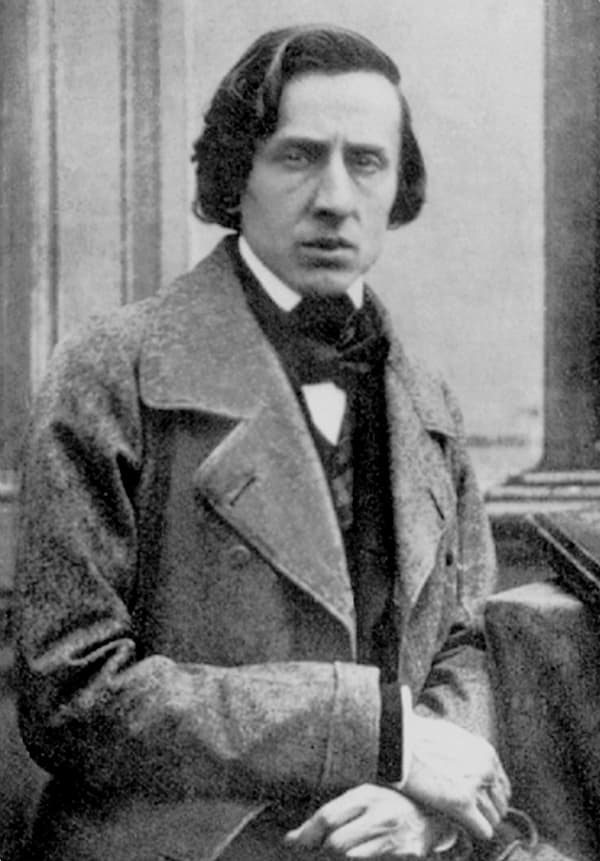
Frédéric Chopin
In the end, the most true-to-life (or perhaps true-to-death) image we have is the death mask made by Auguste Clésinger, George Sand’s sculptor son-in-law.
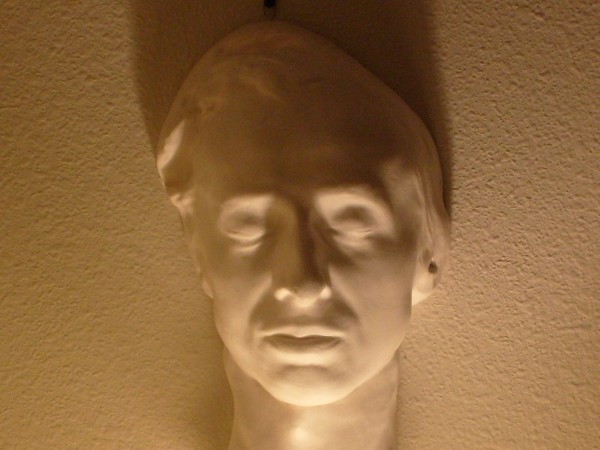
Death mask of Frédéric Chopin
Who did Chopin teach?
Chopin earned his living by teaching piano. (Read more from Ten Secrets About Chopin’s Piano Teaching Career.) He was greatly in demand, especially among aristocratic women.
His students included:
- Princess Marcelina Czartoryska, who went on to found the Kraków Conservatory
- Baroness Charlotte de Rothschild, to whom Chopin dedicated his fourth Ballade
- Countess Delfina Potocka, to whom Chopin dedicated his second piano concerto
- Émile Decombes, who taught important French musicians Alfred Cortot, Reynaldo Hahn, Erik Satie, and Maurice Ravel.
What did Chopin compose?
Chopin composed:
- Two piano concertos
- Four ballades
- Twenty-seven etudes
- Around sixty mazurkas
- Twenty-one nocturnes
- Three piano sonatas
- Twenty-four preludes
- Four scherzos
- Nineteen waltzes
He is best-known for his chamber music and piano solos.
As an adult, he focused on smaller-scale works more than larger-scale ones.
He did not write symphonies, and he wrote both of his piano concertos before he turned twenty-one, never returning to the genre again.
Chopin’s Mazurka in A-minor
What did Chopin think about Beethoven?
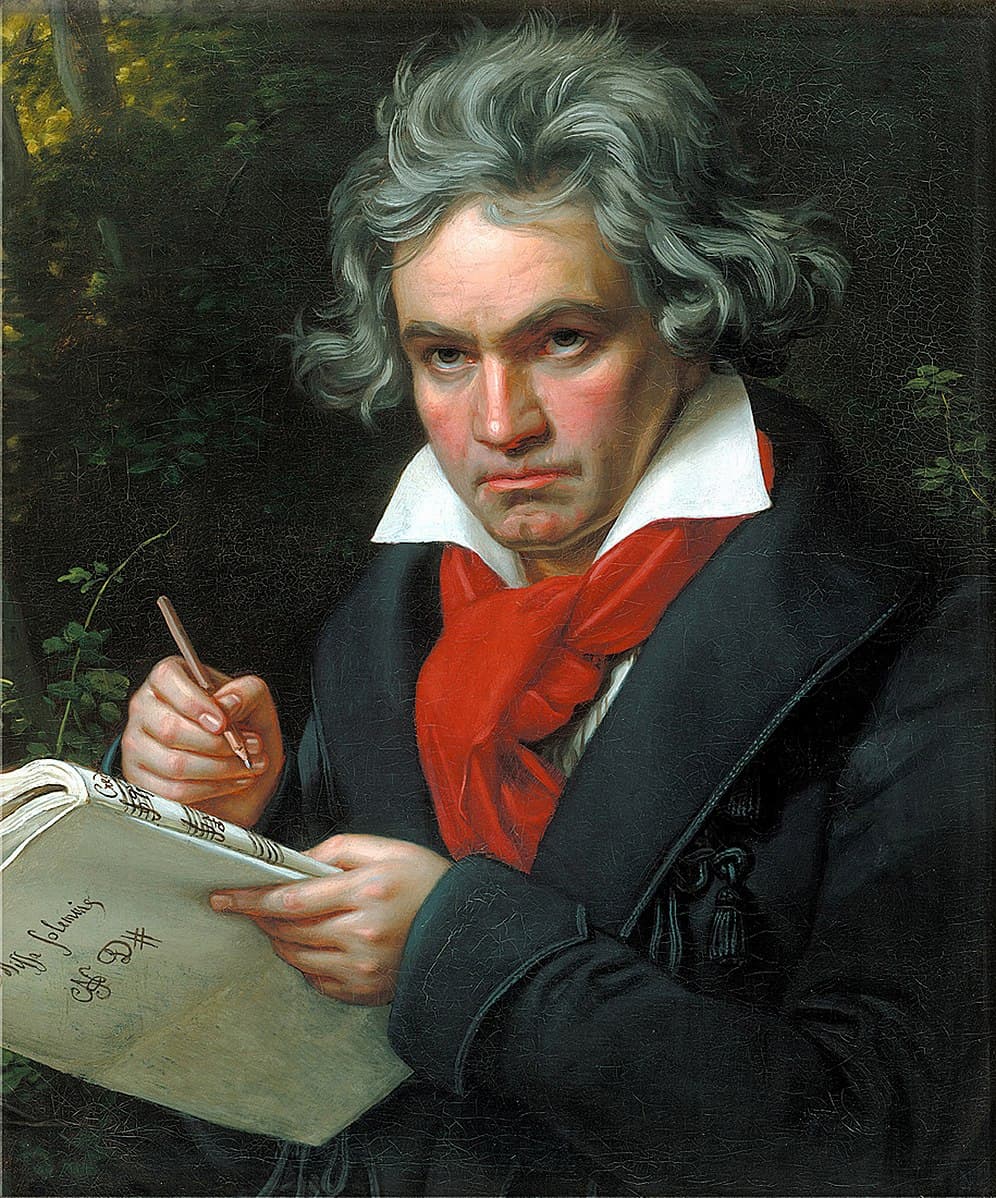
Portrait of Ludwig van Beethoven
In his 2018 Chopin biography, historian Alan Walker wrote:
“Beethoven, he respected, but he never proffered the master that adulation so readily bestowed on him by practically every other musician of the nineteenth century.”
In 1845, Chopin turned down an invitation to attend the unveiling of a Beethoven statue in Bonn.
Is Chopin classical or romantic?
Chopin was the quintessential Romantic. The era was all about raw emotion, bold individuality, and breaking free of convention, and Chopin embodied all of those qualities.
In addition, his contemporaries are widely acknowledged to belong to the Romantic Era: Mendelssohn, Liszt, Berlioz, etc.
Is Chopin public domain?
Because Chopin died in 1849, many editions of his sheet music are public domain. (Not all, though! Some editions that were created later are still under copyright.)
However, that doesn’t mean that the audio of Chopin performances is in the public domain. A performance of a piece is copyrighted separately from its sheet music.
Who did Chopin influence?
Liszt’s transcription of Chopin’s Six Polish Songs, No. 1, “The Maiden’s Wish”
Chopin influenced a number of composers who followed him.
Franz Liszt. Liszt and Chopin’s relationship was a rivalry, but Liszt was deeply impacted by his friend’s early death, even going so far as to write a biography of him (Read more from Life of Chopin: Takeaways From Liszt’s Controversial Chopin Biography). Liszt also transcribed some of Chopin’s works.
Robert Schumann. Schumann found Chopin’s music poetic, a quality that Schumann aspired to in his own music. Throughout his career, Schumann loved exploring the intersection of literature and music, and he was fascinated by how Chopin created poetry at the piano.
Claude Debussy. Just like Chopin, he wrote famously atmospheric works and was always less concerned about structure than with setting a mood. He wrote a set of twenty-four Preludes, an homage to Chopin.
Alexander Scriabin. Scriabin’s Op. 11 set of twenty-four preludes for solo piano echoes Chopin’s.
Antonín Dvořák. Dvořák’s embrace of his Bohemian identity in his music is reminiscent of Chopin’s embrace of his Polish identity a generation earlier.
That’s just the tip of the iceberg. He was massively influential.
When did Chopin die?
Chopin died on 17 October 1849. Read more about Chopin’s tragic final days.
What did Chopin die of? Why did Chopin die so young?
Chopin died of tuberculosis. The illness had claimed his younger sister, as well as countless friends and acquaintances.
In the nineteenth century, tuberculosis manifested as a long-lasting, slowly progressing chronic illness. Symptoms included chronic low-grade fever, crushing fatigue, and persistent, eventually bloody coughs.
Patients lived with the knowledge that the infection would probably kill them; they just didn’t know when.
Chopin displayed symptoms throughout most of his adult life, but his case worsened considerably during the 1840s.
We wrote about Chopin’s experience of tuberculosis and the opium used to treat it.
Conclusion
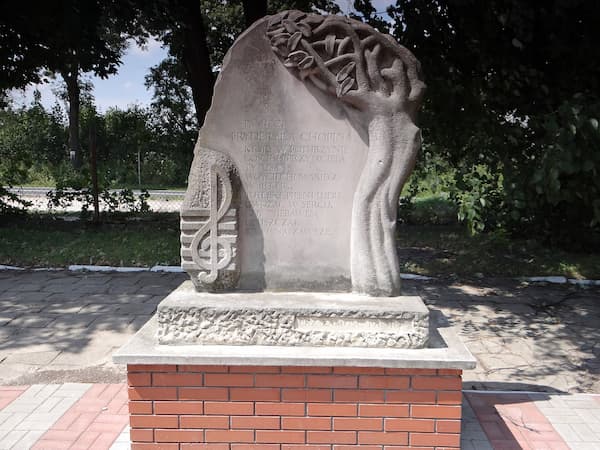
Chopin memorial monument (Photo: Zbigniew Czernik)
Chopin’s life may have been short, but the questions that people are still asking about him prove how enduring his legacy is.
The breadth of these questions reminds us why Chopin and his music continue to fascinate us nearly two centuries after his death.
For more of the best in classical music, sign up for our E-Newsletter