When you put the three leading violinists in close proximity, you can expect fireworks! Isaac Stern (1920–2001) was the leader. Itzhak Perlman (b. 1945) was born in Tel Aviv and came to New York at age 13 to study at Juilliard. Pinchas Zukerman (b. 1948) was the other 13-year-old violinist Stern found in Israel and brought to New York to study, also at Juilliard.
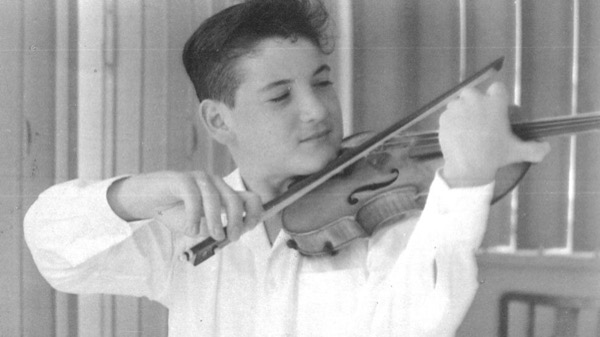
Pinchas Zukerman around age 13.
Zukerman’s music training started at home with his father. He started on the recorder at age 4, graduated to the clarinet, and then started violin at age 8. He entered the Samuel Rubin Academy of Music (now the Buchmann-Mehta School of Music) and was heard there by Pablo Casals and Isaac Stern on a visit to Israel in 1962.
Zukerman admits that taking a 13-year-old from his home and transplanting him to New York was an invitation to run around. He finely honed his skills in pool and other non-musical diversions as he explored the city without his parents’ supervision.
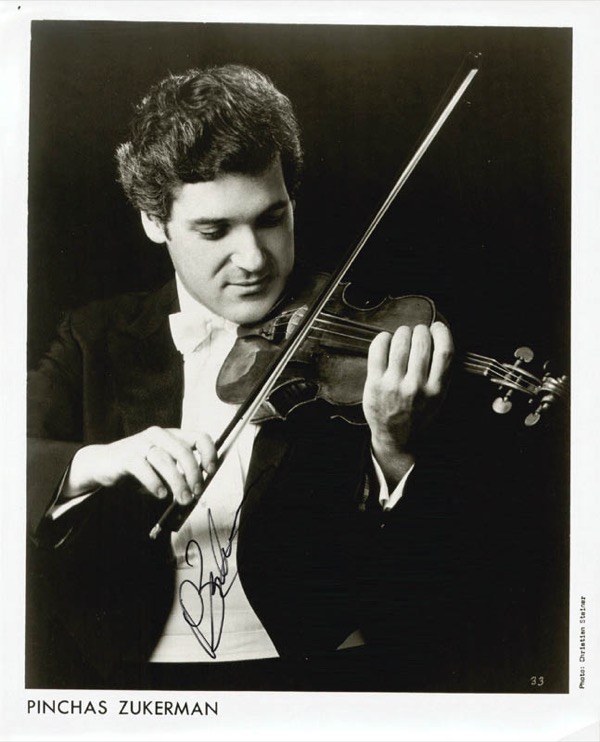
Pinchas Zukerman
Despite all that, he studied at Juilliard under Ivan Galamian and made his performance debut in 1963. He was co-awarded the Leventritt Prize with Korean violinist Kyung-wha Chung in 1967; two years later, at age 21, he was recording with the London Symphony Orchestra and the New York Philharmonic.
Felix Mendelssohn: Violin Concerto in E Minor, Op. 64, MWV O14: I. Allegro molto appassionato (Pinchas Zukerman, violin; New York Philharmonic Orchestra; Leonard Bernstein, cond.)
In addition to his solo career, he has a second career as a conductor, starting with the English Chamber Orchestra in 1970. In the US, he was music director of the Saint Paul Chamber Orchestra (1980–1987). In 1998, he became Music Director of Canada’s National Arts Centre Orchestra (NACO) in Ottawa, serving on and off with them until 2015.
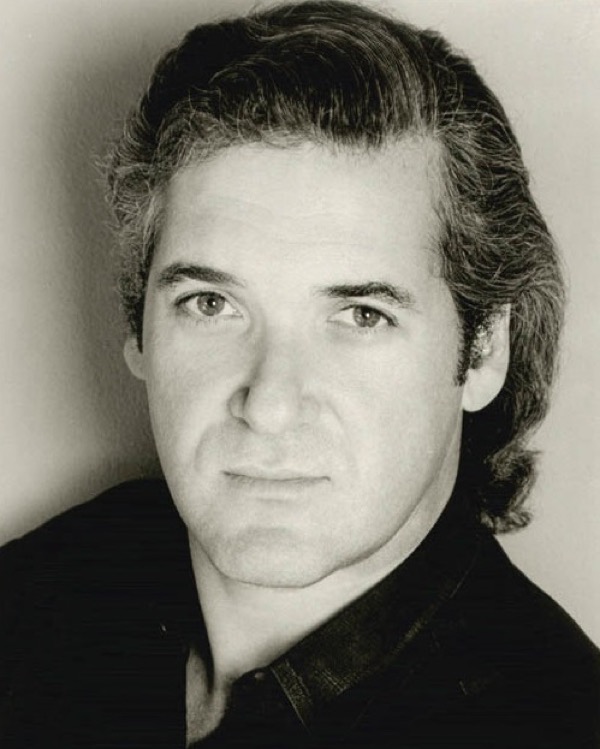
Pinchas Zukerman
Zukerman directed the South Bank Festival from 1971 to 1974 and later directed the summer festivals of the Dallas Symphony Orchestra (1991–1995) and the Baltimore Symphony Orchestra (1996–1999).
He teaches at the Manhattan School of Music and, during COVID, led online masterclasses for Juilliard.
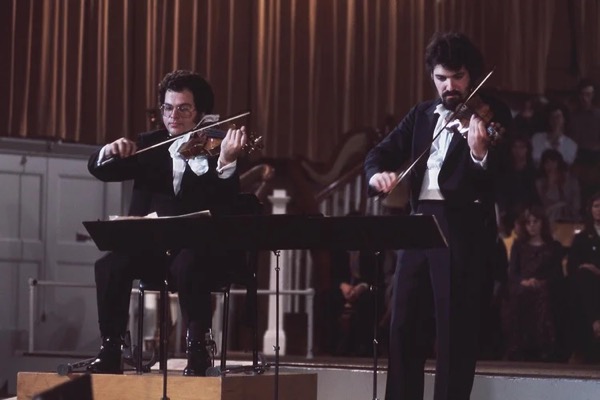
Pinchas Zukerman and Itzhak Perlman in performance
As one of Isaac Stern’s protégés, he was able to both study with the older violinist and perform with him. One of their most notable concerts included the 60th anniversary celebration held at Avery Fisher Hall in 1980, where Stern’s birthday was celebrated with Itzhak Perlman, Zukerman, and the New York Philharmonic under the baton of Zubin Mehta.
In that concert, Stern played with Zukerman, Stern played with Perlman, and in the Vivaldi Concerto for 3 violins, all were the soloists.
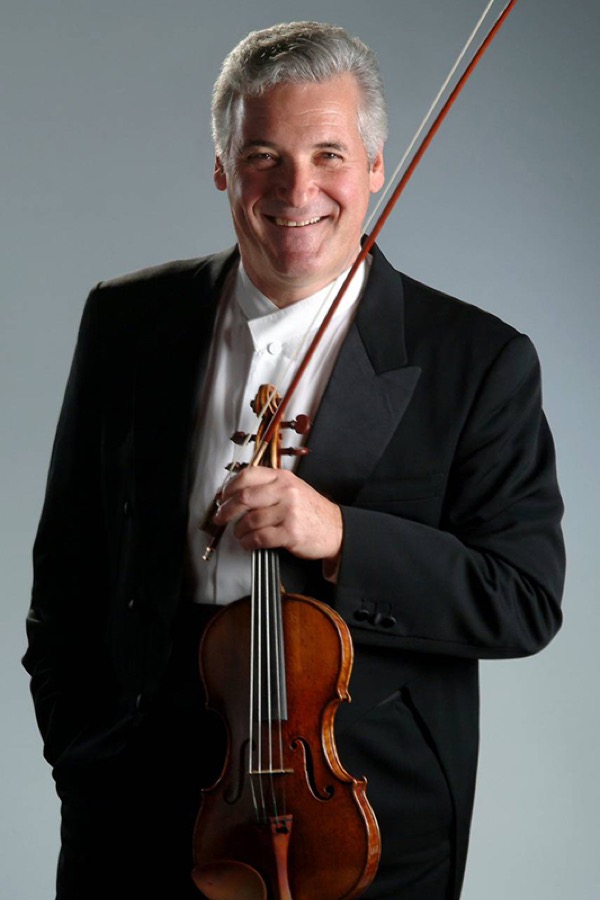
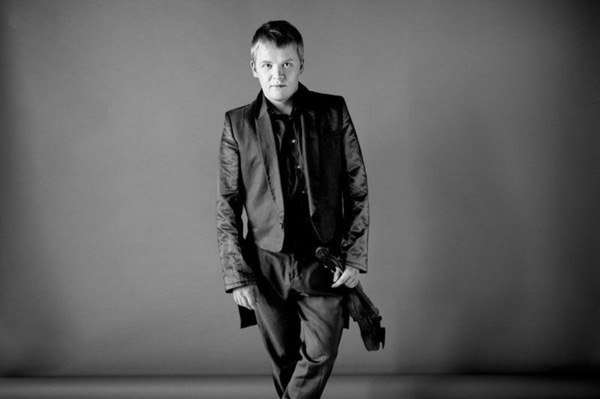
Pinchas Zukerman (Photo by Paul Labelle)
Antonio Vivaldi: Concerto for 3 Violins in F Major, RV 551: III. Allegro (Isaac Stern, Pinchas Zukerman, Itzhak Perlman, violins; New York Philharmonic Orchestra; Zubin Mehta, cond.)
Another of their notable recordings was of the J.S. Bach Concerto for 2 violins, which he and Stern recorded with the St. Paul Chamber Orchestra.
Johann Sebastian Bach: Concerto for 2 Violins in D Minor, BWV 1043: I. Vivace (Pinchas Zukerman, Isaac Stern, violins; Saint Paul Chamber Orchestra; Pinchas Zukerman, cond.)
As an international soloist and conductor, Zukerman’s career has been exceptional in both its quality and its length. His playing is admired for its ‘expressive lyricism, singular beauty of tone’, and his impeccable musicianship. Just as much as his mentor was noted for finding young performers and bringing them into their careers, so Zukerman has done the same, founding the Pinchas Zukerman Performance Program at the Manhattan School of Music for ‘exceptionally gifted violinists and violists’. They become his private students, and he is ‘devoted to the artistic and technical development of these talented students’. They have private lessons, are active in chamber music, and work on their advanced technical and artistic development.
Working with young musicians continues the future, working with his contemporaries brought us some of the best violin performances of the 20th century, and working with his mentors gave us masterful recordings that set a style for modern virtuosity. Zukerman was involved in all of these and continues to bring us new ideas and innovations.
For more Interlude on Pinchas Zukerman, see https://interlude.hk/on-this-day-16-july-pinchas-zukerman-was-born/
For more of the best in classical music, sign up for our E-Newsletter