For most pianists, practising occupies far more time than performing. Indeed, for many amateur musicians, public performance may be relatively infrequent or not particularly important at all. Our musical lives are lived largely in private: at the piano, alone with the music.
This makes practice something rather more significant than preparation for some future event. It is not simply the work we have to do before we are permitted the pleasure of playing. Practising is playing. It is an act of doing, creating and living with the music.
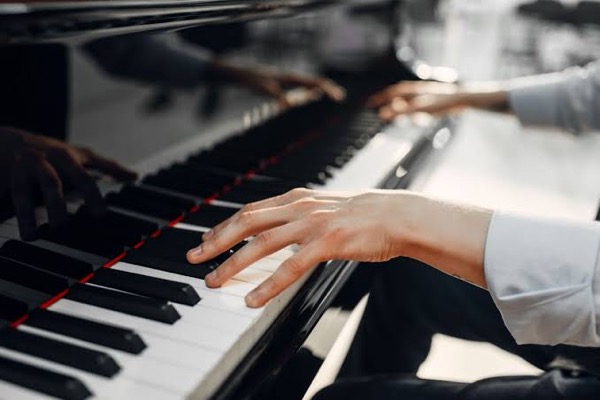
Playing the piano
Regular practice creates its own momentum. The more frequently we return to the instrument, the more natural that return becomes. The piano remains part of the rhythm of daily life, and the music we are learning stays present in the mind and body even when we are away from the keyboard.
Conversely, after a prolonged absence, returning can sometimes feel surprisingly difficult. The instrument which ordinarily seems familiar may suddenly feel slightly foreign; the music has receded from immediate memory; fingers which once found their way instinctively around a passage require reminding what to do.
Claude Debussy: 12 Etudes: No. 1. Pour les cinq doigts (For the five fingers) (Noriko Ogawa, piano)
There is a psychological element too. When playing is part of everyday life, we think of ourselves naturally as musicians. When we stop for an extended period, that sense of identity can become less certain. The longer the absence, the easier it becomes to postpone the return.
But maintaining the practice habit does not mean forcing oneself through a prescribed number of hours every day. Some days sustained, concentrated practice is both possible and productive; others, tiredness, distraction, or the competing demands of life make it unrealistic. Sometimes rest is precisely what the body or mind needs. Intelligent practising includes knowing when not to practise.
Camille Saint-Saëns: Carnival of the Animals: XIII. The Swan (Slovak Radio Symphony Orchestra)
On less promising days, however, a few minutes at the piano can be enough to maintain the connection. We might play a favourite piece, sight-read something unfamiliar, improvise, revisit a passage simply for pleasure, or open a score which has been neglected for years. None of this needs to have an obvious goal.
This is particularly important because the word practice can imply obligation. We practise because something needs fixing: notes must be learnt, a difficult passage mastered, scales improved, a piece prepared for a lesson, exam or performance. The activity becomes directed towards a future state in which, presumably, we will finally be able to play the music properly. But some of the most valuable time at the piano occurs when there is nothing in particular to achieve.
Playing through familiar repertoire keeps it under the fingers. Sight-reading introduces us to music we might otherwise never encounter. Improvising encourages a different kind of listening. Simply playing a piece we love reminds us why we wanted to play the piano in the first place.
The habit matters more than the duration. Ten attentive minutes can sometimes be more nourishing than an hour spent dutifully repeating passages while the mind is elsewhere. What matters is the quality of our engagement with the music: listening, noticing, questioning, responding.
Piano music
Curiosity helps keep this engagement alive. Rather than beginning every practice session by automatically repeating yesterday’s work, we might ask: What can I do differently today? What haven’t I noticed before? Is there another way to approach this passage?
Such questions prevent practice from becoming merely habitual repetition. The routine of returning to the piano may be familiar, but what happens once we sit down need not be.
There is another reason why regular contact with repertoire matters. When we learn a piece of music, we enter into a relationship with something which existed long before us and will, one hopes, continue long after us. For a time, we become its custodians. There is something rather appealing in thinking of the musician as a gardener or conservator. We tend the music, attend to its details, keep it alive through use and renew our understanding of it each time we return. We do not own it, though we may develop a powerful sense that certain pieces are “ours”. Rather, we take temporary responsibility for bringing the notes on the page into sound.
And because music exists fully only when it is sounded, the apparently private activity of practising participates in something much larger. Every pianist who opens a volume of Bach, Beethoven, Schubert or Debussy and begins to play is renewing music which has passed through countless other hands. For the amateur musician especially, this may be one of the deepest pleasures of practice. No concert needs to follow, no examination, recording, or public recognition. The activity justifies itself.
Franz Schubert: 4 Impromptus, Op. 90, D. 899: No. 4 in A-Flat Major (Murray Perahia, piano)
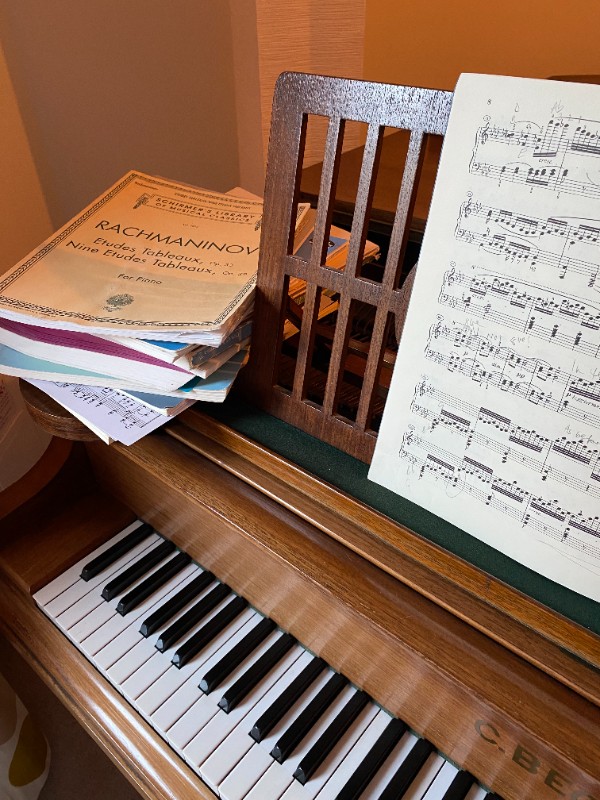
We practise because we are curious. Because we enjoy the physical sensation of playing. Because we want to understand the music more closely. Because certain pieces have become companions to which we repeatedly return. And sometimes simply because sitting at the piano is part of who we are.
Regular practice certainly develops technique and helps repertoire progress, but its value is not measured only by improvement. It keeps the relationship with music active.
The point is not to practise every day at all costs. It is to keep coming back.
For more of the best in classical music, sign up for our E-Newsletter