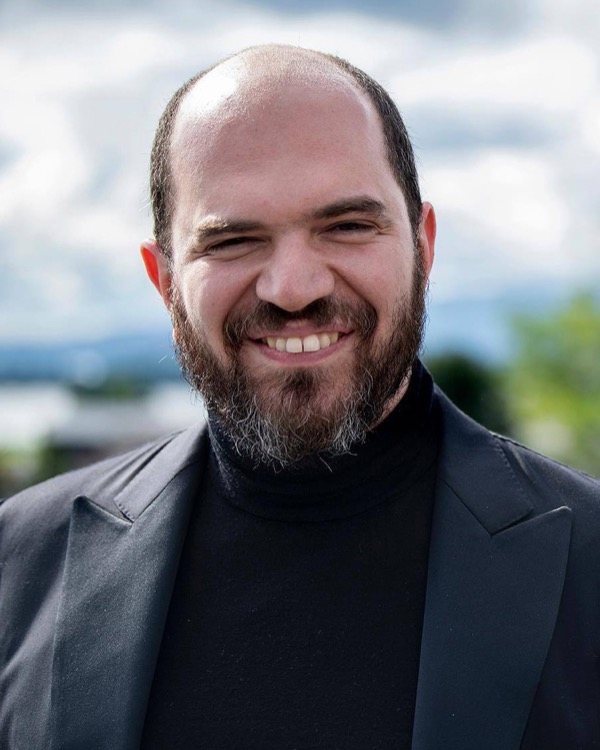
George Li, born on 24 August 1995 in Boston, Massachusetts, grew up in a family of music lovers. His parents had immigrated from China, and the family frequently attended concerts in the Boston area. Classical music has been part of his life almost from birth.
Li announced himself to the world by placing second in the piano division of the 2015 International Tchaikovsky Competition, with judges praising his incredible technical skill and passionate, sincere approach to music.
George Li grew up listening to the sounds of Beethoven, Chopin, and Rachmaninoff. To celebrate his birthday, let’s turn to his relationship with Rachmaninoff and the composer’s Variations on a Theme of Corelli, Op. 42.
George Li plays Rachmaninoff: Variations on a Theme of Corelli, Op. 42 (Theme-Variation 3)
Learning from Rachmaninoff

George Li
In an interview for Counterpoints, George Li talked about the wonderful pianism of Alfred Cortot and Sergei Rachmaninoff. “The ways of their playing are so individual,” he explained. “They both have rich sound, but on top of that, there is so much colour and nuance, and their dynamic range is humongous.” (George Li, The Counterpoints, 2017)
In addition, Li specifically loves “Rachmaninoff’s recordings of his own concertos.” From his description, it becomes clear that Li isn’t simply attracted to Rachmaninoff’s music because it is technically difficult. Rather, he listens to colour, nuance, and individuality, with a specific emphasis on dynamic range.
Sergei Rachmaninoff: Variation 4: Andante (George Li, piano)
Sergei Rachmaninoff: Variation 5: Allegro (ma non tanto) (George Li, piano)
Sergei Rachmaninoff: Variation 6: L’istesso tempo (George Li, piano)
Sergei Rachmaninoff: Variation 7: Vivace (George Li, piano)
Sergei Rachmaninoff: Variation 8: Adagio misterioso (George Li, piano)
Sergei Rachmaninoff: Variation 9: Un poco più mosso (George Li, piano)
Memory and Modernity
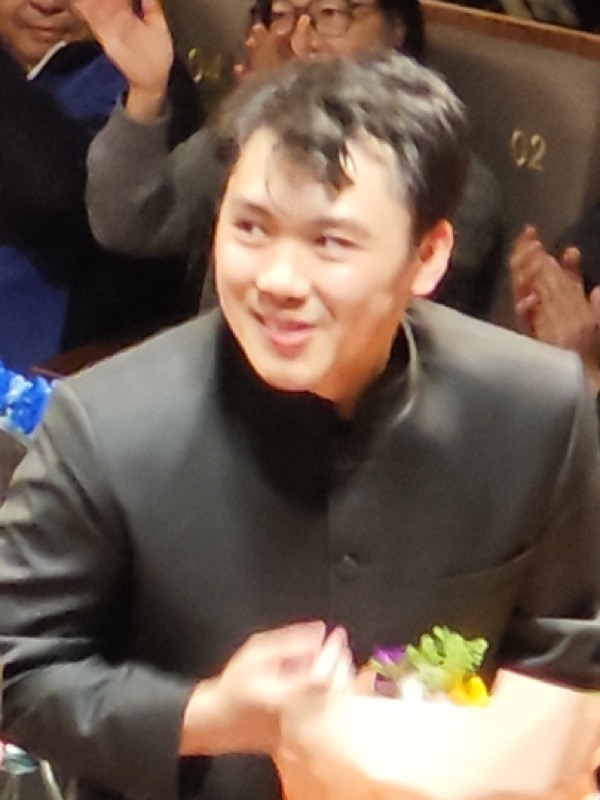
George Li
The Corelli Variations date from 1931, when Rachmaninoff was in Switzerland. The theme isn’t actually by Corelli; Rachmaninoff is looking back in time, though not with a sense of nostalgia. Essentially, he transforms the old melody into something restless and introspective.
Rachmaninoff’s meeting of the past and the present resonates in Li’s recording, where the opening theme never becomes overly sentimental. It is presented with lovely nuances of dynamics and articulation, while the freedom in the phrasing stretches the music without sacrificing the underlying sense of structure. We also hear the nuances and shades of colour that Li references in his comments about Rachmaninoff.
Sergei Rachmaninoff: Variation 10: Allegro scherzando (George Li, piano)
Sergei Rachmaninoff: Variation 11: Allegro vivace (George Li, piano)
Sergei Rachmaninoff: Variation 12: L’istesso tempo (George Li, piano)
Sergei Rachmaninoff: Variation 13: Agitato (George Li, piano)
Sergei Rachmaninoff: Intermezzo (George Li, piano)
Island of Warmth
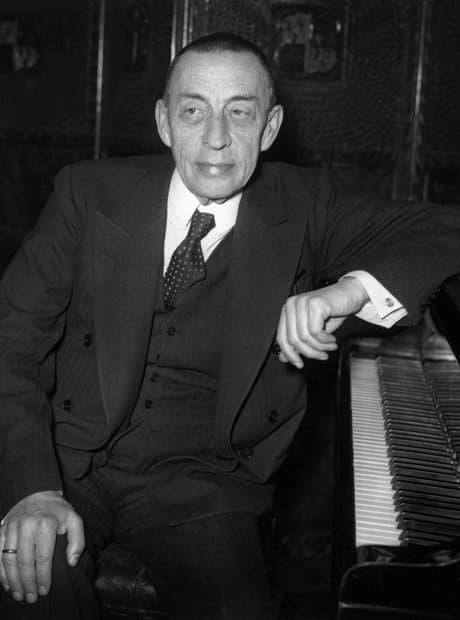
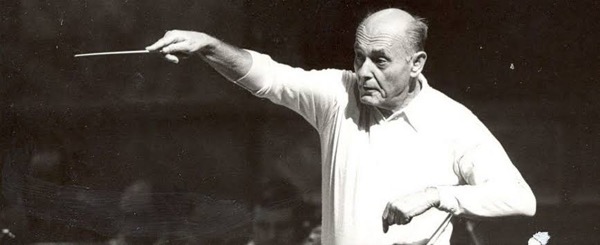
Sergei Rachmaninoff, 1940s
As the atmosphere darkens, the rhythmic momentum increases, and the music alternates between agitation and lyricism. Li infuses each variation with its own character, and virtuosity becomes part of the overall drama.
Li, citing Vladimir Ashkenazy, has described the sequence of variations through the “Intermezzo” as an “island of a kind of warmth and joy,” surrounded by an “ocean of darkness.” Accordingly, we hear the change of emotional temperature in the “Intermezzo,” with Li creating a momentarily consoling sense of warmth.
Sergei Rachmaninoff: Variation 14: Andante (come prima) (George Li, piano)
Sergei Rachmaninoff: Variation 15: L’istesso tempo (George Li, piano)
Sergei Rachmaninoff: Variation 16: Allegro vivace (George Li, piano)
Sergei Rachmaninoff: Variation 17: Meno mosso (George Li, piano)
Virtuosity as Expression
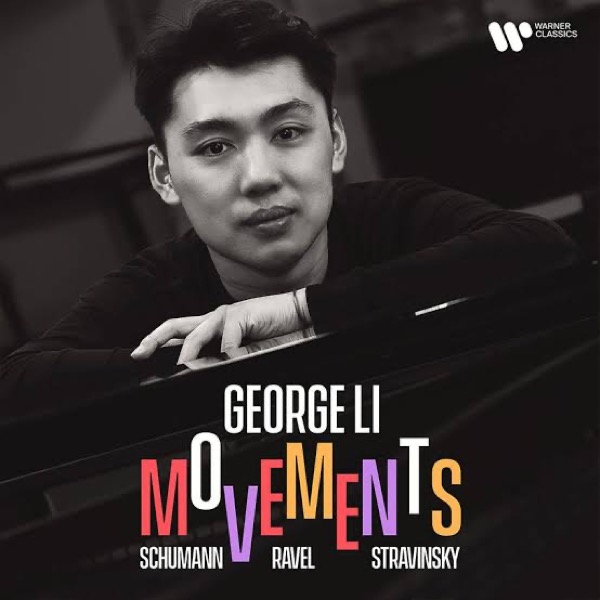
George Li
Technical considerations come to the fore in Variations 14-17, where Li showcases his technical prowess. He navigates the rapid octave writing and powerful chordal passages with consummate skill.
Yet, as he expressed in his admiration of Rachmaninoff’s own playing, the technical achievement primarily serves the musical argument. The music surges, always in danger of being overwhelmed, yet Li still manages to communicate the fundamental emotional intensity.
Sergei Rachmaninoff: Variation 18: Allegro con brio (George Li, piano)
Sergei Rachmaninoff: Variation 19: Più mosso, Agitato (George Li, piano)
Sergei Rachmaninoff: Variation 20: Più mosso (George Li, piano)
Sergei Rachmaninoff: Coda: Andante (George Li, piano)
A Promise of Resurrection
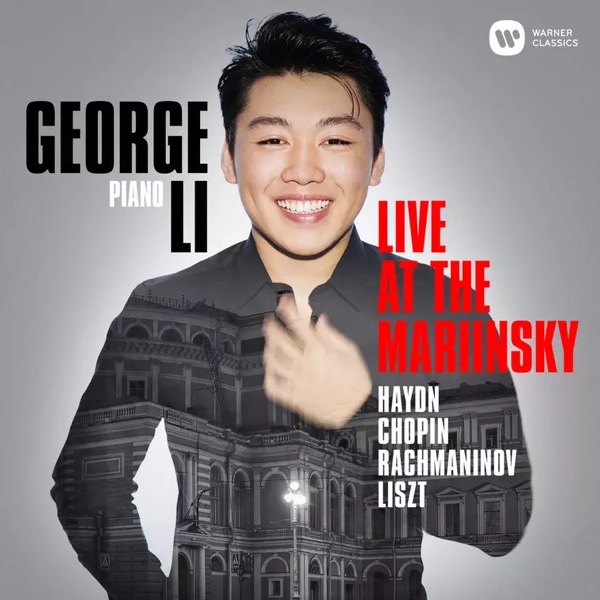
George Li: Live at the Mariinsky (album cover)
The music reaches its emotional and dramatic climax with Variations 18 through the Coda. Li has described this concluding journey as moving from “dark triumph” towards a “heart-wrenching swansong. We have been through death and tragedy, but in the end there’s a promise of resurrection.”
Positive critical responses to Li’s Rachmaninoff have come from several sources. Above all, critics consider his performance “thoughtful and reflective,” with an emphasis on “mining the poetry” rather than displaying virtuosity.
With critics responding to his insightful combination of brilliance and introspection, Li’s technical prowess is never an end in itself. In Li’s hands, the “Corelli Variations” become a powerful meditation on memory and loss.
For more of the best in classical music, sign up for our E-Newsletter