The rise of air travel over the past century has proven transformative for touring artists, completely rewriting what an international career as a singer, pianist, violinist, or conductor looks like.
But that same technology has also led to some of the most shocking, heartbreaking losses in the history of art.
Today, we’re remembering eight classical musicians whose lives were tragically cut short in plane crashes. Their stories are a sobering reminder of both the fragility of life…and the impact of their artistry.
Grace Moore (1947)
Grace Moore singing an excerpt from Tosca in the 1937 film When You’re in Love
Grace Moore was born in Tennessee in 1898. When she was nineteen, she moved to New York City to pursue a career as a singer.
She made her Broadway debut in 1920. A few years later, she traveled to France to study opera. She made her debut at the Metropolitan Opera in New York in February 1928, singing the role of Mimi in La bohème.
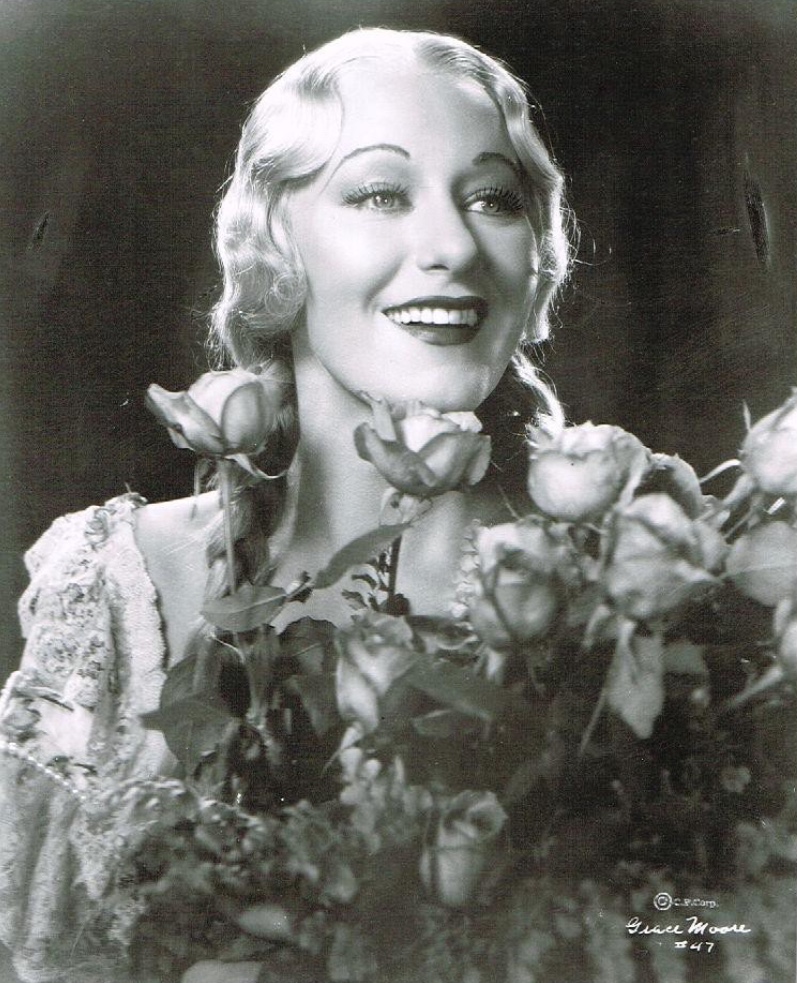
Grace Moore
Around the same time, she also began pursuing a film career. In 1935, she was nominated for an Academy Award for Best Actress for her role in One Night of Love, where she played a woman from a small town pursuing a career in opera.
A snippet from One Night of Love
She died in January 1947 outside of Copenhagen in a KLM DC-3 crash. Gust locks accidentally left in place rendered the plane’s elevators uncontrollable, which led to the crash. Twenty-two crew and passengers died, including Prince Gustaf Adolf of Sweden.
Ginette Neveu (1949)
Ginette Neveu playing an excerpt from Chausson’s Poeme
Ginette Neveu was born in Paris in 1919. Her mother was an accomplished violinist and taught her the instrument from an early age.
She was a child prodigy and made her debut with the Bruch concerto at seven. A critic wrote, “If you close your eyes, you think you are listening to the vigorous playing of a man and not that of a little girl in a white frock.”
At the age of just fifteen, she won the Henryk Wieniawski Violin Competition (placing ahead of a 27-year-old David Oistrakh). The win jump-started her career, and she was soon touring internationally.
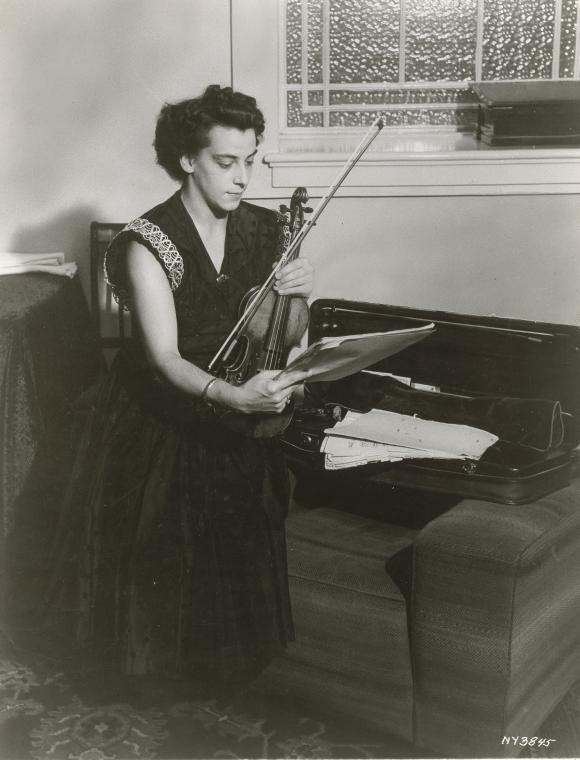
Ginette Neveu
In October 1949, she and her pianist brother set off on a three-month tour of North America. They boarded a Lockheed Constellation flying Air France Flight 009. Their planned route was Paris to New York, with a fuel stop in the Azores, an archipelago a thousand miles west of Portugal.
On descent, sixty miles from the airport, the pilot made navigation errors that resulted in the aircraft crashing into a ridge. All 48 passengers and crew were killed.
Neveu had brought two violins with her on tour: a 1730 violin by Antonio Stradivari’s son Omobono Stradivari, and a Guadagnini. Miraculously, her double violin case was found on the mountain. Two bows were salvaged from the wreck; the Stradivari was never recovered, and the scroll of the Guadagnini was salvaged from the debris and attached to another violin.
William Kapell (1953)
William Kapell playing Scarlatti, Chopin, and Napolitano
William Kapell was born in 1922 in New York City. He won a number of piano competitions in his teens and was signed with RCA Victor.
He became famous for his renditions of Khachaturian’s Piano Concerto in D-flat, so much so that his 1946 recording of the work with the Boston Symphony became a bestseller.
Unfortunately, his health, never good, deteriorated in the early 1950s. He was diagnosed with bronchitis and even told a fellow pianist that he had terminal cancer.
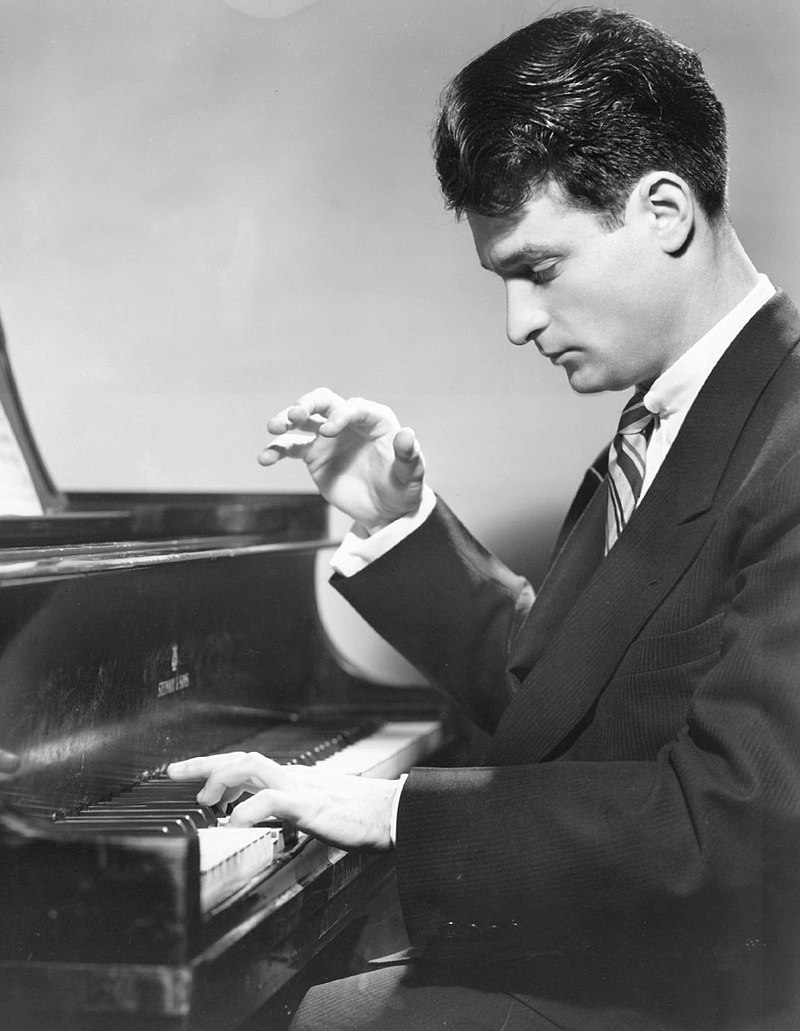
William Kapell
Against his doctor’s orders, he pursued an aggressive concert schedule, appearing in Australia thirty-seven times in fourteen weeks in 1953.
He was returning home from that Australian tour on a British Commonwealth Pacific Airlines DC-6. The aircraft was on the Honolulu to San Francisco leg of its flight when it flew into a mountain during its descent into San Francisco. The crash was ultimately blamed on pilot error, combined with foggy conditions.
Today, Kapell is remembered as one of the big what-ifs stories of American pianism.
Jacques Thibaud (1953)
Jacques Thibaud playing La Fontaine d’Arethuse by Szymanowski
Jacques Thibaud was born in 1880 in Bordeaux, France. He entered the Paris Conservatoire at the age of thirteen and became an internationally renowned soloist.
He was especially celebrated for his chamber music performances.
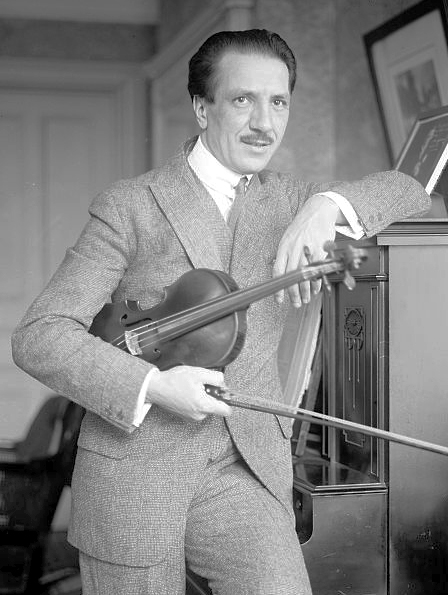
Jacques Thibaud
In September 1953, he, his daughter-in-law, and his accompanist embarked on a tour. The first recital would be in Tokyo, and multiple flights would be necessary to deliver them to their ultimate destination. For the first leg, he brought his 1720 Antonio Stradivari violin onboard the Lockheed Constellation being used for Air France Flight 178.
The flight was descending into Nice during a severe thunderstorm when it crashed into Mont Le Cimet. All forty-two people on board died. His Stradivari was also lost.
Guido Cantelli (1956)
Guido Cantelli conducting Rossini’s Semiramide Overture in rehearsal
Guido Cantelli was born in 1920 in Italy. He began his conducting career at twenty, but World War II temporarily halted his career. During the war, he was imprisoned in a concentration camp in Szczecin, Poland, for his anti-Nazi views.
He returned to Italy and restarted his career after the war in Europe ended. In July 1945, his debut with the Orchestra of La Scala made a major impression with audiences and critics alike.
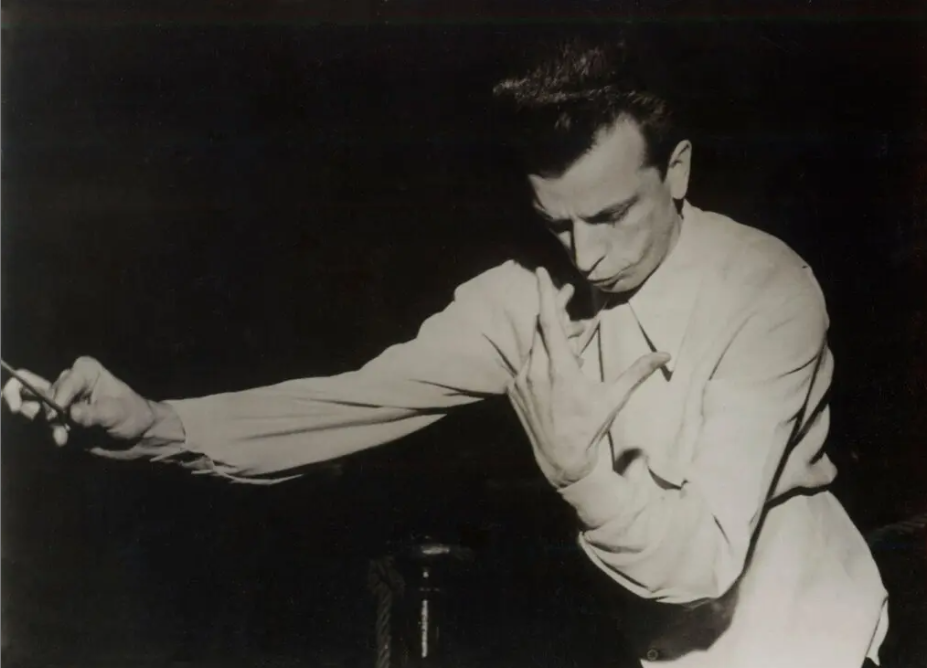
Guido Cantelli
Renowned conductor Arturo Toscanini adopted Cantelli as a protege, inviting him to conduct the NBC Symphony Orchestra in 1949 and writing, “This is the first time in my long career that I have met a young man so gifted. He will go far, very far.”
In November 1956, at the age of 36, Cantelli was named the Musical Director of La Scala.
Unthinkable tragedy struck just a week later. On his way to conduct concerts in America, Cantelli died in a plane crash. The Douglas DC-6B he was on lost altitude for unknown reasons and crashed into a cluster of houses outside of Paris. Only one person survived.
At the time, he had been under consideration to succeed Dimitri Mitropoulos at the New York Philharmonic. Leonard Bernstein ended up getting the job instead. It is fascinating – and sobering – to think about how American music might have been different if he’d survived.
Eduardo Mata (1995)
A tribute video to Eduardo Mata from the Dallas Symphony
Eduardo Mata was born in 1942 in Mexico City. He began his career as a composer and teacher but left Mexico in 1972 to take the position of principal conductor of the Phoenix Symphony.
In 1977, he was named music director of the Dallas Symphony Orchestra, where he served for fifteen seasons. During that time, he made a number of recordings with the Dallas Symphony and the London Symphony Orchestra.
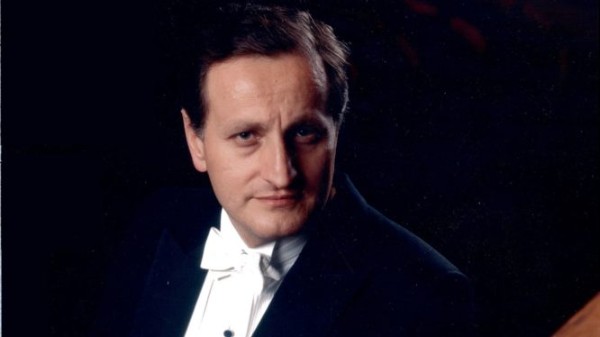
Eduardo Mata
He was just about to begin a tenure as music director of the New Zealand Symphony Orchestra when he died in a tragic plane crash. The accident occurred in January 1995, when he was piloting his Piper Aerostar between Cuernavaca and Dallas. An engine failed after takeoff, and he was unable to regain control of the aircraft, leading to his death.
Maria Radner (2015)
Maria Radner sings an excerpt from Götterdämmerung
Maria Radner was born in Düsseldorf, Germany, in 1981. She sang as a child but began pursuing a love of opera during her teens, ultimately becoming a contralto.
She began appearing across Europe under the batons of conductors like Zubin Mehta, Gianandrea Noseda, Lorin Maazel, and others, in works by Beethoven, Wagner, Mozart, Stravinsky, Mahler, Richard Strauss, and more.
However, Wagner was her speciality. She made her Metropolitan Opera debut in 2012 in Götterdämmerung, and she gave her final performance playing Erda in Siegfried on 23 March 2015.
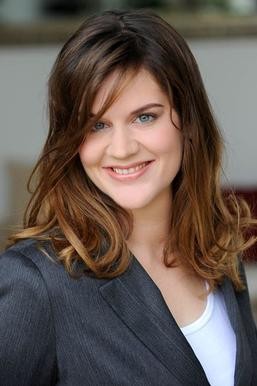
Maria Radner
The following day, she boarded Germanwings Flight 9525 with her husband and baby son, as well as her colleague, bass-baritone Oleg Bryjak. The plane crashed when the co-pilot locked the pilot out of the cockpit and deliberately flew the plane into the Alps, killing all 150 people on board.
James Horner (2015)
Clips of James Horner conducting the soundtrack to Titanic
James Horner was born in 1953 in Los Angeles. As a child, he played both violin and piano. He moved to Britain and attended the Royal College of Music (studying with composer György Ligeti). Later, he studied at the University of Southern California and the University of California, Los Angeles.
He scored his first film, The Lady in Red, in 1979. In 1982, he scored Star Trek II: The Wrath of Khan, which put his name on the map.
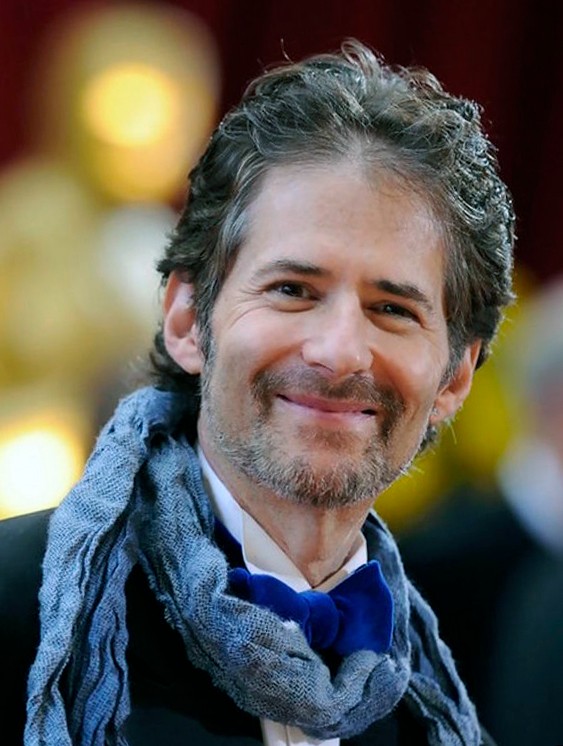
James Horner
Some of the noteworthy movies he wrote scores for include Aliens, Field of Dreams, An American Tail, The Perfect Storm, A Beautiful Mind, and The Mask of Zorro, among others.
His biggest triumph came in 1997 when he scored James Cameron’s film Titanic. He won two Oscars for best score and best original song.
He worked with Cameron again in 2009 to create the score for Avatar. He confessed in an interview, “Avatar has been the most difficult film I have worked on, and the biggest job I have undertaken… I work from four in the morning to about ten at night, and that’s been my way of life since March.”
He also wrote a double concerto for violin and cello, as well as a concerto for four horns.
One of his hobbies was piloting his private plane. In June 2015, Horner took off from the Camarillo Airport in southern California. He was practicing low-level flight when his plane crashed into terrain. Codeine and butalbital in his system may have contributed to the crash.
Titanic Suite
Final Thoughts
While these lives ended tragically, their legacies live on in films, recordings, and memories. It’s good for classical music lovers to familiarise themselves with the incredible work these eight great artists left behind.
Because in the end, remembering them also means celebrating the power of the art they devoted their lives to…and inspires their listeners to fill each day with purpose, beauty, and the music they love best.
For more of the best in classical music, sign up for our E-Newsletter